
# California Plumbing Code Venting Requirements: CPC Sections 504-508 Complete Guide
Venting systems are the backbone of any properly functioning drainage system, and understanding california plumbing code venting requirements is essential for C-36 exam success. The California Plumbing Code (CPC) Sections 504 through 508 provide detailed requirements for designing, installing, and maintaining vent systems that protect trap seals, maintain pressure differentials, and ensure proper drainage throughout the building.This comprehensive guide walks you through every aspect of venting system requirements, common code violations, and practical exam tips to help you master this critical topic.
Why Venting Systems Matter
Before diving into specific code requirements, it's important to understand why venting systems exist. Plumbing vent stacks serve three primary functions:- Trap Seal Protection - Prevents siphonage that could break trap seals and allow sewer gases into the building
- Pressure Equalization - Maintains atmospheric pressure in drainage pipes, allowing proper drainage
- Sewer Gas Ventilation - Safely exhausts dangerous gases (hydrogen sulfide, methane) to atmosphere above roofline
CPC Section 504: General Vent Requirements
CPC Section 504 establishes the foundational requirements for all plumbing vent systems in California.CPC Section 504.1 - Vent System Definition
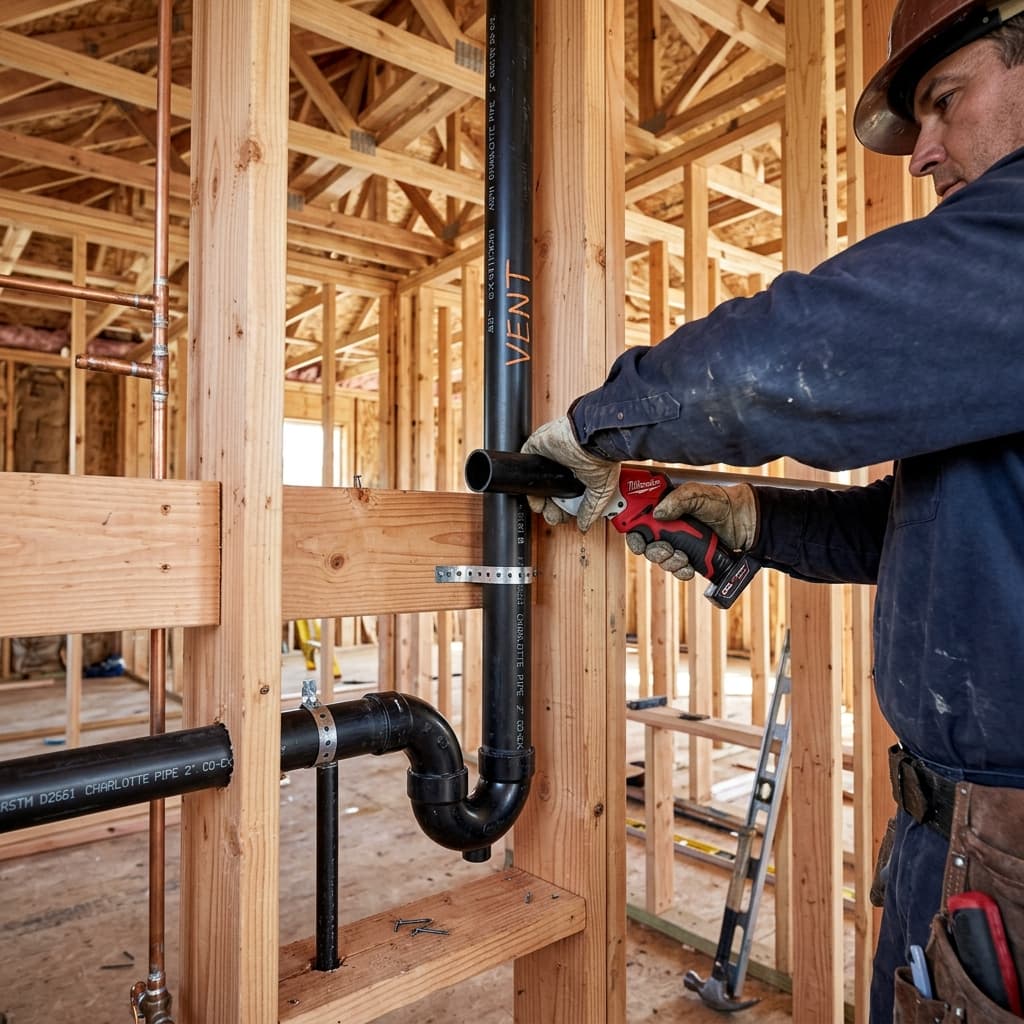
Under CPC Section 504.1, a vent system is defined as a network of ductwork or piping that:- Conveys sewer gases and odors to the outdoors
- Provides air circulation to maintain atmospheric pressure in drainage pipes
- Protects trap seals from siphonage
- Allows proper drainage of fixtures and waste pipes
CPC Section 504.2 - Individual Vent Pipes
Individual vents (also called "fixture vents") serve a single fixture or trap. CPC Section 504.2 requirements include:
- Minimum Size: 1¼ inches for most fixtures, 1 inch for lavatories and bidets
- Connection Point: Must connect above the flood rim of the fixture
- Grade: Minimum ⅛-inch per foot slope toward drain
- Height: Must extend full size through roof or to vent stack
CPC Section 504.3 - Common Vent Pipes
A common vent serves multiple fixtures at the same level. Key requirements:
- May serve fixtures on opposite sides of a stack
- Must be sized according to text drainage fixture unit tables in CPC Section 504.4
- Requires proper slope (⅛ inch per foot minimum)
- Cannot be used for water closets unless they share the same trap
CPC Section 504.4: Vent Sizing Tables
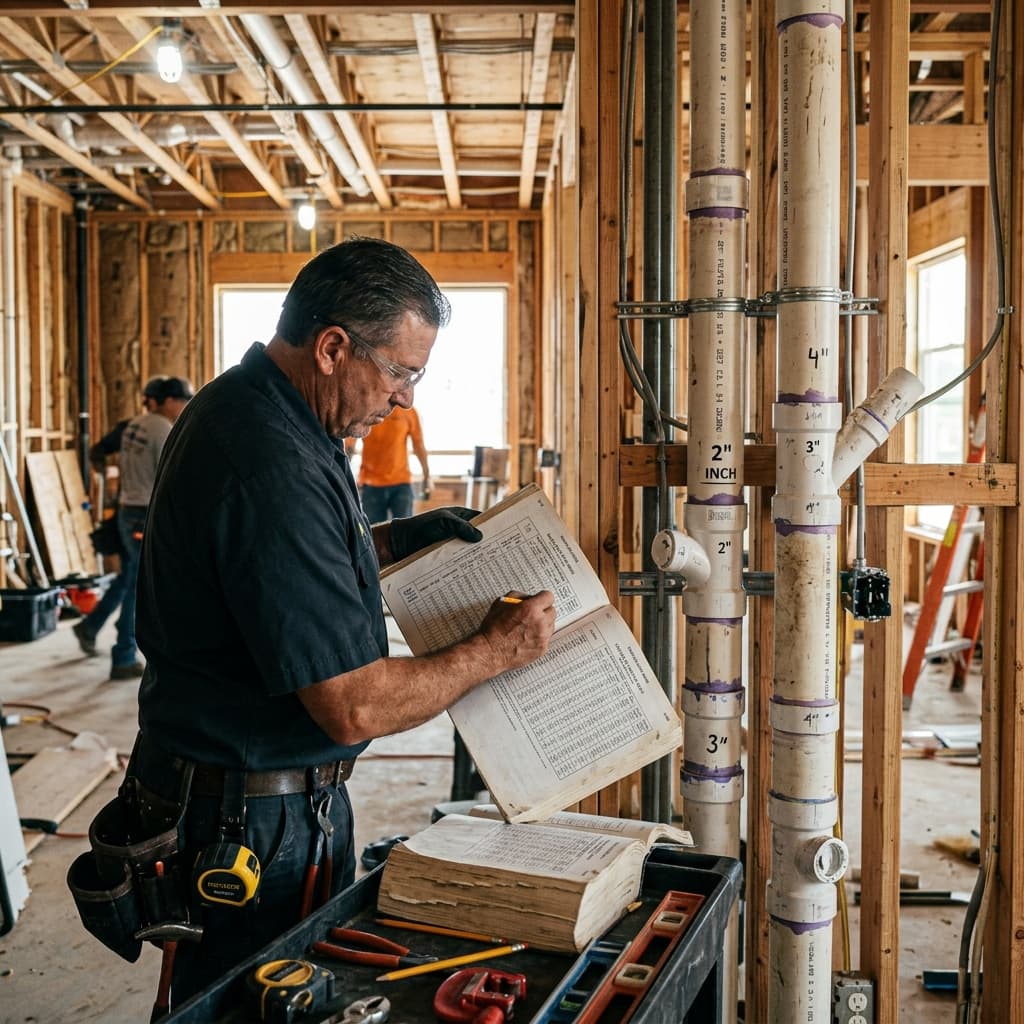
This section is crucial for the C-36 exam. CPC Section 504.4 provides detailed tables that determine minimum vent pipe sizes based on:- Drainage Fixture Units (DFUs) - The load on the vent system
- Developed Length - The total length of vent pipe from lowest connection to roof terminal
Understanding DFUs for Vents
Unlike drainage DFUs, vent DFUs are calculated differently. Common vent unit values include:
| Fixture Type | Vent DFUs | |---|---| | Water Closet | 4 | | Lavatory | 1 | | Bathtub/Shower | 2 | | Kitchen Sink | 2 | | Floor Drain | 1 | | Washing Machine | 2 |
Vent Sizing Based on Table 504.4
The exam heavily emphasizes practical application of vent sizing tables. Here's how to use them:
Step 1: Add up total DFUs for all fixtures on the vent Step 2: Calculate developed length from lowest connection to roof terminal Step 3: Cross-reference DFUs and developed length in CPC Table 504.4 Step 4: Select required vent pipe diameter Example: A vent serves 6 DFUs over a 40-foot developed length. According to CPC Table 504.4, a 2-inch vent pipe is required. C-36 Exam Strategy: Practice vent sizing problems using actual CPC tables. Exam questions often include multiple possible pipe sizes, and selecting the correct minimum size is critical. Remember: you cannot use a smaller pipe than the table requires, but you can use larger.CPC Section 505: Vent Stacks and Stack Vents
CPC Section 505 addresses the larger vent pipes that serve multiple smaller vents—the main arteries of the venting system.CPC Section 505.1 - Stack Vent Sizing
A stack vent (also called a vent stack or main vent) is the primary vertical vent pipe extending through the roof. Key sizing requirements:
- Minimum 2 inches for most installations
- Must be sized per CPC Section 504.4 tables based on total DFUs
- Cannot be less than the largest individual vent pipe connected to it
- Requires text proper roof penetration per CPC Section 406
CPC Section 505.2 - Vent Stack Installation
Installation requirements are strict:
- Must extend full size through roof without reduction
- Minimum 6 inches above roof surface (or 2 feet above if in snow country)
- Requires flashing and boot to prevent leaks
- Cannot be terminated near windows, doors, or air intakes (minimum 10 feet horizontal)
- Slope of horizontal portions must be ⅛ inch per foot toward drain
Common Stack Vent Violations on C-36 Exam
Test questions frequently present violations like:- Stack vent reduced below required minimum size
- Improper roof terminal (too low or in wrong location)
- Horizontal vent segments sloping wrong direction
- Stack vent terminating under soffit or near air intake
CPC Section 506: Branch Vents and Secondary Venting Methods
CPC Section 506 covers branch vent pipes and alternative venting solutions for complex drain layouts.CPC Section 506.1 - Branch Vents
A branch vent connects individual or common vents to the stack vent. Requirements:
- Minimum 1¼ inches diameter (except lavatories at 1 inch)
- Must connect at same elevation or above the highest fixture it serves
- Slope requirements: ⅛ inch per foot minimum toward drain
- Cannot connect below the weir of a trap (must be above)
CPC Section 506.2 - Wet Venting
Wet venting allows a vent pipe to simultaneously serve as a drain for upper fixtures and a vent for lower fixtures. Specific conditions apply:
- Limited to certain fixture combinations
- Requires special sizing calculations
- Water closets cannot be on a wet vent arm
- Common in residential applications for space efficiency
CPC Section 506.3 - Revent Pipes (Relief Vents)
Revent pipes (relief vents) provide additional venting for long horizontal drain runs. They:
- Connect to the drain between the trap and stack
- Connect to the vent system above the water line
- Help prevent trap seal loss on extended runs
- Must be sized per CPC Section 504.4
CPC Section 507: Special Venting Situations
CPC Section 507 addresses venting requirements for special circumstances and fixture types.CPC Section 507.1 - Island Fixture Venting
Island sinks and fixtures in kitchens require special venting methods since they cannot naturally drain back to a wall vent. Options include:
- Air Admittance Valves (AAVs) - One-way vents per CPC Section 918.3 (covered in text separate guide)
- Looped Vents - Vent line runs overhead and connects to main vent stack
- Drain-to-Vent - Special fixture trap design
CPC Section 507.2 - Rough-in Vent Connections
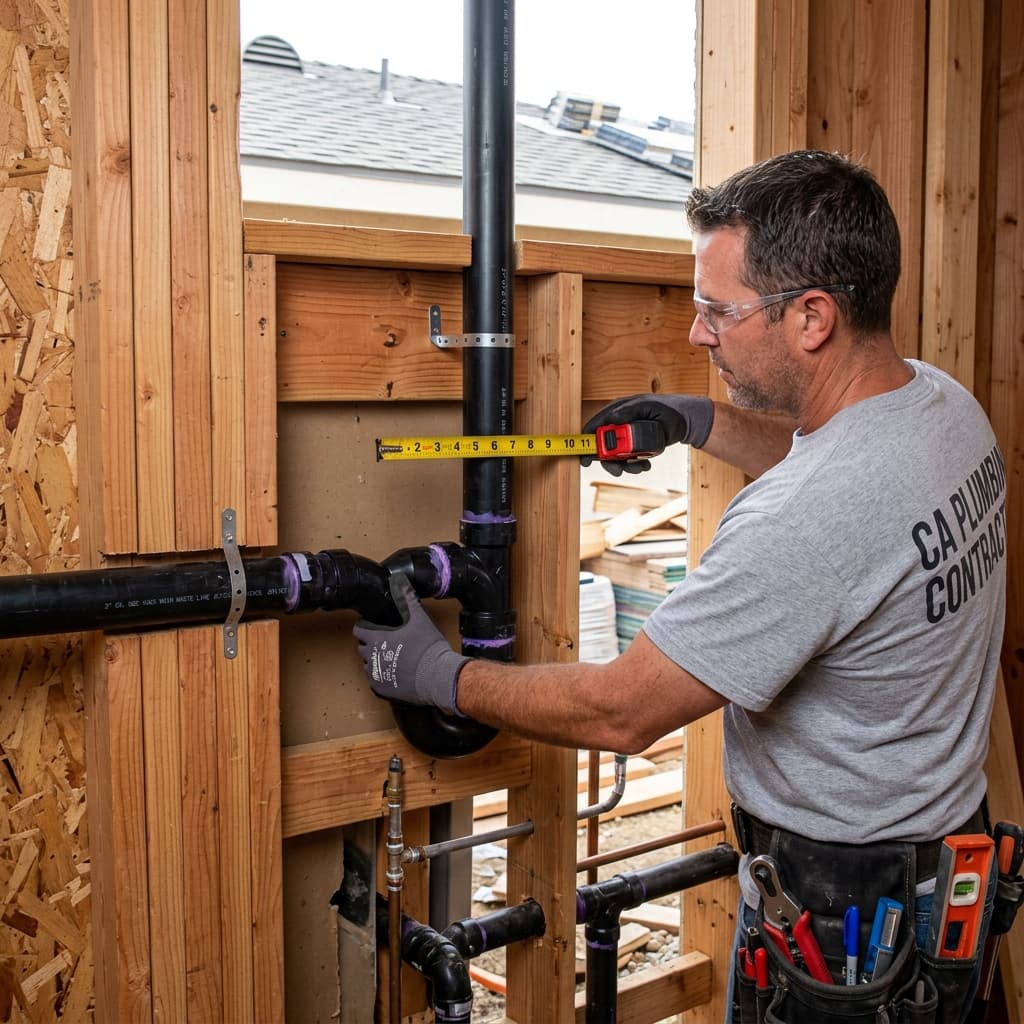
During rough-in inspection, examiners verify:- All vent pipes are correct size and slope
- Connections are at proper elevation relative to traps
- Proper spacing and support of vent pipes
- No illegal connections or damaged piping
CPC Section 508: Vent Termination and Clearances
CPC Section 508 specifies where vent pipes must terminate and required clearances from building openings.CPC Section 508.1 - Vent Terminal Location
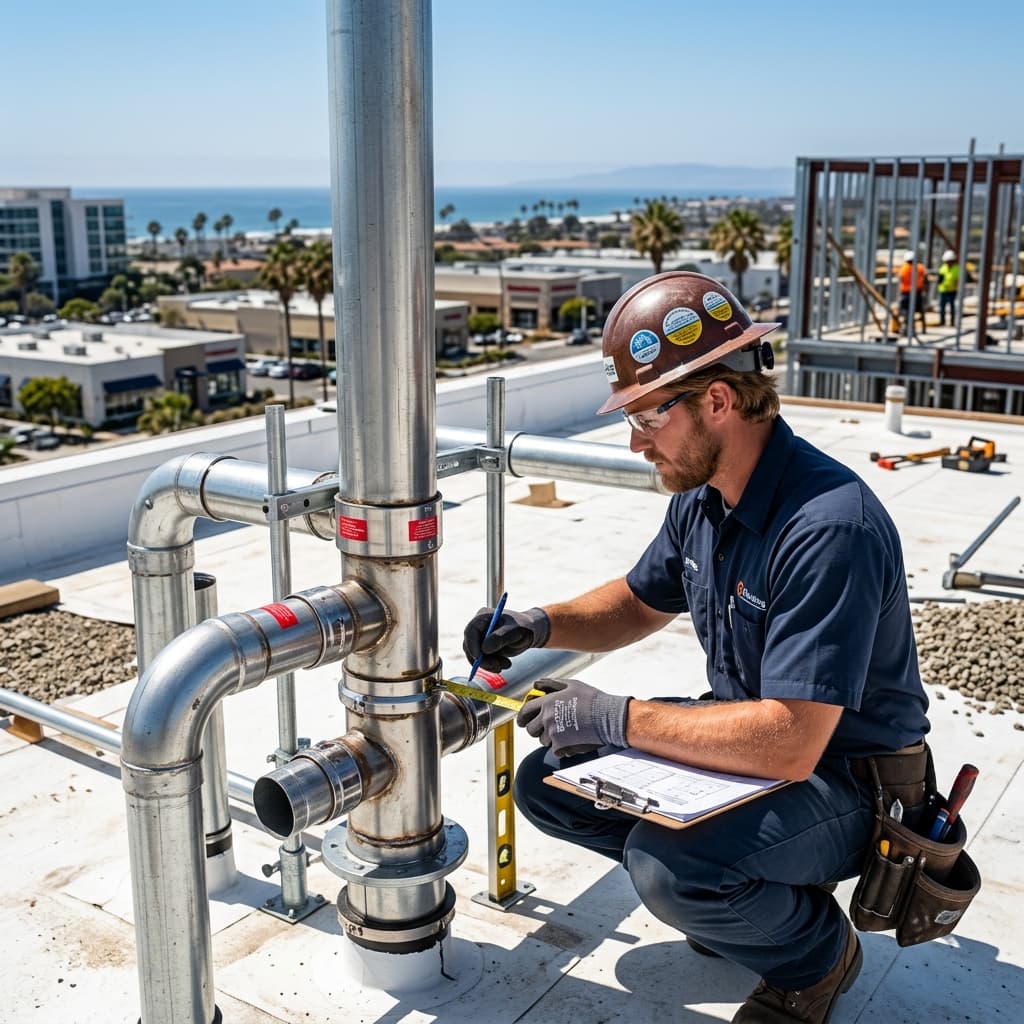
Vent pipes must terminate:- Above the roof surface (6 inches minimum, 2 feet if snow load area)
- At least 10 feet horizontally from:
- At least 3 feet below any soffit or eave
CPC Section 508.2 - Vent Pipe Protection
Above-roof vent pipes require:- Durable, corrosion-resistant materials
- Pitch pans or flashing boots to prevent water intrusion
- Support to prevent separation or damage
- PVC, ABS, or metal pipe with proper spacing
Common Code Violations and Exam Question Scenarios
Understanding common venting violations is essential for C-36 exam success. Here are violations that appear frequently:
Violation #1: Undersized Vent Pipes
Scenario: A 1½-inch vent serves 8 DFUs over 60 feet developed length Requirement: Per CPC Table 504.4, minimum 2½ inches required Code Reference: CPC Section 504.4 Consequence: Inadequate venting, slow drainage, trap seal lossViolation #2: Improper Connection Height
Scenario: Individual vent connects below the fixture's flood rim Requirement: Must connect above flood rim per CPC Section 504.2 Consequence: Fixture drain water can enter vent systemViolation #3: Incorrect Slope
Scenario: Horizontal vent segment slopes away from drain (toward roof) Requirement: All vents must slope toward drain at ⅛ inch per foot per CPC Section 505.2 Consequence: Water traps in vent line, blocking air circulationViolation #4: Inadequate Roof Clearance
Scenario: Vent terminal 4 inches above roof surface Requirement: Minimum 6 inches per CPC Section 508.1 Consequence: Snow/water can block vent openingViolation #5: Illegal Vent Termination
Scenario: Vent terminates 8 feet from operable window Requirement: Minimum 10 feet per CPC Section 508.1 Consequence: Sewer odors enter building through windowC-36 Exam Preparation Strategy
Study Focus Areas
- Vent Sizing Tables - Practice 10+ problems using CPC Table 504.4
- Minimum Pipe Sizes - Memorize standard requirements for each fixture type
- Connection Requirements - Know proper elevations and slopes
- Violation Identification - Review code violation photos and diagrams
Test-Taking Tips
- Read questions carefully for developed length (easy to miscalculate)
- Always verify DFU calculations before selecting pipe size
- Watch for trick answers offering smaller pipes than code allows
- Remember: correct code applications sound conservative (larger pipes, higher terminations)
Practical Application Examples
Example 1: Kitchen Sink Venting
A kitchen sink requires an individual vent. Using CPC Section 504.2:- Minimum vent size: 1¼ inches
- Slope: ⅛ inch per foot toward drain
- Connection: Must be above flood rim
- Termination: Full size through roof
Example 2: Multi-Fixture Bathroom Venting
A bathroom with water closet (4 DFU), lavatory (1 DFU), and shower (2 DFU) = 7 total DFUs- Developed length: 35 feet
- Per CPC Table 504.4: 2-inch vent stack required
- Each fixture gets individual vent to stack
- Stack must be 2 inches minimum through roof
Conclusion
Mastering venting system requirements under CPC Sections 504-508 is fundamental to passing the C-36 exam and becoming a competent plumbing professional. These requirements exist to protect building occupants from sewer gases, prevent drainage problems, and ensure system longevity.
Focus your study efforts on:- ✓ Vent pipe sizing calculations using CPC tables
- ✓ Proper connection heights and slopes
- ✓ Vent terminal location requirements
- ✓ Common violation patterns
---META_TAGS--- #CaliforniaPlumbingCode #C36Exam #PlumbingVents #CPC504 #CodeCompliance #PlumbingExam #DrainageVenting