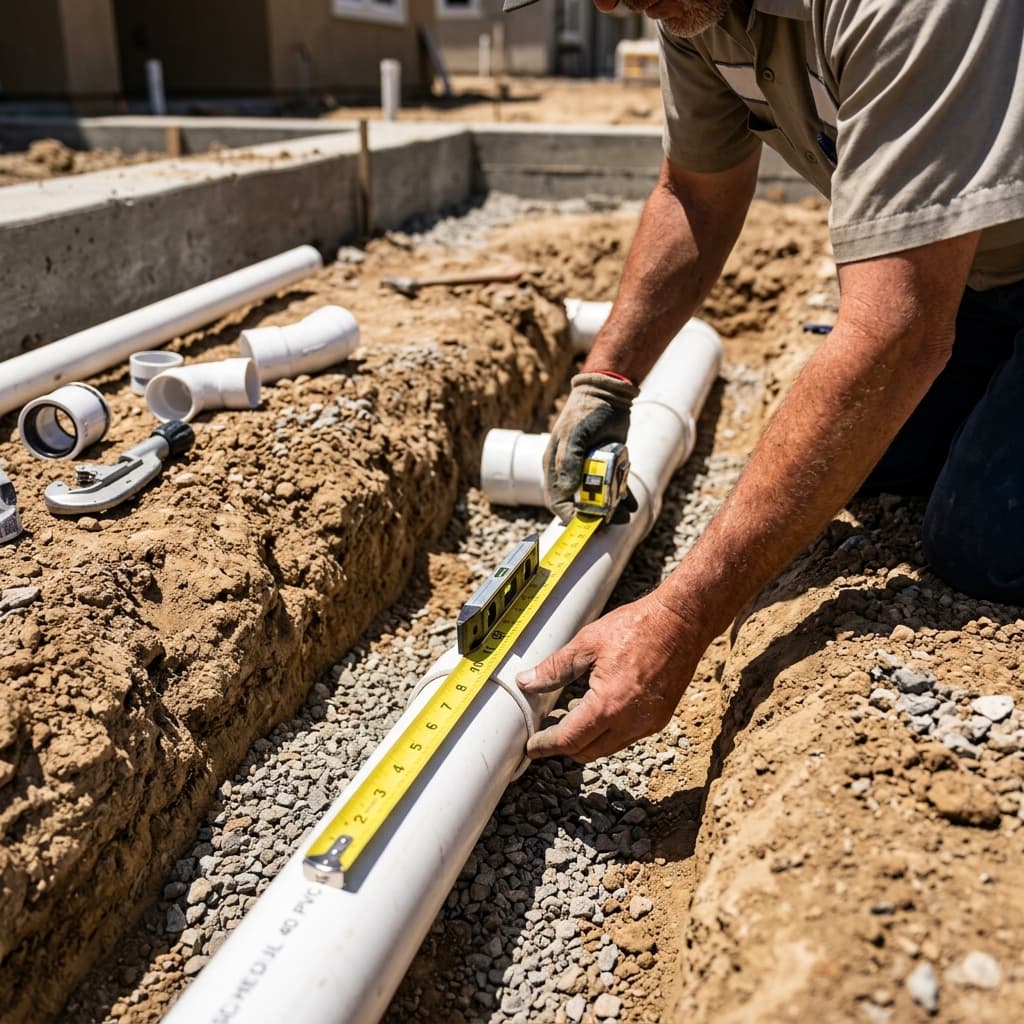
# CPC Section 422.2: Underground Building Sewer Installation Requirements
Introduction
The California plumbing code drainage system foundation begins with understanding underground building sewer installation requirements. For C-36 plumbing exam candidates, CPC Section 422.2 represents a critical knowledge area that bridges the gap between basic drainage principles and practical field application. This section specifically addresses building sewers that extend from the building's foundation to the public sewer system or private treatment facility.Whether you're preparing for your California C-36 plumbing exam or seeking to understand proper installation practices, mastering CPC Section 422.2 compliance is essential for both test success and professional competency.
Understanding the Scope of CPC Section 422.2
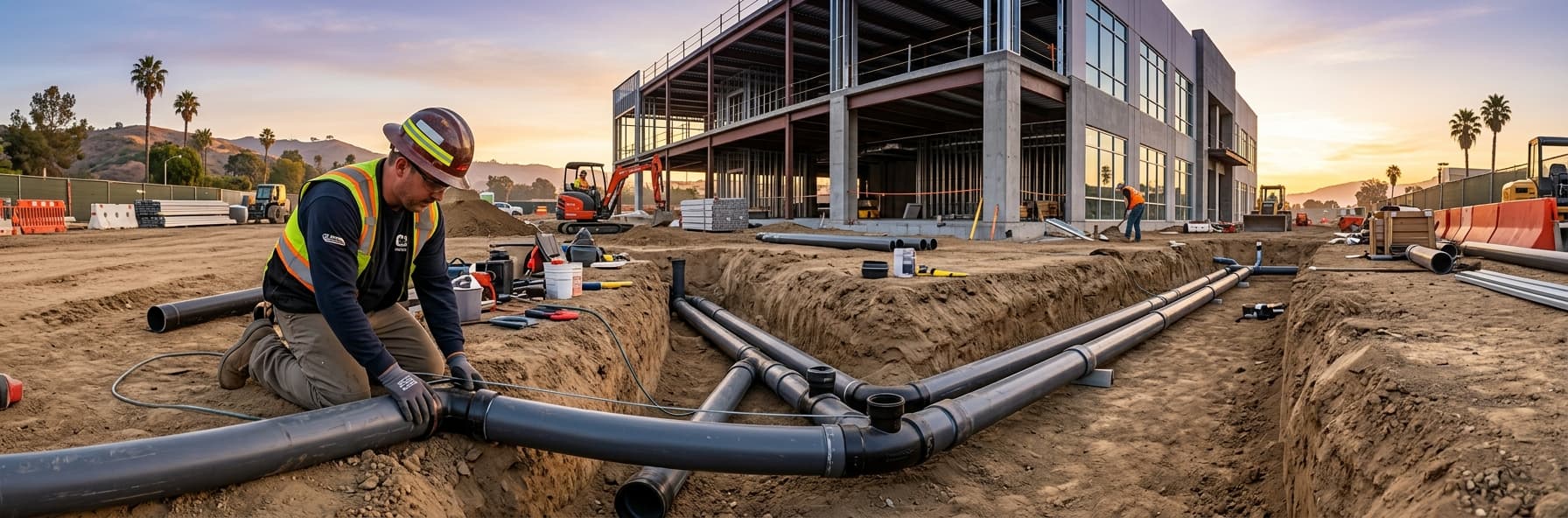
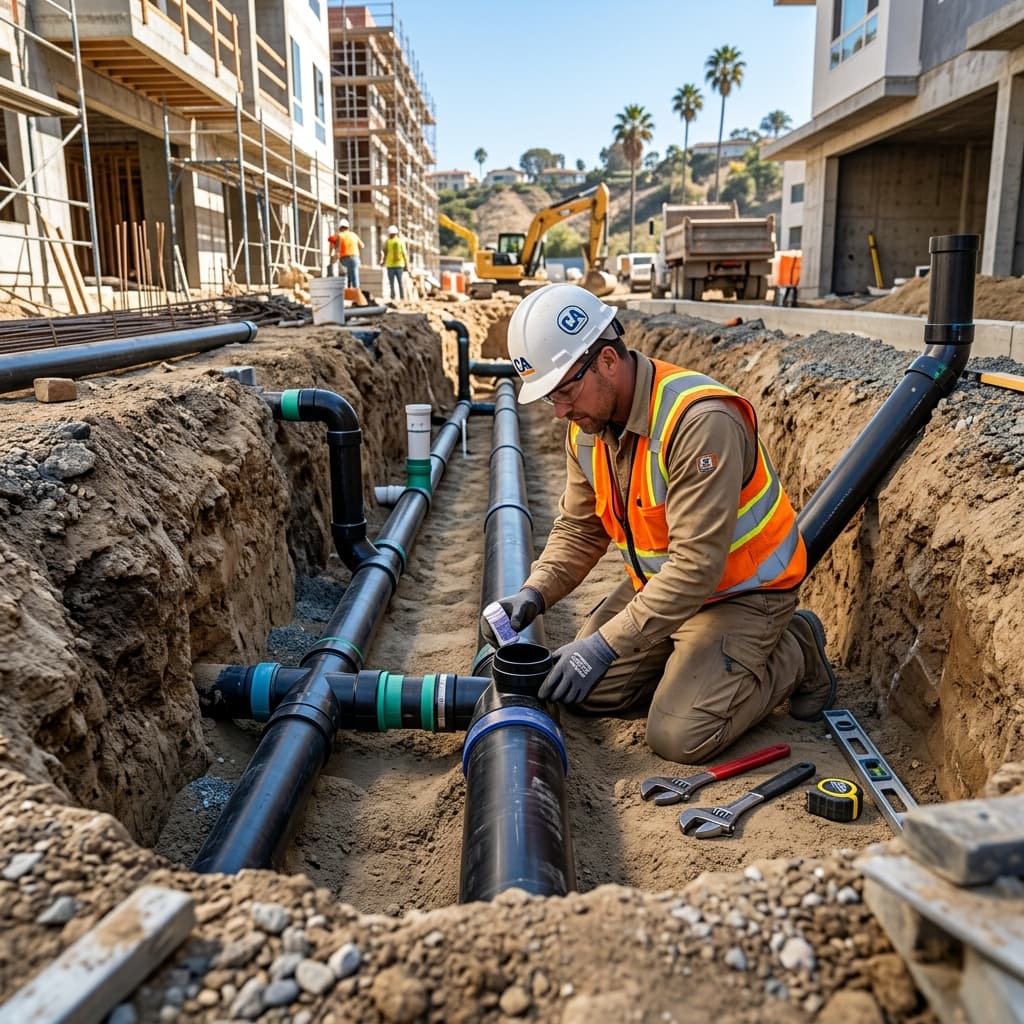
CPC Section 422.2 applies exclusively to building sewers installed underground, beneath the building's lowest floor level. This distinction is crucial for exam success because the code treats underground building sewers differently from internal building drains or above-ground drainage systems.Key Definitions from CPC Section 422
Before diving into Section 422.2 specifics, understanding foundational definitions helps solidify your knowledge:
- Building Drain: The lowest piping that collects wastewater from all fixtures within the building, typically located at or below the lowest floor level
- Building Sewer: The pipe that carries wastewater from the building drain to the public sewer system, private treatment facility, or point of discharge
- Underground Installation: Any building sewer installed below ground level outside the building's foundation
Sizing Requirements for Underground Building Sewers
Minimum Pipe Diameter Standards
CPC Section 422.2 establishes minimum pipe diameter requirements based on fixture unit load calculations. The code requires:
- Minimum 4-inch diameter for most residential and commercial building sewers
- Minimum 3-inch diameter only in specific cases with low fixture unit loads (rare in practical application)
- No reduction below 4 inches for typical installations
Calculating Fixture Units for Sizing
The sizing process requires understanding fixture unit calculations, which directly apply to building sewer sizing:- Count all fixture units draining into the building sewer
- Reference CPC Table 422.1 for maximum fixture units per pipe size
- Select pipe diameter that accommodates the calculated load
- Apply safety factors by selecting the next larger size when borderline
Slope and Grade Requirements
One of the most commonly missed exam topics involves proper building sewer slope requirements. CPC Section 422.2 requires:- Minimum slope of 1/4 inch per foot (1:48 ratio) for all building sewers
- Maximum slope of 3 inches per foot (1:4 ratio) to prevent fixture seal loss and pipe erosion
- Uniform slope without reverse grades, sags, or level sections
Why Slope Matters
Inadequate slope (less than 1/4 inch per foot) creates:- Standing water in pipes
- Solids accumulation
- Reduced drain capacity
- System failures and backups
- Excessive water velocity
- Solids deposition
- Trap seal loss in fixtures
- Erosion damage to pipe materials
Material Requirements and Standards
Approved Building Sewer Materials
CPC Section 422.2 permits specific materials for underground building sewers, each with particular advantages and limitations:
PVC (Polyvinyl Chloride)- Most common modern choice
- Requires Schedule 40 minimum
- Excellent corrosion resistance
- Easy installation with proper jointing
- Traditional material
- Superior durability in harsh environments
- Higher installation costs
- Requires proper bedding and support
- Historical material, rarely installed new
- Highly corrosion-resistant
- Brittle; susceptible to fracturing
- May appear on historical renovation questions
- Found in older installations
- Rarely approved for new installations
- Health and environmental concerns
- Maintenance and replacement focus in modern code
- Heavy-duty applications
- Susceptible to sulfuric acid corrosion
- Requires adequate bedding
- Often used in industrial settings
Material Selection Considerations
The California plumbing code drainage standards require:- Materials approved by CPC Section 422.2
- Proper laying length and jointing methods
- Adequate support and bedding
- Corrosion resistance based on soil conditions
Depth and Burial Requirements
Minimum Burial Depth
CPC Section 422.2 requires adequate depth protection through:
- Minimum 10 inches of cover below grade surface in most locations
- Additional depth protection in areas subject to traffic or vehicle loading
- Frost line considerations in specific California regions (coastal areas with freezing potential)
- Protection from surface water that could compromise the system
Depth Determination Factors
Several variables influence required burial depth:
- Soil bearing capacity and stability
- Groundwater table elevation
- Traffic loading from vehicles or equipment
- Frost penetration depth (minimal in most California areas)
- Surface drainage patterns
Support and Bedding Requirements
Proper Pipe Support System
Underground building sewers require adequate support throughout their length:
- Continuous bedding for rigid pipes (CIP, VCP, concrete)
- Select bedding material (sand, native soil, or engineered material) properly compacted
- Cradle support at low points and direction changes
- Flexible pipe support allowing slight movement without damage
Bedding Material Standards
The code specifies bedding material based on pipe type:
- Sand or fine granular material for most applications
- Minimum 2-inch bed thickness under rigid pipes
- Proper compaction to prevent differential settlement
- Native soil acceptable only when properly prepared
Cleanouts and Access Requirements
Cleanout Location Standards
CPC Section 422.2 integrates with building drain cleanout requirements by specifying:- Cleanouts required at building sewer origin
- Cleanouts at direction changes exceeding 45 degrees
- Cleanouts on straightline runs at maximum 100-foot intervals
- Accessible cleanout locations for maintenance and clearing
Access Considerations
Proper cleanout placement ensures:- Easy rodding and clearing
- Minimal disruption to landscaping or structures
- Compliance with local amendments
- Long-term system maintenance capability
Connection to Public Sewer System
Public Sewer Interface Requirements
When connecting to municipal sewer systems, CPC Section 422.2 requires:
- Direct connection to public sewer lateral (not through cleanouts)
- Proper invert elevation to prevent backflow conditions
- Water-tight connection using approved methods
- Permit compliance and inspection before coverage
Private Treatment System Connections
For properties without public sewer access:
- Distance requirements from wells and water sources per CPC Section 411.1
- Adequate grade for gravity flow to treatment system
- Professional design of septic or alternative systems
- Health department approval for non-public systems
Common Installation Errors (Exam Focus)
Understanding frequently made errors helps you recognize wrong answers on your C-36 exam:
Inadequate Slope Installation- Installing at less than 1/4 inch per foot
- Creating level sections or sags
- Failing to maintain uniform gradient
- Using non-approved materials
- Selecting materials unsuitable for soil conditions
- Mixing incompatible materials at transitions
- Burying less than required depth
- Failing to account for traffic loading
- Inadequate protection from surface water infiltration
- Laying pipes on undisturbed, unstable soil
- Using oversized aggregate material
- Inadequate compaction of bedding material
- Undersizing based on incomplete fixture unit counting
- Failing to account for future use or additions
- Using smaller than required minimum diameter
CPC Section 422.2 and Related Code Sections
Understanding how Section 422.2 integrates with other code sections strengthens exam performance:
CPC Section 408: General drainage and venting system principles CPC Section 409: Trap requirements for drainage systems CPC Section 411: Distance requirements from water sources CPC Section 415: Grading and slope requirements CPC Section 422: General building sewer provisions CPC Section 701: Connection to public sewer systemsExam Tips for CPC Section 422.2 Mastery
Study Strategy
- Memorize the four essential requirements:
- Practice sizing calculations using fixture unit tables until you can determine proper pipe diameter within 60 seconds
- Study slope calculations using both fraction format (1:48) and decimal format (0.208 inches per foot) to recognize either presentation
- Create scenario flashcards covering common site conditions and required solutions
Question Pattern Recognition
Expect exam questions following these patterns:
- Sizing scenarios: "A building has 42 fixture units. What minimum pipe diameter is required?"
- Slope calculation: "A building sewer must drop 8 feet over a 300-foot run. Is this compliant?"
- Material selection: "Which material would you select for acidic soil conditions?"
- Depth determination: "A parking lot covers the building sewer location. What additional depth is required?"
- Connection issues: "How should the building sewer connect to an old VCP public lateral?"
Common Answer Traps
Test creators frequently include tempting incorrect answers:
- 3-inch pipes (too small unless specified single-fixture scenario)
- 1/8-inch slope (too shallow; meets drain requirements but not sewer requirements)
- 5-inch depth (insufficient protection)
- Concrete pipe in acidic soil (correct material selection question)
Practical Application Beyond the Exam
Understanding CPC Section 422.2 beyond exam success ensures proper field practice:
- Design compliance for projects you supervise or manage
- Inspection capabilities when reviewing contractor work
- Maintenance planning for existing systems
- Permit acquisition with properly designed and sized systems
- Problem diagnosis when drainage systems fail
Conclusion
CPC Section 422.2 establishes the foundation for proper underground building sewer installation throughout California. Mastering the four critical requirements—minimum 4-inch diameter, 1/4-inch per foot slope, 10-inch depth, and appropriate material selection—ensures both C-36 exam success and professional competency in drainage system design and installation.Success with this material requires understanding not just the requirements but the reasoning behind them. Proper slope prevents solids accumulation. Adequate diameter accommodates expected flow. Sufficient depth protects pipes from damage. Correct material selection ensures longevity in specific soil conditions.
As you prepare for Part 4: Drainage and Venting Systems on your California C-36 plumbing exam, invest time in mastering CPC Section 422.2 fundamentals. The concepts appear frequently across multiple question types, and strong foundational knowledge builds confidence for more complex drainage system scenarios.