# Mastering CPC Section 403: Trap Arm Distance and Slope Calculations for C-36 Success
The California Plumbing Code Section 403 establishes fundamental requirements for trap arm design that separate competent plumbers from those unprepared for licensure. Understanding CPC section 403 trap requirements and related plumbing trap arm distance calculations is non-negotiable for passing the C-36 exam's Part 2: Drainage and Venting Systems section. This comprehensive guide walks you through the critical provisions you'll encounter on test day.Understanding CPC Section 403: The Foundation
CPC Section 403 governs the installation of plumbing traps and trap arms—the curved sections of pipe that create water seals preventing sewer gases from entering buildings. The code recognizes that improper trap arm installation compromises both the trap seal and the entire drainage system's integrity.
What is a Trap Arm?
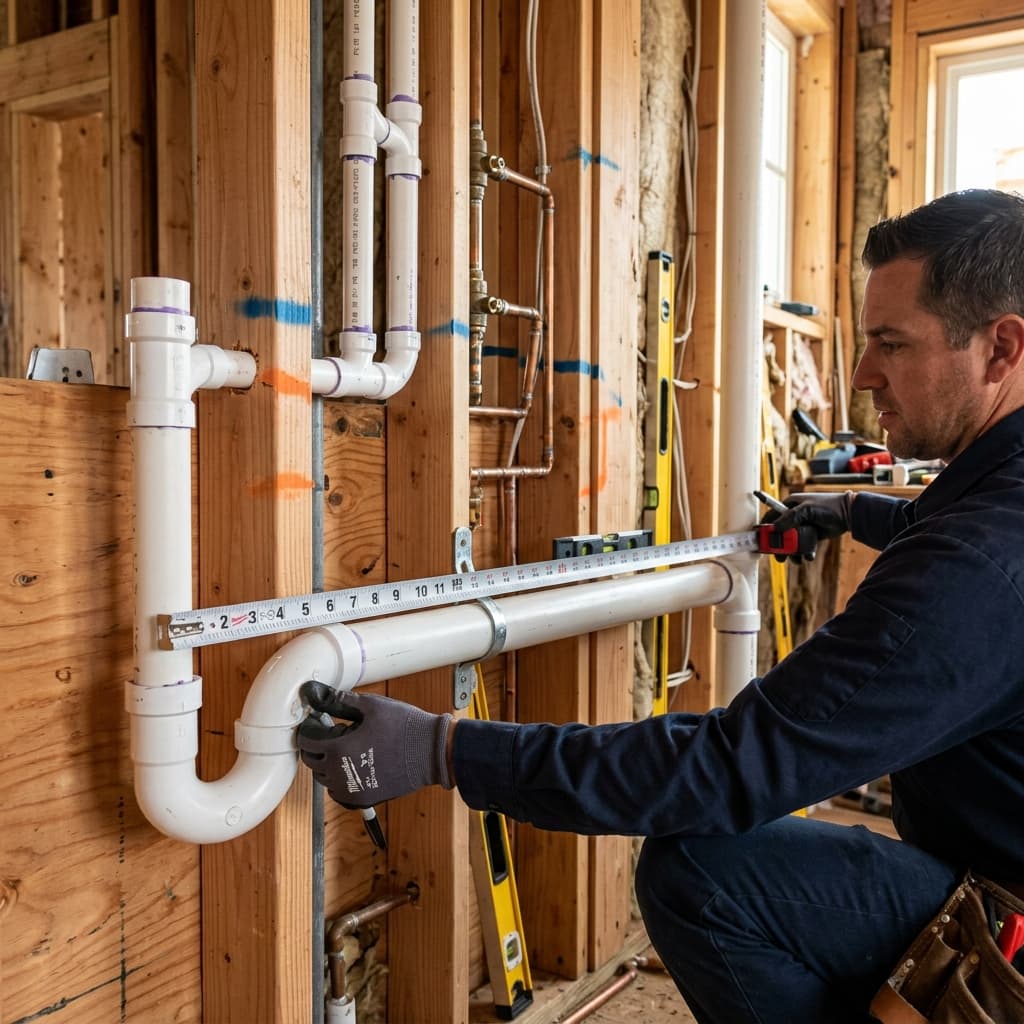
A trap arm is the horizontal (or nearly horizontal) pipe section extending from a trap outlet to the vent stack or main drain line. This component must be designed to maintain proper slope while keeping the trap seal intact—a balance that requires precise calculation and understanding of code provisions.
Maximum Trap Arm Distance Requirements
CPC Section 403 establishes specific maximum distances from trap outlet to vent connection, varying based on pipe diameter and design configuration.
Standard Trap Arm Distances
For most residential and commercial applications:- Standard trap arm maximum distance: 6 feet from trap outlet to vent stack or junction with drainage line
- 1/2-inch diameter trap arms: Maximum 8 feet (the increased length compensates for reduced friction loss with smaller diameter pipes)
- 3-inch and larger trap arms: Up to 10 feet (larger diameters handle extended runs with lower velocity)
Exam Tip: Distance Calculation Scenarios
Test questions frequently present scenarios like: "A lavatory trap outlet is located 7 feet from the vent stack. The trap arm is 1/2-inch diameter. Is this compliant?" Answer: YES — 1/2-inch diameter allows 8 feet maximum. The 7-foot distance falls within acceptable limits. Compare this to: "A 3/4-inch toilet trap arm extends 7 feet to the vent. Is this acceptable?" Answer: NO — 3/4-inch diameter uses the standard 6-foot maximum. This installation violates CPC Section 403.Drainage Slope Requirements Under California Plumbing Code
Proper drainage slope is inseparable from trap arm requirements. The california plumbing code drainage slope directly impacts trap seal maintenance and system efficiency.Minimum Slope Standards
CPC Section 403 requires:
For pipes 2 inches and smaller:- Minimum slope: 1/4 inch per foot (also expressed as 1:48 ratio or 2.08% grade)
- This slope ensures adequate velocity to move waste while maintaining trap seals
- Minimum slope: 1/8 inch per foot (also expressed as 1:96 ratio or 1.04% grade)
- Larger diameters require less slope due to reduced friction loss
Understanding the Physics
Why different slopes? Smaller diameter pipes create higher friction losses. The steeper 1/4-inch-per-foot slope in 2-inch and smaller pipes ensures waste velocity remains adequate (typically 2-6 feet per second) despite friction resistance.
Larger 3-inch and 4-inch pipes naturally move solids at acceptable velocities with gentler slopes, preventing excessive water loss from traps.
Calculating Required Slope
Formula: Length × Slope = Total Drop Example calculation:- Trap arm length: 6 feet
- Required slope: 1/4 inch per foot
- Total drop: 6 feet × 1/4 inch = 1.5 inches
- Length: 8 feet
- Required slope: 1/8 inch per foot
- Total drop: 8 feet × 1/8 inch = 1 inch
Trap Arm Direction and Configuration
CPC Section 403 contains critical requirements about trap arm orientation that candidates often overlook.
Slope Direction Mandate
The trap arm MUST slope downward toward the trap. This requirement prevents water from flowing backward or pooling, which would break the trap seal. Horizontal runs without slope are explicitly prohibited.Common Violations
Plumbers frequently encounter these violations during inspections:
- Level trap arms — Pipes running perfectly horizontal without any downslope
- Upward slopes from trap — Trap arm rising as it extends away from the trap (backslope)
- Reversed slope — Piping that slopes toward the fixture instead of toward drainage
Design Consideration: Vent Stack Connection
The vent stack connection point receives the downsloping trap arm. The vent must be positioned higher than the trap arm outlet to permit proper slope throughout the run. This often requires:
- Positioning vent stacks elevated on walls
- Using offset fittings to achieve necessary height differential
- Planning vent routing during initial design phase
CPC Section 403 and Fixture Categories
Different fixtures have specific trap arm considerations that affect your calculations.
Lavatory and Sink Applications
- Standard 1.25-inch trap arms: 6-foot maximum distance
- Slope requirement: 1/4 inch per foot
- Common exam scenario: Vanity sink with distant vent stack
Toilet Trap Calculations
- Integral traps mean the distance measurement starts from the closet bend outlet
- Typically 3-inch or 4-inch diameter: 10-foot maximum distance
- Minimum slope: 1/8 inch per foot
- These larger pipes tolerate longer distances
Bathtub and Shower Drains
- Usually 1.5-inch or 2-inch diameter
- Maximum 6-foot trap arm distance
- Slope requirement: 1/4 inch per foot
- Often challenging in remodel scenarios where vent positioning is restricted
Exam Questions: Typical Trap Arm Scenarios
Understanding how exam writers present C-36 exam drainage requirements helps you recognize patterns and answer confidently.Scenario Type 1: Distance Compliance
"A residential installation requires a trap arm from a pedestal sink to a vent stack 9 feet away. The installer proposes a 3/4-inch diameter trap arm. Will the inspector approve this?" Analysis:- 3/4-inch diameter = 6-foot maximum trap arm distance
- Proposed distance = 9 feet
- Result = NON-COMPLIANT
- Solution = Use 1/2-inch diameter (8-foot maximum) or relocate components
Scenario Type 2: Slope Calculation
"A trap arm runs 5 feet horizontally from trap outlet to vent junction. If the trap outlet is at elevation 35.0 inches and slope must be 1/4 inch per foot, what elevation should the vent junction be?" Calculation:- Distance: 5 feet
- Required slope: 1/4 inch per foot
- Total drop: 5 × 1/4 = 1.25 inches
- Vent junction elevation: 35.0 - 1.25 = 33.75 inches
Scenario Type 3: Multi-Part Analysis
"An installation includes a 2-inch trap arm running 8 feet to a vent. Identify all code violations." Analysis:- 2-inch diameter allows 6-foot maximum (violation: distance too long)
- Minimum slope required: 1/4 inch per foot
- At 8 feet: 8 × 1/4 = 2-inch drop needed
- Violation: Exceeds distance limit by 2 feet
- Solution: Reduce to 6-foot distance or use smaller diameter trap with 1.5-inch drop
CPC References and Related Sections
Understanding how CPC Section 403 connects to other code provisions strengthens exam performance.
Related Sections:
- CPC Section 306 — Definitions clarifying "trap arm" and measurement points
- CPC Section 308 — Trap seal requirements that depend on proper arm design
- CPC Section 404 — Vent connection requirements that determine arm endpoint
- CPC Section 422 — Indirect waste requirements affecting certain trap arms
Practical Application Tips for C-36 Success
Tip 1: Memorize the Key Distances
Create flashcards with:- Standard trap arm: 6 feet
- 1/2-inch trap arm: 8 feet
- 3-inch+ trap arm: 10 feet
Tip 2: Remember the Slope Ratio
- 2-inch and smaller: 1/4 inch drop per foot run (1:48)
- 3-inch and larger: 1/8 inch drop per foot run (1:96)
Tip 3: Sketch Out Scenarios
When reading exam questions, draw quick diagrams showing:- Fixture location
- Trap position
- Vent stack location
- Required slope profile
Tip 4: Check Installation Feasibility
Always ask: "Can this slope actually be built in the space available?"Many violations stem from impossible-to-achieve slope requirements in confined spaces. Recognizing these physical constraints demonstrates practical competency.
Common C-36 Exam Mistakes to Avoid
Mistake 1: Confusing Trap Arm Distance with Developed Length
Distance is the horizontal measurement. Developed length accounts for fittings. Use horizontal distance for CPC Section 403 compliance checks.
Mistake 2: Applying Wrong Slope Requirement
Students frequently apply 1/4-inch slope to 4-inch pipes (which allow 1/8-inch) or vice versa. The pipe diameter always determines which slope standard applies.
Mistake 3: Forgetting the Downslope Direction
Some candidates incorrectly assume horizontal is acceptable. The code explicitly requires downslope toward the trap—every inch of horizontal distance must lose height.
Mistake 4: Ignoring Vent Stack Positioning
Trap arm slope requirements are impossible to achieve if the vent connection point is too low. Always verify vent stack height accommodates necessary slope.
Conclusion: Building CPC Section 403 Mastery
CPC Section 403 trap arm distance and slope requirements form the foundation of safe drainage system design. The plumbing trap arm distance calculations and california plumbing code drainage slope standards directly protect building occupants from sewer gas exposure and system failures. Success on the C-36 Part 2 exam requires fluent understanding of:- Maximum distance limitations by pipe diameter
- Slope calculation methodology
- Physical feasibility assessment
- Relationship to vent stack positioning