
# Sump Pump and Ejector Pump Installation Requirements: CPC Code Compliance for C-36 Exam Success
Introduction
Sump pump installation California regulations are fundamental to drainage system design covered extensively in the C-36 plumbing exam. Whether you're preparing for Part 4: Drainage System Design and Installation or managing actual plumbing projects in California, understanding the California Plumbing Code (CPC) requirements for sump pumps and ejector pumps is essential. These systems protect buildings from water intrusion and handle waste water that cannot drain by gravity—making proper installation and sizing critical for both code compliance and practical application.This comprehensive guide covers the CPC code references, sizing calculations, installation requirements, and exam-focused strategies you need to master sump pump and ejector pump systems.
Understanding Sump Pumps vs. Ejector Pumps
Key Differences
Before diving into code requirements, it's important to distinguish between these two systems:
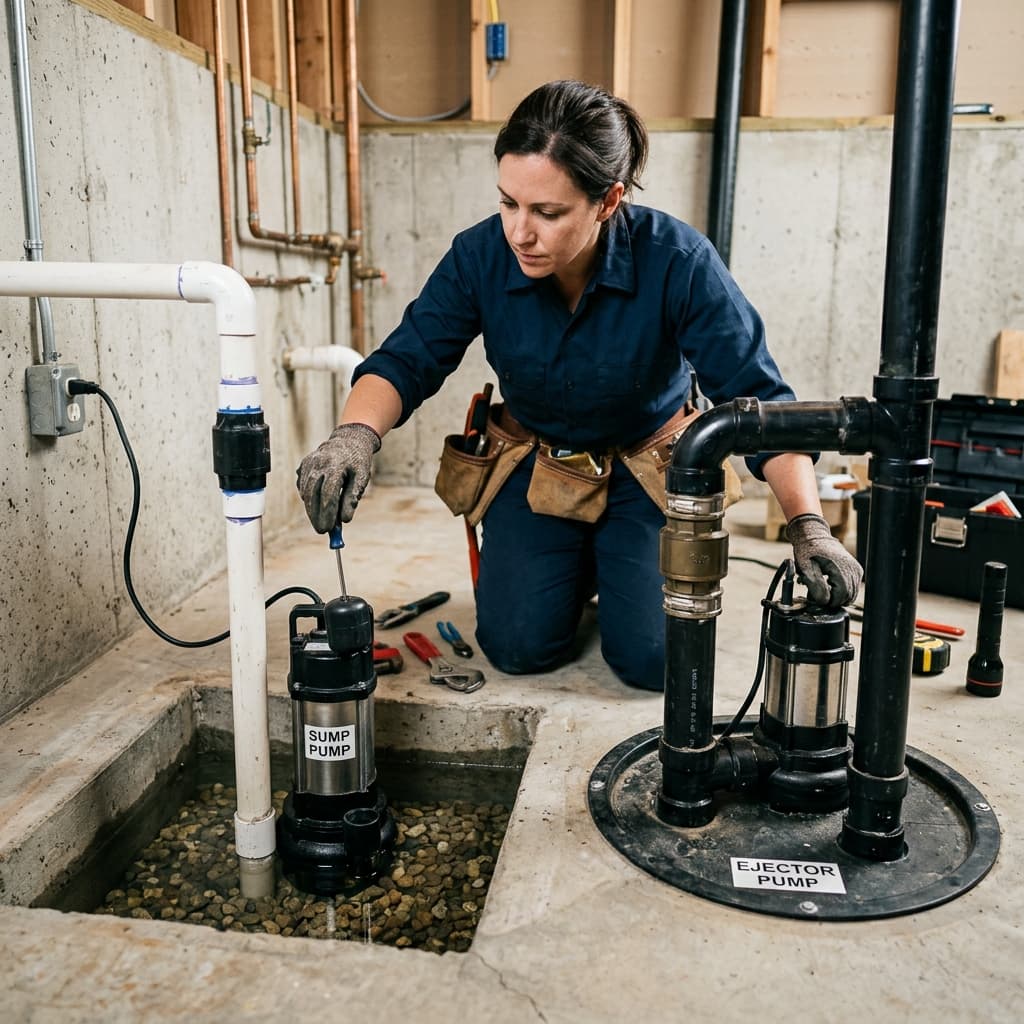
Sump Pumps remove groundwater and surface water accumulation from building basements or crawl spaces. They handle clean water only and discharge to the building's storm drainage system, surface, or municipal storm system. Ejector Pumps handle sanitary waste water from fixtures located below the main building drain's gravity line. They collect waste from toilets, sinks, showers, and other fixtures, then pump it upward to the main building drain or public sewer system.Exam Tip
The C-36 exam frequently tests your ability to distinguish when each pump type is required. Remember: sump = clean water removal, ejector = waste water pumping.CPC Code Requirements for Sump Pump Installation California
CPC Section 308.1: Sump Pit and Pumping Requirements
California Plumbing Code Section 308.1 establishes the foundation for sump pit construction and operation:
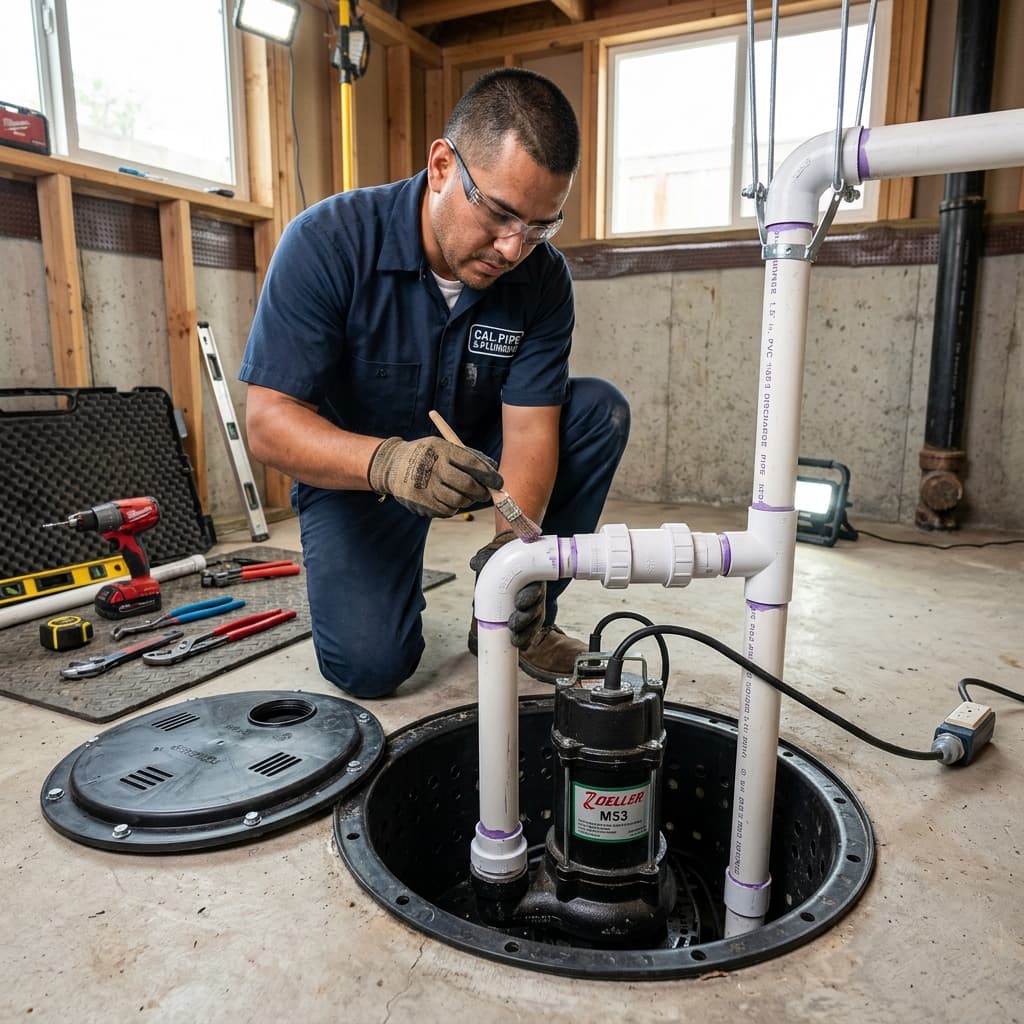
- Pit Construction: Sump pits must be watertight and constructed of concrete, metal, or plastic materials that won't deteriorate from water exposure
- Minimum Capacity: Pits must provide storage capacity for at least the volume of water that would accumulate in a 24-hour period
- Accessible Location: Pits must be accessible for cleaning, maintenance, and pump removal
- Covers Required: All sump pits must have removable, durable covers to prevent entry of foreign materials and ensure safety
CPC Chapter 7: Drainage System Design Standards
When designing sump pump discharge systems, Chapter 7 requirements apply:
- Discharge piping must be sized according to drainage and venting systems calculations
- Minimum 2-inch discharge line diameter is typical for residential sump pumps
- Discharge lines cannot connect to the sanitary drainage system
- Storm drainage systems must accommodate sump pump discharge volumes
Ejector Pump Requirements and CPC Compliance
When Ejector Pumps Are Required
Ejector pumps become necessary when:
- Fixtures Below Grade: Bathrooms, laundry rooms, or kitchens installed below the main building drain elevation
- No Gravity Drainage Available: Basements finishing projects where gravity drainage to sewer isn't possible
- Septic System Locations: Properties using septic systems where fixtures cannot drain by gravity
CPC Section 308.2: Ejector Pump System Requirements
The California Plumbing Code mandates specific ejector pump installation standards:
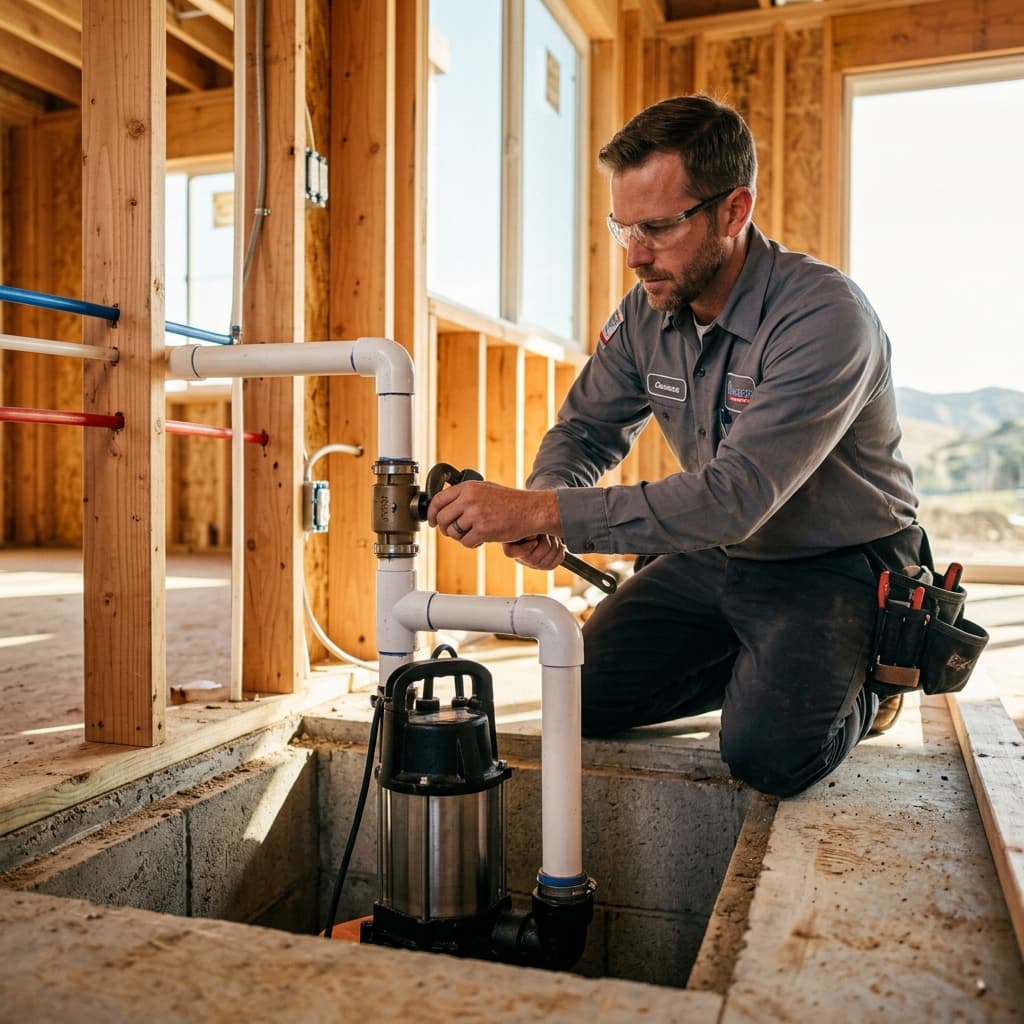
Check Valve Installation: A minimum 2-inch check valve must be installed on the discharge line immediately above the pump. This prevents backflow of sewage into the basin when the pump stops. Pump Sizing: Ejector pump capacity must exceed the maximum probable discharge from connected fixtures by at least 50%. For example:- 3 fixture units = 7.5 gallons per minute (GPM) minimum
- Pump selection should be 12+ GPM to maintain the 50% capacity margin
- Minimum 18-inch diameter basin for residential applications
- 24-inch recommended for multi-fixture installations
- Basin must be water-sealed and properly vented
Plumbing Pump Sizing Calculations
Accurate sizing prevents system failure and exam errors. Here's the calculation methodology:
Step 1: Determine Fixture Unit Load- Toilet: 4 fixture units
- Sink: 1 fixture unit
- Shower: 2 fixture units
- Laundry tub: 2 fixture units
- Example: 4 fixture units × 7.5 GPM = 30 GPM × 1.5 = 45 GPM pump minimum
- 2-inch line: up to 50 GPM
- 3-inch line: up to 100 GPM
- 4-inch line: up to 150 GPM
Discharge Piping and System Design
Discharge Line Specifications
Material Requirements:- PVC, ABS, or cast iron piping acceptable for above-grade discharge
- Must be schedule 40 minimum for PVC/ABS
- Cast iron requires hub connections with lead and oakum or approved rubber gaskets
- Minimum ¼-inch per foot slope
- Maximum slope: 45 degrees from horizontal
- Steep slopes (greater than 45°) may cause air trapping and reduced efficiency
- Discharge connects to main building drain above all other drainage connections
- Never connect to lowest portion of main drain (creates backup potential)
- Must connect at least 5 feet from the main stack vent opening for backflow prevention
Check Valve and Backflow Prevention
The check valve is non-negotiable in ejector pump systems:
CPC Requirements:- Swing or ball-type check valves acceptable
- Must be installed within 12 inches above the pump discharge
- Cannot be submerged in the pump basin
- Requires cleanout access for inspection
- Must be capable of opening with pump discharge pressure
Ventilation and Atmospheric Requirements
Basin Vent Piping
Ejector pump basins require proper venting:
CPC Section 307: Basin vent pipes must:- Connect to the main drain vent stack or individual vent
- Be minimum ¾-inch diameter for residential applications
- Rise above all connections into the basin
- Not be submerged in basin water
- Allows air entry during pump discharge
- Prevents vacuum conditions that would slow pump operation
- Vents sewer gases safely to the roof
Electrical and Safety Considerations
While primarily a mechanical exam, the C-36 includes electrical/safety coordination:
- Pumps must have ground fault circuit interrupter (GFCI) protection
- Disconnect switches required for service access
- Pump alarm systems recommended for backup/failure notification
- Basin covers must be secure to prevent accidental entrapment
Common Installation Defects and Exam Traps
Understanding what NOT to do is equally important:
| Common Error | CPC Violation | Consequence | |---|---|---| | Connecting sump discharge to sanitary sewer | Section 308.1 | System backup into living spaces | | Undersizing ejector pump | Section 308.2 | Sewage backup into basement | | Missing or improper check valve | Section 308.2 | Gravity backflow contamination | | Discharge line slope greater than 45° | Chapter 7 | Air pockets and pump cavitation | | Basin without cover | Section 308.1 | Debris/rodent entry, safety hazard | | Check valve submerged in basin | Section 308.2 | Valve malfunction and backflow |Step-by-Step Installation Compliance Checklist
Use this checklist when studying installation questions:
Pre-Installation:- [ ] Verify fixture count and calculate fixture unit load
- [ ] Determine pump GPM requirement (load × 7.5 × 1.5 factor)
- [ ] Select appropriate discharge line diameter
- [ ] Plan vent connection to main stack
- [ ] Construct watertight basin (concrete, fiberglass, or plastic)
- [ ] Position basin for accessibility and pump removal
- [ ] Install basin vent before pump placement
- [ ] Ensure minimum 24-inch diameter for multi-fixture systems
- [ ] Install pump in basin with discharge line routing
- [ ] Place check valve within 12 inches of pump discharge
- [ ] Maintain minimum ¼-inch per foot slope on discharge line
- [ ] Secure piping with appropriate hangers (18-inch maximum spacing)
- [ ] Connect discharge to main drain above all other connections
- [ ] Install cleanout at discharge connection point
- [ ] Verify basin vent is properly sized and connected
- [ ] Test pump operation before covering basin
California Plumbing Code Sump Pump Special Situations
Sump Pumps in Cellars and Crawl Spaces
CPC Section 308.3 addresses below-grade water accumulation:- Sump pits required when water accumulation is anticipated
- Pump discharge must route to surface, storm drainage, or approved location
- Cannot discharge into sanitary sewer under any circumstances
- Pit size must accommodate 24-hour water accumulation based on local hydrology
Multiple Pump Systems
Larger buildings may require dual sump or ejector pump systems:
- Each pump sized to handle full load independently
- Check valves required on each discharge line
- Alternating float switches recommended to balance pump wear
- Shared basin acceptable if each pump has individual discharge line
Exam Preparation Strategies
Part 4 Drainage System Focus Areas
The C-36 exam emphasizes:
- Fixture Unit Calculations: Converting fixture loads to GPM requirements (25% of pump questions)
- Code Reference Accuracy: Knowing specific CPC section numbers and requirements (35% of questions)
- System Diagram Interpretation: Identifying code violations in illustrated installations (25% of questions)
- Sizing and Material Selection: Choosing appropriate pump types and piping sizes (15% of questions)
Practice Question Example
Question: A basement renovation adds 2 toilets, 1 sink, and 1 shower below the main drain. What is the minimum ejector pump capacity required? Solution:- 2 toilets = 8 fixture units
- 1 sink = 1 fixture unit
- 1 shower = 2 fixture units
- Total = 11 fixture units
- 11 × 7.5 GPM = 82.5 GPM
- 82.5 × 1.5 (safety factor) = 123.75 GPM minimum (round to 125 GPM)
Study Resources
Master pump systems by:- Reviewing CPC Sections 307, 308, and Chapter 7 in detail
- Practicing fixture unit conversion problems
- Sketching system diagrams with proper vent and check valve placement
- Taking timed practice exams focusing on drainage system questions
Conclusion
Understanding sump pump installation California requirements and ejector pump requirements CPC standards is essential for C-36 exam success and professional plumbing practice. The California Plumbing Code provides clear guidance through Sections 307-308 and Chapter 7, establishing specific standards for pit construction, pump sizing, discharge routing, and backflow prevention. Key success factors include:- Accurate fixture unit to GPM calculations with proper safety factors
- Proper basin construction, venting, and check valve installation
- Discharge line sizing and slope compliance
- Complete separation between sump and sanitary drainage systems