

# Storm Drain Sizing and Roof Drainage System Design: CPC Section 422 Calculations for C-36 Success
Storm drain sizing calculations and roof drainage system design are critical components of the California C-36 plumbing exam. Understanding CPC Section 422 storm drainage requirements ensures you can accurately size drainage systems and pass the challenging drainage calculations on Part 2 of the examination. This comprehensive guide walks you through the essential formulas, code requirements, and exam strategies you need to master this crucial topic.Understanding CPC Section 422: Storm Drainage Fundamentals
CPC Section 422 establishes the minimum requirements for storm drainage systems throughout California. This section is foundational for any C-36 candidate because it directly addresses storm drain sizing calculations that appear repeatedly on the licensing exam.What Is Storm Drainage?
Storm drainage systems collect and convey water from roofs, yards, and other surfaces away from buildings and properties. Unlike sanitary drainage systems that handle wastewater, storm drains manage rainwater exclusively. The California Plumbing Code distinguishes between these systems to ensure proper environmental protection and prevent water damage to structures.
Key Definitions in CPC Section 422
Drainage Area: The total horizontal area from which water flows to a drain, typically measured in square feet. Rainfall Intensity: The rate at which rain falls, measured in inches per hour. California varies significantly by region, requiring location-specific calculations. Drainage Fixture Unit (DFU): While primarily used for sanitary systems, understanding fixture units helps contextually understand drainage load concepts. Leader (or Downspout): The vertical or near-vertical pipe that conveys water from roof drains to horizontal storm drains or ground.The Rainfall Formula: Core of CPC Section 422
The fundamental calculation for storm drain sizing uses the following formula established in CPC Section 422:
Drain Size = Drainage Area × Rainfall Rate / Drain CapacityOr more commonly presented as:
Q = A × I Where:- Q = Required drainage capacity (gallons per minute or cubic inches per second)
- A = Drainage area (square feet)
- I = Rainfall intensity (inches per hour)
Converting Between Measurement Units
C-36 exam questions often require converting between different units. Here's the essential conversion:
- 1 inch of rainfall on 1 square foot = 0.623 gallons
- For practical calculations: multiply square footage by rainfall rate (in inches/hour) by 0.623 to get gallons per minute
- Drainage area: 2,000 square feet
- Rainfall intensity: 1 inch per hour
- Required drainage: 2,000 × 1 × 0.623 = 1,246 gallons per minute
Determining Rainfall Intensity for Your Region
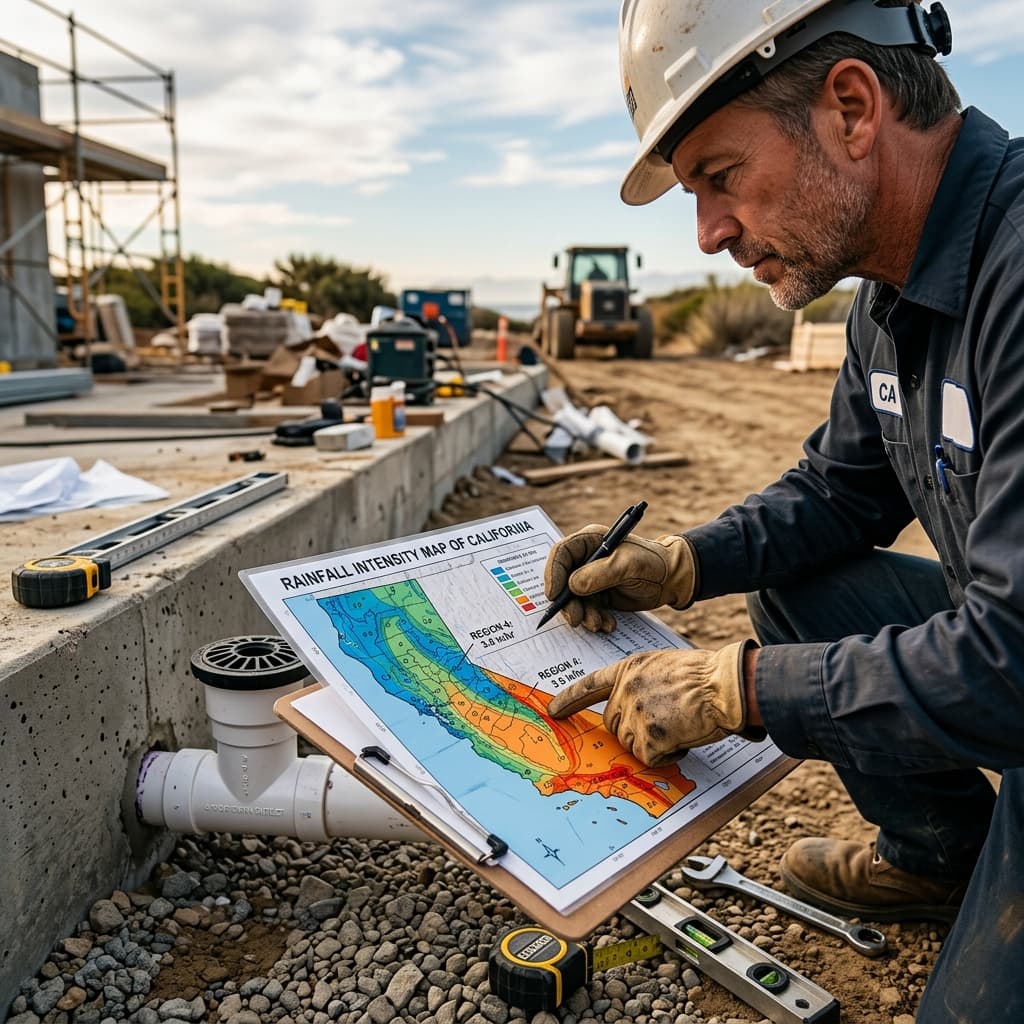
California's rainfall intensity varies dramatically across regions. CPC Section 422 requires that drainage systems be designed based on the locality's 100-year storm intensity data.
Regional Rainfall Rates
- Northern California coastal areas: 2.0-3.0 inches per hour
- Central Valley: 1.0-1.5 inches per hour
- Southern California coastal: 1.5-2.0 inches per hour
- High elevation mountain areas: 2.5-4.0 inches per hour
- Desert regions: 0.5-1.0 inches per hour
Roof Drainage Requirements and Calculations
Measuring Drainage Area for Roof Systems
Accurate measurement is fundamental to proper sizing. CPC Section 422.1 requires that drainage area calculations include the projected horizontal area of the roof surface, not the actual sloped area.
Important Distinction: Use horizontal projection, not sloped surface area. A roof sloped at 45 degrees increases actual surface area by 41% compared to horizontal projection—but your drain sizing must use the smaller horizontal figure.Example: Calculating Roof Drainage Area
Consider a rectangular building:- Length: 80 feet
- Width: 60 feet
- Roof pitch: 6:12
- Horizontal projection area = 80 × 60 = 4,800 square feet
- Note: Pitch doesn't affect this calculation
Leader (Downspout) Sizing
Once you determine total drainage requirements, you must size individual leaders and gutters. CPC Section 422 Table 422.1 provides maximum drainage areas for various leader diameters based on rainfall intensity.
Leader Sizing Table (1-inch rainfall intensity):- 2-inch diameter leader: 744 square feet maximum
- 3-inch diameter leader: 1,676 square feet maximum
- 4-inch diameter leader: 2,980 square feet maximum
- 5-inch diameter leader: 4,662 square feet maximum
- 6-inch diameter leader: 6,702 square feet maximum
Gutter Sizing and Selection
Types of Gutters
CPC Section 422 addresses both gutters (horizontal elements collecting water) and leaders (vertical conveyance).
Common Gutter Sizes:- K-style gutters: typically 5-6 inches
- Half-round gutters: 4-8 inches
- Box gutters: custom sizing
- Internal gutters: 6-12 inches or larger
Gutter Capacity Calculations
Like leaders, gutters have maximum drainage area capacities based on size and rainfall intensity. Undersized gutters cause overflow, water damage, and code violations.
Sample Gutter Capacity (1-inch rainfall):- 4-inch K-style: 600 square feet maximum
- 5-inch K-style: 1,040 square feet maximum
- 6-inch K-style: 1,496 square feet maximum
CPC Section 422: Complete System Design Requirements
Storm Drain Sizing for Underground Systems
When roof water enters underground storm drains, CPC Section 422 applies additional requirements:
CPC Section 422.2: Underground storm drains must be sized to convey the calculated storm water flow. Table 422.2 provides capacity information for various pipe materials and diameters. Storm Drain Pipe Sizing (1-inch rainfall intensity, typical):- 3-inch PVC: 480 square feet maximum
- 4-inch PVC: 853 square feet maximum
- 6-inch PVC: 1,916 square feet maximum
- 8-inch PVC: 3,408 square feet maximum
Slope and Velocity Requirements
CPC Section 422 requires minimum slopes to maintain self-cleansing velocity:
Minimum Slopes:- 1/4 inch drop per foot for pipes up to 6 inches diameter
- 1/8 inch drop per foot for pipes larger than 6 inches
Practical Exam Problem: Complete Storm Drainage System
Let's work through a comprehensive problem representative of C-36 Part 2 exams:
Scenario: A commercial building has a flat roof measuring 120 feet long by 100 feet wide. The project is located in a California region with 1.5 inches per hour rainfall intensity. The roof drains to gutters, then leaders, then underground storm drains. Calculate:- Total drainage area
- Minimum gutter size needed
- Required leader diameter
- Underground storm drain pipe size
- Horizontal projection: 120 × 100 = 12,000 square feet
- Q = 12,000 × 1.5 × 0.623 = 11,207 gallons per minute
- Adjust table values: 1,496 (6-inch capacity at 1" rainfall) ÷ 1.5 = 997 square feet per gutter
- Required gutter coverage: 12,000 ÷ 997 = 12 gutters (or 6 gutters if bidirectional flow)
- Answer: Multiple 6-inch gutters required
- Adjust table values: 6,702 (6-inch leader at 1" rainfall) ÷ 1.5 = 4,468 square feet per leader
- Required leaders: 12,000 ÷ 4,468 = 3 leaders
- Answer: Three 6-inch diameter leaders minimum
- Adjust pipe capacity: 3,408 (8-inch pipe at 1" rainfall) ÷ 1.5 = 2,272 square feet
- Required pipes: 12,000 ÷ 2,272 = 5.3
- Answer: 10-inch PVC storm drain (or multiple 8-inch lines)
Common Exam Mistakes to Avoid
Mistake 1: Using Sloped Area Instead of Horizontal Projection
Always use horizontal projection measurements. This is a frequent error that produces oversized drainage systems.Mistake 2: Forgetting Rainfall Intensity Adjustments
Table values assume 1-inch per hour rainfall. Failing to adjust for actual regional rainfall intensity produces incorrect answers.Mistake 3: Not Accounting for Multiple Drainage Points
Large roofs require multiple leaders and gutters. Calculate total area, then divide by individual component capacity.Mistake 4: Confusing Leader and Pipe Capacity Tables
Different tables apply to leaders versus underground pipes. Check the CPC table number carefully.Mistake 5: Ignoring Slope Requirements
Undersized slopes violate CPC Section 422 and create system failures. Always specify proper slope in answers.Study Tips for Storm Drainage Success
Create a Reference Sheet
Develop a personal study card with the rainfall formula, unit conversions, and the three primary capacity tables. Reference this repeatedly until memorization occurs naturally.Practice Unit Conversions
Spend time converting between square feet, gallons per minute, cubic inches, and drainage area. Exam calculators don't convert units—you must understand the math.Understand the "Why"
Don't just memorize table values. Understand that larger rainfall intensities require larger pipes. This conceptual foundation helps you catch calculation errors.Work Regional Problems
Practice problems from various California regions with different rainfall intensities. This builds flexibility and confidence on diverse exam questions.Review Actual Code References
Read CPC Sections 422.1 through 422.4 directly. The actual code language appears in some exam questions, requiring specific knowledge of requirements.Related Drainage Topics for Comprehensive Exam Prep
For complete Part 2 success, connect storm drainage to related systems:
- Sanitary Drainage System Sizing and DFU Calculations
- Trap Installation Requirements and CPC Section 408
- Grading and Slope Requirements for Drainage Systems
Final Exam Strategy: Storm Drainage Mastery
Master storm drain sizing by following this progression:
- Week 1: Learn the rainfall formula and unit conversions until you can calculate without references
- Week 2: Memorize key table values and practice adjusting for various rainfall intensities
- Week 3: Work 20-30 complete system design problems
- Week 4: Take full-length practice exams focusing on drainage sections
- Final Review: Review your personal study card daily for one week before the exam
Conclusion
CPC Section 422 storm drainage calculations form a fundamental portion of the California C-36 plumbing exam Part 2. By mastering the rainfall formula, understanding capacity tables, and practicing real-world sizing scenarios, you'll develop the competence needed to answer exam questions confidently.The key to success is moving beyond memorization to true understanding. Know why you're adjusting table values for rainfall intensity. Understand the relationship between drainage area and required pipe size. Recognize common errors and avoid them systematically.
Use this guide as your foundation, supplement with the actual CPC code sections, and commit significant study time to practice problems. With focused preparation on storm drain sizing calculations, you'll approach the C-36 exam with the confidence that leads to passing success.