
# CPC Section 422: Septic Systems and Alternative Sewage Disposal for C-36 Exam
Understanding CPC Section 422 requirements for septic system installation california and alternative sewage disposal is essential for passing your C-36 plumbing license exam. This comprehensive section establishes minimum standards for on-site sewage treatment systems that serve properties where conventional municipal sewer connections aren't available. Whether you're studying for your contractor exam or preparing to install systems, mastering these requirements protects public health and ensures code compliance.Overview of CPC Section 422
California Plumbing Code Section 422 addresses on-site sewage treatment systems commonly known as septic systems. This section applies to individual dwelling units, multiple residential units, and non-residential facilities that generate domestic wastewater without access to a public sewer system.Scope and Application
CPC Section 422 establishes requirements for:
- Design and sizing of septic tanks
- Soil evaluation and percolation testing
- Drain field installation and spacing
- System components and materials
- Distance requirements from water sources and property lines
- Operation and maintenance standards
- Alternative treatment systems and innovative technologies
Key Requirements for Septic Tank Design
Tank Sizing Standards
CPC Section 422.2 establishes minimum septic tank capacities based on fixture units and occupancy:- Residential dwellings: Minimum 1,000 gallons for 2-bedroom homes
- Additional bedrooms: Add 150 gallons per bedroom
- Multiple dwelling units: Calculate based on total occupant load (150 gallons per person per day)
- Non-residential facilities: Size based on daily flow calculations specific to the use type
Tank Construction Materials
Approved materials for septic tank construction include:
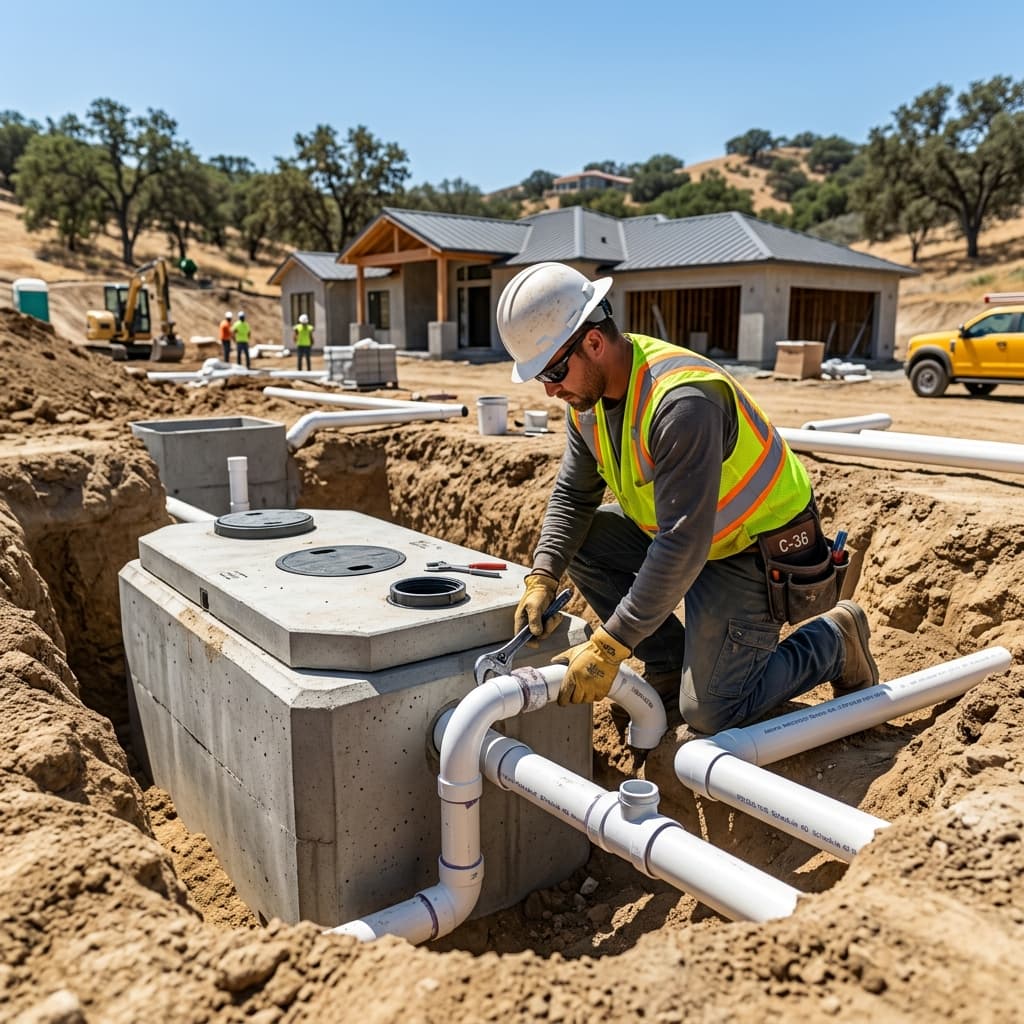
- Concrete: Most common; monolithic or precast
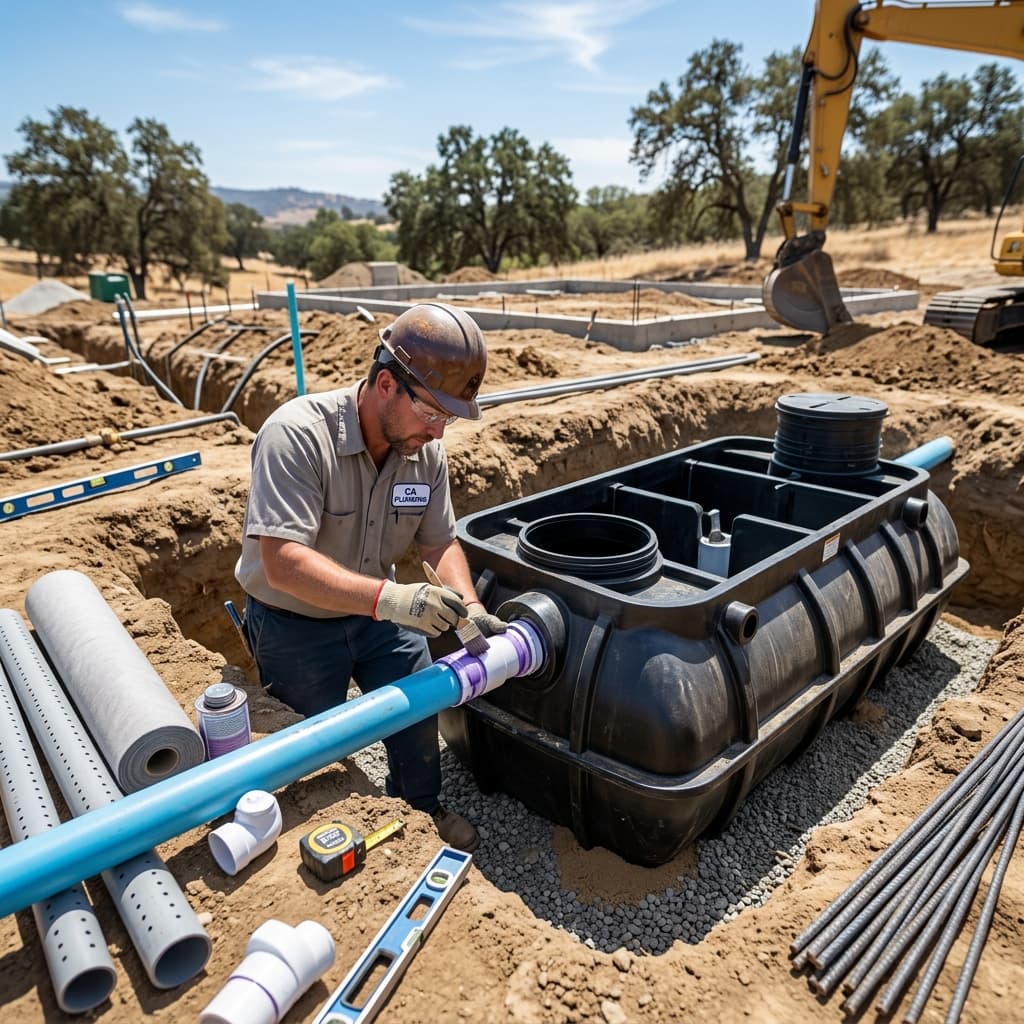
- Fiberglass: Lighter weight alternative; corrosion-resistant
- Polyethylene: Acceptable for appropriate soil conditions
- Steel: Must be properly coated to prevent corrosion
- Access ports to the settling and filtering compartments
- Inlet and outlet baffles
- Adequate structural integrity to resist soil and hydrostatic loads
- Watertight construction to prevent infiltration and leakage
Soil Evaluation and Percolation Testing
Importance of Soil Testing
Before installing any septic system, you must evaluate soil characteristics. CPC Section 422.1 requires professional soil evaluation to determine:- Soil type and composition
- Percolation rate (hydraulic conductivity)
- Seasonal groundwater depth
- Soil stability and bearing capacity
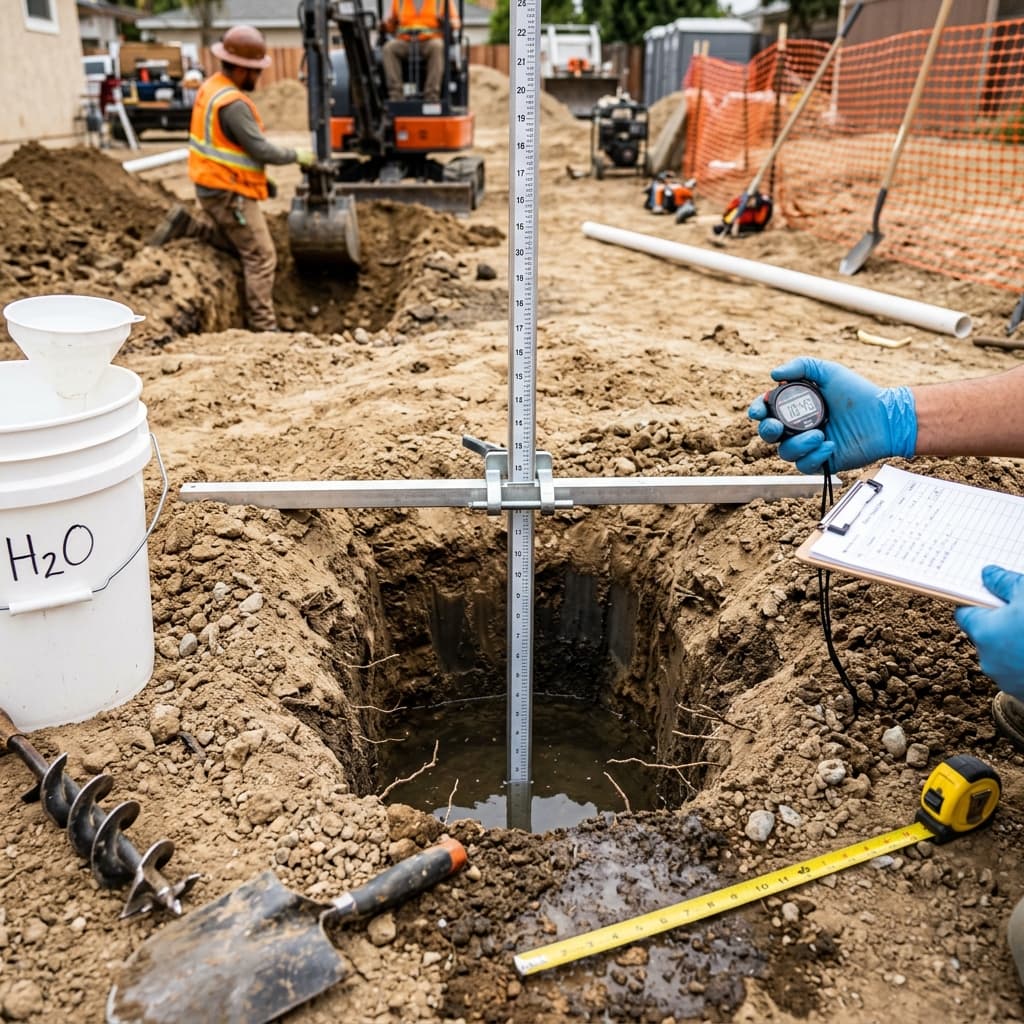
Percolation Test Procedures
The percolation test measures how quickly soil absorbs water, expressed in minutes per inch. Standard procedures require:
- Test pit depth: Equal to the proposed drain field depth (typically 18-36 inches)
- Pre-saturation: Soak the test pit for 24 hours
- Measurement intervals: Record water drop every 10 minutes over 1 hour
- Multiple locations: Test multiple areas to account for soil variation
- Professional documentation: Licensed environmental health specialist or engineer conducts testing
Soil Absorption Area Calculations
The required drain field area is calculated using the formula:
Required Area = Daily Flow ÷ Percolation Rate For example:- 400 gallons daily flow ÷ 10 minutes per inch = 40 square feet minimum absorption area
Drain Field Design and Installation
Drain Field Layout
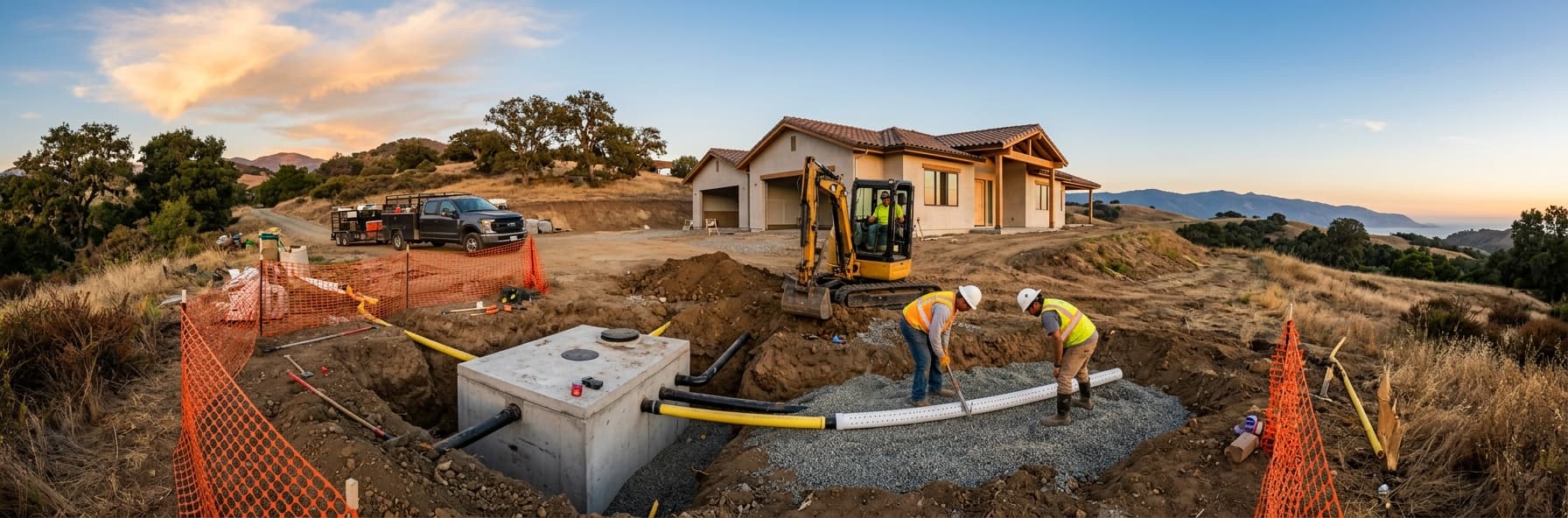
CPC Section 422.3 specifies drain field installation requirements:- Depth: Minimum 12 inches below grade to maximum 36 inches
- Width: Minimum 3 feet for distribution lines
- Spacing: Minimum 6 feet between parallel trenches or absorption beds
- Slope: Uniform grade of 2-4% for distribution lines
- Separation from structures: Minimum 10 feet from building foundations
Distribution System Components
The drain field typically includes:
- Distribution lines: Perforated pipe (schedule 40 PVC) distributing effluent
- Aggregate media:
- Final cover: Minimum 12 inches of soil over aggregate
- Filter fabric: Prevents soil from clogging aggregate interstices
Absorption Media Specifications
Approved absorption media include:
- Soil absorption trenches: Traditional method using native soil
- Sand filters: Engineered sand medium for difficult soils
- Drip irrigation systems: Low-pressure distribution for sensitive areas
- Constructed wetlands: Advanced treatment for specific applications
Distance and Setback Requirements
Critical Distances from Water Sources
CPC Section 422.4 establishes minimum separation distances to protect drinking water:| Distance Requirement | Minimum Distance | |----------------------|-----------------| | From wells | 50 feet minimum | | From surface water | 100 feet minimum | | From property line | 5 feet minimum | | From building foundation | 10 feet minimum | | From pools/spas | 10 feet minimum |
These distances prevent pathogenic contamination of water supplies and must be measured horizontally from the edge of the absorption area.
Slope and Groundwater Considerations
Additional setback adjustments may be required when:
- Sloping terrain: Increase distances if drain field is downslope from water source
- High groundwater: Modify system design or increase separation distances
- Shallow bedrock: May restrict system placement entirely
Alternative Sewage Disposal Systems
Aerobic Treatment Units (ATUs)
CPC Section 422.5 permits aerobic treatment systems that mechanically aerate wastewater:- Achieves higher treatment efficiency than traditional septic tanks
- Reduces organic and nitrogen content before discharge
- Allows reduced drain field sizes in some situations
- Requires electrical power and regular maintenance
- Must be installed and maintained by certified service providers
Composting Toilet Systems
Alternative to water-based systems for certain applications:
- Diverts human waste into composting chambers
- Reduces wastewater volume requiring disposal
- Applicable for secondary dwellings or remote locations
- Must comply with local health department requirements
- Requires regular monitoring and maintenance
Drip Irrigation and Subsurface Systems
Advanced distribution methods for sensitive areas:
- Drip irrigation: Low-pressure distribution through emitter lines
- Mound systems: Above-grade absorption areas in poor soil conditions
- Recirculating sand filters: Multi-stage treatment before dispersal
- Constructed wetlands: Biological treatment using aquatic plants
Inspection and Permitting Requirements
Initial Inspections
CPC Section 422.6 requires inspections at multiple stages:- Soil evaluation: Before system design approval
- System layout: Verification of setback distances and design plans
- Tank installation: Before backfilling, verify integrity and baffles
- Drain field construction: Before final cover, verify trenching and media installation
- Pressure testing: Leakage tests for tanks and lines (typically 3 PSI for 15 minutes)
Operating Permits and Maintenance
Systems must obtain operation permits that specify:
- Authorized system capacity
- Maintenance schedule requirements
- Pumping frequency (typically every 3-5 years)
- Monitoring and testing protocols
- Prohibited waste disposal (grease, non-biodegradable materials)
Common C-36 Exam Questions on Section 422
Understanding these typical exam scenarios will improve your performance:
Scenario 1: Tank Sizing "A 4-bedroom residential dwelling requires a septic tank. What is the minimum capacity?"- Base capacity: 1,000 gallons (for 2 bedrooms)
- Additional: 150 gallons × 2 bedrooms = 300 gallons
- Answer: 1,300 gallons minimum
- CPC Section 422.4 requires minimum 50 feet
- Answer: No, insufficient separation; system must be relocated
- Required Area = 600 ÷ 15 = 40 square feet
- Answer: 40 square feet minimum
Best Practices for System Installation
Planning and Design Phase
- Conduct professional soil evaluation early in project planning
- Verify setback distances and property constraints before design
- Work with qualified hydraulic designers for complex sites
- Obtain pre-approval of system design from health department
Installation Phase
- Use licensed and trained installation contractors
- Follow manufacturer specifications for all system components
- Document all inspections with photographs and signed inspection reports
- Maintain detailed records of materials, dimensions, and test results
Operation and Maintenance
- Schedule regular tank pumping (typically every 3-5 years)
- Use septic-safe cleaning products
- Avoid pouring grease, chemicals, or non-biodegradable materials
- Monitor drain field performance for surface ponding or odors
- Maintain vegetation over drain field for erosion control
Key Takeaways for C-36 Exam Success
Master these essential points from CPC Section 422:
- Tank sizing formulas: Base capacity plus additional gallons per bedroom/occupant
- Soil evaluation requirements: Percolation testing and professional documentation mandatory
- Setback distances: Minimum 50 feet from wells, 100 feet from surface water
- Design calculations: Daily flow divided by percolation rate equals absorption area
- Inspection requirements: Multiple stages from soil evaluation through final cover
- Alternative systems: ATUs, composting toilets, and drip irrigation as approved options
- Maintenance standards: Pumping schedules and operational permits required
Conclusion
CPC Section 422 establishes comprehensive standards for on-site sewage treatment systems protecting California's water resources and public health. For C-36 plumbing license candidates, proficiency with septic system design calculations, distance requirements, and inspection protocols is essential for exam success. The california plumbing code drainage requirements demand that plumbing contractors understand both traditional and alternative sewage disposal methods.Review sample questions, practice distance calculations, and study inspection checklists as part of your preparation strategy. Consider supplementing this guide with official CPC Section 422 text and local health department guidelines for your jurisdiction, as some counties implement stricter standards than the state minimum.
Your commitment to mastering these regulations ensures you'll install safe, compliant systems that protect both your clients and California's groundwater resources.