
# Residential Greywater System Design and Code Compliance for C-36 Exam Success
Residential greywater system installation california has become increasingly important for both new construction and retrofit projects across the state. As a C-36 plumbing license candidate, understanding greywater system design requirements under the California Plumbing Code is essential to passing Part 2: Water Supply and Distribution. This comprehensive guide covers everything you need to know about CPC Section 422 greywater compliance, design standards, and examination preparation.
Understanding Greywater Systems in California
Greywater represents wastewater from household sources excluding toilet discharge (blackwater). California plumbing code drainage standards recognize greywater as a valuable resource for landscape irrigation, addressing both water conservation and environmental sustainability goals.
What Qualifies as Greywater?
Under CPC Section 422.1, greywater includes wastewater from:- Bathroom sinks and showers
- Bathtubs
- Washing machines
- Hot water heaters
- Laundry equipment
Prohibited Greywater Sources
The california plumbing code drainage standards explicitly prohibit certain water sources from entering greywater systems:- Kitchen sink wastewater (contains grease and food particles)
- Dishwasher discharge
- Toilet water
- Wastewater from areas with hazardous chemicals
CPC Section 422: The Foundation of Greywater Compliance
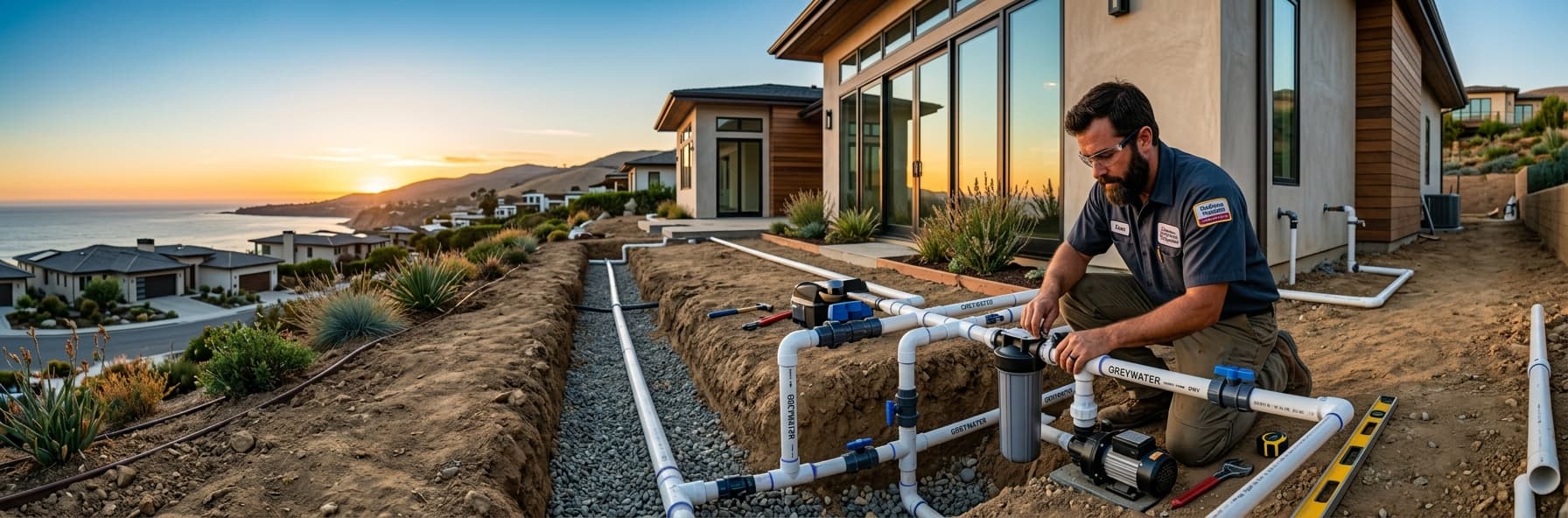
CPC Section 422 is the primary regulation governing residential greywater system installation california. This section establishes minimum standards for system design, installation, operation, and maintenance.
CPC Section 422.1 - System Definition and Scope
CPC Section 422.1 defines greywater systems as constructed, subsurface irrigation systems designed to distribute household greywater to the soil for landscape irrigation. The code specifically addresses single-family and duplex residential applications.
Key requirements under this section:- Systems must be designed by a licensed plumber or professional engineer
- Installation must comply with all specified technical standards
- Property owners must receive operation and maintenance documentation
- Systems require local approval before installation
CPC Section 422.2 - General Design Requirements
This section establishes fundamental design principles for all residential greywater systems:
Subsurface Distribution: Greywater must be distributed below ground surface within 6 inches minimum depth. Surface application is prohibited under california plumbing code drainage requirements to minimize public health risks. Landscape Irrigation Purpose: Systems must be designed exclusively for landscape irrigation of trees, shrubs, ornamental plants, and ground covers—not for vegetable gardens or food crops without additional treatment. Filtration Requirements: All greywater systems must include filtration mechanisms to remove solids and prevent system clogging. Minimum filtration specifications include:- Lint filters for washing machine discharge
- Hair and lint traps for shower/bathtub connections
- Sediment filters (100 microns minimum)
System Component Requirements
Surge Tanks and Storage
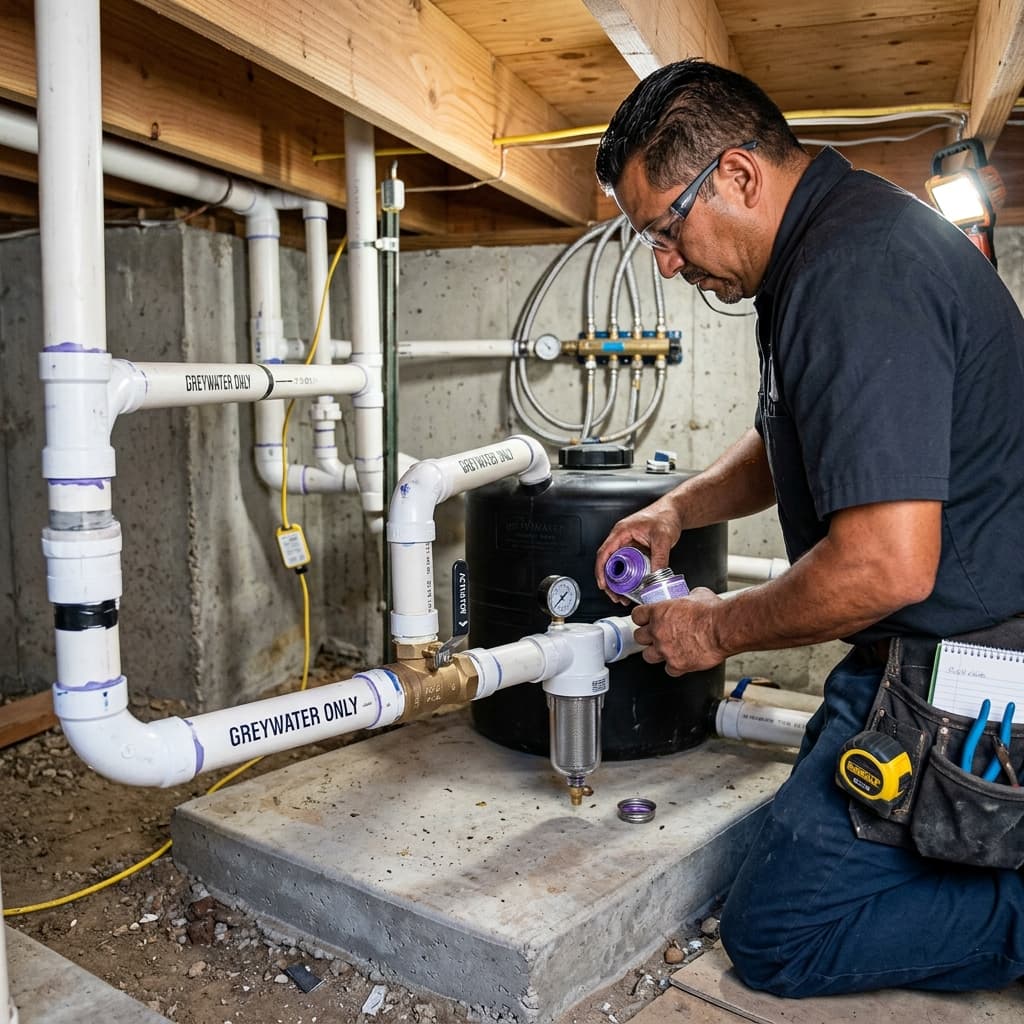
CPC Section 422.3 addresses surge tank requirements for greywater systems. Surge tanks serve critical functions:
- Equalize flow variations
- Allow settling of solids
- Prevent backflow into building drains
- Facilitate maintenance access
- Minimum 50-gallon capacity for typical residential applications
- 75-gallon minimum if serving washing machine only
- Tank must include cleanouts for maintenance
- Vented to prevent pressure buildup
- Access openings minimum 18 inches in smallest dimension
Distribution System Components
#### Piping Materials and Sizing
California plumbing code drainage standards specify acceptable materials for greywater piping:- Polyvinyl chloride (PVC)
- Polyethylene (PE)
- Polypropylene (PP)
- Copper tubing
- Cast iron or galvanized steel (for surface portions)
#### Drip Irrigation and Subsurface Distribution
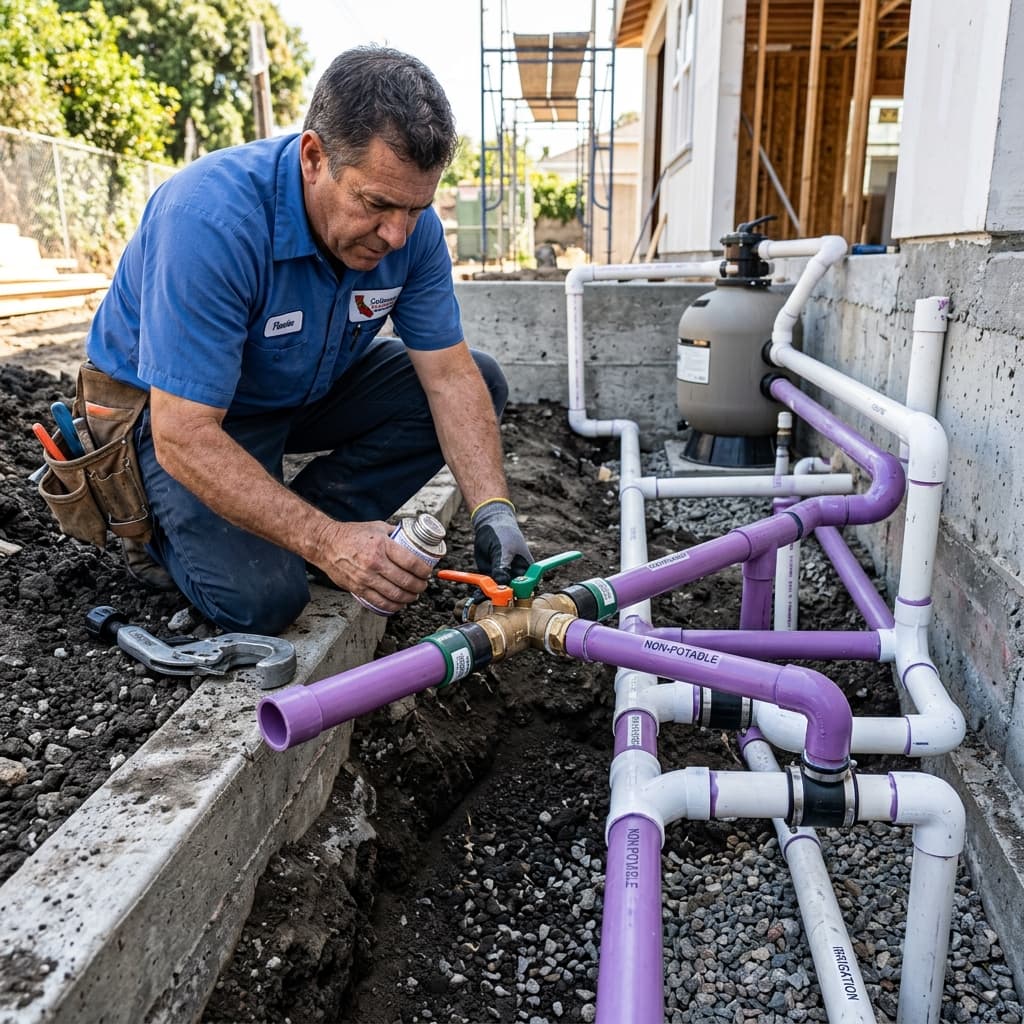
CPC Section 422.4 requires drip irrigation systems for subsurface greywater distribution. Specifications include:
- Drip emitters spaced according to soil type (typically 12-24 inches)
- Distribution lines buried 6-12 inches deep
- Minimum 2% slope for proper drainage (1% minimum for level terrain)
- End caps to prevent backflow and siphoning
- Valve isolation for individual zones
Filtration and Treatment Components
CPC Section 422.2(c) mandates specific filtration components:
Primary Filtration (Surge Tank):- Suspended solids must settle
- Minimum 30-minute settling time in surge tank
- Particle size reduction to 500 microns maximum
- Spin-down or cartridge filters (100-400 microns)
- Sand filters for larger applications
- Automatic or manual cleaning mechanisms
- Ultraviolet (UV) disinfection systems
- Constructed wetlands for additional treatment
- Not required for subsurface irrigation but may be required by local agencies
Safety Codes and Health Considerations
Backflow Prevention
CPC Section 422.2(d) requires comprehensive backflow prevention mechanisms to protect potable water supplies:
- Surge tank must be elevated above building water supply connections
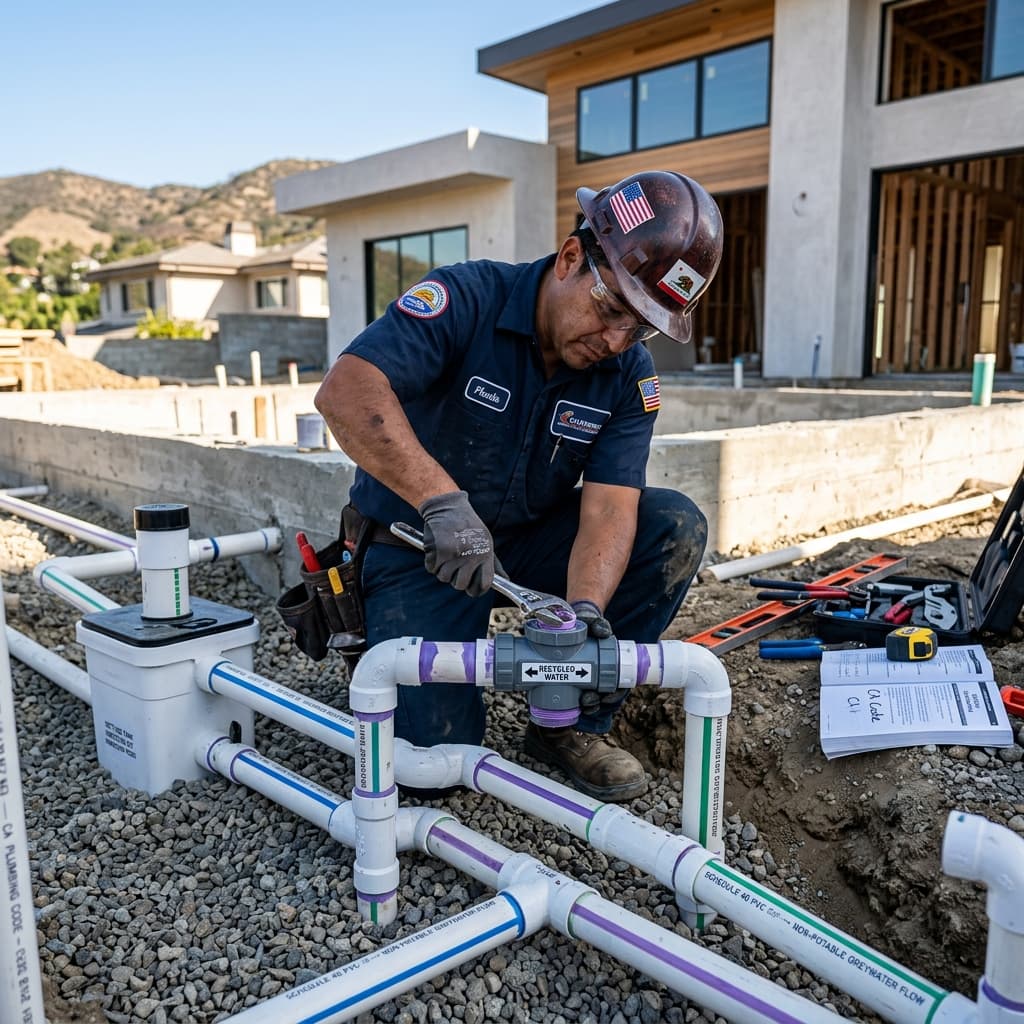
- No direct cross-connections permitted between potable and greywater systems
- Air gaps minimum 1 inch vertically
- Check valves on discharge lines from building fixtures
Health and Sanitation Requirements
Greywater systems present potential health hazards if improperly designed or maintained:
Application Restrictions:- No greywater application to food crops (except fruit trees under specific conditions)
- No public access to drip lines or distribution areas
- Minimum 10-foot separation from wells and water sources
- Minimum 50-foot separation from food crop plants (vegetables)
- Subsurface distribution prevents mosquito breeding
- Surge tank covers prevent vector access
- All vents include screens to prevent insect entry
- Proper maintenance reduces pathogen survival
Accessibility and Maintenance
CPC Section 422.2(e) requires accessible components for maintenance operations:
- Surge tank cleanouts minimum 18 inches diameter
- Filter access for cleaning and replacement
- Drain valves at low points of distribution system
- Isolation valves for individual zones
- Clear access paths to all mechanical components
Operation and Maintenance Documentation
Owner Manuals and Instructions
California plumbing code drainage standards require comprehensive documentation for property owners:
Required Documentation Must Include:- System schematic diagram showing all components
- Operating procedures and seasonal adjustments
- Maintenance schedule and procedures
- Filter cleaning/replacement intervals
- Component warranties and manufacturer information
- Emergency procedures for system failures
- Contact information for licensed plumber maintenance
Maintenance Schedules
Proper maintenance prevents system failures and ensures code compliance:
| Component | Maintenance Task | Frequency | |-----------|------------------|-----------| | Surge Tank | Remove accumulated solids | Quarterly to semi-annually | | Filters | Clean/inspect | Monthly | | Distribution Lines | Check for leaks/clogs | Quarterly | | Soil Infiltration | Assess plant health | Monthly | | Check Valves | Test functionality | Annually |
Local Approval and Permitting Process
Design Submittal Requirements
Before installation begins, C-36 license holders must understand local approval processes:
Required Design Documentation:- System location plan showing property boundaries
- Greywater source identification
- Surge tank specifications and location
- Distribution system layout with elevation contours
- Soil infiltration test results (percolation test)
- Signed statement of water conservation benefit
- Contractor qualifications documentation
Soil and Site Evaluation
Successful greywater system design requires proper site assessment:
Percolation Testing (CPC Section 422.3):- Measures soil infiltration rate
- Tests conducted minimum 12 inches below finished grade
- Minimum three test holes in distribution area
- Results determine drip line spacing and system capacity
- Sandy soil: 6+ inches/hour percolation (smaller coverage area)
- Loamy soil: 2-6 inches/hour (moderate coverage)
- Clay soil: Less than 2 inches/hour (requires special design or alternative systems)
Common Code Violations and Exam Pitfalls
Understanding frequent mistakes helps C-36 candidates succeed:
Design Violations
Violation: Attempting surface application of greywater Code Requirement: CPC Section 422.1 mandates subsurface distribution minimum 6 inches below grade Consequence: System rejection; health code violation Violation: Connecting kitchen sink or dishwasher to greywater system Code Requirement: CPC Section 422.1 explicitly prohibits food preparation area wastewater Consequence: System failure; water quality degradation; code enforcement action Violation: Inadequate filtration or surge tank capacity Code Requirement: CPC Section 422.2(c) requires specific filtration specifications Consequence: System clogging; potential backup into building; maintenance issuesInstallation Violations
Violation: Improper backflow prevention allowing cross-contamination Code Requirement: CPC Section 422.2(d) requires specific backflow prevention design Consequence: Potable water contamination risk; immediate shutdown order Violation: Greywater piping not clearly marked Code Requirement: CPC Section 422.2 requires permanent "GREYWATER" labeling Consequence: Code violation; future confusion during maintenance Violation: Inadequate surge tank access or cleanout sizing Code Requirement: CPC Section 422.3 specifies minimum access opening dimensions Consequence: Inability to perform required maintenance; system failureC-36 Exam Preparation Strategies
Key Concepts to Master
- CPC Section 422 Requirements: Thoroughly understand all subsections, particularly design and safety provisions
- System Component Functions: Know the purpose and specifications of each component
- Code References: Practice citing specific code sections for design requirements
- Calculation Scenarios: Be prepared for questions requiring surge tank sizing or distribution area calculations
Practice Exam Questions
Sample Question 1: A single-family residential property owner wants to install a greywater system. Which water source would be prohibited from the system under CPC Section 422.1?- A) Shower and bathtub water
- B) Washing machine discharge
- C) Kitchen sink and dishwasher wastewater
- D) Bathroom sink water
- A) 50 gallons
- B) 75 gallons
- C) 100 gallons
- D) 150 gallons
Additional Resources for C-36 Success
To complement this guide on greywater system installation california, explore related topics:
- California Plumbing Code Water Supply Fundamentals
- Backflow Prevention Devices and Testing Requirements
- Residential Water Distribution System Design Standards
Conclusion
Mastering residential greywater system design and CPC Section 422 compliance is essential for C-36 license examination success. Understanding system components, design requirements, safety codes and regulations, and installation procedures provides the foundation for passing Part 2: Water Supply and Distribution.
Remember that california plumbing code drainage standards exist to protect public health and water resources. When designing and installing greywater systems, approach each project with attention to detail and commitment to code compliance. This mindset will serve you well on the examination and throughout your plumbing career.
Success on the C-36 exam requires mastery of both broad code concepts and specific technical requirements. Dedicate time to understanding why CPC Section 422 requirements exist, not just memorizing specifications. This deeper comprehension translates to examination success and the ability to design compliant systems in professional practice.