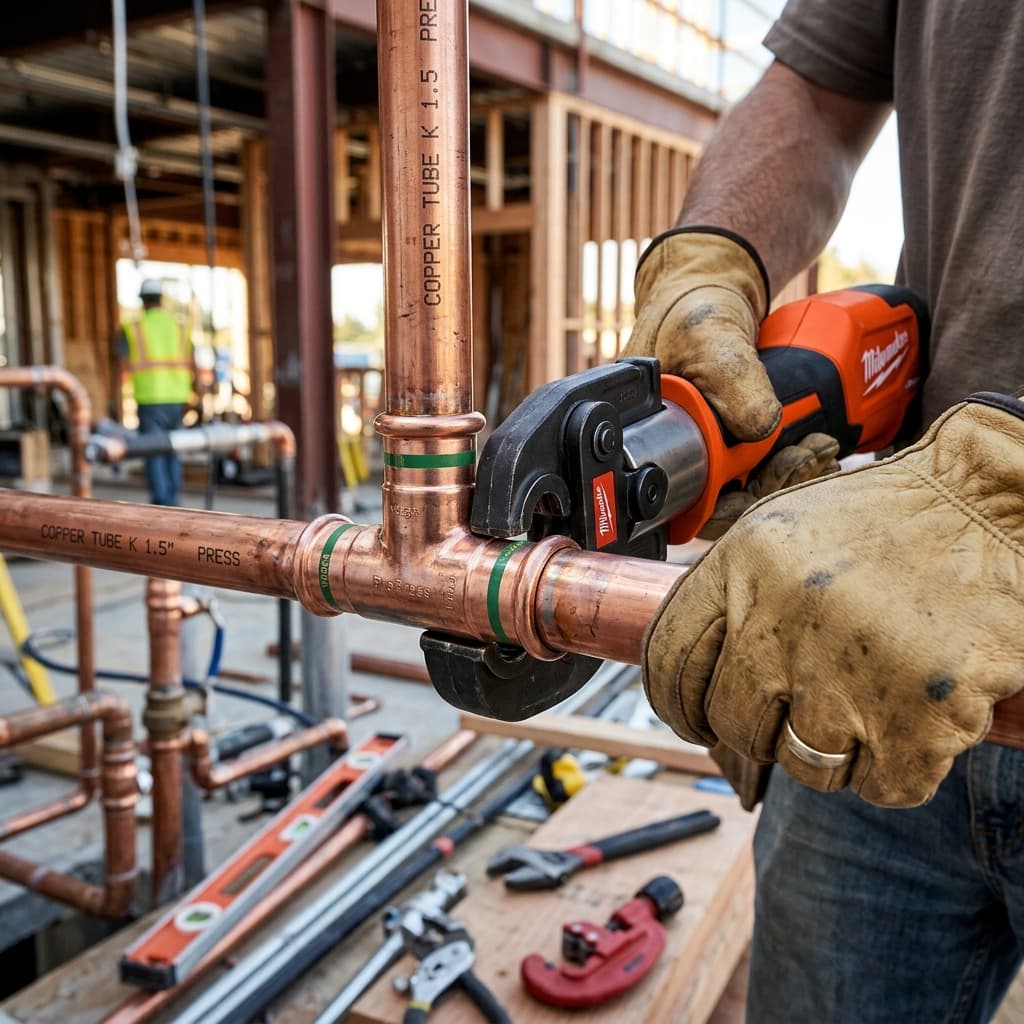

# Press Fittings vs. Traditional Brazing: What California Plumbers Need to Know for Modern Installations
The plumbing industry is experiencing a significant shift away from traditional brazing methods toward modern press fittings technology. Recent coverage of NIBCO copper press fitting systems and RLS press fittings highlights this transformation, with manufacturers promoting "no more brazing" solutions that are reshaping how plumbers approach copper installations. For California C-36 exam candidates and working plumbers, understanding both traditional brazing techniques and modern press fittings is crucial. This comprehensive guide covers everything you need to know about these installation methods to succeed on your exam and in the field.The Industry Shift: Why Press Fittings Are Gaining Ground
The movement toward press fitting technology isn't just a trend—it's a response to real industry needs. NIBCO's copper press fitting systems and similar RLS press fittings offer several advantages that are making them increasingly popular in commercial and residential applications.
Speed and Efficiency Benefits
Press fittings can reduce installation time by up to 70% compared to traditional soldering or brazing methods. This efficiency translates to:
- Faster project completion
- Reduced labor costs
- Increased productivity per technician
- Less disruption to occupied buildings
Safety Considerations
Unlike brazing, press fittings eliminate:- Open flame hazards
- Hot work permits in many jurisdictions
- Burn risks to installers
- Fire hazards in occupied buildings
C-36 Exam Tip: Remember that CPC Section 308.1 addresses general requirements for pipe joints. Press fittings must still comply with manufacturer specifications and code requirements for mechanical joints.
Understanding Traditional Brazing Methods
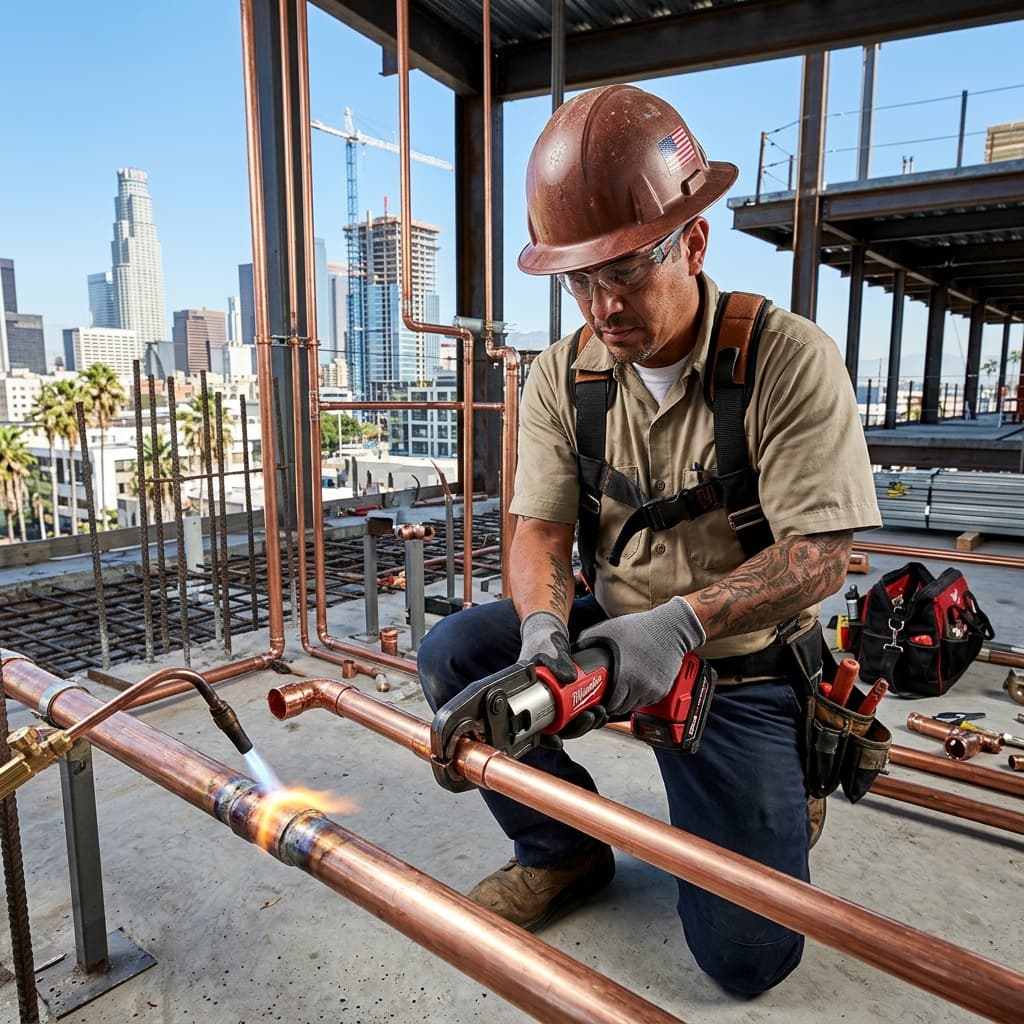
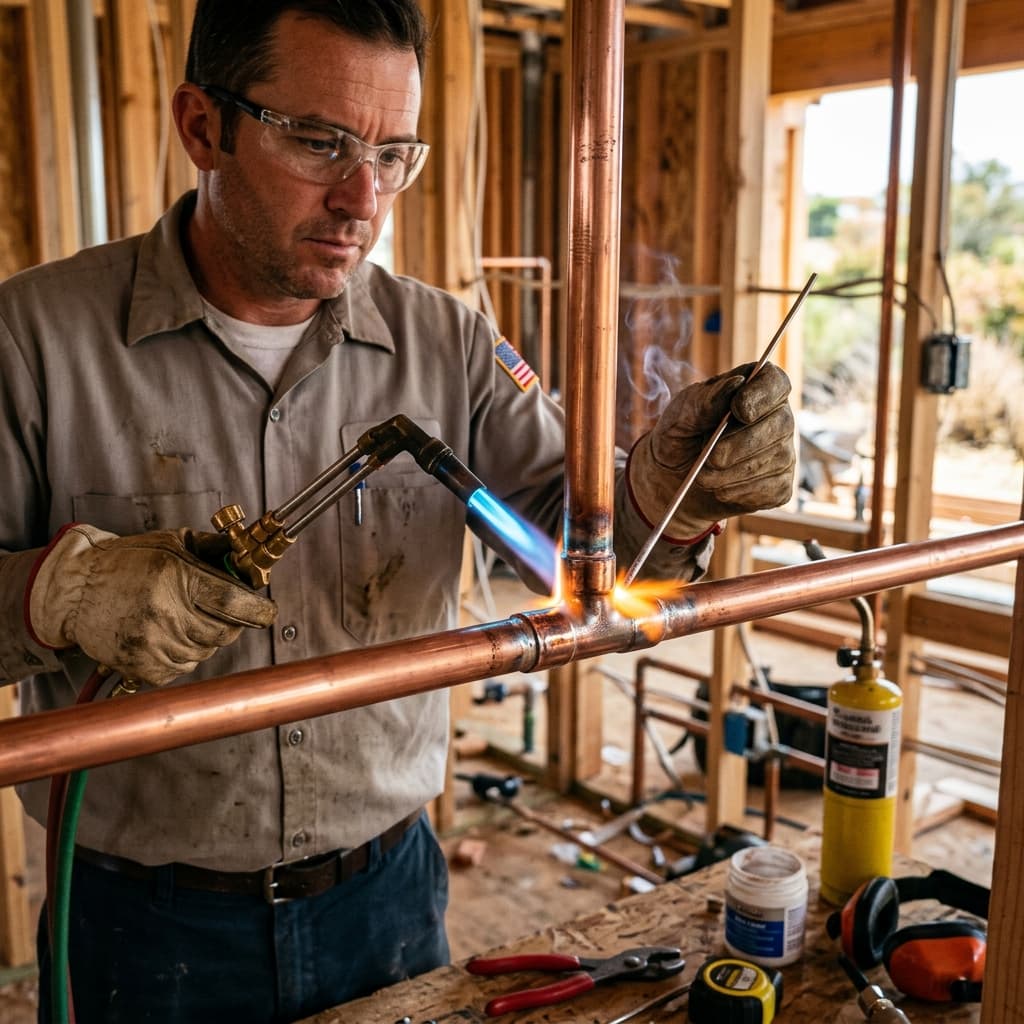
Brazing remains a fundamental skill tested on the California C-36 exam. This process involves joining metals using a filler metal that melts above 840°F (450°C).Brazing Process Requirements
According to CPC Section 308.3, brazed joints must be made with approved filler metals and flux materials. Key requirements include:
- Base metal preparation: Surfaces must be clean and free of oxidation
- Proper clearances: Typically 0.002" to 0.005" for capillary action
- Flux application: Required for most copper-to-copper joints
- Heat application: Uniform heating to achieve proper flow
Code Compliance for Brazing
CPC Section 605.3 specifically addresses copper tube and fittings, requiring that:- Filler metals contain at least 15% silver for water distribution systems
- Lead content not exceed 0.05% for potable water applications
- Joints be made in accordance with ASTM B828 standards
C-36 Exam Tip: The 15% silver requirement is frequently tested. Remember this applies to potable water systems under CPC Section 605.3.
Modern Press Fitting Technology
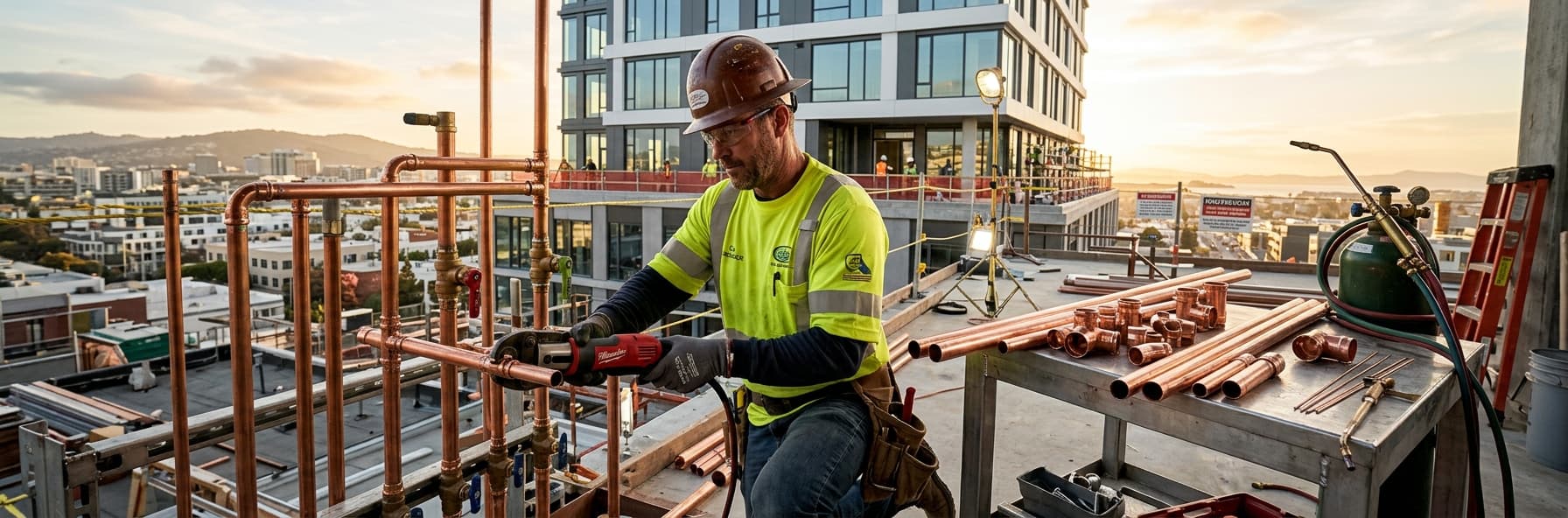
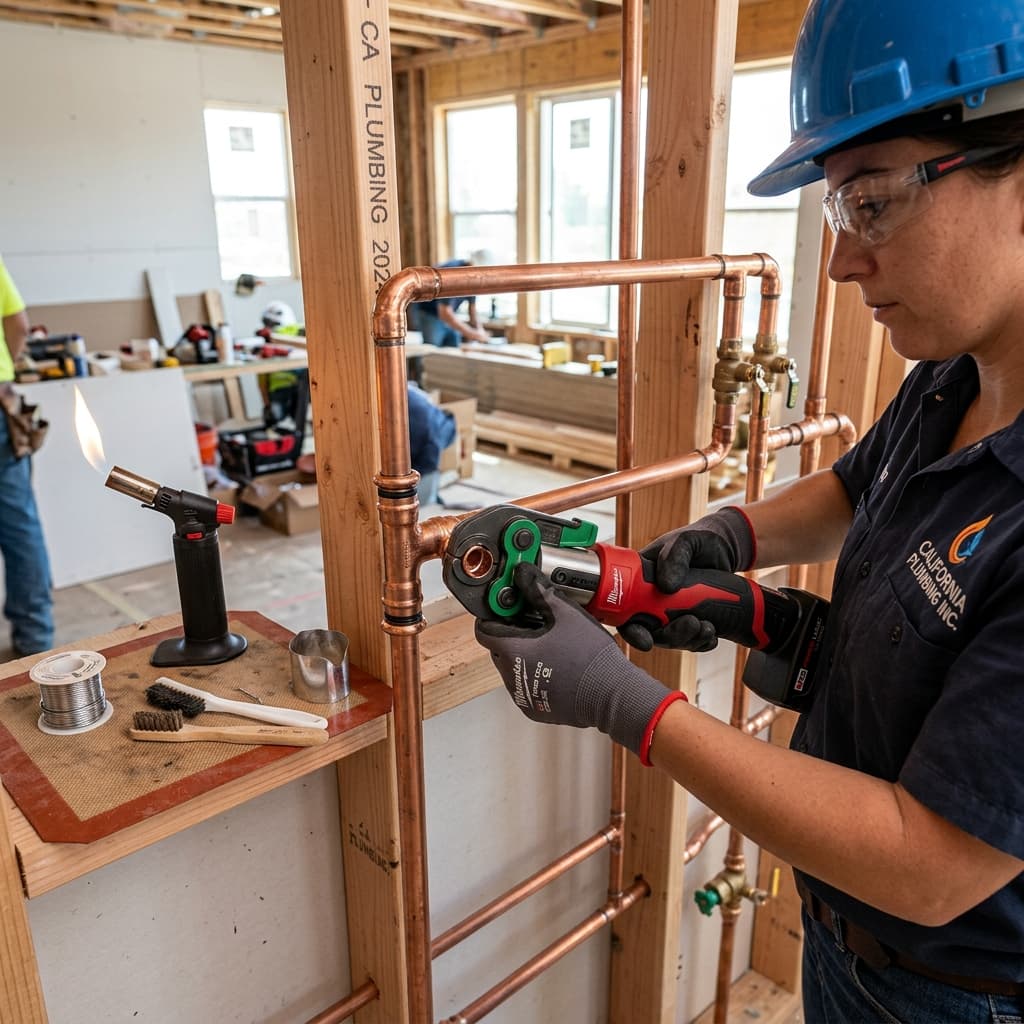
Press fittings use mechanical compression to create watertight seals without heat, flame, or solder. Understanding this technology is increasingly important for the C-36 exam.How Press Fittings Work
The press fitting process involves:
- Pipe preparation: Cutting square and deburring
- Fitting insertion: Positioning the fitting on the pipe
- Tool application: Using a press tool to compress the fitting
- Visual inspection: Confirming proper compression marks
Press Fitting Components
Copper fittings designed for press systems typically include:- O-ring seals: Provide the watertight barrier
- Press sleeves: Create the mechanical connection
- Visual indicators: Show proper installation
- Leak-before-press design: Unpressed fittings leak intentionally for testing
Code Requirements for Press Fittings
CPC Section 308.5 covers mechanical joints, which includes press fittings. Key requirements:
- Must comply with applicable ASTM or ANSI standards
- Installation per manufacturer's instructions
- Proper tools and techniques required
- Regular inspection and testing protocols
C-36 Exam Tip: Press fittings fall under mechanical joint requirements in CPC Section 308.5. Don't confuse these with compression fitting requirements in other code sections.
Comparative Analysis: When to Use Each Method
Brazing Applications
Traditional brazing remains preferred for:
High-temperature applications: Systems operating above 200°F where press fitting O-rings may degrade Medical gas systems: Where CPC Section 1217 requires specific brazing procedures Underground applications: Where mechanical joints face extended ground contact Repair situations: When press tools aren't available or practicalPress Fitting Applications
Press fittings excel in:
Occupied buildings: Where open flame restrictions apply High-volume installations: Where speed increases profitability Tight spaces: Where torch access is limited Potable water systems: Where lead-free requirements are strictInstallation Techniques and Best Practices
Proper Brazing Technique
- Surface preparation: Clean with emery cloth or steel wool
- Flux application: Apply thin, even coating
- Assembly: Insert pipe fully into fitting socket
- Heating: Apply heat evenly around the joint
- Filler application: Feed rod into heated joint area
- Cooling: Allow natural cooling without water quenching
Press Fitting Installation
- Cutting: Use appropriate tube cutters for square cuts
- Deburring: Remove all internal and external burrs
- Inspection: Check O-rings and fitting condition
- Positioning: Insert pipe to full depth markings
- Pressing: Use calibrated tools with proper jaw sets
- Verification: Confirm press marks and visual indicators
C-36 Exam Tip: Both methods require proper pipe preparation. Inadequate preparation is a common cause of joint failure and a frequent exam topic.
Code Compliance and Testing Requirements
Testing Standards
Both brazing and press fitting installations must meet testing requirements under CPC Section 312:
Hydrostatic testing: Minimum 1.5 times working pressure Duration requirements: Hold pressure for specified time periods Inspection protocols: Visual examination of all accessible jointsDocumentation Requirements
CPC Section 103.4 requires proper documentation of:- Materials used and their certifications
- Installation methods and procedures
- Test results and pressure readings
- Any repairs or modifications made
Cost and Labor Considerations
Initial Investment
Press fitting systems require:- Higher upfront tool costs ($2,000-$5,000)
- More expensive fittings (2-3x traditional costs)
- Training and certification expenses
- Battery maintenance and calibration
- Lower tool investment ($200-$500)
- Less expensive materials
- Readily available supplies
- Established workforce skills
Long-term Economics
Press fittings offer advantages in:- Reduced labor time per joint
- Lower insurance costs (reduced fire risk)
- Fewer callbacks and warranty issues
- Improved worker productivity
Exam Preparation Strategy
Key Code Sections to Master
- CPC Section 308: General pipe joint requirements
- CPC Section 605: Copper tube and fitting specifications
- CPC Section 312: Testing and inspection procedures
- CPC Section 1217: Medical gas system requirements
Common Exam Questions
Expect questions covering:- Minimum silver content for brazing filler metals
- Press fitting O-ring material requirements
- Proper joint preparation techniques
- Testing pressure calculations and hold times
- When each method is code-required vs. optional
C-36 Exam Tip: Practice calculating test pressures for different system types. The formula appears regularly: Test pressure = 1.5 × working pressure, with minimum requirements varying by application.
Safety Requirements and OSHA Compliance
Brazing Safety
OSHA requirements for brazing operations include:- Proper ventilation systems
- Eye and skin protection
- Fire prevention measures
- Hot work permits where required
Press Fitting Safety
Press tool safety considerations:- Proper tool calibration and maintenance
- Eye protection during pressing operations
- Ergonomic considerations for repetitive use
- Battery safety and charging procedures
Future Trends and Technology
The industry continues evolving with:
Smart press tools: Digital monitoring and documentation Expanded material options: Beyond copper to PEX and steel systems Automated systems: Robot-assisted installation in commercial projects Enhanced testing: Built-in pressure testing capabilitiesConclusion
Both press fittings and traditional brazing have important roles in modern plumbing installations. California C-36 exam candidates must understand when and how to use each method properly.
Key success factors include:- Mastering relevant CPC code sections
- Understanding proper installation techniques for both methods
- Recognizing when each approach is most appropriate
- Staying current with evolving technology and standards