# Press Fittings in California Plumbing: What C-36 Contractors Need to Know About Modern Copper Joinery Methods
The Industry Shift That's Changing C-36 Exam Content
The plumbing industry is experiencing a pivotal moment. For decades, brazing has been the gold standard—and often the only acceptable method—for joining copper pipes in California. But recent widespread adoption of press fitting technology is fundamentally reshaping how contractors approach copper pipe joinery and what exam candidates need to know.Major manufacturers like NIBCO, RLS, and other industry leaders have developed and perfected copper press fitting systems that deliver reliable, code-compliant joints without the need for torch work, flux, solder, or brazing materials. This isn't a fringe development anymore. It's mainstream technology that's appearing on jobsites across California and directly affecting what the C-36 plumbing exam expects you to know.
If you're preparing for your California plumbing contractor exam or managing crews in the field, understanding press fittings and how they compare to traditional brazing methods is no longer optional—it's essential.What Are Press Fittings?
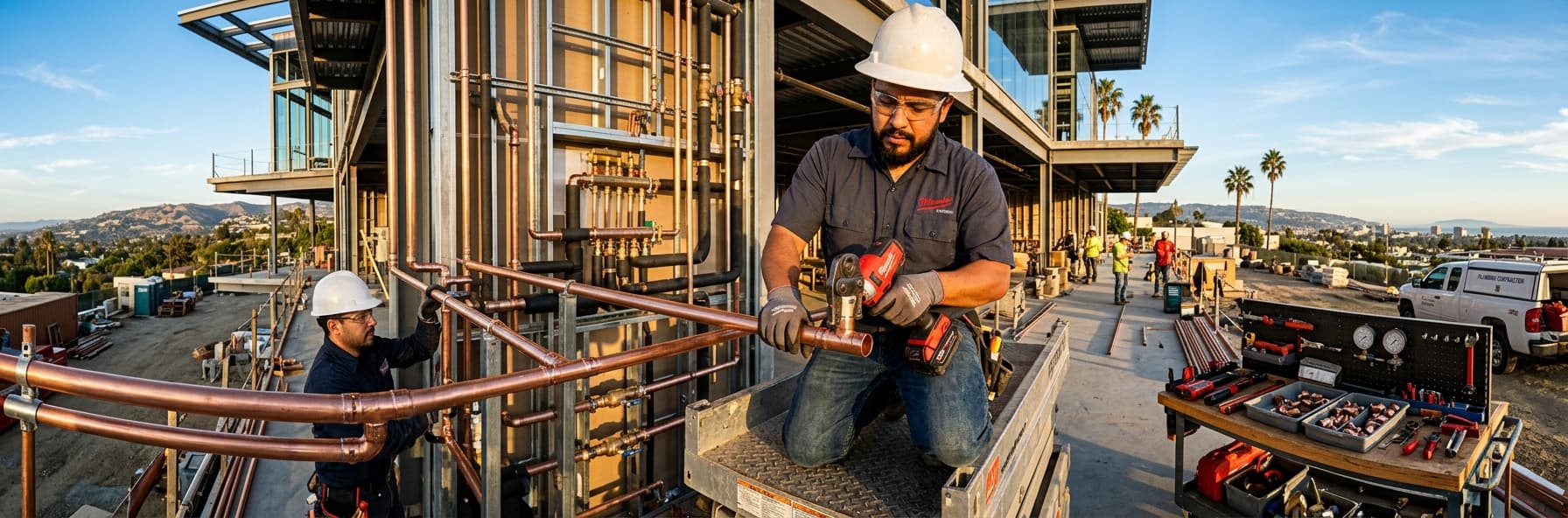
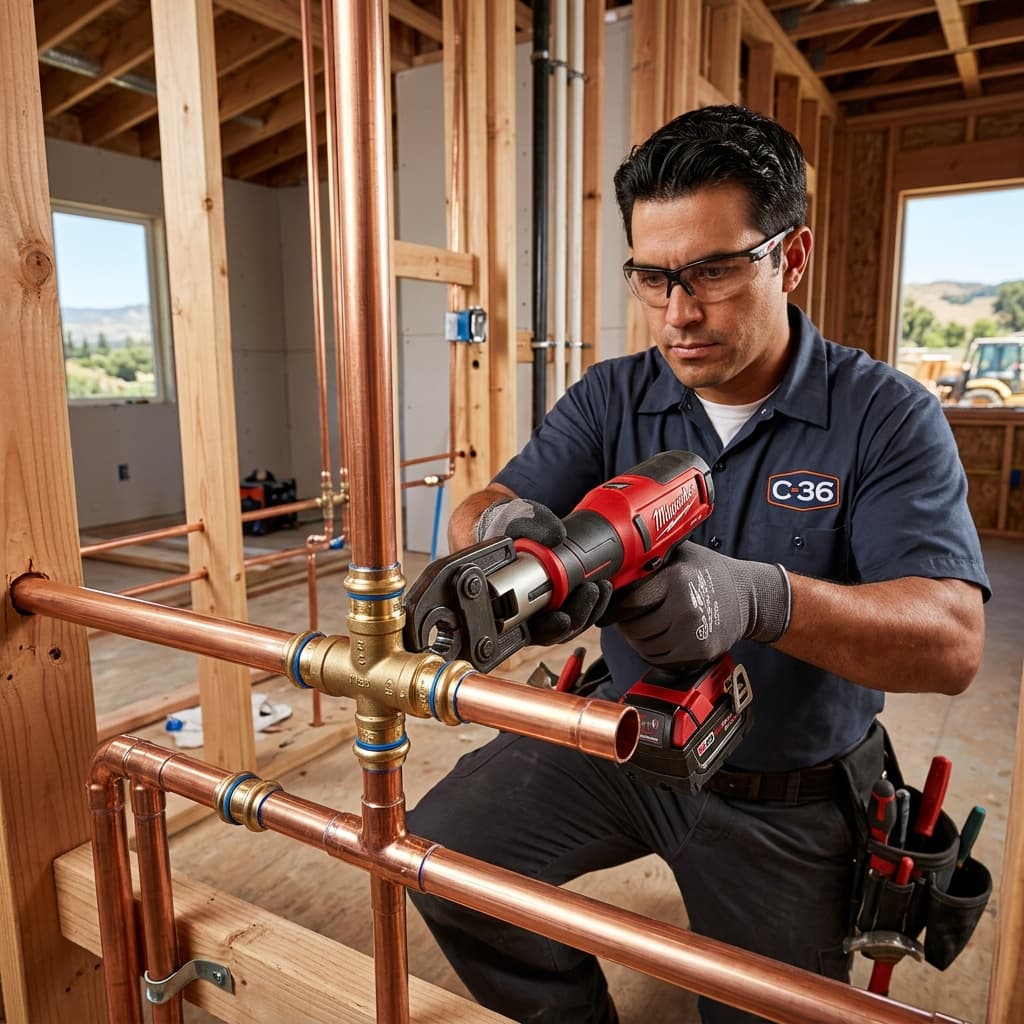
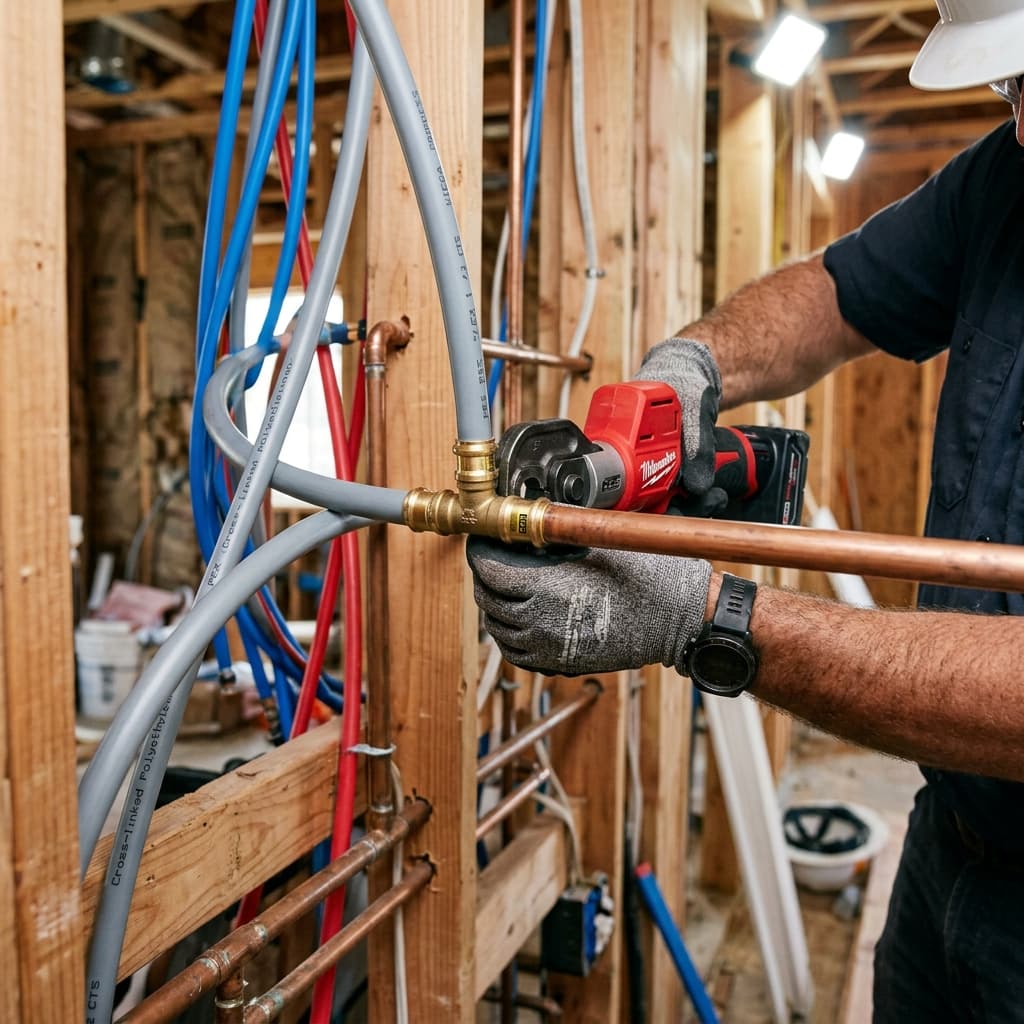
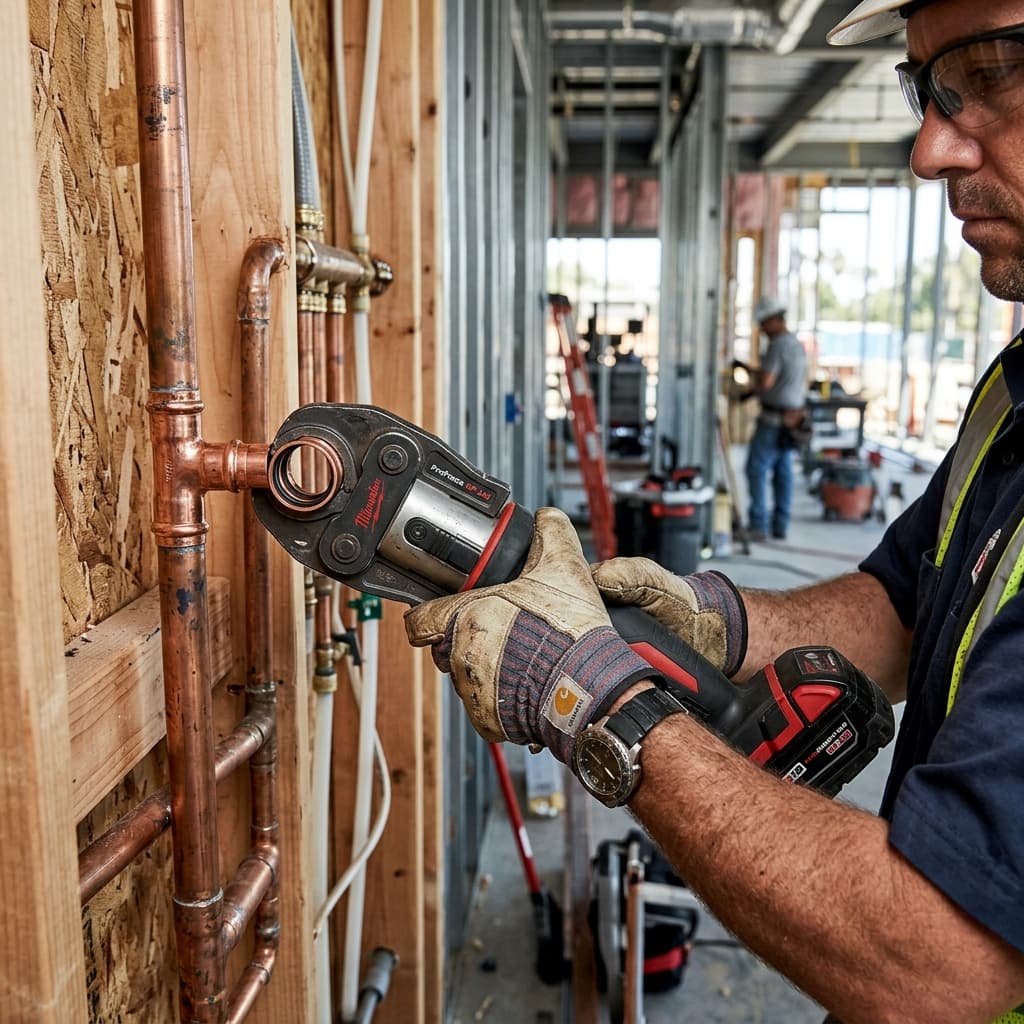
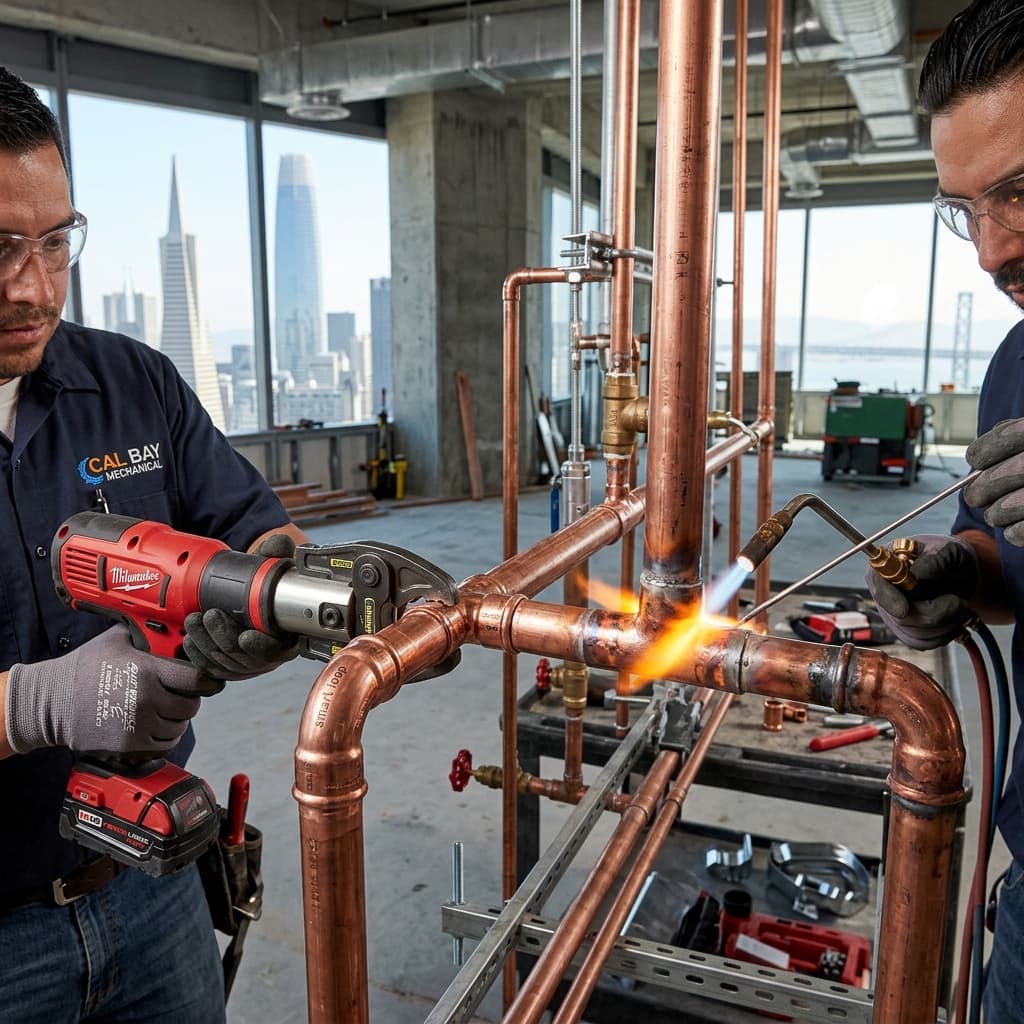
Press fittings are mechanical copper joinery systems that create permanent, leak-proof connections without heat or solder. The system typically consists of:
- Press fitting bodies: Specially designed copper or brass fittings with precision-engineered internal sealing surfaces
- Stainless steel or copper crimp rings: Components that are mechanically deformed to create the seal
- Press tools: Hydraulic or battery-powered equipment that applies uniform, calibrated pressure to compress the crimp ring and deform the fitting
Press Fittings vs. Brazing: A Technical Comparison
Understanding how these methods differ is crucial for your C-36 exam and field competency.
Traditional Brazing Method
What it requires:- Oxy-acetylene or propane torch
- Brazing rod (typically silver-bearing alloy)
- Flux compound
- Skilled torch technique
- Extended training period to master consistent quality
- Proven track record with decades of field performance
- Can repair existing connections with heat
- Single material creates joint (brazing alloy)
- No additional equipment investment beyond torch setup
- Fire hazard on occupied properties and near flammable materials
- Health risks from flux fumes and heat exposure
- Moisture contamination risk (nitrogen purging required for proper joints)
- Slower production rate due to heating/cooling time
- Requires ongoing skill maintenance
Press Fitting Method
What it requires:- Press tool (initial equipment investment $2,000-$8,000)
- Properly sized press fittings and crimp rings
- Minimal training (typically one day to proficiency)
- Precise pipe preparation (clean, deburred, proper OD measurement)
- No open flame—safer for residential and commercial properties
- Consistent, repeatable results (pressure-based, not skill-based)
- Faster installation—typically 30-50% quicker than brazing
- No flux or solder materials needed
- Lower long-term per-joint cost despite tool investment
- Minimal environmental impact
- Suitable for all pipe diameters and angles
- Works in wet conditions (critical advantage)
- Reduced training requirements and faster apprentice productivity
- Initial capital investment in press tool
- Tool maintenance and calibration required
- Joints cannot be "re-pressed" if misaligned
- Requires different methodology for retrofits (may need to cut out and replace rather than reheat)
California Plumbing Code and Press Fitting Approval
The California Plumbing Code (Title 24, Part 5) governs all plumbing installations in the state. The critical question for C-36 contractors and exam candidates is: Are press fittings code-compliant?Current Code Status
Press fittings are recognized as acceptable joinery methods under CPC Section 308.1, which addresses copper tube joining. The code permits press fittings when:- The system is approved: Fittings must be from approved manufacturers with documented performance testing
- Proper installation procedures are followed: Press tools must be calibrated and used according to manufacturer specifications
- Correct fitting selection: The fitting type must match the application (potable water, hydronic systems, gas lines, etc.)
- Pressure and temperature ratings are respected: Not all press fittings are suitable for all applications
What This Means for Your Exam
The C-36 plumbing exam will increasingly test your understanding of:
- Which joinery methods are approved for specific applications
- Code sections that govern copper pipe joining (CPC Sections 308.1-308.3)
- Technical differences between press fittings and brazing
- When each method is appropriate
- Safety protocols for both methods
- Quality assurance and inspection procedures
Skill Requirements for Modern C-36 Contractors
This is where the industry shift creates both opportunity and challenge.
The Brazing Requirement Evolves (But Doesn't Disappear)
Brazing is still essential knowledge for C-36 licensing. You cannot pass your exam without demonstrating competency in traditional copper joining methods. However, the emphasis is shifting:
- Brazing remains: A fundamental skill required for exam passage and field situations where press fitting systems aren't suitable
- Press fittings are added: No longer optional—contractors must understand when and how to use them
- Hybrid competency is now standard: Modern C-36 contractors need both skill sets
Press Fitting Installation Best Practices
If you're installing press fittings on jobsites, follow these critical procedures:
Preparation Phase:- Measure pipe OD precisely (variations affect seal quality)
- Cut pipe cleanly with no burrs or deformation
- Remove all debris from inside the pipe
- Dry the pipe interior completely (moisture can affect seal integrity)
- Keep fittings clean and protected from contamination
- Verify your press tool is calibrated (check manufacturer specs)
- Select the correct fitting size for your pipe dimension
- Position the tool squarely on the fitting body
- Apply steady, firm pressure until the tool indicates completion
- Never "re-press" the same location
- Visually confirm the crimp ring is evenly compressed
- Check for proper tool imprints (indicates correct pressure application)
- Perform pressure testing per code requirements
- Document the installation method for code officials
Exam Preparation: What You Need to Know
Knowledge Areas for C-36 Candidates
Your C-36 exam preparation should include these press fitting topics:
- Code compliance: Where in the California Plumbing Code are press fittings approved? (Answer: CPC Section 308.1 and manufacturer listings)
- System comparison: Comparative advantages and disadvantages of brazing vs. press fitting for different applications
- Material science: Why crimp ring compression creates a seal; pressure requirements; seal mechanism principles
- Safety considerations: Open flame hazards with brazing; pressure tool safety; appropriate use of each method on occupied properties
- Quality assurance: How to inspect completed press fitting installations; pressure test procedures; troubleshooting failed connections
- Application scenarios: When would you choose press fittings over brazing? (Answer: Occupied homes, wet conditions, high-volume installations, retrofit work in tight spaces)
Sample Exam Question
You're installing copper supply lines in an occupied residence during final rough-in. The homeowner has expressed concern about open flame work. Which joinery method would be most appropriate, and why? Expected answer: Press fittings would be appropriate because they eliminate open flame hazard, work reliably in residential settings per CPC Section 308.1, are faster than brazing, and pose no risk to nearby finishes or materials. Brazing would be acceptable but less ideal given the stated concern.Real-World Application: When to Use Each Method
Use Brazing When:
- Installing high-temperature applications (hydronic heating above 200°F)
- Working with specialty copper grades requiring flux-based joining
- Retrofitting existing systems where historical consistency matters
- Working in jurisdictions with specific brazing requirements
- Equipment failure makes press tools unavailable
- Extremely large diameter copper (certain specialty applications)
Use Press Fittings When:
- Working in occupied residential or commercial properties
- Conditions are wet or humid
- Production speed is important (multi-unit residential, commercial projects)
- Working near flammable materials or insulation
- Installing high-volume identical connections
- Training newer apprentices (faster competency development)
- Working in spaces with limited access or ventilation challenges
- Installing on occupied healthcare facilities or food service areas
The Equipment Investment Question
Many C-36 contractors ask: Should I invest in press fitting equipment?The answer depends on your business model:
Invest if you:- Run a mid-to-large company with steady copper installation work
- Perform residential new construction or multi-family projects
- Want to reduce project timelines and crew scheduling complexity
- Plan to retire significant torch work from your operation
- Target markets (like healthcare) favoring no-flame methods
- Primarily do repair work or small projects
- Work exclusively on commercial/industrial projects requiring high-temperature capacity
- Have limited capital for tool investment
- Operate in regions where brazing dominates
Common Misconceptions About Press Fittings
Myth 1: "Press Fittings Aren't as Reliable as Brazed Joints"
Reality: Modern press fitting systems have been extensively tested and perform equivalently to brazed connections. When installed correctly per manufacturer specs, press joints consistently pass pressure tests and deliver long service life.Myth 2: "Press Fittings Are a New, Unproven Technology"
Reality: Press fitting technology has been in use for over 20 years in Europe and is now mainstream in North America. NIBCO, RLS, and other manufacturers provide extensive documentation of performance testing and code approvals.Myth 3: "If You Get a Press Fitting Wrong, It's Ruined"
Reality: If a press fitting doesn't seal properly, it will typically leak during pressure testing (not after installation). You can identify problems immediately and cut out/replace the fitting. The pipe can usually be reused by moving slightly downstream.Myth 4: "Press Fittings Cost Too Much"
Reality: While individual fittings cost slightly more than solder materials, the labor savings are substantial. Press fitting installations are 30-50% faster than brazing, which dramatically reduces project cost per joint on large installations.Code References Every C-36 Candidate Should Know
- CPC Section 308.0: General copper tube requirements and material standards
- CPC Section 308.1: Copper tube joining methods (includes both brazing and press fittings)
- CPC Section 308.2: Soldering requirements (specific standards when solder-based joints are used)
- CPC Section 308.3: Quality standards and inspection requirements for all copper tube joints
- Title 24, Part 5: California's adoption of plumbing code with state-specific modifications
Looking Forward: The Future of C-36 Training and Exams
The California Contractors State License Board (CSLB) is gradually incorporating press fitting knowledge into C-36 exam content. Future changes likely include:
- More exam questions specifically addressing press fitting applications
- Increased emphasis on method selection based on code and application requirements
- Greater weight on understanding modern joinery alternatives
- Possible evolution of practical exam components to include press fitting demonstrations
Practical Resources for C-36 Exam Prep
As you prepare for your exam:
- Study the California Plumbing Code directly: Read CPC Sections 308.0-308.3 multiple times
- Review manufacturer documentation: NIBCO and RLS provide detailed technical specifications
- Watch installation videos: Visual learning reinforces technique understanding
- Practice identifying applications: Study scenarios and decide which method applies
- Understand the physics: Learn why crimp ring compression creates a seal
- Know the safety protocols: For both brazing and press fitting methods
Final Thoughts: Embracing Modern Joinery Methods
The shift toward press fitting technology doesn't diminish the importance of traditional brazing knowledge. Rather, it expands what today's C-36 contractors must know. The most valuable plumbers and contractors in California's market are those who can competently execute both methods and, critically, understand when to use each one.
For exam candidates, this means your preparation strategy should include thorough study of both joinery methods. For working contractors, it means considering whether press fitting equipment makes sense for your business model.
The future of copper pipe installation in California includes both brazing and press fittings. By understanding the technical differences, code compliance requirements, and practical applications of modern press fitting systems, you'll be better prepared for your C-36 exam and positioned for success in an evolving industry.
---
Ready to master both traditional and modern copper joinery methods for your C-36 exam? Start with a deep dive into the California Plumbing Code sections on copper tube joining, then supplement with manufacturer technical documentation on press fitting systems. Your comprehensive understanding of both approaches is what separates C-36 candidates who pass from those who excel.