


# Pipe Material Selection and Code-Compliant Installation for C-36 Exam Success
The California plumbing code pipe materials section represents one of the most critical foundational topics for anyone preparing for the C-36 plumbing exam. Whether you're a first-time test taker or returning to strengthen weak areas, understanding CPC Section 422 approved materials and proper installation methods will directly impact your passing score. This comprehensive guide breaks down everything you need to know about selecting and installing compliant pipe materials.
Understanding CPC Section 422: Approved Pipe Materials
CPC Section 422 forms the backbone of material selection requirements in California plumbing installations. This section outlines which materials are acceptable for different applications and establishes the minimum standards all plumbers must follow.What Makes a Material "Approved"?
In the California plumbing code, an approved material must meet one of these criteria:
- Listed or labeled by an approved testing agency (like NSF International or ASTM)
- Evaluated by the California Building Standards Commission
- Accepted by the local Authority Having Jurisdiction (AHJ)
- Conforming to recognized standards established by standards-setting organizations
Material Classifications Under CPC 422
California recognizes several material classifications:
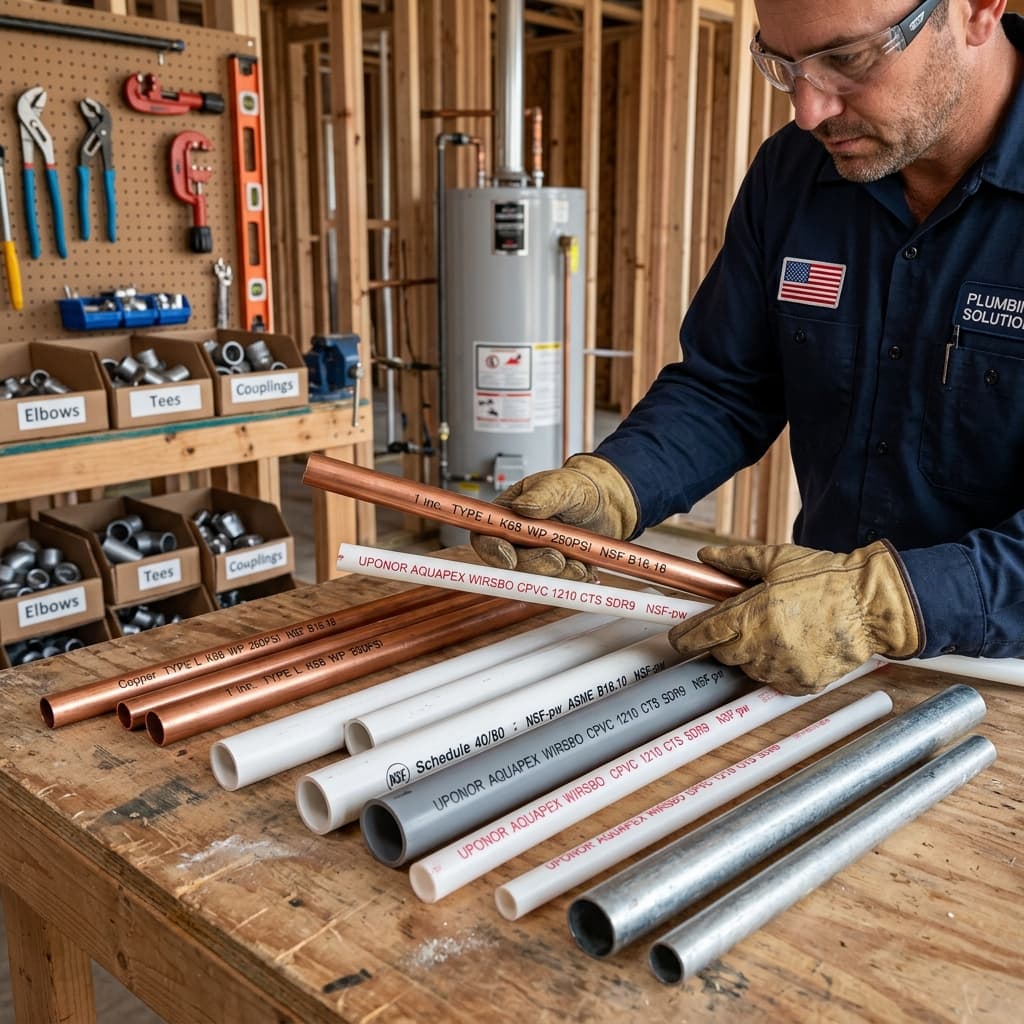
Metallic Pipe Materials:- Copper (Types K, L, M)
- Brass
- Stainless steel
- Galvanized steel
- PVC (Polyvinyl Chloride)
- CPVC (Chlorinated Polyvinyl Chloride)
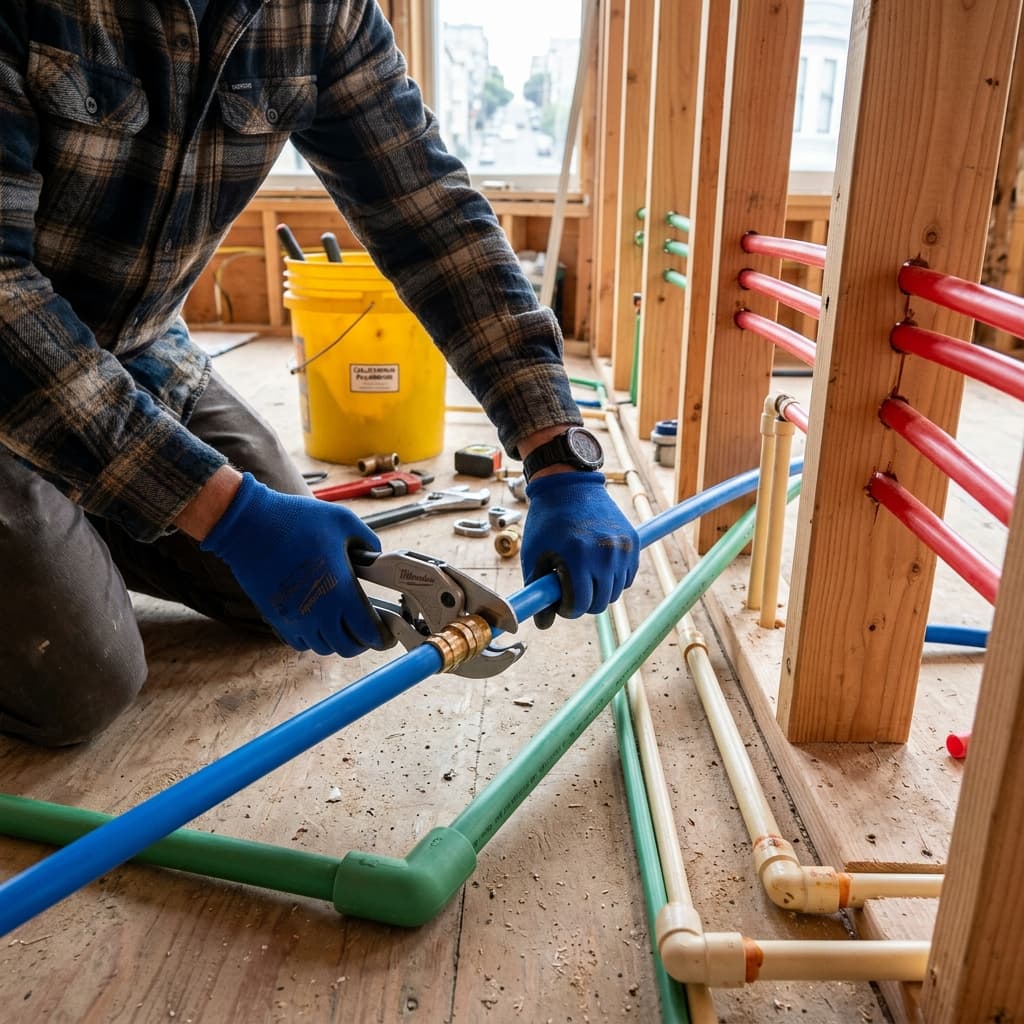
- PEX (Cross-linked Polyethylene)
- PB (Polybutylene) - largely phased out
- ABS (Acrylonitrile Butadiene Styrene)
Copper Pipe: The Gold Standard of Plumbing Materials
Copper remains the most widely specified piping material in California plumbing installations, particularly for potable water supply systems.
Copper Type Classifications
Type K Copper:- Thickest wall construction
- Highest pressure rating
- Best for underground or exterior service lines
- Common in main water service lines
- Typically used where maximum durability is required
- Medium wall thickness
- Most versatile for residential and commercial applications
- Acceptable for both water supply and some drainage applications
- Cost-effective alternative to Type K
- Primary choice in residential plumbing
- Thinnest wall thickness
- Lowest pressure rating
- Limited to low-pressure applications
- Interior building supply only
- Generally not recommended for new installations per modern codes
Copper Installation Code Requirements
When installing copper pipe, C-36 exam questions frequently test your knowledge of these requirements:
Pressure and Temperature Ratings:- Maximum working pressure varies by type and diameter
- Temperature limitations of 250°F for standard copper (per CPC Section 422.2)
- PH considerations for water quality—acidic water requires specific treatment
- Copper tubing must be supported at intervals specified in CPC Section 308
- Horizontal runs: typically 6-foot maximum spacing
- Vertical runs: 10-foot maximum spacing
- Supports must prevent sagging and stress concentration
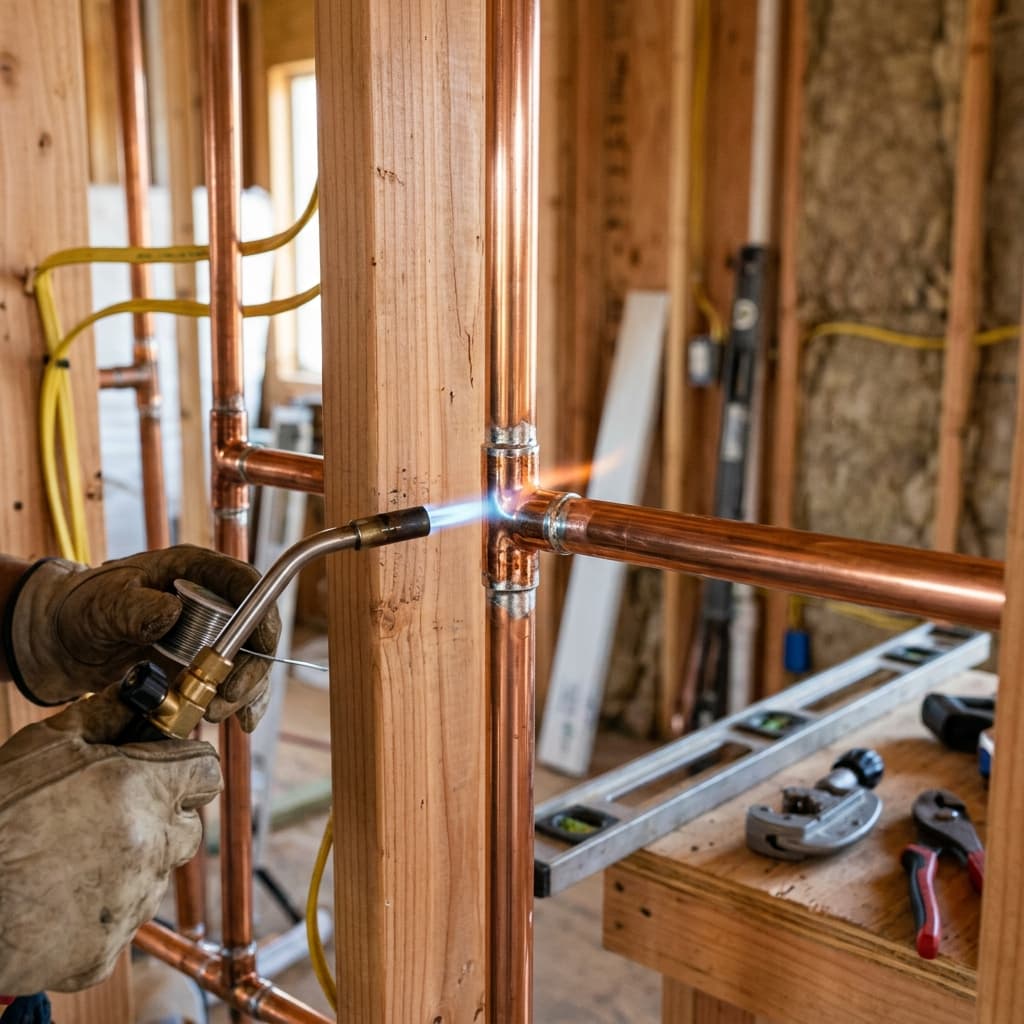
- Solder and brazing joints (most common in California)
- Compression fittings (acceptable with proper materials)
- Flared fittings (limited applications)
- Press-fit connections (increasingly approved but verify locally)
Plastic Pipe Materials: Modern Alternatives
California has gradually expanded acceptance of plastic pipe materials, though significant restrictions remain compared to other states.
PVC (Polyvinyl Chloride) Pipe
Approved Applications:- Drain, Waste, and Vent (DWV) systems
- Underground service lines in some jurisdictions
- Non-potable water applications
- Irrigation systems
- Generally NOT approved for hot water supply in California residential applications
- Not recommended for above-ground potable water supply
- Temperature limitations of 140°F for standard PVC
- Subject to degradation from UV exposure if installed above ground without protection
- Proper slope for gravity drainage (minimum 1/4 inch per foot per CPC Section 422)
- Adequate support preventing excessive deflection
- Expansion joints where temperature changes are significant
- Proper venting requirements for DWV systems
CPVC (Chlorinated Polyvinyl Chloride) Pipe
CPVC offers superior temperature tolerance compared to standard PVC, allowing use in hot water applications where codes permit.
Key Advantages:- Temperature rating up to 200°F continuous
- Better chemical resistance than PVC
- Approved for both hot and cold water supply in some California jurisdictions
- Solvent weld connections create permanent joints
- Always verify with local jurisdiction—acceptance varies significantly
- NSF/ANSI Standard 61 certification is essential
- Installation requires proper primers and solvent cements
- Connection quality directly impacts system reliability
PEX (Cross-linked Polyethylene) Piping
PEX represents the newest technology gaining acceptance in California plumbing codes, though adoption remains more limited than in other states.
Characteristics:- Flexible piping reduces fitting requirements
- Superior freeze-crack resistance
- Temperature range: 40°F to 180°F
- Pressure rating: typically 100 psi at 73°F
- Still not universally accepted by all California jurisdictions
- Requires separate backflow prevention considerations
- Hot water applications require NSF 61 certification
- Underground installation varies by jurisdiction—always check locally
- Reduces labor costs through fewer fittings
- Easier installation in retrofit applications
- No solvent cement odors or fumes
- Better insulation properties than metal pipe
Water Quality Considerations: Corrosion and Leaching
The California plumbing code addresses water chemistry concerns that directly impact material selection.
Acidic Water Conditions
California has regions with naturally acidic water, particularly in areas with granite geology. Per CPC Section 422:
- pH below 7.0 requires protective measures
- Copper pipe may experience pinhole leaks
- Acid neutralizers may be required
- Alternative materials (plastic) may be mandated
- Treatment adds cost and maintenance requirements
Hard Water Considerations
While not preventing material use, hard water affects:
- Mineral deposits in pipe interiors
- Reduced flow rates over time
- Water heater efficiency
- Treatment method selection
Galvanized Steel: Historical Context and Modern Restrictions
Galvanized steel pipe was historically the standard for potable water systems but now faces significant restrictions.
Current Code Status:- Generally not approved for new potable water installations per CPC Section 422
- Allowed only in very limited circumstances where specifically approved
- Still used in some drainage and vent applications
- Common in older existing systems (a frequent exam context)
- Interior corrosion shortens lifespan to 20-40 years
- Zinc coating deteriorates, exposing steel to rust
- Rough interior surface reduces flow
- Cross-contamination potential from corrosion products
Stainless Steel Applications
Stainless steel offers advantages in specific applications:
Approved Uses:- High-corrosion environments (coastal areas)
- Chemical compatibility requirements
- Aesthetic installations visible to occupants
- Specialized commercial applications
- Significantly higher cost
- Requires specialized fittings and connections
- Special handling during installation
- Less common in typical residential plumbing
Installation Standards and Code Compliance
Pressure Rating Compliance
Every piping material has maximum working pressure ratings that vary by:
- Pipe diameter
- Wall thickness (schedule)
- Material type
- Temperature conditions
- Age and degradation factors
Support System Requirements
Proper support prevents:
- Sagging and stress concentration
- Joint failure from movement
- Water hammer damage propagation
- Thermal expansion issues
- Copper pipe requires non-corrosive support materials
- Plastic pipe needs cushioning to prevent stress concentration
- Steel supports must not contact bare copper (galvanic corrosion)
- Hangers must allow for thermal expansion
Expansion and Contraction Allowances
Different materials expand and contract at different rates. Per CPC Section 308:
- Copper expansion: approximately 0.0093 inches per 100 feet per 100°F temperature change
- Plastic materials expand approximately 3-5 times more than copper
- Systems must accommodate movement through:
Common C-36 Exam Scenarios
Scenario 1: Material Selection for Acidic Water
Question: A property in the Sierra Nevada region has pH 6.2 water. Which material would be most appropriate for the main water service line? Answer Rationale: While copper would normally be acceptable, acidic water conditions favor plastic pipe (PVC or PEX) to prevent pinhole corrosion. This tests your understanding that water chemistry modifies standard material selection rules.Scenario 2: Retrofit Installation Challenges
Question: Upgrading an existing galvanized steel water supply system. What considerations are most important when selecting replacement material? Answer Rationale: Consider cost, existing junction compatibility, local code approval for selected material, support system requirements, and whether piping can be salvaged or must be completely replaced.Scenario 3: Temperature Application Limits
Question: What maximum temperature can standard PVC drain piping withstand per California code? Answer Rationale: 140°F for standard PVC (found in CPC Section 422). This straightforward factual question appears frequently on exams.Study Tips for Material Selection Questions
- Master CPC Section 422 - This section contains the definitive answers to most material questions
- Create a Material Comparison Chart - Compare pressure ratings, temperature limits, and approved applications
- Understand "Why" Rules Exist - Material selection rules stem from documented failure modes; understanding the reasoning helps with scenario questions
- Practice Local Jurisdiction Variations - Remember that while CPC is state code, local AHJs sometimes impose stricter requirements
- Know Connection Methods - Material selection includes appropriate connection methods for each material type
Conclusion
Mastery of California plumbing code pipe materials and CPC Section 422 approved materials is essential for C-36 plumbing exam success. By understanding not just which materials are approved, but why they're approved for specific applications, you'll be prepared for both straightforward factual questions and complex scenario-based problems.
The key to success is recognizing that material selection isn't arbitrary—each restriction exists because of documented performance issues, safety concerns, or water quality factors. As you prepare, focus on building this conceptual understanding rather than simply memorizing lists.