
---META_START--- { "metaTitle": "Medical Gas & Specialty Piping: C-36 Exam Guide", "metaDescription": "Master medical gas and specialty piping systems for California C-36 plumbing exam. Learn CPC requirements, safety codes, and installation standards.", "excerpt": "Comprehensive guide to medical gas and specialty piping systems for C-36 license candidates. Covers CPC requirements, safety regulations, and exam expectations.", "focusKeywords": ["medical gas installation requirements", "california plumbing code medical gas", "specialty piping systems CPC", "C-36 plumbing license requirements california"], "overview": { "keyTakeaways": [ "Medical gas systems require specialized knowledge distinct from standard plumbing systems under CPC Chapter 3", "C-36 exam Part 4 focuses on safety codes, regulations, and proper installation of medical gas and specialty piping", "Compliance with NFPA 99, ASME standards, and California-specific requirements is essential for C-36 licensure", "Proper material selection, pressure testing, and documentation are critical exam topics" ], "examRelevance": "High - Medical gas and specialty piping systems comprise 15-20% of Part 4 exam content and require detailed knowledge of safety protocols", "readTime": 8, "difficulty": "intermediate" } } ---META_START---
---CONTENT_START---
# Medical Gas and Specialty Piping Systems: Complete C-36 Exam Guide
Medical gas installation requirements under California plumbing code represent a critical specialty area that separates experienced plumbers from entry-level technicians. If you're preparing for your C-36 plumbing license exam, understanding medical gas and specialty piping systems is non-negotiable. This comprehensive guide breaks down everything you need to know about california plumbing code medical gas requirements, specialty piping systems CPC standards, and exam expectations for Part 4 of the California Contractor's License exam.Understanding Medical Gas Systems in the CPC
What Are Medical Gas Systems?
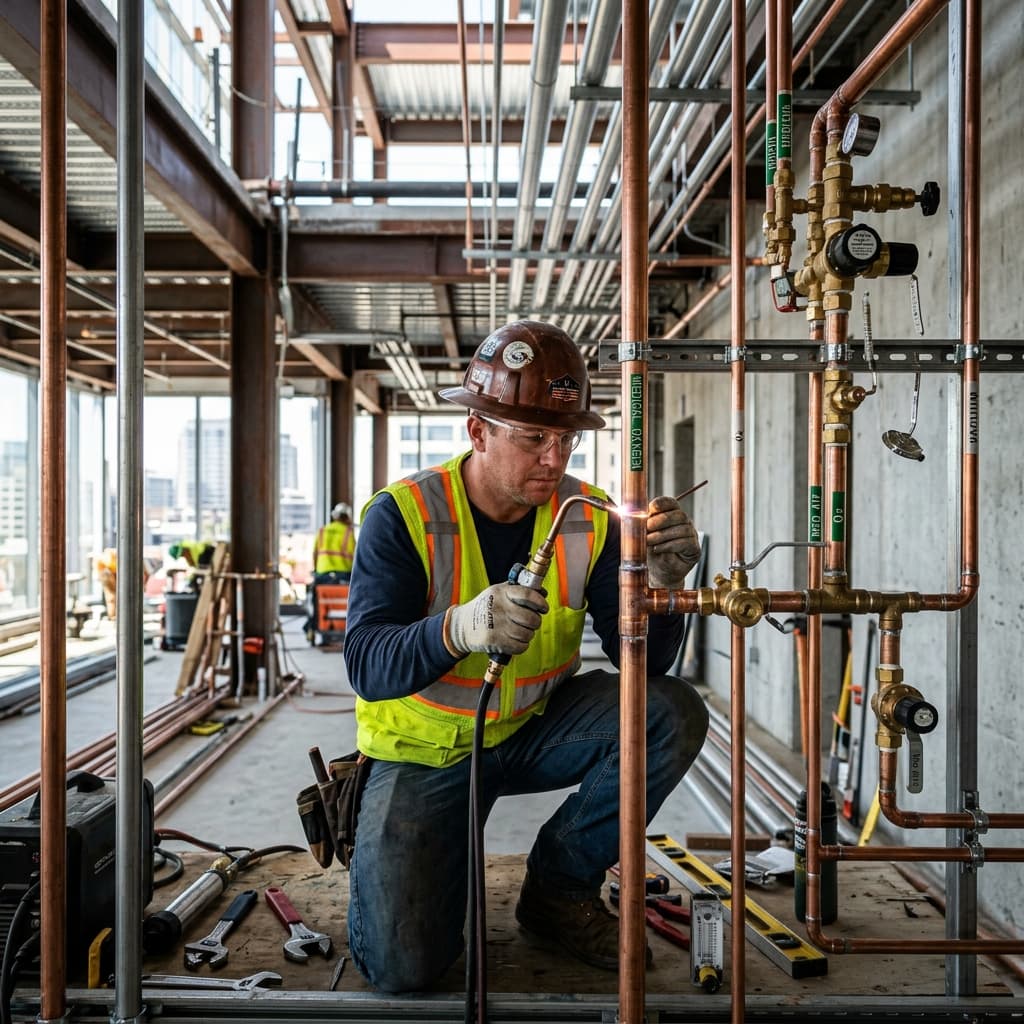
Medical gas systems are specialized piping installations designed to deliver gases such as oxygen, nitrous oxide, nitrogen, and compressed air to medical facilities. These systems differ fundamentally from standard plumbing because they handle gases under pressure rather than liquids, requiring different materials, codes, and installation methodologies.
Under CPC Section 308, medical gas and medical vacuum systems are covered as specialty piping installations. These systems must comply with both plumbing code requirements and medical-specific standards like NFPA 99 (Standard for Health Care Facilities Code).Why Medical Gas Systems Matter for C-36 Candidates
The C-36 plumbing license requirements california explicitly test your knowledge of medical gas systems because:- Hospital and healthcare facility construction requires licensed plumbers certified in medical gas installation
- Improper installation can result in patient harm or death
- California regulators treat medical gas systems as critical infrastructure requiring strict adherence to safety codes
- Specialized knowledge commands premium billing rates for contractors
CPC Medical Gas Requirements
CPC Chapter 3: Section 308 Overview
CPC Section 308.1 establishes that medical gas and medical vacuum systems shall be designed and installed in accordance with:- NFPA 99 - Standard for Health Care Facilities Code
- ASME Standards (American Society of Mechanical Engineers)
- California Title 24 energy standards where applicable
- Local amendments and California-specific modifications
Material Standards for Medical Gas Piping
One of the most heavily tested areas on the C-36 exam involves proper material selection. CPC Section 308.2 specifies:#### Approved Piping Materials
- Type K Copper Tubing - Most common for oxygen, air, and nitrous oxide systems
- Stainless Steel Tubing - Required in certain corrosive environments
- Seamless Steel Tubing - Acceptable for specific applications (vacuum systems primarily)
- Medical Gas Approved Plastic - Only in isolated applications per NFPA 99
Prohibited Materials
Under CPC Section 308.3, the following materials are explicitly prohibited:- Galvanized pipe (oxidizes and contaminates gases)
- Black iron pipe (unsuitable for oxygen systems due to combustion risk)
- Lead-containing solder
- Brass fittings in oxygen service (under certain pressure conditions)
- Standard PVC piping (incompatible with medical gases)
Safety Codes and Pressure Testing Requirements
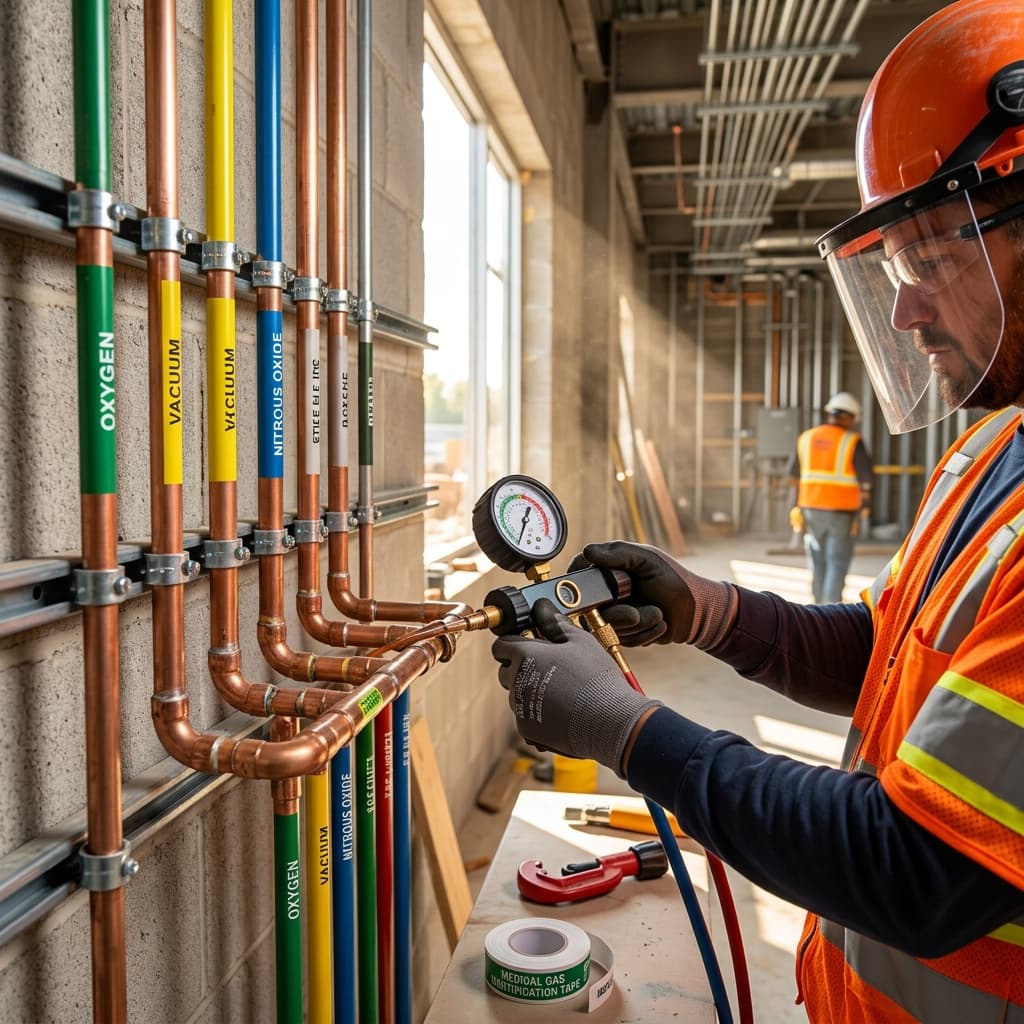
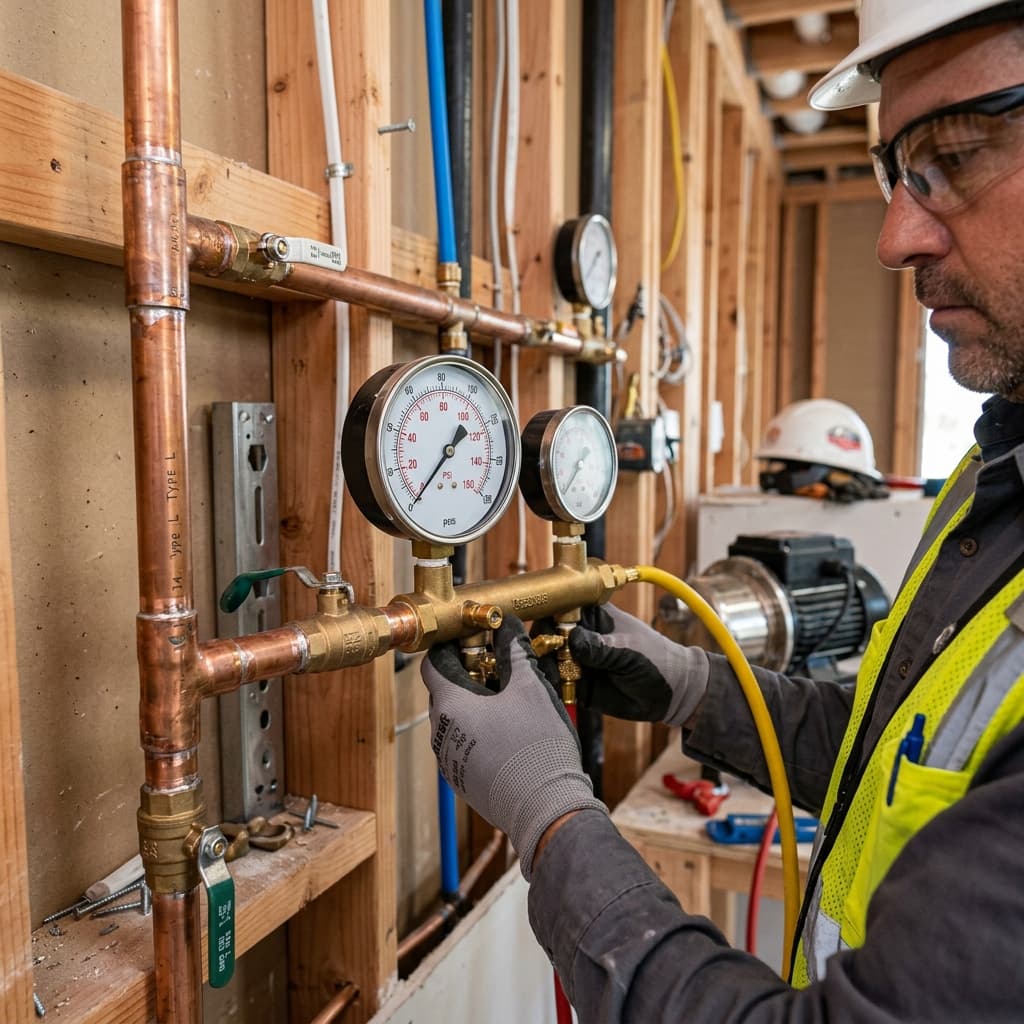
Pressure Testing Standards
CPC Section 308.4 mandates pressure testing before system activation. The exam expects you to know specific test pressures:#### Medical Gas System Testing Protocol
| System Type | Test Pressure | Test Duration | Required Certification | |-----------|--------------|---------------|----------------------| | Oxygen Systems | 50 PSI | 1 hour minimum | NFPA 99 compliant | | Vacuum Systems | 10 inches of mercury | 30 minutes | Registered technician | | Nitrous Oxide | 50 PSI | 1 hour minimum | Licensed installer | | Compressed Air | 50 PSI | 1 hour minimum | Per manufacturer specs |
Pressure test documentation is critical. The C-36 exam often includes scenario questions where you must identify whether a system passed or failed testing based on pressure readings over time.
Leak Detection Methods
Medical gas systems require specialized leak detection under CPC Section 308.5:- Soap Solution Method - Initial visual inspection
- Helium Mass Spectrometry - Gold standard for oxygen systems (detects leaks as small as 1x10⁻⁶ cc/s)
- Ultrasonic Detection - Supplementary method for large systems
- Halide Torch - Acceptable for vacuum systems only
Installation Requirements and CPC Compliance
Location and Routing Standards
CPC Section 308.6 establishes strict requirements for medical gas piping routing: #### Prohibited Locations- Inside walls without protective chase (except in new construction per approved plans)
- Through floors without proper penetration sealing
- In the same chase as electrical wiring
- In areas subject to corrosive environments without protective wrapping
- Electrical conduit: 3 inches minimum
- Sewage pipes: 10 feet horizontal distance
- Water supply piping: Separate support systems required
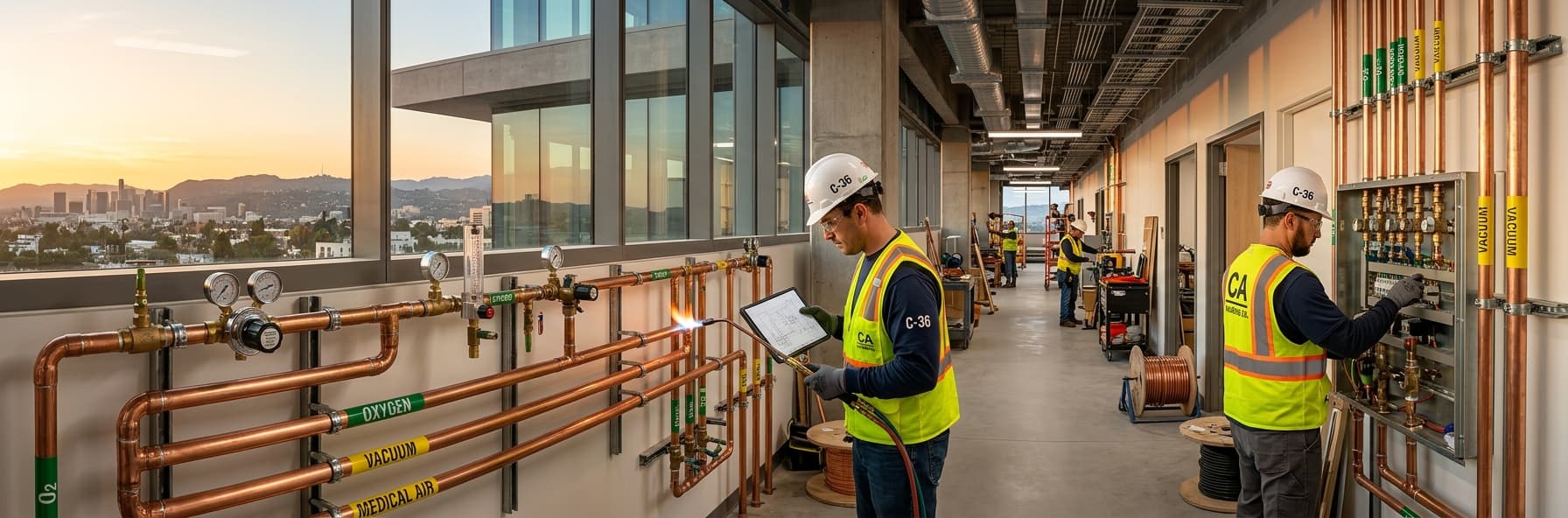
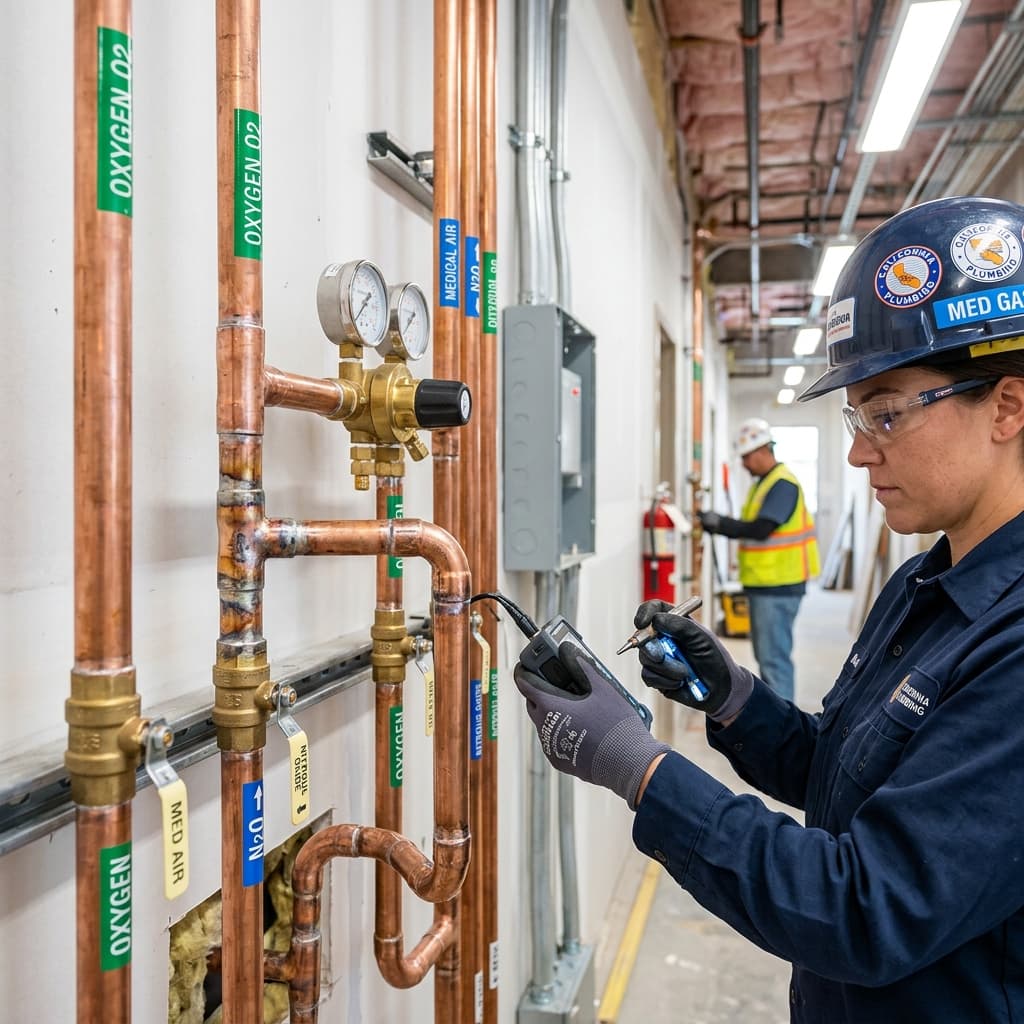
System Identification and Color Coding
CPC Section 308.7 mandates strict color-coding per NFPA 99:| Gas Type | Color Code | Label Requirement | |----------|-----------|------------------| | Oxygen | Green | "OXYGEN" tag required every 6 feet | | Vacuum | Yellow | "VACUUM" tag required every 6 feet | | Nitrous Oxide | Blue | "NITROUS OXIDE" tag required every 6 feet | | Compressed Air | Yellow with Black Stripe | "COMPRESSED AIR" tag required |
The C-36 exam tests color-coding extensively because improper identification creates life-threatening hazards. A plumber connecting the wrong gas line could be criminally liable.
Outlet and Connection Standards
Medical Gas Outlets
CPC Section 308.8 specifies outlet requirements:- NFPA-Compliant Quick Disconnects - Required for all medical gas outlets
- Non-Interchangeable Connections - Different gases require different connector types
- Outlet Boxes - Must be labeled and positioned per facility layout plans
- Safety Caps - Required when outlets are not in use
Pressure Regulators and Safety Devices
CPC Section 308.9 requires:- Primary pressure regulators at supply source
- Secondary regulators at point-of-use
- Pressure relief valves (set per NFPA 99 specifications)
- Backflow prevention devices on all inlet connections
Documentation and Compliance Records
Required Documentation for C-36 Installations
CPC Section 308.10 mandates comprehensive documentation:- As-Built System Drawings - Showing final installed configuration
- Test Records - Pressure test results with times and dates
- Material Certification - Proof that all materials meet ASME/NFPA standards
- Installer Credentials - C-36 license verification
- Inspection Approval - Building official sign-off
Specialty Piping Systems Beyond Medical Gas
While medical gas is primary, specialty piping systems CPC also covers:Laboratory Gas Systems
CPC Section 309 addresses laboratory and research facility gas piping:- Similar safety requirements to medical gas
- Often higher pressures (up to 200 PSI for certain applications)
- Additional grounding requirements for some systems
Vacuum and Vent Systems for Medical Facilities
CPC Section 310 addresses medical facility vacuum systems:- Separate from standard building vacuum systems
- Require high-efficiency particulate air (HEPA) filtration
- Must prevent contamination of building exhaust
Oxygen-Enriched Environments
Special requirements apply in areas where oxygen concentration exceeds normal atmospheric levels. CPC Section 311 specifies:- Combustible material restrictions
- Enhanced electrical safety requirements
- Specialized cleaning protocols
Exam Preparation Strategies for Medical Gas Topics
High-Probability Exam Questions
Based on historical C-36 exam patterns, expect questions on:
- Material Selection - Identifying correct piping materials for specific gases
- Pressure Testing - Calculating test pressures and evaluating pass/fail scenarios
- Color Coding - Identifying which gas corresponds to which color code
- Distance Requirements - Separation from other utilities
- Documentation - What records must be maintained
Study Resources for Medical Gas Systems
Recommended preparation materials:
- NFPA 99 Standard (available through NFPA website)
- CPC Chapter 3 detailed study with medical gas focus
- California DCA Board of Examiners official exam prep materials
- Medical gas manufacturer installation guides (Praxair, Airgas, etc.)
Practice Scenario Questions
Scenario 1: You're installing an oxygen system in a hospital expansion. What test pressure is required, and how long must pressure hold for a passing test? Correct Answer: 50 PSI for minimum 1 hour with no more than 5 PSI drop permitted (per NFPA 99). Scenario 2: A plumber uses black iron pipe for a nitrous oxide system because it's less expensive than copper. Is this acceptable under CPC Section 308? Correct Answer: No. Black iron is prohibited under CPC Section 308.3 because iron particles contaminate the gas and create oxidation risks in oxygen systems.Licensing and Professional Requirements
C-36 License Specific Requirements
The C-36 plumbing license requirements california include demonstrated competency in medical gas systems. California law mandates:- Completion of manufacturer-approved training (8-40 hours depending on specialty)
- Documented installation experience (typically 100+ hours under supervision)
- Successful passage of specialized medical gas examination section
- Continuing education in medical gas updates (if required by your local authority)
Professional Liability Insurance
California contractors working with medical gas systems face elevated liability exposure. Most require:
- General liability: $1-2 million minimum
- Professional liability specific to medical gas
- Coverage for errors and omissions in design/installation
Common Code Violations and Remediation
Frequent C-36 Exam Violations
Understanding common violations helps on the exam:
- Improper Material Usage - Using non-approved materials
- Inadequate Pressure Testing - Insufficient test duration or documentation
- Missing Color Coding - Failing to properly label piping
- Inadequate Documentation - No test records or material certifications
- Improper Routing - Placing piping in prohibited locations
Final Exam Tips for Medical Gas and Specialty Piping
As you approach your C-36 examination, remember:
- Medical gas is life-safety - Answer conservatively; when in doubt, choose the safest option
- Know the standards - CPC references NFPA 99 and ASME; understanding these standards directly applies to exam questions
- Pressure testing is critical - Multiple questions will focus on test pressures, durations, and documentation
- Color coding matters - Visual identification questions appear frequently
- Documentation is paramount - Many violations involve failure to properly document rather than installation errors
Conclusion
Medical gas and specialty piping systems represent a significant portion of the C-36 plumbing license examination, particularly in Part 4 covering special requirements and safety codes. By mastering california plumbing code medical gas requirements, understanding specialty piping systems CPC standards, and internalizing the safety rationale behind each regulation, you'll be well-prepared for exam success.The regulations exist because improper medical gas installation can directly result in patient harm or death. The C-36 exam tests not just code knowledge but your understanding of why these systems must be installed with precision and care. Study the NFPA 99 standard, practice pressure testing calculations, and develop confidence in material selection criteria. Your success on the medical gas section of the C-36 exam demonstrates your readiness to work on California's most critical healthcare infrastructure.
---CONTENT_END---