
# Medical Gas and Specialty Piping Systems: CPC Section 422 Requirements for C-36 Exam
Medical gas piping systems are specialized infrastructure that demands expert knowledge and strict adherence to California plumbing code standards. As a C-36 plumbing license applicant, understanding CPC Section 422 requirements is essential for both passing your exam and ensuring safe installation practices in real-world applications.
This comprehensive guide covers everything you need to know about medical gas and specialty piping systems under California's plumbing code, with specific focus on examination requirements and practical installation standards.
Understanding CPC Section 422: Medical Gas Systems Overview
CPC Section 422 establishes the framework for designing, installing, testing, and maintaining medical gas piping systems throughout California. Unlike standard water supply or waste piping, medical gas systems require extraordinary precision because they directly impact patient safety and medical facility operations.
What Qualifies as a Medical Gas System?
Medical gas systems under CPC Section 422 include:
- Oxygen delivery systems - Primary medical gas for respiratory support
- Nitrogen systems - Used in surgical applications and equipment operation
- Nitrous oxide systems - Anesthetic and analgesic applications
- Carbon dioxide systems - Surgical insufflation and laboratory applications
- Compressed air systems - Pneumatic tool operation and medical equipment
- Vacuum systems - Surgical suction and laboratory applications
- Medical gas blends - Custom mixtures for specific medical applications
Key Material Requirements for Medical Gas Piping
Approved Piping Materials
CPC Section 422 specifies exact materials permitted for medical gas system installation. The california plumbing code medical gas provisions mandate:
Copper Tubing- Type K copper tubing is the primary approved material for most medical gas installations
- Must meet ASTM B88 specifications
- Requires seamless construction for safety
- Minimum wall thickness requirements vary by application and pressure rating
- 304 or 316L stainless steel approved for specific applications
- Often specified in corrosive environments or where copper compatibility is questioned
- Must meet ASTM A269 specifications
- More expensive but provides superior longevity in certain conditions
- Black iron or galvanized steel prohibited for oxygen systems due to oxidation risk
- Permitted for nitrogen and compressed air applications under specific conditions
- CPC Section 422 limits applications based on gas type
Prohibited Materials
C-36 exam questions frequently test knowledge of prohibited materials:
- PVC and plastic piping - Never approved for medical gas systems
- Galvanized materials for oxygen service - Risk of zinc contamination
- Aluminum piping - Incompatible with many medical gases
- Flexible tubing without rigid support - Creates safety and flow regulation issues
Pressure Testing and System Integrity Verification
One of the most heavily tested aspects of medical gas piping systems CPC 422 requirements involves pressure testing protocols. These tests ensure system integrity before patient care begins.
Hydrostatic Testing Requirements
Before any medical gas system operates, CPC Section 422 mandates hydrostatic testing:
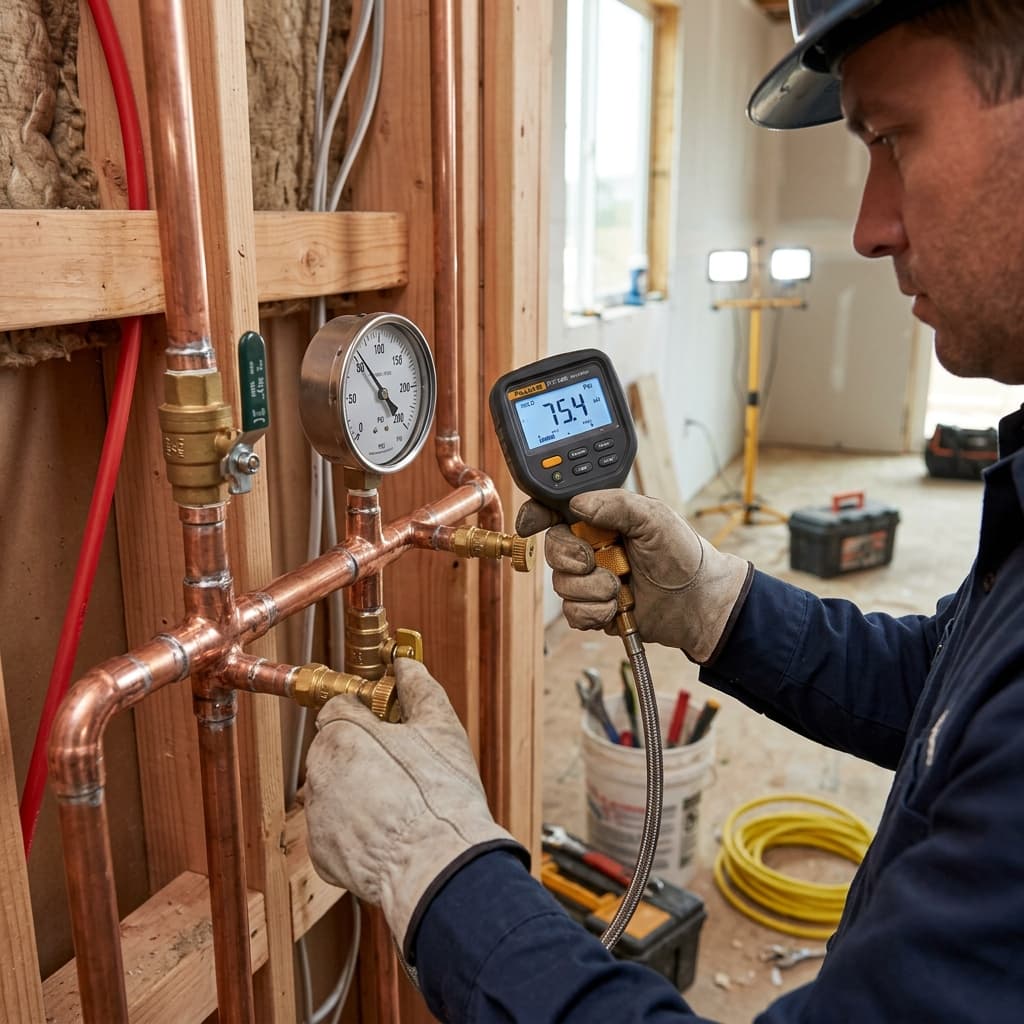
- Test pressure: Minimum 1.5 times the system's maximum operating pressure
- Duration: Minimum 1 hour for most systems, with longer periods for larger installations
- Documentation: All pressure test results must be recorded and maintained
- Inspector verification: Testing may require verification by certified inspectors
Purging and Gas-Specific Protocols
After installation or repair, medical gas systems require specialized purging:
- Oxygen systems: Triple evacuation method to remove oxygen-incompatible contaminants
- Nitrogen systems: Standard purging with approved inert gas
- Vacuum systems: Dedicated evacuation with moisture removal verification
- Mixed-gas systems: Sequential purging protocols specific to gas combinations
Installation Requirements and CPC Section 422 Standards
System Design and Planning
Before any physical installation begins, medical gas systems must meet planning requirements:
Professional Design Requirements- Registered design professional involvement mandatory for most installations
- System design must account for anticipated flow rates and pressure requirements
- Redundancy and backup systems required for critical care applications
- Risk assessment documentation required for high-complexity systems
- Piping routing must maintain required clearances from electrical systems
- Separation from hazardous materials and corrosive environments essential
- Accessibility for maintenance and testing must be preserved
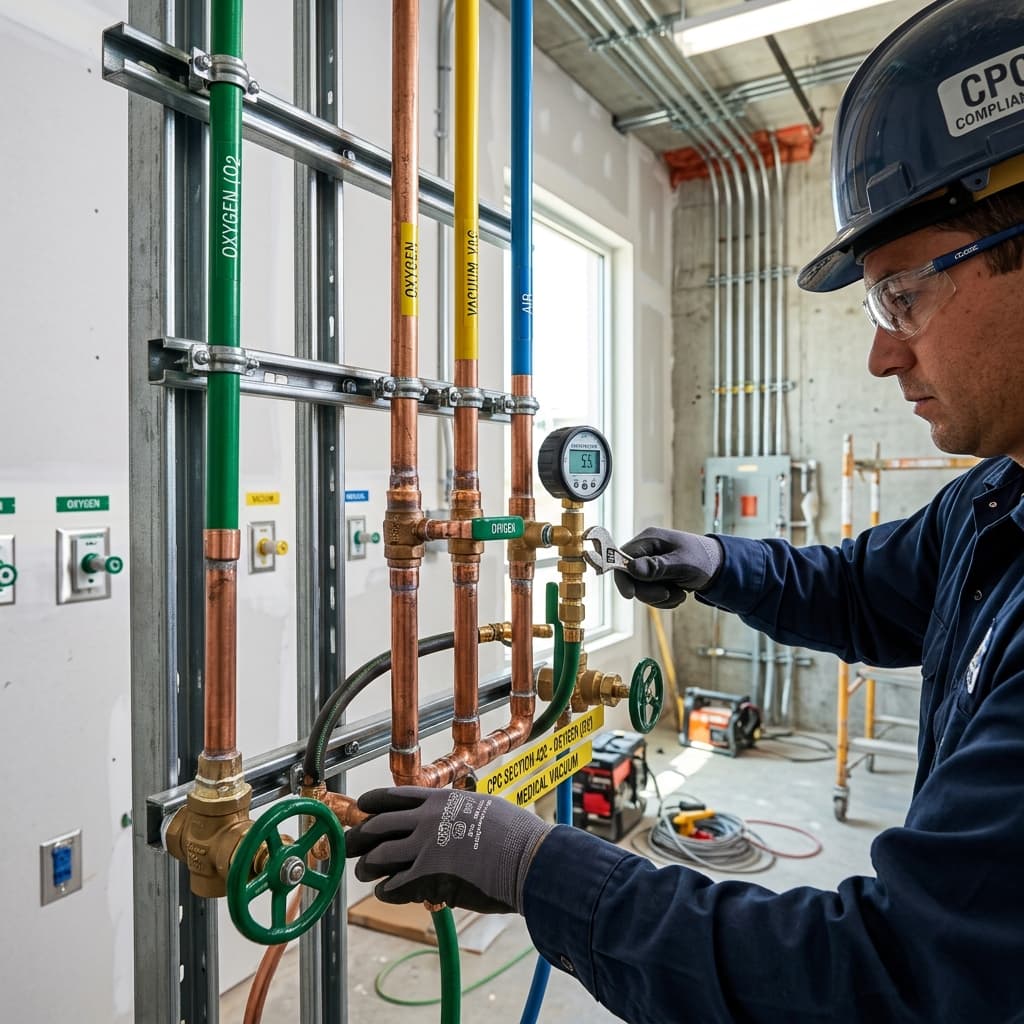
- Identification and labeling requirements per CPC Section 422
Support and Securing Methods
Proper support prevents system degradation and maintains safety:
- Support spacing: Copper tubing typically requires support every 6 feet horizontally, 8 feet vertically
- Support materials: Stainless steel clamps and brackets required; copper clamps prohibited (galvanic corrosion risk)
- Vibration isolation: Critical for systems near mechanical equipment
- Protection from mechanical damage: Tubing must be shielded in high-traffic areas
Testing and Certification for Medical Gas Systems
Third-Party Certification Requirements
California's strict medical gas standards typically require third-party verification:
- Certified testing agencies: Licensed firms must conduct final system verification
- Documentation requirements: Comprehensive testing reports must accompany system handoff
- Continued compliance: Many installations require periodic re-certification
- Chain of custody documentation: All system modifications must be tracked
System Balancing and Flow Verification
Beyond pressure testing, medical gas systems require functional verification:
- Flow rate measurements: Each outlet must meet design specifications
- Pressure regulation verification: Regulators must maintain correct downstream pressure
- Alarm system testing: Where installed, all alarms must function properly
- Emergency shutdown verification: Isolation valves must operate smoothly
Specialty Piping Systems Beyond Medical Gas
While CPC Section 422 focuses on medical gases, it addresses related specialty piping systems:
Laboratory Gas Systems
Laboratory facilities often require specialized gas delivery systems:
- Similar material and testing requirements as medical gas systems
- Specific design considerations for laboratory equipment compatibility
- Environmental containment requirements for certain gases
- Documentation requirements for laboratory safety compliance
Industrial Gas Systems
Though not medical-grade, industrial applications within healthcare facilities require CPC compliance:
- Compressed air systems for surgical equipment and tools
- Inert gas systems for sterilization and laboratory work
- Specialized isolation and safety requirements
- Pressure regulation specific to equipment specifications
C-36 Plumbing License Requirements and Medical Gas Qualifications
Contractor Licensing and Scope
A standard C-36 plumbing license permits general plumbing work but has limitations regarding medical gas systems:
- Medical gas system restrictions: Many C-36 holders cannot independently install medical gas systems
- Specialty certification requirements: Additional training and certification often necessary
- Supervision requirements: Some installations require licensed specialist supervision
- Scope limitations: Always verify current contractor scope with regulatory authorities
Training and Certification Pathways
For C-36 plumbers seeking medical gas specialization:
Manufacturer Training Programs- Equipment manufacturers often provide system-specific training
- Certification demonstrates manufacturer-approved installation knowledge
- Frequently required by healthcare facility standards
- State and national certifications available through multiple organizations
- Comprehensive training covering all medical gas types and applications
- Often required for California healthcare facility work
- Regular updates necessary as codes and standards evolve
- CPC Section 422 changes require knowledge updates
- Professional development maintains competitive advantages
Common C-36 Exam Questions on CPC Section 422
Understanding typical exam formats helps preparation:
Scenario-Based Questions
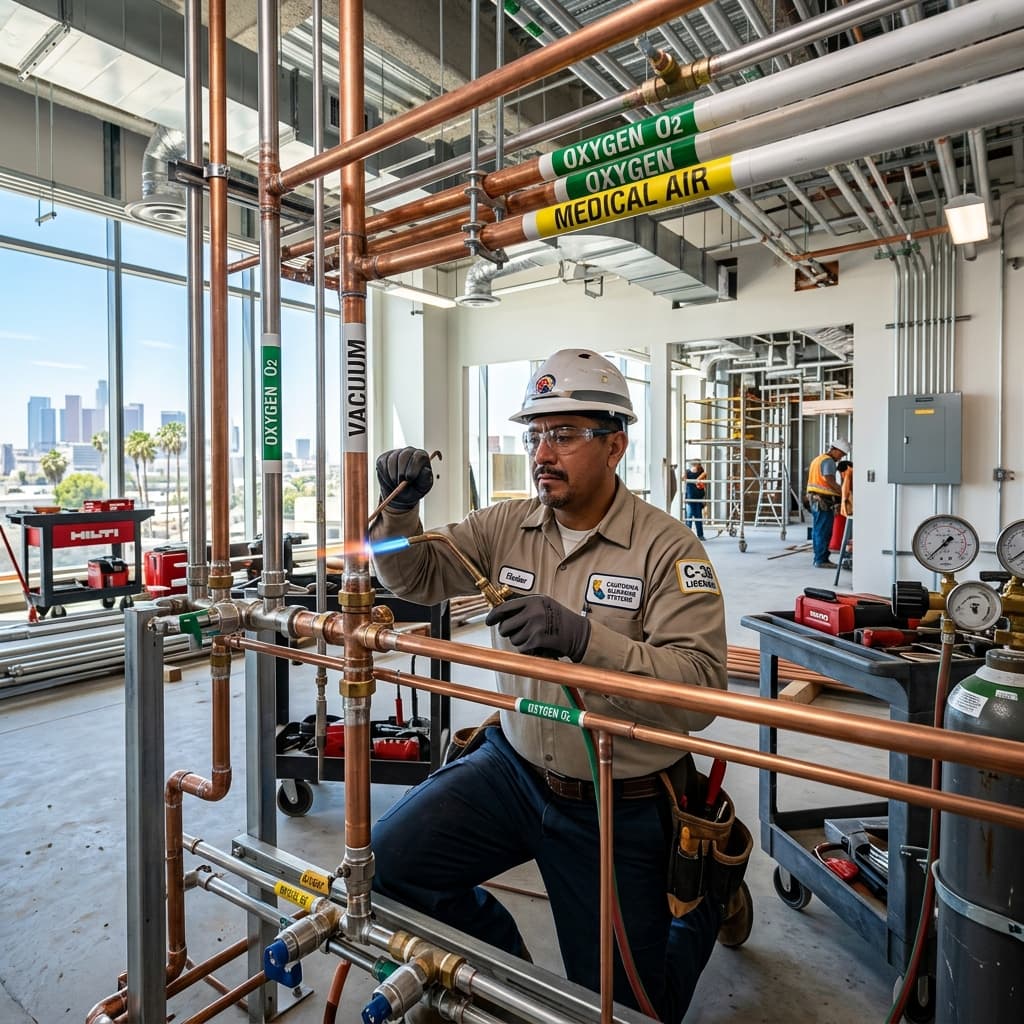
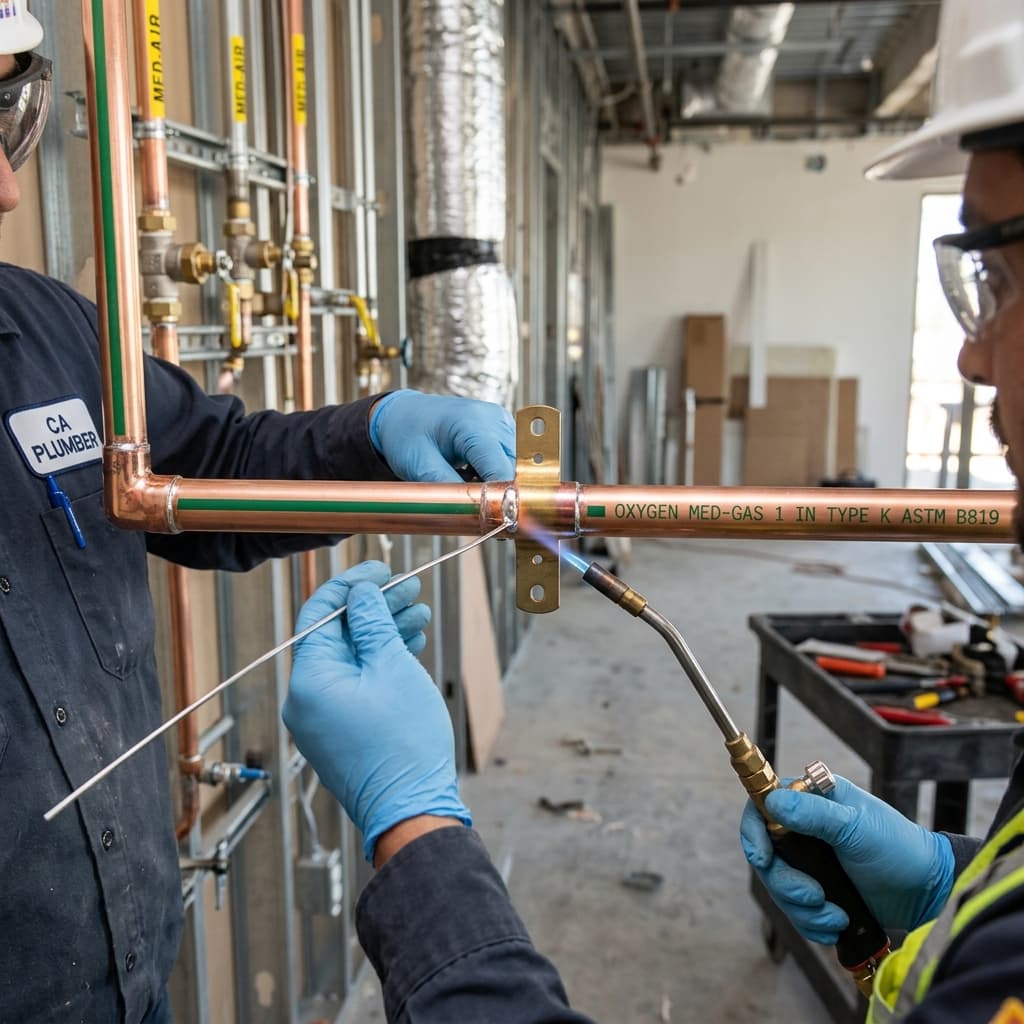
Example: "A contractor is installing an oxygen delivery system in a new surgical suite. The design calls for copper tubing with soft solder joints. Is this permitted under CPC Section 422?" Answer: No. Soft solder is prohibited for oxygen systems due to fluxes creating fire hazards. Silver braze or mechanical fittings required.Code Section Identification
Example: "Which CPC section establishes requirements for medical gas system pressure testing?" Answer: CPC Section 422, which mandates hydrostatic testing at 1.5 times maximum operating pressure.Safety and Material Knowledge
Example: "Why is galvanized steel prohibited for oxygen service in medical gas piping systems?" Answer: Galvanized coatings can oxidize and flake, contaminating oxygen and creating combustion hazards with the highly reactive oxygen environment.Practical Application: Installation Best Practices
Pre-Installation Verification
Before beginning any medical gas system installation:
- Verify system design compliance with current CPC Section 422 standards
- Confirm all materials meet specified ASTM standards
- Review installation sequence with all team members
- Obtain necessary permits and inspection schedules
- Prepare documentation systems for comprehensive record-keeping
Installation Execution
During the actual installation phase:
- Work methodically following approved design specifications
- Maintain cleanliness to prevent contamination in tubing
- Document modifications if design adjustments become necessary
- Perform preliminary inspections before calling for official inspections
- Communicate with medical facility staff about impacts and schedules
Final Testing and Handoff
After physical installation completion:
- Conduct pressure testing per CPC Section 422 specifications
- Perform purging with appropriate gas type
- Verify all regulators and safety devices function properly
- Document all test results comprehensively
- Provide complete documentation to facility management
- Arrange third-party certification if required
Recent Changes and Updates to CPC Section 422
Medical gas standards continually evolve with technology and safety research:
2022-2023 Code Cycle Updates
Recent revisions to California plumbing code medical gas sections include:
- Enhanced requirements for redundant safety systems in critical care applications
- Updated material specifications reflecting new manufacturing standards
- Revised testing protocols incorporating newer verification technologies
- Clarified requirements for system modifications and alterations
Staying Current for Exam Success
C-36 candidates should:
- Review the most current CPC edition available
- Consult DHGS updates for healthcare facility-specific requirements
- Monitor professional organizations for standard updates
- Utilize official study materials reflecting current code requirements
Additional Resources for C-36 Medical Gas Exam Preparation
Official References
- California Plumbing Code (CPC) Section 422 - Primary examination source
- ASPE Medical Gas Systems Design Manual - Comprehensive technical reference
- AGA Gas Installation Code - Complementary standards document
- NFPA 99 Health Care Facilities Code - Healthcare-specific requirements
Supplementary Study Materials
For deeper understanding of specialty piping systems installation:
- Understanding Water Supply System Design in California
- CPC Section 308 Safety Measures for Plumbing Systems
- Pressure Testing Requirements Across California Plumbing Code
Key Takeaways for C-36 Exam Success
Essential Knowledge Points
- Material specifications - Know approved materials for each medical gas type
- Testing protocols - Memorize pressure testing requirements and procedures
- Safety standards - Understand why certain materials and methods are prohibited
- Documentation requirements - Recognize importance of comprehensive record-keeping
- Certification limitations - Know when C-36 licenses require specialist assistance
Exam Strategy Tips
- Read questions carefully - Medical gas questions often contain specific technical details
- Eliminate obviously wrong answers - Prohibited materials and methods are common distractors
- Focus on safety - Questions often test safety-critical knowledge
- Remember that standards vary - Medical gas requirements differ from standard plumbing
- Study code sections thoroughly - Direct code knowledge often determines correct answers
Conclusion
Medical gas and specialty piping systems CPC 422 requirements represent essential knowledge for C-36 plumbing license candidates. The intersection of plumbing expertise, medical safety, and strict regulatory compliance makes this topic both challenging and rewarding.
By mastering CPC Section 422 requirements, understanding material specifications, and knowing proper testing and installation procedures, you'll be well-prepared for examination success. More importantly, you'll gain the knowledge necessary to safely install systems that directly impact patient care and healthcare facility operations.
Remember that medical gas systems demand precision, attention to detail, and unwavering commitment to code compliance. As you prepare for your C-36 examination, dedicate substantial study time to this critical content area—your exam results and professional reputation depend on thorough understanding of these life-safety standards.