


# Indirect Waste and Special Fixture Connections: CPC Section 422 Requirements for C-36 Exam Success
Indirect waste piping is one of the most frequently tested topics on the California C-36 plumbing exam, particularly within Part 4: Water Supply and Distribution. Understanding when and how to implement indirect waste connections, along with special fixture connection requirements, is critical for passing your CSLB exam. This comprehensive guide walks you through CPC Section 422 and its practical applications.What is Indirect Waste Piping?
Before diving into the California Plumbing Code requirements, it's essential to understand what indirect waste piping is and why it exists.
Indirect waste refers to wastewater that does not directly connect to the drainage system. Instead, it discharges into an approved receptor (typically a sink or floor drain), which then connects to the drainage system. This creates a visible separation between the fixture outlet and the drainage system.Why Indirect Waste Matters
The primary reason for requiring indirect waste connections is health and safety protection. By creating a visible air gap, indirect waste prevents backflow and contamination of the water supply. This is particularly important for:- Fixtures that handle potentially contaminated or hazardous materials
- Equipment that could allow dangerous substances to enter the potable water system
- Fixtures where the discharge method poses a risk to public health
CPC Section 422: The Legal Framework
California Plumbing Code Section 422 establishes the requirements for indirect waste piping and special fixture connections. This section is organized into several key subsections that define when indirect waste is required and how it must be installed.Section 422.1: General Requirements
CPC Section 422.1 establishes that certain fixtures and equipment require indirect waste connections. These are not optional—they are mandatory under California law and a critical component of your C-36 exam preparation.
Key Rule: If the code specifies a fixture requires indirect waste, direct connection to the sewer is not permitted, regardless of the plumber's preference or the property owner's wishes.Section 422.2: Fixtures Requiring Indirect Waste
The California Plumbing Code specifies several categories of fixtures and equipment that must use indirect waste connections:
#### Refrigeration Equipment Air conditioning units, refrigerators, and ice machines must discharge through indirect waste. The condensation and drainage from these systems cannot directly enter the drainage system.
#### Beverage Dispensers and Coolers Water coolers, coffee machines, and similar equipment require indirect waste connections to prevent potential contamination.
#### Floor Drains in Certain Locations Not all floor drains require indirect waste, but those in food preparation areas, laboratories, and similar spaces often do.
#### Steam Equipment Steamers, sterilizers, and other steam-generating equipment must discharge indirectly to prevent damage to the drainage system and potential contamination.
#### Indirect Waste Receptors (Sinks) Certain fixtures, such as floor sinks and deck drains, are specifically approved receptors for indirect waste connections.
Installation Requirements for Indirect Waste Connections
Understanding the installation standards is crucial for both exam success and field work. CPC Section 422.3 provides detailed installation requirements.Air Gap Requirements
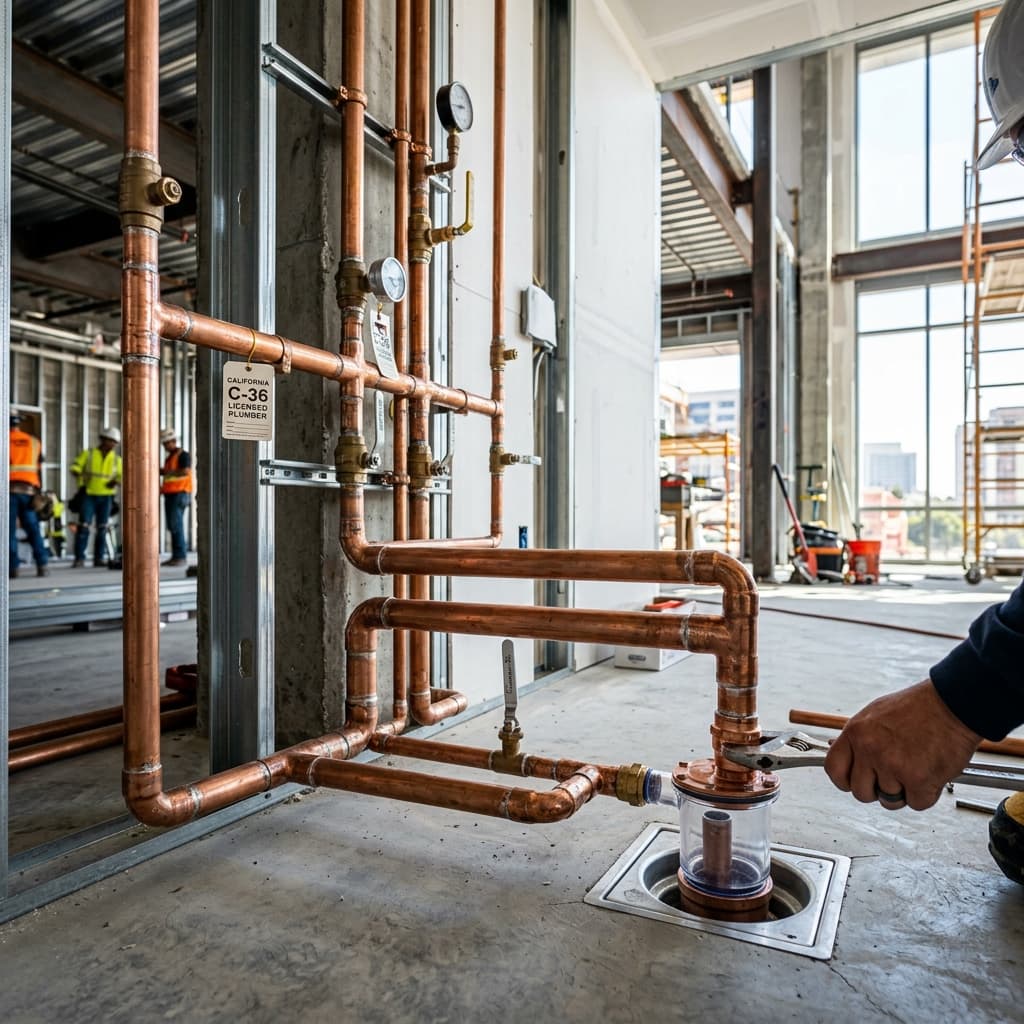
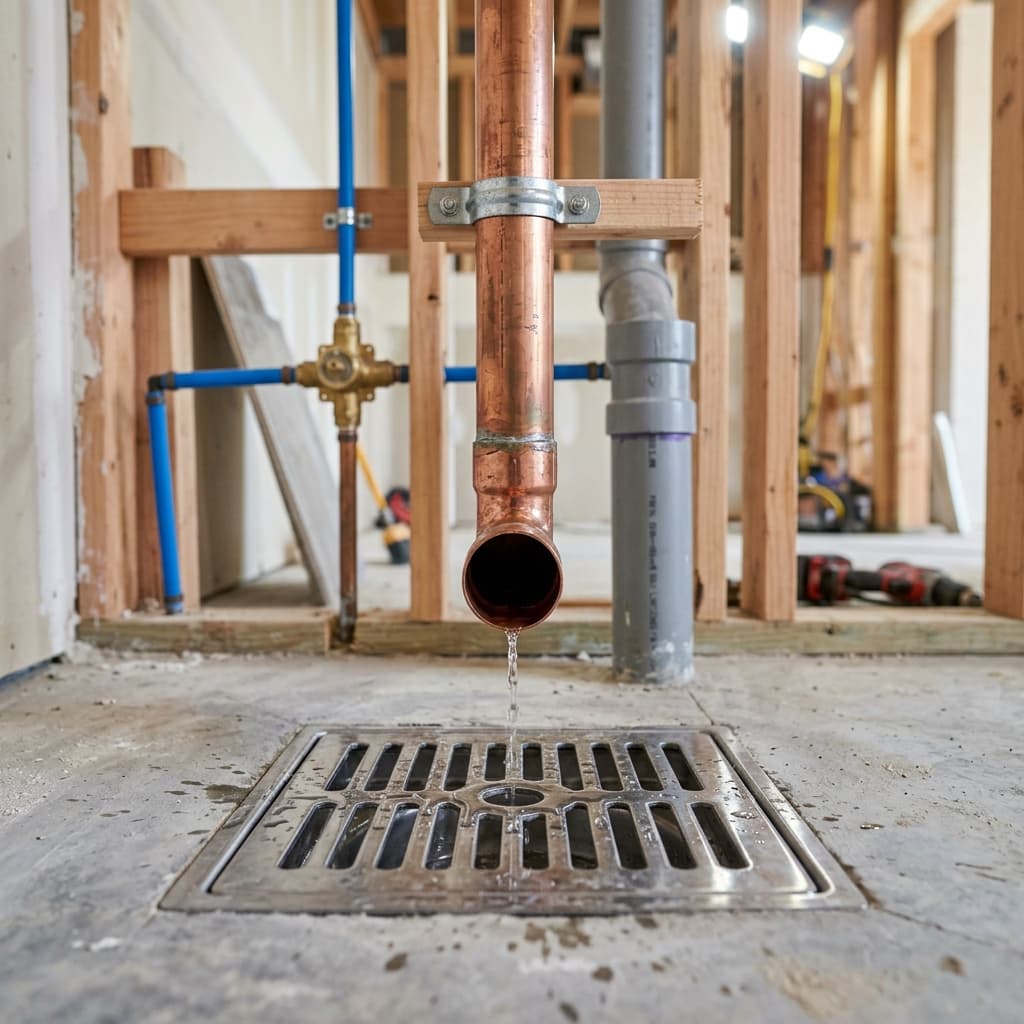
The most critical element of an indirect waste connection is the air gap—the vertical distance between the discharge outlet and the receptor's rim. Minimum Air Gap Standards:- Standard fixtures: minimum 1 inch (25 mm) below the overflow rim
- Lavatory fixtures: minimum 1 inch below the overflow
- Floor drains: minimum 1 inch above the rim in most cases
- Special applications: may require larger gaps (e.g., 2 inches for certain medical equipment)
Connection Methods
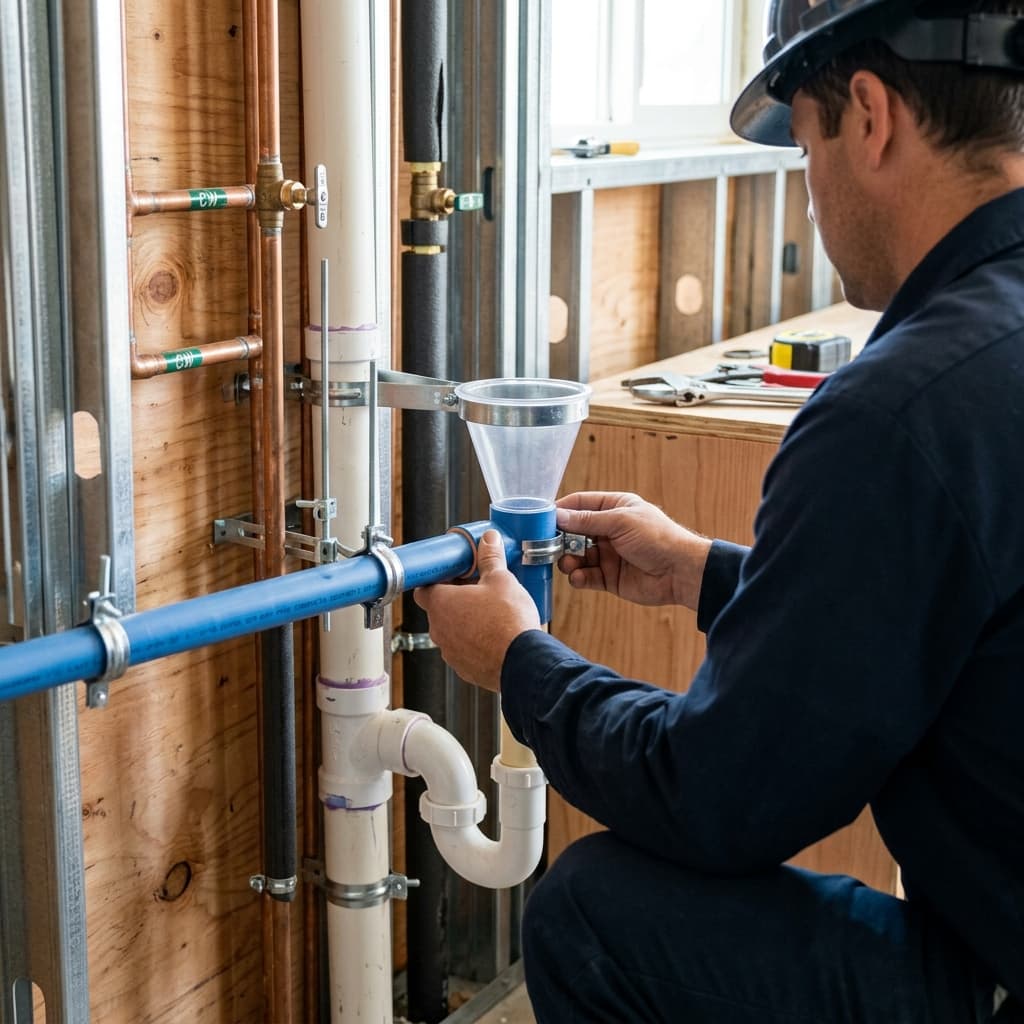
Indirect waste piping must connect to an approved receptor, which then drains to the sanitary sewer or other approved disposal system. The receptor itself must:
- Be a trapped fixture (sink, floor drain, etc.)
- Have adequate capacity to handle the discharge volume
- Be located in an accessible, observable location
- Be properly ventilated according to trap and ventilation standards
Pipe Material and Sizing
Indirect waste piping follows the same material and sizing standards as other drainage piping under the California Plumbing Code:
- Approved Materials: Cast iron, copper, PVC, ABS (per CPC Section 422.4)
- Minimum Sizing: Typically 3/4 inch diameter for most fixtures, though some applications may require 1 inch
- Slope Requirements: Minimum 1/4 inch per foot slope toward the receptor
Special Fixture Connections Under CPC Section 422
Beyond indirect waste requirements, Section 422 addresses other special fixture connection scenarios that deviate from standard installation practices.
Medical and Laboratory Equipment
Fixtures in medical facilities, laboratories, and research settings often require special connections:
- Sterilizers and autoclaves must discharge indirectly with specific trap configurations
- Eyewash and safety shower stations typically require indirect connections
- Laboratory sinks in hazardous material areas may need additional safeguards
- Distillers and similar equipment cannot discharge directly to the sewer
Commercial Kitchen Applications
Commercial kitchens present unique challenges due to grease, food particles, and high-temperature discharge:
- Pot sinks and floor drains in food prep areas require indirect waste
- Grease traps must be properly sized and maintained (see CPC Section 1005 for grease interceptor requirements)
- Indirect waste from cooking equipment must not bypass the grease trap
High-Temperature Discharge
Certain fixtures discharge water or steam at temperatures that could damage conventional drainage systems:
- Steam equipment requires special piping materials (often copper or galvanized steel)
- Temperature limitations: Water entering the drainage system typically cannot exceed 180°F
- Cooling requirements: Some indirect waste connections include cooling coils
Trap Requirements for Indirect Waste Receptors
A critical point that many C-36 candidates miss: the receptor itself must be a trapped fixture.Understanding Trapped Receptors
When an indirect waste connection discharges into a sink or floor drain, that receptor must have:
- A P-trap or S-trap in proper configuration
- Adequate water seal maintained at all times (minimum 2 inches in most cases)
- Proper ventilation to prevent trap seal loss
Ventilation of Indirect Waste Fixtures
The receptor fixture must be properly ventilated according to CPC Sections 308 and 312:- Individual vents are typically required
- Common vents may be permitted in some configurations
- Loop vents are not permitted for receptors receiving indirect waste
- Vent sizing follows standard requirements based on the drainage system
Common Indirect Waste Scenarios You'll See on the C-36 Exam
Understanding real-world applications helps solidify your knowledge of CPC Section 422.
Scenario 1: Air Conditioning Unit Condensate
Situation: An air conditioning unit serves a commercial office space. Requirement: The condensate line must discharge indirectly into a trapped and vented sink (or approved floor drain) with a minimum 1-inch air gap. Why: The condensate, while relatively clean, could harbor bacteria. Direct connection poses backflow risk.Scenario 2: Water Cooler in Office Building
Situation: A point-of-use water cooler serves an office floor. Requirement: Discharge must go indirectly through a trapped sink with proper ventilation. The sink must drain to the sanitary sewer (not roof drain or storm drain). Common Error: Some plumbers attempt to discharge water coolers into floor drains without proper trapping—this violates the code.Scenario 3: Laboratory Equipment
Situation: A laboratory sterilizer requires a drain. Requirement: Indirect waste connection with adequate air gap, special materials that resist high temperatures, and proper trap/vent configuration. Additional Consideration: May require checking with local health departments for special requirements.Scenario 4: Commercial Kitchen Floor Drain
Situation: A floor drain in a food preparation area. Requirement: Must be indirectly trapped and vented. All grease-laden water must pass through a grease trap before entering the sewer. CPC Reference: Cross-reference with CPC Section 1005 for grease interceptor requirements and indirect waste standards.Common Code Violations and Exam Mistakes
Being aware of frequent violations helps you avoid them on your C-36 exam and in the field.
Violation 1: Inadequate Air Gap
Error: Indirect waste outlet submerged below the receptor rim level. Code Violation: CPC Section 422.3 Consequence: Risk of backflow contamination; fixture must be modified.Violation 2: Untrapped Receptors
Error: Indirect waste discharging into an untrapped floor drain or sink. Code Violation: CPC Sections 309 and 422.3 Consequence: Trap seal loss, sewer gases entering building, health hazard.Violation 3: Undersized Receptors
Error: Discharging multiple fixtures or high-volume equipment into an undersized sink. Code Violation: CPC Section 422.3 (adequate capacity requirement) Consequence: Overflow, water damage, system failure.Violation 4: Improperly Ventilated Receptors
Error: Indirect waste receptor trapped and connected but not properly vented. Code Violation: CPC Sections 308 and 312 Consequence: Trap seal loss, system failure over time.Study Tips for Section 422 on Your C-36 Exam
To master this critical exam content:
- Memorize the fixtures that require indirect waste (refrigeration, beverage dispensers, steam equipment, etc.)
- Know the air gap measurements by heart—these are frequently tested
- Understand why indirect waste is required, not just the "what"
- Practice identifying scenarios where indirect waste applies
- Cross-reference with trap and ventilation sections for complete understanding
- Draw diagrams showing proper indirect waste connections with air gaps and vents
- Review actual installations in your area to see real-world applications
Related CPC Sections You Should Know
To fully understand Section 422 in context, review these related sections:
- CPC Section 308: Traps and Seals - Every indirect waste receptor must be properly trapped
- CPC Section 309: Trap Seals - Water seal requirements
- CPC Section 312: Ventilation of Drainage Systems - Receptors must be properly vented
- CPC Section 1005 - Grease interceptors (cross-referenced for kitchen applications)
- CPC Section 406: Backflow Prevention - The reason indirect waste exists
Practical Application: Answering C-36 Exam Questions on Section 422
When you encounter an exam question about indirect waste or special fixture connections, use this approach:
- Identify the fixture or equipment - Is it on the required list?
- Determine if indirect waste is required - Does CPC Section 422 apply?
- Check air gap requirements - What's the minimum for this application?
- Verify trap and vent requirements - Is the receptor properly configured?
- Consider material and sizing - Are appropriate materials specified?
- Eliminate obviously wrong answers - Many test questions include violation scenarios
Final Thoughts
CPC Section 422 addresses critical health and safety requirements that protect California's water supply and public health. As a C-36 plumbing professional, your thorough understanding of indirect waste and special fixture connections isn't just about passing the exam—it's about protecting the people you serve.
Take time to study these requirements carefully, practice identifying when they apply, and understand the reasoning behind each rule. Your success on Part 4 of the C-36 exam depends on this knowledge, and your professional reputation will be built on applying it correctly in the field.
---META_TAGS--- CPC References: Section 422 (Indirect Waste), Section 308 (Traps), Section 309 (Trap Seals), Section 312 (Ventilation) Next Steps: After mastering Section 422, review trap and ventilation requirements and fixture connection standards for comprehensive Part 4 preparation.