


# CPC Section 422 Drainage Pipe Sizing: Master Horizontal and Vertical Requirements for C-36 Success
Drainage system design forms the backbone of competent plumbing practice in California. The California Plumbing Code's Section 422 establishes comprehensive requirements for CPC Section 422 drainage sizing that every C-36 candidate must master. Whether you're sizing a residential toilet drain or a commercial multi-story soil stack, understanding horizontal and vertical pipe sizing calculations directly impacts your exam performance and professional capability.This comprehensive guide breaks down the critical concepts, calculation methods, and code requirements you'll encounter on your C-36 plumbing exam, specifically focusing on Part 2: Drainage and Venting Systems.
Understanding CPC Section 422 Framework
CPC Section 422 serves as the foundation for all drainage system design in California. This section provides the technical requirements for sizing drainage and waste pipes based on fixture unit loads, slope considerations, and material specifications.The Fixture Unit Concept
The fixture unit is your primary tool for drainage calculations. Each plumbing fixture has an assigned fixture unit value that represents its drainage load:
- Water closets: 4 fixture units
- Lavatories: 1 fixture unit
- Kitchen sinks: 2 fixture units
- Bathtubs/showers: 2 fixture units
- Floor drains: 1 fixture unit
- Urinals: 4 fixture units
- Bidets: 1 fixture unit
Horizontal Drainage Pipe Sizing
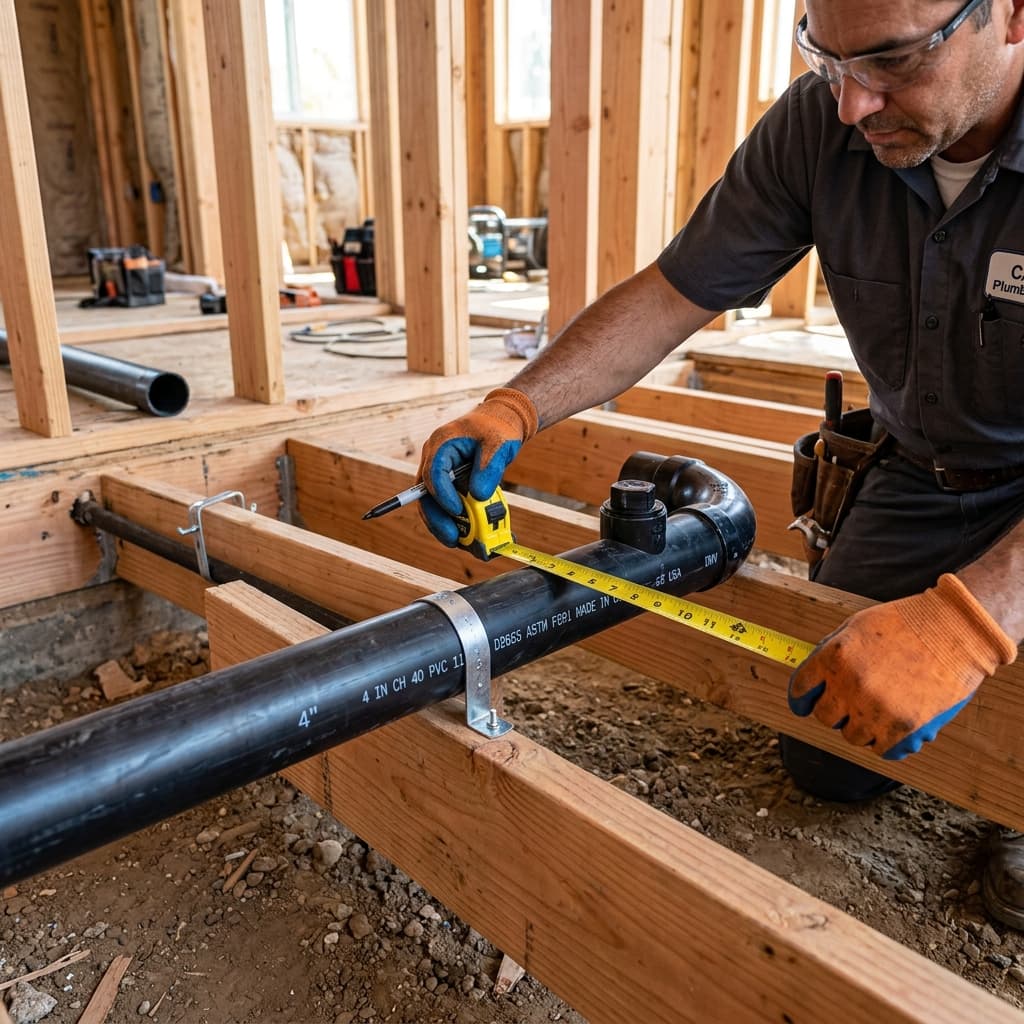
Horizontal drainage pipes present unique challenges compared to vertical stacks. The california plumbing code drainage requirements for horizontal runs focus on maintaining proper flow velocity while preventing sediment accumulation.Slope Requirements for Horizontal Drainage
CPC Section 422.2 specifies that all horizontal drainage pipes must have a minimum slope of 1/8 inch per foot and a maximum slope of 1/4 inch per foot (1:96 to 1:48 ratio).
Why slope matters:- Too shallow (less than 1/8"): Waste accumulates, causing blockages and odor problems
- Too steep (more than 1/4"): Water separates from solids, leaving deposits that trap gases
- Optimal range (1/8" to 1/4"): Maintains proper scouring velocity of 2 feet per second
Horizontal Drainage Sizing Table (CPC Section 422)
The code provides a comprehensive table for sizing horizontal drainage pipes:
| Pipe Diameter | Maximum Fixture Units | Slope 1/4" per foot | |---|---|---| | 1.5" | 3 | 3 | | 2" | 6 | 6 | | 3" | 20 | 20 | | 4" | 160 | 180 | | 6" | 620 | 700 |
Key insight: Notice how pipe capacity increases dramatically with diameter. A 4-inch pipe handles nearly 8 times the load of a 2-inch pipe. This nonlinear relationship frequently appears in C-36 exam questions.Calculating Horizontal Branch Sizes
Let's work through a practical example you might encounter:
Scenario: A bathroom includes two lavatories (1 FU each), one bathtub (2 FU), and one water closet (4 FU) all draining into a common horizontal branch. Calculation:- Sum fixture units: 1 + 1 + 2 + 4 = 8 fixture units
- Check CPC Table 422.1: 8 FU requires minimum 2-inch pipe
- Verify slope: Install at 1/8" minimum slope (1/4" preferred)
- Result: 2-inch horizontal branch at 1/4" per foot slope
Vertical Drainage Pipe Sizing
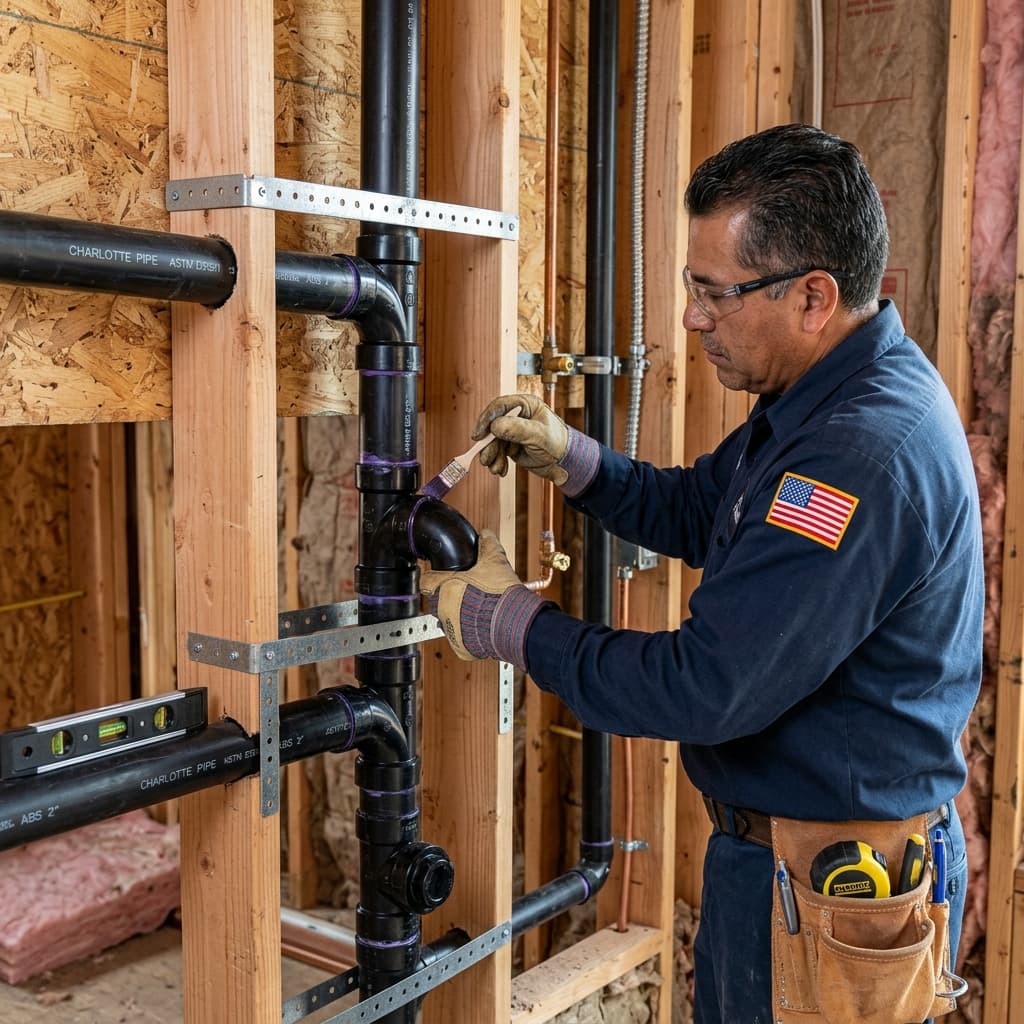
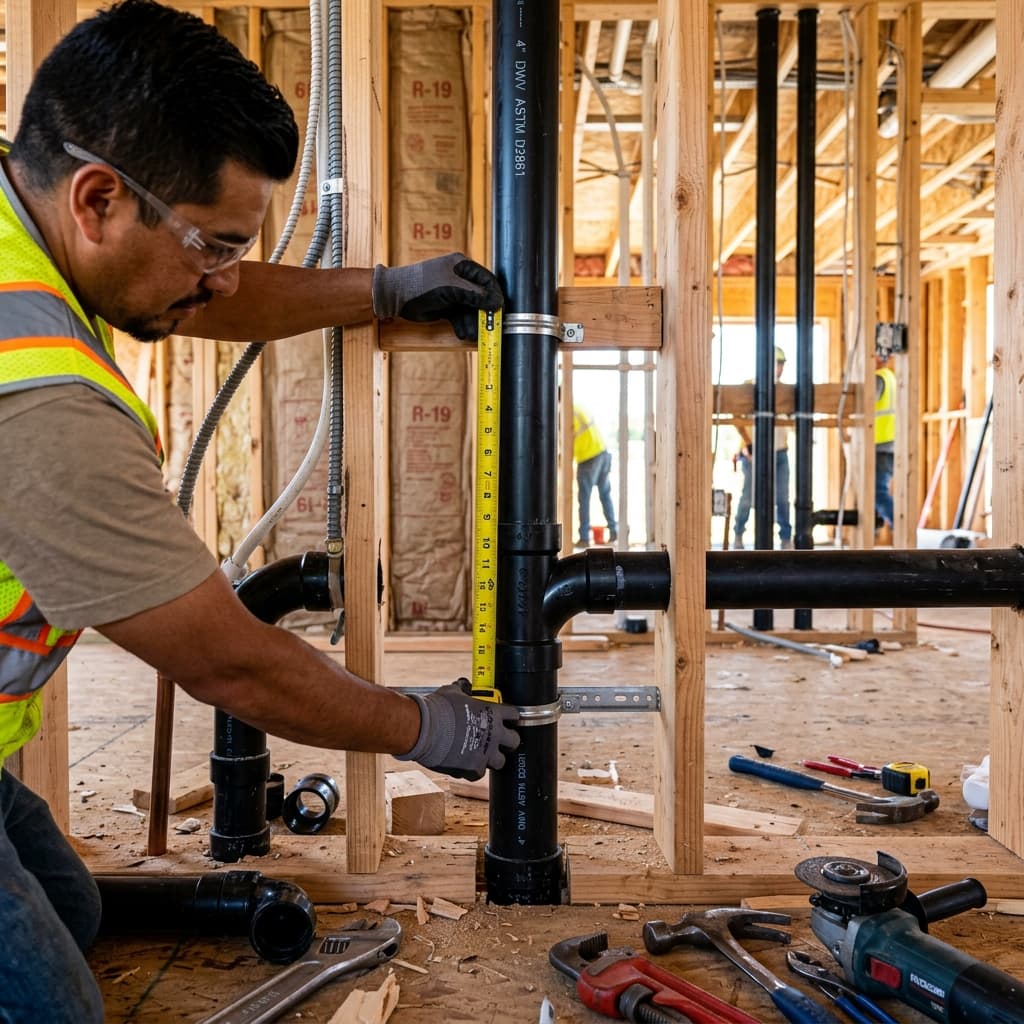
Vertical soil and waste stacks operate under different hydraulic principles than horizontal pipes. CPC Section 422.3 provides distinct sizing requirements for vertical installations.
Vertical Stack Sizing Principles
Vertical pipes don't require slope—gravity provides all necessary flow. However, vertical pipes must be sized to prevent:
- Trap seal loss: Air pockets that siphon water from traps
- Back pressure: Gases pushing upward and escaping through fixtures
- Overflow conditions: Insufficient pipe diameter for simultaneous fixture use
Vertical Soil and Waste Stack Table (CPC Section 422)
| Stack Diameter | Maximum Fixture Units | |---|---| | 2" | 4 | | 3" | 16 | | 4" | 256 | | 5" | 541 | | 6" | 960 |
Notice the dramatic capacity increase: a 4-inch stack handles 256 fixture units compared to only 4 for a 2-inch stack.
Calculating Vertical Stack Sizes
Scenario: A three-story commercial building with bathroom stacks on each floor. Each floor contains:- 2 water closets (4 FU each) = 8 FU
- 2 lavatories (1 FU each) = 2 FU
- 1 sink (2 FU) = 2 FU
- Per floor: 12 FU
- Floor 1 (ground): 12 FU
- Floors 2-3: Add cumulative loads (12 + 12 + 12 = 36 FU total)
- Check CPC Table 422.3: 36 FU requires minimum 3-inch stack
- Result: 3-inch soil stack serving all three floors
Key Differences: Horizontal vs. Vertical Drainage
Understanding distinctions between horizontal and vertical sizing prevents costly mistakes on your exam:
| Factor | Horizontal | Vertical | |---|---|---| | Slope Required | 1/8" to 1/4" per foot | None (gravity only) | | Flow Principle | Maintained velocity critical | Pressure/gravity driven | | Sizing Table | CPC 422.1 | CPC 422.3 | | Common Issue | Blockage from sediment | Air lock/trap seal loss | | Exam Frequency | Very high | Very high |Sanitary Drainage vs. Storm Drainage
CPC Section 422 primarily addresses sanitary drainage (toilet, sink, shower waste). Storm drainage has separate requirements under CPC Section 423. This distinction frequently appears as exam trick questions.
Key differences:- Sanitary drainage: Human waste products, requires venting per CPC Section 424
- Storm drainage: Rainwater only, different sizing tables, fewer restrictions on materials
- Combined systems: Some older buildings use combined drains; modern code generally prohibits this per CPC Section 429
Common C-36 Exam Scenarios and Solutions
Scenario 1: Branch Fitting Selection
Question: A 2-inch horizontal branch draining 4 fixture units changes direction 45 degrees. What fitting is required? Answer: CPC Section 422 requires a long-radius 45-degree elbow or wye fitting. Tight elbows (22.5-degree) are prohibited on drainage.Scenario 2: Stack Sizing with Future Expansion
Question: An office building installs a 3-inch soil stack serving 25 fixture units. Building plans include future renovation adding 35 more fixture units. Is the current stack adequate? Answer: No. Current stack (3-inch) handles maximum 16 FU. Even current load (25 FU) exceeds capacity. A 4-inch stack is required. CPC Section 422.3 prohibits undersizing regardless of current load.Scenario 3: Slope Measurement
Question: A 40-foot horizontal drain must drop 8 inches total. Is this compliant? Calculation: 8 inches ÷ 40 feet = 0.2 inches per foot = 1/5 inch per foot Answer: Yes, this falls within CPC's 1/8" to 1/4" per foot range. Compliant installation.Critical Code References for Your Exam
- CPC Section 422.1: Horizontal drainage pipe sizing and slope requirements
- CPC Section 422.2: Minimum and maximum slopes for drainage pipes
- CPC Section 422.3: Vertical soil and waste stack sizing
- CPC Section 422.4: Pipe material and joint requirements
- CPC Table 422.1: Horizontal drainage sizing table (critical reference)
- CPC Table 422.3: Vertical stack sizing table (critical reference)
Practical Application: Residential Dwelling Example
Let's design a complete drainage system for a three-bedroom residence:
Ground floor:- 2 lavatories (1 FU each) = 2 FU
- 1 kitchen sink (2 FU) = 2 FU
- 1 water closet (4 FU) = 4 FU
- Total: 8 FU
- 2 lavatories (1 FU each) = 2 FU
- 1 bathtub (2 FU) = 2 FU
- 1 water closet (4 FU) = 4 FU
- Total: 8 FU
- Second floor toilet: 2-inch horizontal branch (4 FU requires minimum 1.5", use 2")
- Second floor wet area: 2-inch horizontal branch (2 + 2 = 4 FU)
- Second floor vent stack: 2-inch (connects to main vent per CPC Section 424)
- Main vertical stack: 3-inch (16 FU capacity exceeds combined 16 FU load)
- First floor kitchen branch: 2-inch (2 FU)
- First floor toilet: 2-inch (4 FU)
- Main soil line to septic/sewer: 4-inch at 1/4" per foot slope
Study Tips for Mastering Drainage Sizing
- Memorize fixture unit values: You cannot reference these during calculations; they must be automatic recall
- Practice slope calculations: Many exam questions test your ability to calculate drops over distances
- Understand cumulative loading: Vertical stacks accumulate loads from multiple floors—don't forget fixtures above
- Know table references: Memorize the maximum fixture units for each pipe diameter in both horizontal and vertical tables
- Draw diagrams: Sketch out system layouts during exam calculations; visual representation prevents errors
- Review code changes: CPC updates every three years; verify your study materials reflect current code
Common Study Mistakes to Avoid
Mistake 1: Confusing horizontal and vertical sizing tables- Solution: Color-code your reference materials—one color for CPC 422.1, another for 422.3
- Solution: Create a checklist when reading questions: toilet, sink, shower, tub, floor drain, washer, dishwasher?
- Solution: Always verify both diameter AND slope for horizontal installations
- Solution: Size for maximum anticipated load, not current load
Your Path to C-36 Exam Success
Mastering drainage system design per CPC Section 422 separates competent plumbers from those who struggle on the certification exam. This content area appears in approximately 15-20% of Part 2 questions, making it impossible to achieve passing scores without thorough understanding.The fixture unit method, horizontal slope requirements, and vertical stack calculations aren't abstract concepts—they're practical tools you'll use throughout your plumbing career. Every drainage system you design must comply with CPC Section 422 requirements.
Start by memorizing the fixture unit table and the two critical sizing tables. Practice converting real-world scenarios into fixture unit calculations. Work through dozens of practice problems until you can identify required pipe sizes within seconds. Review venting requirements alongside drainage sizing—they're deeply interconnected systems.Your C-36 exam success begins with mastering the fundamentals in this post. Make CPC Section 422 your foundation, and you'll confidently tackle every drainage sizing question on test day.