
# Greywater System Installation California: C-36 Plumbing Code Requirements
Greywater system installation California contractors must master is becoming increasingly critical as water conservation regulations tighten across the state. As a C-36 plumbing license professional, understanding greywater system design and the fixture requirements that govern them directly impacts your ability to pass Part 5 of the California Contractor's Plumbing Exam and execute compliant installations in the field.
This comprehensive guide covers the California Plumbing Code greywater standards, fixture-specific requirements, and the essential knowledge needed for both exam success and real-world project execution.
What Are Greywater Systems and Why They Matter
Greywater systems are alternative water source plumbing installations designed to capture, treat, and redistribute water from certain household fixtures for non-potable reuse—typically landscape irrigation. Unlike blackwater (toilet and urinal discharge), greywater comes from sinks, showers, bathtubs, and washing machines.
In California, greywater systems represent a critical water conservation strategy. The state's persistent drought conditions and regulatory emphasis on alternative water sources have made greywater installations increasingly common in new construction and retrofit projects.
Key distinction for exam preparation: Understanding which fixtures qualify as greywater sources versus prohibited sources is fundamental to Part 5 of the C-36 exam.California Plumbing Code Foundation: CPC Chapter 3 Overview
The California Plumbing Code (CPC) Section 308.1 establishes the framework for alternative water sources, including greywater systems. Chapter 3 governs water supply and distribution—directly aligned with Part 5 of your exam.
Primary CPC References for Greywater Systems
CPC Section 308.1 defines alternative water sources and requires compliance with:- NSF/ANSI 350-1 (Onsite Residential and Commercial Water Reuse Treatment Systems)
- California Title 22 regulations for non-potable water reuse
- Local water agency requirements
- Include proper identification and labeling
- Maintain separation from potable water supplies
- Prevent backflow and cross-connections
- Provide access for maintenance and inspection
Approved Greywater Fixture Sources
Understanding which fixtures can legally supply greywater is critical for both exam and field work. The California Plumbing Code clearly defines approved sources.
Permitted Greywater Sources
Approved fixtures include:- Bathtubs and showers
- Bathroom sinks and vanities
- Washing machines (including laundry facilities)
- Floor drains from bathrooms and laundry areas
- Kitchen sinks (in some jurisdictions with treatment requirements)
Prohibited Blackwater Sources
Never permitted as greywater sources:- Toilets and urinals
- Bidets
- Kitchen garbage disposals
- Sewage or effluent from septic systems
- Any fecal matter-contaminated water
Fixture-Specific Installation Requirements
Different fixtures require distinct installation approaches when integrated into greywater systems. C-36 contractors must understand these variations.
Shower and Bathtub Connections
Showers and bathtubs represent the most common greywater sources in residential installations.
Installation requirements (CPC Section 308.3):- Trap seals must be maintained between fixture and greywater system
- P-traps remain required despite greywater use
- Drain piping must slope minimum 1/4 inch per foot toward collection
- No reverse slopes that could create water pooling
Washing Machine Connections
Washing machines present unique challenges due to soap residue and lint considerations.
Key installation standards:- Dedicated drain connection to greywater system (do not combine with other fixture drains initially)
- Lint filters required unless NSF-certified system removes particles
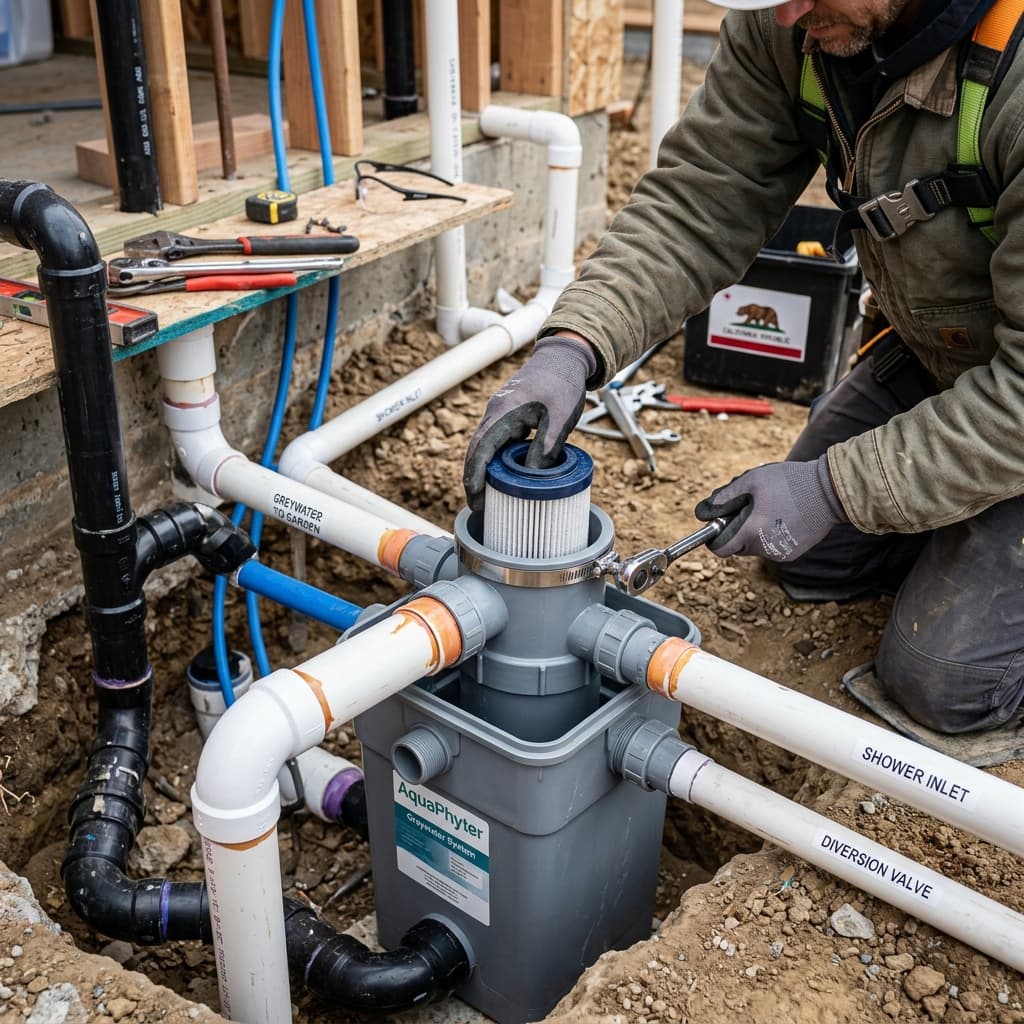
- Drum filter or sediment trap installed before greywater treatment unit
- Separate cleanout access maintained for inspection
- Connection must allow for fixture removal without system disruption
Bathroom Sink Connections
Bathroom sinks supply lower-volume greywater but require specific configurations.
Installation details:- Individual P-trap required between sink and collection piping
- Pop-up stoppers must not clog collection lines (consider strainers)
- Overflow holes in sinks need separate drainage if they feed greywater system
- Access fittings required for cleaning sediment buildup
System Separation and Backflow Prevention
Separating greywater systems from potable supplies is non-negotiable under California Plumbing Code requirements. Backflow prevention is equally critical.
Physical Separation Standards
CPC Section 308.4 requires:- Air gap of minimum 1 inch between greywater discharge and potable water
- Visible, unobstructed separation (no siphoning possible)
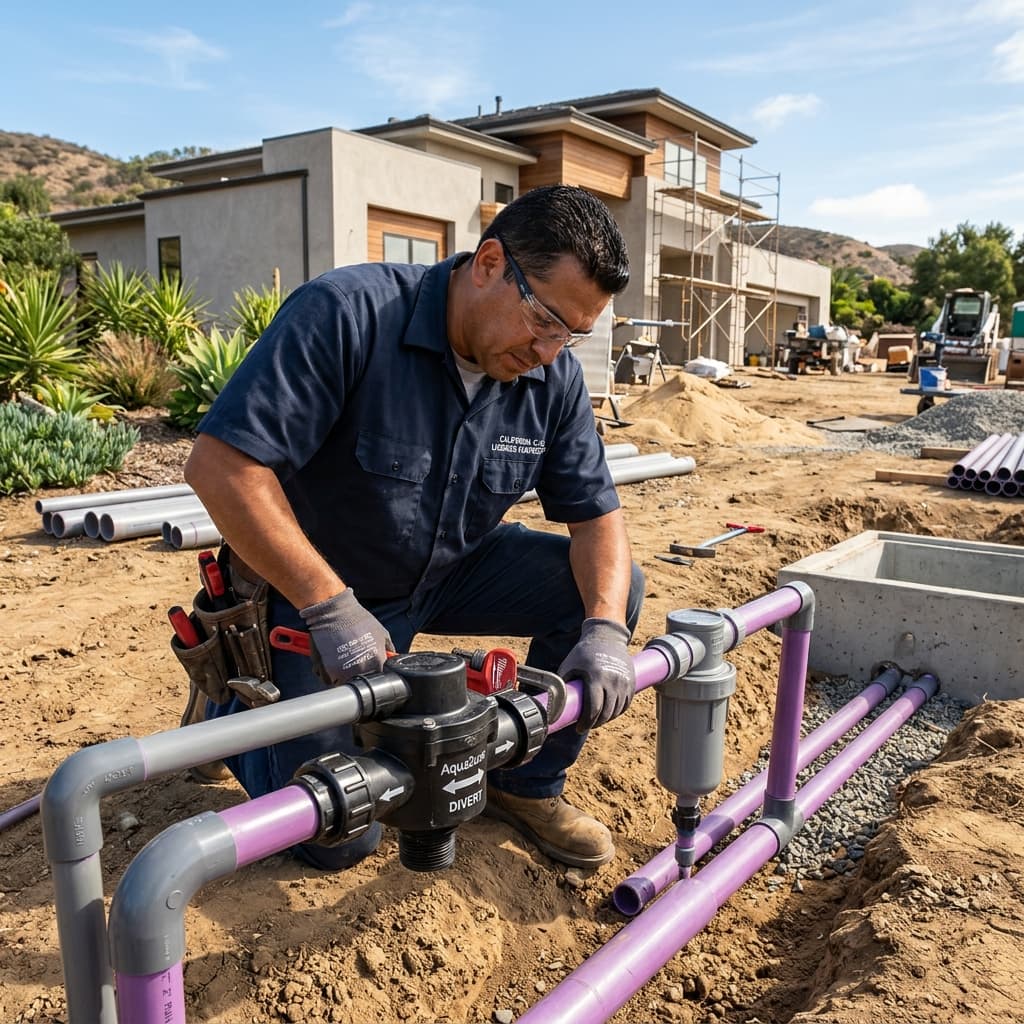
- Color-coded piping or clear labeling showing non-potable water
- Separate cleanouts, access points, and inspection locations
Backflow Prevention Devices
When air gaps cannot be maintained:- Reduced pressure principle (RP) backflow preventers required
- Double check valves as alternative (lower protection level)
- Devices must be testable and NSF certified
- Installation accessible for annual testing and maintenance
NSF/ANSI 350-1 Certification Requirements
The NSF/ANSI 350-1 standard is the gold standard for greywater treatment systems in California and appears frequently on C-36 exams.
What NSF/ANSI 350-1 Covers
This standard specifies:- Treatment system effectiveness (particulate removal, pathogen reduction)
- Water quality testing and monitoring protocols
- System component durability and reliability
- Maintenance requirements and intervals
- Performance under various water conditions
Why It Matters for Installation
C-36 contractors must verify that installed systems hold NSF certification. Non-certified systems—regardless of performance claims—violate California code and create liability.
Exam focus: Questions test whether you know that certification must be verified before installation begins, not after.Permit and Plan Requirements
Greywater system installations require documentation beyond standard plumbing permits.
Permits Required for C-36 Contractors
Most jurisdictions require:- Standard plumbing permit with greywater system designation
- Detailed system plans showing all connections and fixtures
- Water quality report (for some jurisdictions)
- NSF certification documentation
- Maintenance and operation manual approval
Plan Submission Essentials
Your plans must clearly indicate:- Each fixture supplying greywater (with specification of fixture type)
- Treatment unit location and NSF certification
- Distribution piping layout and slope calculations
- Backflow prevention devices and testing access
- Separate potable and non-potable piping identification
- Cleanout and access point locations
- Maintenance schedule and responsibility
Labeling and Identification Standards
The California Plumbing Code mandates clear identification of all greywater system components.
Required Labeling (CPC Section 308.5)
All greywater piping must be clearly marked:- Non-potable water signage at distribution points
- Color coding: typically purple or grey pipe (check local requirements)
- Permanent labels on cleanouts and access fittings
- Warning labels at any potable/greywater adjacency points
- Fixture identification showing greywater source
Material Standards for Labeling
- Labels must be durable and weather-resistant
- Text must remain legible for system lifespan
- Multiple languages required in some jurisdictions
- Pictorial symbols accepted if barriers prevent potable connection
Maintenance Access and Inspection Requirements
Greywater systems require ongoing access for maintenance—a critical installation consideration often tested on Part 5 exams.
Required Access Points
Installation must include cleanouts at:- Inlet to treatment system (for sediment and debris removal)
- Outlet of treatment system (for servicing)
- Changes in direction greater than 45 degrees in collection piping
- Every 50 feet of collection piping runs
- Between fixture groups and main collection line
Inspection Port Specifications
- Minimum 4-inch diameter cleanout openings
- Accessible within 18 inches of ground surface (or as jurisdictionally required)
- Clear identification and permanent marking
- Grates or covers removable without tools
Common Installation Errors and Exam Pitfalls
Understanding mistakes prevents both field failures and exam errors.
Frequent Code Violations
- Blackwater contamination: Connecting garbage disposals or toilets to greywater systems (automatic failure)
- Missing air gaps: Allowing greywater discharge to sit below potable water line without backflow prevention
- Inadequate slope: Collection piping without proper grade causing standing water
- Incomplete labeling: Failing to mark all piping and access points
- No maintenance access: Installing systems without adequate cleanouts for servicing
Exam-Specific Traps
- Questions may list multiple fixture types and ask which are prohibited sources
- Scenario questions often test your knowledge of fixture-specific requirements
- Installation sequence questions assess your understanding of proper connection order
- Code reference questions require knowing specific CPC sections
Maintenance Requirements and Contractor Responsibility
As a C-36 contractor, understanding maintenance obligations protects your license and ensures system longevity.
Required Maintenance Documentation
Systems must include:- Maintenance manual in English (and other languages if required)
- Frequency of filter changes and sediment removal (typically monthly to quarterly)
- System testing and inspection intervals
- Contact information for qualified maintenance personnel
- Record-keeping requirements for inspections
Contractor Documentation Responsibility
Before final sign-off:- Verify NSF certification remains with homeowner
- Provide labeled system schematic
- Document all fixture connections
- Supply maintenance schedule
- Include contact information for future service providers
Key Takeaways for C-36 Exam Success
Remember these critical points for Part 5 preparation:- Greywater systems must separate approved fixture sources (showers, sinks, washing machines) from prohibited blackwater sources (toilets, urinals, garbage disposals)
- CPC Section 308.1 and NSF/ANSI 350-1 are the primary regulatory frameworks
- Fixture-specific installation requirements vary—each source type has distinct connection and access requirements
- Backflow prevention and air gaps prevent potable water contamination
- Comprehensive labeling, maintenance access, and documentation are non-negotiable
- Permits require detailed plans showing all connections and certifications
Related Exam Topics to Study
Strengthen your Part 5 preparation by reviewing:- Water Supply and Distribution System Fundamentals
- Backflow Prevention Devices and Installation Standards
- Fixture Installation Requirements Under California Plumbing Code
- Alternative Water Sources and Rainwater Harvesting Systems
Conclusion
Greywater system installation California requirements represent a significant knowledge area for C-36 contractors. By mastering fixture-specific requirements, understanding NSF/ANSI 350-1 standards, and applying proper backflow prevention and labeling protocols, you'll pass Part 5 of the exam and execute compliant installations that serve California's water conservation goals.
Begin your exam prep by identifying which specific fixture connections you find most challenging, then deep-dive into the corresponding CPC sections and NSF standards. Success on greywater system questions often determines whether candidates achieve passing scores on the water supply portion of the C-36 examination.