
# Gas Line Sizing and Installation: California Plumbing Code Section 422 Requirements for C-36 Exam Success
Understanding California Plumbing Code Section 422 is absolutely critical for C-36 license candidates. This comprehensive section governs every aspect of gas piping systems, from initial sizing calculations to final installation and inspection. Whether you're preparing for the CSLB exam or managing gas piping projects in California, mastering these requirements will determine your success.
Understanding CPC Section 422: The Foundation of Gas Piping
California Plumbing Code Section 422 is the backbone of residential and commercial gas piping installations throughout the state. This section provides detailed requirements that ensure gas systems operate safely, efficiently, and in compliance with state standards.Why Section 422 Matters for C-36 Candidates
The C-36 plumbing license requirements in California mandate comprehensive knowledge of gas piping systems. Section 422 directly correlates to:
- Part 2: Gas Piping Systems on the CSLB exam
- Approximately 15-20% of your total exam score
- Real-world application in project management and inspections
- Safety-critical knowledge that protects public health
Gas Piping Sizing Calculations: The Core Competency
Pressure Drop and Capacity Fundamentals
One of the most tested areas on the C-36 exam involves gas piping sizing calculations. The California Plumbing Code requires that pressure drop not exceed specific limits based on system type. CPC Section 422.1 establishes that:- Low-pressure systems (under 1/2 psi): Maximum pressure drop is 0.3 inches of water column from meter to appliance
- Intermediate pressure (1/2 psi to 2 psi): Maximum pressure drop is 1 psi
- High-pressure systems (over 2 psi): Maximum pressure drop is 2 psi or 10% of initial pressure
The BTU Method for Sizing
The most practical approach taught in California plumbing training uses the BTU method:
- Calculate total BTU load of all connected appliances
- Determine pipe length from meter to furthest appliance
- Reference CPC Table 422.1 to select appropriate pipe diameter
- Verify pressure drop does not exceed code limits
- Kitchen range: 65,000 BTU
- Water heater: 40,000 BTU
- Furnace: 80,000 BTU
- Total: 185,000 BTU
- Pipe run distance: 75 feet
- Result: Consult CPC Table 422.1 for required pipe diameter (typically 3/4" copper or equivalent)
Pressure Drop Formula
While CPC provides tables, understanding the underlying principle helps with exam questions:
Pressure Drop (inches WC) = (BTU × Distance × Friction Factor) / Pipe Diameter⁵
Material Selection and Requirements
Approved Gas Piping Materials Under CPC Section 422
CPC Section 422.2 specifies which materials are acceptable for gas piping: Approved Materials:- Black steel pipe (Schedule 40)
- Copper tubing (Type K, L, or ACR)
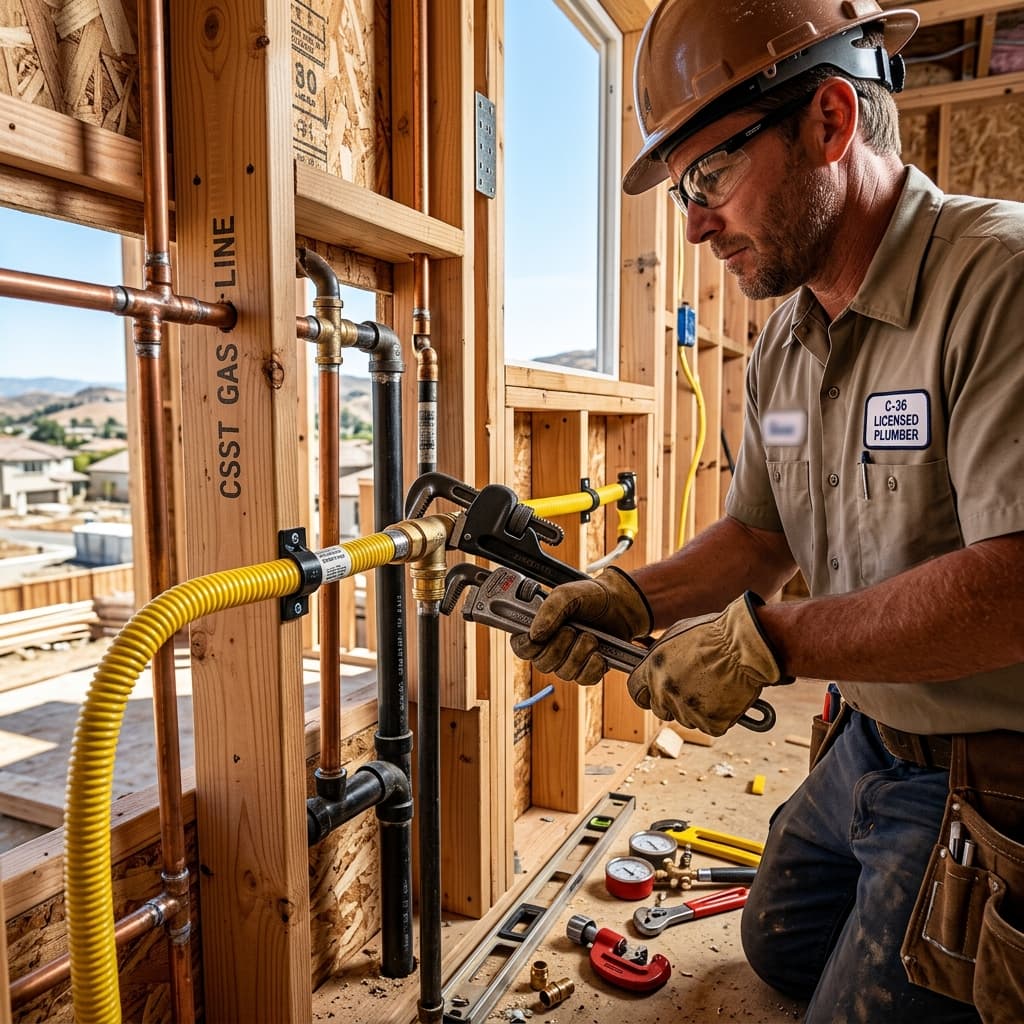
- Corrugated stainless steel tubing (CSST)
- Polyethylene plastic (underground service lines only)
- Ductile iron (gas mains)
- Aluminum piping (except for appliance connectors in specific applications)
- Galvanized steel (corrodes in presence of natural gas moisture)
- Cast iron (except for gas mains)
- Brass or copper with mercury-containing compounds
Material Compatibility and Corrosion Protection
Each approved material has specific installation requirements:
Black Steel Pipe- Most common for residential applications
- Requires protective coatings if underground
- Must be Schedule 40 minimum (not Schedule 80)
- Cannot be installed in concrete slabs
- Superior corrosion resistance
- More expensive than black steel
- Must be Type K, L, or ACR (not type M)
- Requires flux-less brazing or silver solder joints
- Cannot be used with certain gas quality issues
- Flexible system approved in California since 1995
- Requires proper grounding to prevent electrical damage
- Must follow manufacturer's installation specifications
- Cannot exceed 75 feet unsupported in some applications
Installation Standards and Support Requirements
Support and Securing Under CPC Section 422.3
Gas piping must be adequately supported to prevent stress and separation of joints.
Support Spacing Requirements:- Horizontal runs: Support at 6-foot intervals maximum
- Vertical runs: Support at 8-foot intervals maximum
- Hangers must be copper, stainless steel, or other approved corrosion-resistant material
- Never use aluminum or brass hangers (except for specific applications)
Clearances and Protection
CPC Section 422.4 requires:- Minimum 6 inches clearance from electrical wiring
- Minimum 12 inches clearance from water lines (unsleeved)
- Sleeving required if crossing water pipes or running parallel
- Protection from physical damage in areas subject to penetration
- Burial depth minimum of 18 inches for underground gas service lines
Joints, Connections, and Fittings
Approved Joining Methods
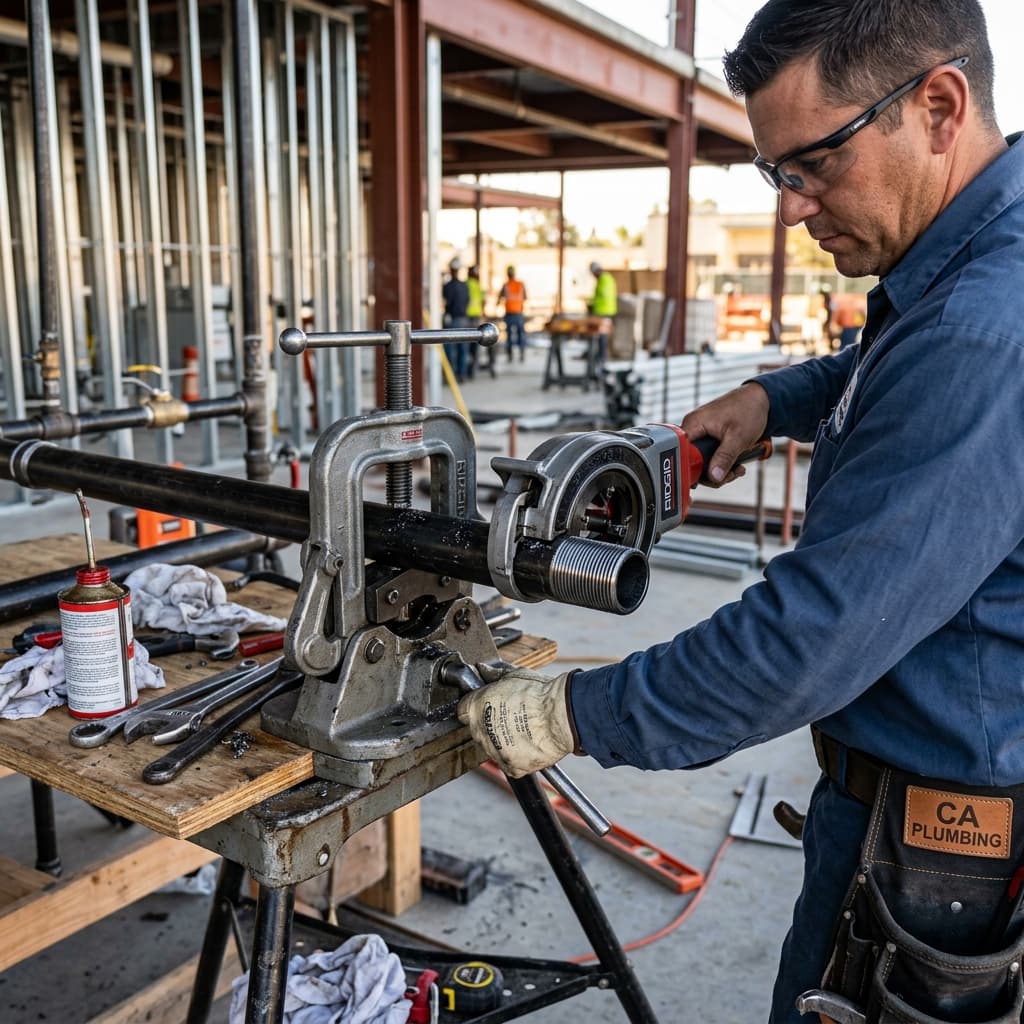
CPC Section 422.5 details acceptable joint and connection methods: Threaded Connections- Black steel pipe with NPT (National Pipe Thread)
- Minimum 4 threads engaged for 1/2" and smaller
- Minimum 6 threads engaged for 3/4" and larger
- Must use approved thread sealant (never PTFE tape alone on gas)
- Copper tubing only
- Flux-less brazing or silver solder required
- Minimum 50% silver content for solder
- No galvanized fittings (oxidation in heat)
- Limited to appliance connectors (not main piping)
- Maximum 6-foot length
- High-pressure applications require different standards
- NOT approved for permanent gas piping installations
- Only for flexible appliance connectors in some cases
- This is a common exam trick question
Dielectric Unions and Transitions
When transitioning between different materials (copper to black steel, for example), dielectric unions prevent galvanic corrosion:- Required by CPC Section 422.5
- Copper to steel transitions must use dielectric unions
- Maintain electrical continuity across the transition
Meter Location and Service Line Installation
CPC Section 422.6 - Meter Requirements
The gas meter location significantly impacts the installation design:
Acceptable Meter Locations:- Outside wall of building (preferred)
- Inside building near entry point (must meet ventilation requirements)
- Underground, with appropriate protection and venting
- Bedrooms or bathrooms
- Spaces below grade (except underground installations)
- Potentially explosive atmospheres
- Areas without proper ventilation
- Minimum 18 inches burial depth
- Protection from freezing with insulation in cold climates
- Drip legs at lowest points to collect condensation
- Proper grounding for electrical safety
Testing and Inspection Requirements
Pre-Activation Testing Under CPC Section 422.7
Before gas appliances operate, all piping must be tested and inspected:
Pressure Testing Standards:- Low-pressure systems: Test at 10 inches water column minimum, 1 second drop maximum over 30 minutes
- Higher pressure systems: Test at 1.5 times the operating pressure
- Test duration: Minimum 30 minutes
- Approved testing method: Soap bubble test or pressure gauge
- Rough inspection (before concealment)
- Hydrostatic testing completion
- Final inspection (after activation)
- Pressure drop verification
Documentation and Tagging
CPC Section 422.8 requires proper documentation:- Test certification signed by responsible plumber
- Results documented with date and signature
- Identification tags at meters and key connection points
- Pressure test results must be available for inspection
Earthquake and Seismic Compliance
Additional California Requirements
Beyond standard CPC Section 422, California's seismic activity requires:
- Flexible connectors at meter and appliance connections
- Support calculations account for seismic forces
- Ductile connections to prevent rupture in earthquake
Common Code Violations and Exam Scenarios
Mistakes That Cost Points
Exam questions frequently test these violations:- Undersized piping - Insufficient diameter for BTU load
- Improper material combinations - Galvanized fittings on black steel
- Inadequate support - Spacing exceeds code limits
- Poor clearances - Too close to electrical or water lines
- Prohibited materials - Aluminum or brass in main piping
- Improper connections - SharkBite fittings on permanent installations
- Meter placement - Inside bedrooms or bathrooms
- Test failures - Pressure drop exceeds limits
Real-World Application
Understanding these violations isn't just for the exam—your C-36 plumbing license requires you to catch these issues during inspections and project management.
Study Tips for C-36 Exam Success
Effective Preparation Strategies
- Create flashcards with CPC Table 422.1 pipe sizing examples
- Draw installation diagrams showing proper clearances and support
- Practice pressure drop calculations until you can recognize sizing errors instantly
- Review inspection procedures - Know the exact sequence and documentation requirements
- Study violation scenarios - Read past exam questions if available through CSLB
Key Formulas to Master
- BTU load calculation (sum all appliances)
- Pressure drop limits by system type
- Pipe diameter selection from tables
- Support spacing requirements (6 feet horizontal, 8 feet vertical)
Connecting Section 422 to Broader Gas Piping Knowledge
Understanding Section 422 is foundational for the entire Part 2: Gas Piping Systems exam section. This knowledge connects to:- Appliance connections and requirements
- Ventilation and combustion air standards
- Safety shut-off valve installation
- Regulator and pressure relief specifications
Conclusion
California Plumbing Code Section 422 is non-negotiable knowledge for C-36 license candidates. The CSLB exam study guide 2025 continues to emphasize practical understanding of gas line sizing and installation standards. By mastering pressure drop calculations, material requirements, installation standards, and testing procedures, you'll gain confidence approaching the Part 2 exam.The connection between code comprehension and field safety cannot be overstated. Your role as a licensed C-36 plumber includes protecting California residents through proper gas piping design and installation. The detailed requirements in Section 422 exist because improper gas piping installations create real safety hazards.
Start your preparation by reviewing CPC Section 422 systematically. Work through sizing calculations until they become second nature. Practice identifying code violations in installation diagrams. Then, take practice exams focusing specifically on gas piping questions. This methodical approach will ensure you master this critical exam component.
---
Ready to dive deeper into gas piping systems? Check out our complete gas piping systems guide or explore appliance connection requirements for additional C-36 exam preparation resources.