
# California Plumbing Code Section 422: Dual Plumbing Systems and Alternate Water Sources
Gray water system installation and rainwater harvesting requirements california have become increasingly important topics for plumbers preparing for the C-36 examination. California Plumbing Code Section 422 establishes comprehensive requirements for dual plumbing systems that utilize alternate water sources alongside traditional potable water supplies. Understanding these regulations is essential for anyone working with non-traditional water systems in California.The shift toward water conservation and sustainability has made alternate water source plumbing a growing field within California's construction and plumbing industries. This guide provides complete coverage of CPC Section 422 requirements, practical installation standards, and exam-focused insights to help you master this critical area.
Understanding CPC Section 422: Scope and Purpose
What is Section 422?
California Plumbing Code Section 422 addresses the design, installation, operation, and maintenance of non-potable water systems that exist alongside conventional potable water supplies. This section specifically covers:
- Gray water systems utilizing wastewater from sinks, showers, and washing machines
- Rainwater harvesting systems that capture precipitation for reuse
- Reclaimed water systems supplied by municipal recycled water providers
- Other alternate water sources approved by local jurisdictions
Regulatory Authority
CPC Section 422 operates within California's broader plumbing framework established in Title 24, Part 5. Local amendments and amendments in the California Energy Commission's Title 24 standards may impose stricter requirements than the base CPC requirements. Always verify local amendments before beginning installation work.
Gray Water System Requirements Under CPC Section 422
Permitted Gray Water Sources
Gray water systems may only utilize water from specific, low-contaminant sources:
Approved Gray Water Sources:- Lavatory sinks
- Shower stalls and bathtubs
- Washing machines (clothes washers)
- Kitchen sinks (with local approval, varies by jurisdiction)
- Toilet waste (blackwater)
- Bidet water
- Diaper wash water
- Kitchen sink water (in many jurisdictions until specifically approved)
System Isolation and Backflow Prevention
CPC Section 422.1 mandates complete isolation between gray water systems and potable water supplies. This requirement encompasses multiple protective measures:
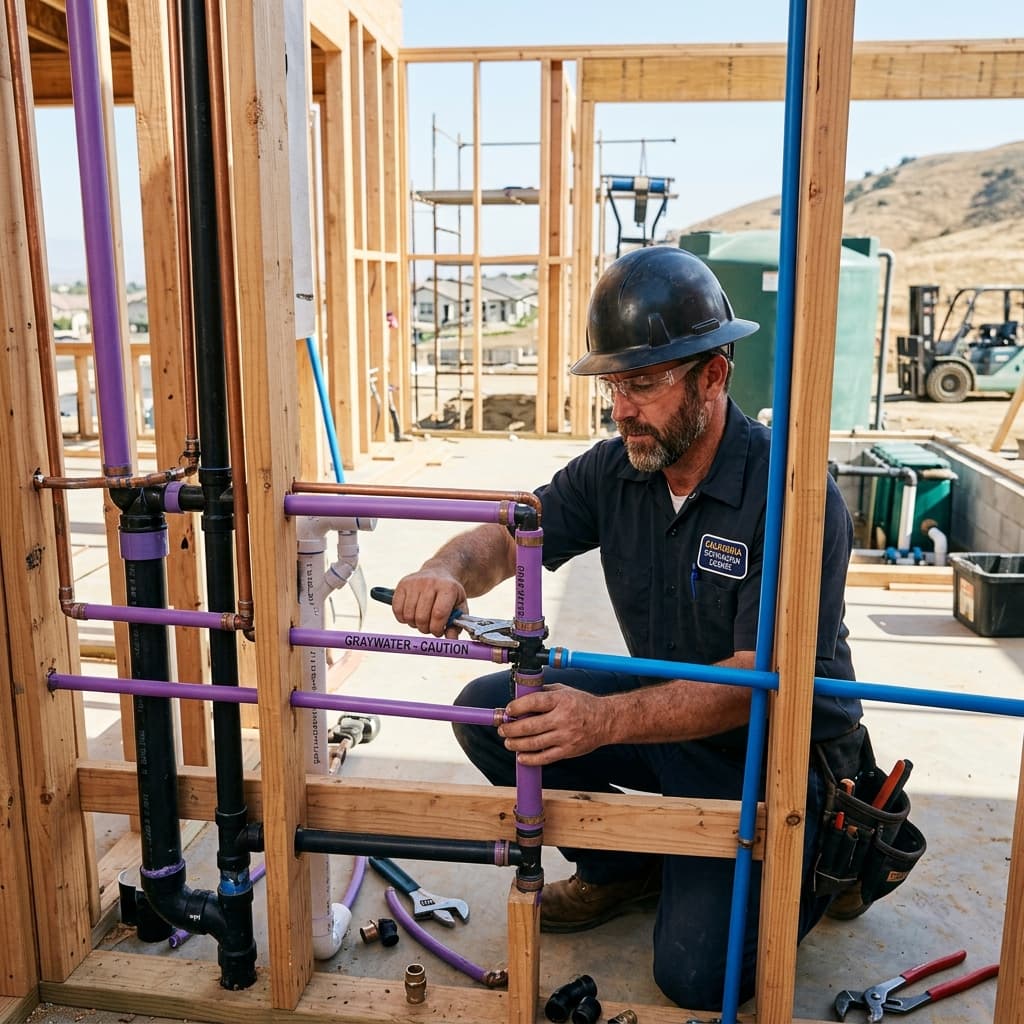
Dual Piping InfrastructureGray water systems must utilize entirely separate piping distinct from potable water systems. This means:
- Separate water entry points into the building
- Non-intersecting distribution networks
- No direct connections between gray and potable systems
- Clear physical separation maintained throughout the installation
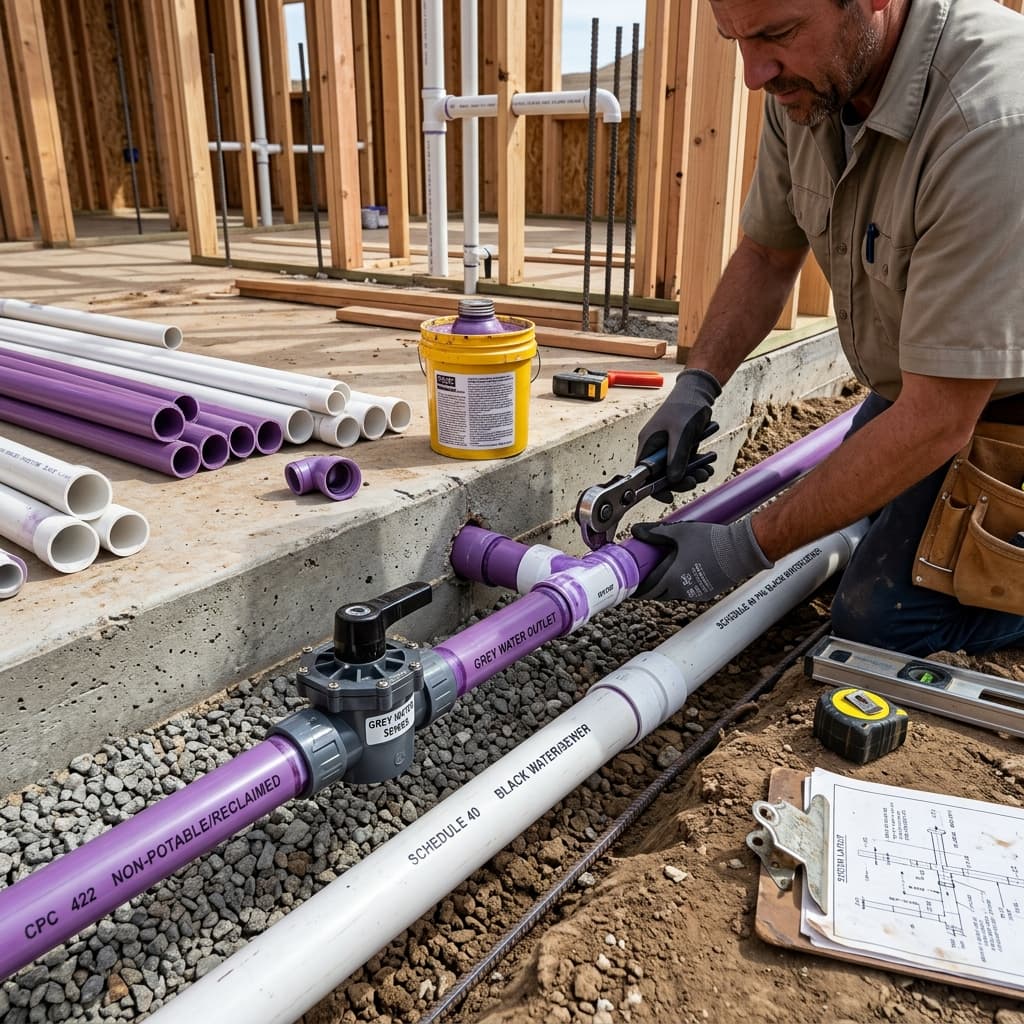
- Air gaps of minimum 1 inch (25 mm) between the gray water outlet and any potable water connection
- Check valves preventing reverse flow from gray water systems
- Reduced pressure backflow preventers (RP) for high-risk scenarios
- Atmospheric vacuum breakers for supplemental protection
Storage Tank Requirements
Gray water storage tanks must meet specific CPC Section 422 standards:
Tank Design and Construction- Use only approved materials (typically stainless steel, fiberglass, or approved plastics)
- Include tight-fitting covers to prevent contamination and mosquito breeding
- Provide overflow drainage to storm drains or sanitary sewer
- Install at minimum 1-inch (25 mm) screen on all openings
- Maintain structural integrity with proper support and anchoring
- Maximum storage of 7-day supply or as determined by local ordinance
- Clearly marked maximum fill levels
- Drain valve positioned for complete system drainage
- Sediment removal capability through drain valve cleanout
- Contamination from surface water or grading issues
- Interference with building foundations or utilities
- Accessibility hazards for children
- Flooding or overflow onto adjacent properties
Distribution System Design
CPC Section 422.2 establishes requirements for gray water distribution piping:
Labeling and Identification- All gray water piping must be labeled with permanent, durable markers
- Labels must state "NONPOTABLE WATER – DO NOT DRINK" or equivalent
- Color coding (commonly purple or non-potable color) aids visual identification
- Labels required at 50-foot (15 m) intervals maximum
- Toilets and urinals supplied with gray water require atmospheric vacuum breakers or check valves
- Landscape irrigation connections must include anti-siphon devices
- Hose bibs cannot be supplied with gray water unless equipped with approved backflow prevention
- Comply with CPC Section 605 material requirements
- Be sized for gravity flow when possible
- Include isolation valves at fixture connections
- Maintain minimum 1/8-inch (3 mm) per foot slope for gravity drainage
- Use only approved materials (typically PVC, HDPE, or copper)
Rainwater Harvesting System Compliance
Rainwater Harvesting Source Requirements
CPC Section 422.3 specifies that rainwater must be captured from building surfaces meeting these criteria:
Approved Roof Surfaces- Metal roofing (galvanized steel, aluminum, standing seam)
- Asphalt shingle (newer roofs with minimal weathering)
- Tile roofing
- Concrete or paved surfaces
- Copper (can leach into water)
- Treated wood surfaces
- Damaged or deteriorated roofing materials
- Roofs with moss or heavy algae growth
Filtration and Treatment Requirements
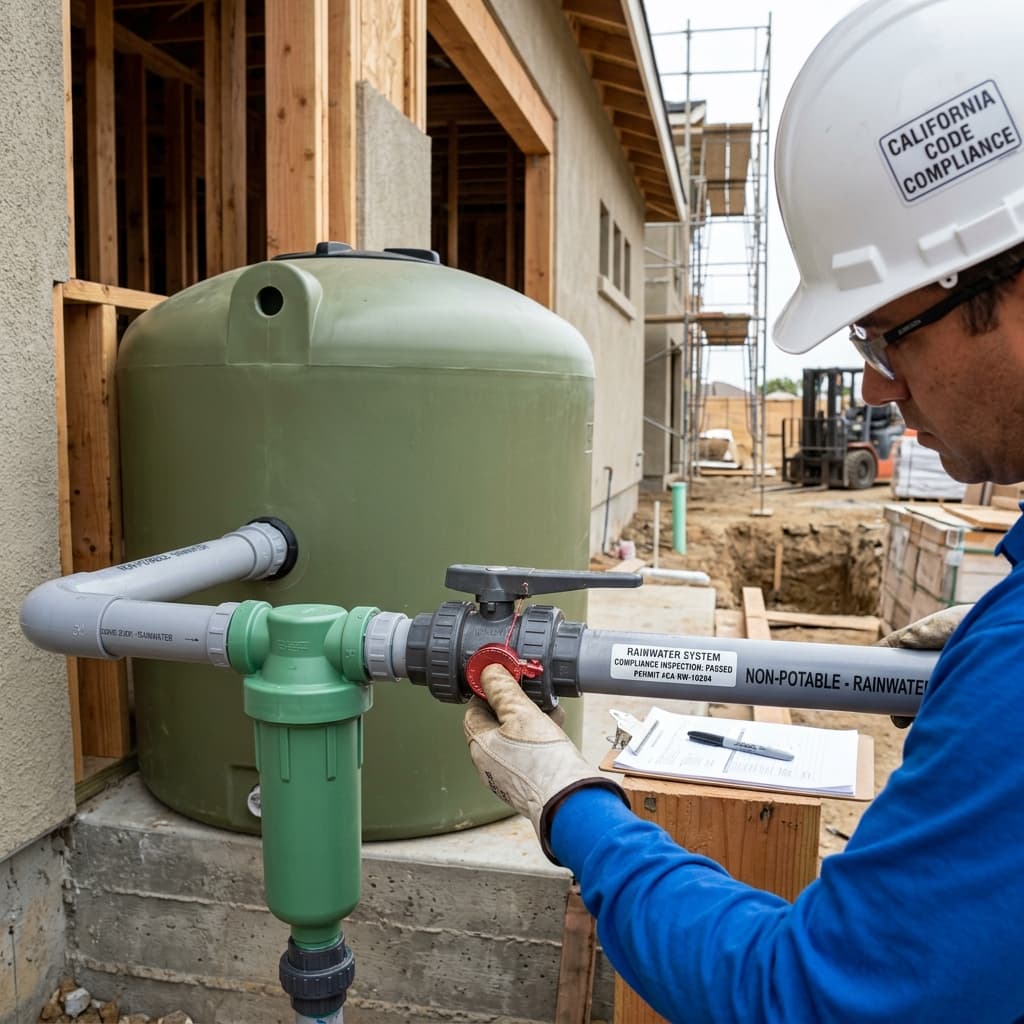
Rainwater harvesting systems must include multiple treatment stages:
First-Flush Diverters- Capture first 1/4 inch (6 mm) of rainfall to remove debris and atmospheric contaminants
- Automatic operation with no manual intervention required
- Cleanable design for maintenance access
- Required before water enters storage
Minimum filtration standards include:
- 100-micron (or finer) mesh screens for particle removal
- Multi-stage filters removing sediment, leaves, and organic material
- Access points for filter cleaning and replacement
- Backwash capability for gravity-fed systems
- UV light treatment
- Chlorine or ozone disinfection
- Carbon filtration for taste and odor removal
- Regular testing per local water quality standards
Storage Tank Standards for Rainwater
Rainwater storage tanks follow CPC Section 422.3 requirements with specific considerations:
Tank Construction Materials- Food-grade plastic or fiberglass (no metallic contamination risk)
- Stainless steel tanks acceptable
- Opaque construction preventing algae growth
- UV-resistant materials for outdoor installations
- Sizing based on average rainfall, roof area, and water demand
- Overflow directed to storm drains or landscape infiltration
- Secondary overflow pipe at 1.5x tank height for emergency drainage
- Maximum storage duration: 14 days (algae growth prevention)
- Cleanout access for sediment removal (minimum annually)
- Inspection openings with tight-fitting covers
- Drain valve for complete system emptying
- Internal baffles separating inlet from outlet
Rainwater System Distribution
Permitted Uses Rainwater can be distributed for:- Landscape and garden irrigation
- Toilet and urinal flushing
- Cooling tower makeup water
- Nonpotable industrial processes
- Vehicle washing
- Drinking water sources
- Cooking water
- Bathing or shower fixtures
- Laundry water (unless treated to potable standards)
- Food preparation areas
Dual Plumbing System Integration
Design and Planning Requirements
Successful dual plumbing system installation begins with comprehensive design documentation:
System Drawings and Specifications- Separate schematic diagrams for potable and non-potable systems
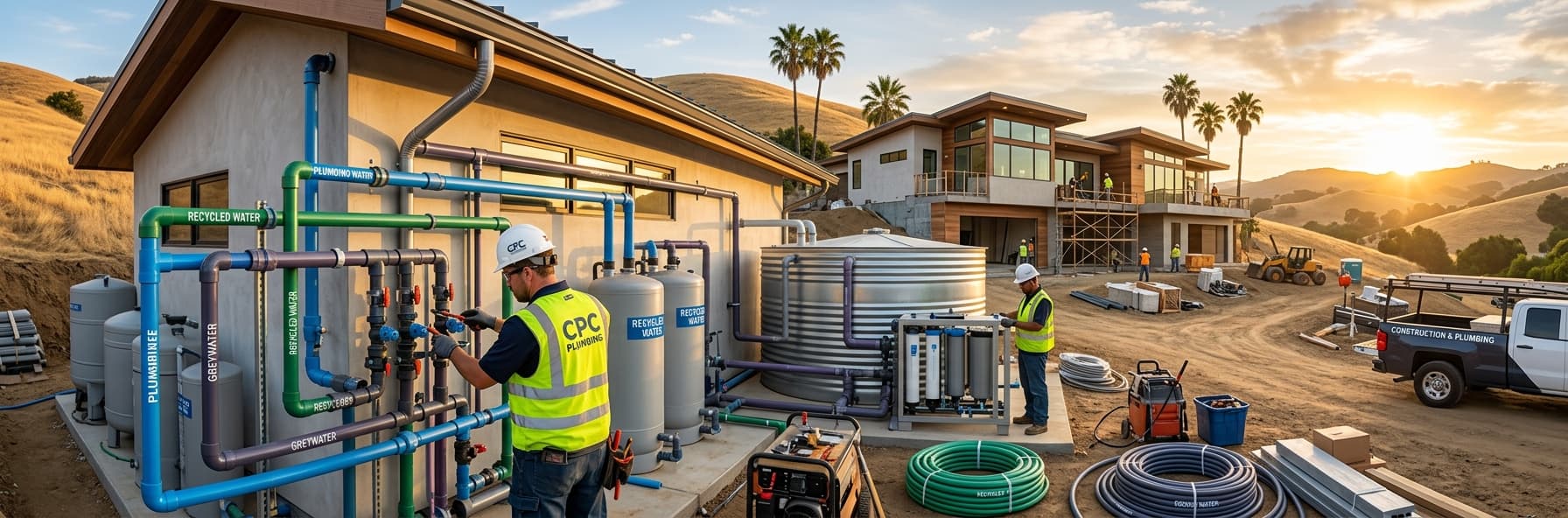
- Color-coded piping plans (potable: blue; gray water: purple; reclaimed: recycled water color)
- Clear labeling of all isolation valves and backflow prevention devices
- Specification sheets for all mechanical components
- Details showing connection points and separation distances
- Submit complete system plans for city/county review
- Obtain separate permits for potable and non-potable systems
- Attend plan reviews to address inspector concerns
- Secure approval before commencing any installation work
Installation and Testing Procedures
Pressure Testing Gray water and rainwater systems require pressure testing per CPC Section 605:- Test at 50 PSI for 15 minutes minimum
- Identify and repair all leaks
- Document test results for inspection records
- Retest after repairs before system activation
- Flush systems thoroughly to remove construction debris
- Test for bacterial contamination (coliform testing recommended)
- Verify pH levels within acceptable range
- Document all testing results for jurisdictional records
- Inspector walkthrough and approval
- Demonstration of backflow prevention device function
- Verification of labeling and signage
- Operator training on system maintenance requirements
Common Exam Scenarios and Applications
Scenario 1: Residential Gray Water System Installation
Situation: A homeowner wants to install a gray water system collecting water from a washing machine for landscape irrigation. CPC Section 422 Requirements:- Install separate piping from washing machine to storage tank
- Provide air gap of 1 inch between gray water outlet and any potable connection
- Install check valve on gray water supply line
- Use 100-micron filter in distribution line to drip irrigation
- Label all piping "NONPOTABLE WATER"
- Provide drain valve on storage tank
- Limit storage to 7-day supply
Scenario 2: Commercial Rainwater Harvesting for Toilet Flushing
Situation: An office building plans to capture roof runoff for supplying toilet flushing. CPC Section 422 Requirements:- Install first-flush diverter (minimum 1/4 inch capture)
- Provide 100-micron filtration
- Use opaque, UV-resistant storage tank
- Maintain maximum 14-day storage duration
- Install overflow to storm drain
- Include vacuum breaker on toilet supply line
- Provide system signage and labeling
- Implement maintenance schedule for filter cleaning
Scenario 3: Dual System in New Construction
Situation: A new residential development includes both potable and rainwater systems for all homes. CPC Section 422 Requirements:- Design completely separate distribution networks
- Install separate water meters for each system
- Provide isolation valves at all connection points
- Color-code all piping and labeling
- Install backflow prevention at each system entry
- Obtain separate permits for each system
- Perform independent pressure testing
- Provide operation and maintenance manuals
Important Code Sections Related to CPC Section 422
Understanding the broader code framework strengthens exam preparation:
- CPC Section 308: Water-Conserving Fixtures – Requirements for low-flow toilets and faucets in systems using alternate water
- CPC Section 608: Backflow Prevention – Detailed requirements for vacuum breakers, check valves, and reduced pressure preventers
- CPC Section 605: Water Supply and Distribution Piping – Material requirements, sizing standards, and installation methods
- CPC Section 422.1: System Separation Requirements – Detailed isolation and protection standards
Maintenance and Operational Requirements
System Maintenance Obligations
Property owners must maintain gray water and rainwater systems according to manufacturer specifications and CPC Section 422 requirements:
Monthly Maintenance Tasks- Visual inspection of storage tanks for leaks or damage
- Verification of filter condition and sediment accumulation
- Checking isolation valves for proper operation
- Monitoring water levels in storage tanks
- Filter cleaning or replacement
- Sediment removal from storage tanks
- System flushing to prevent bacterial growth
- Inspection of all piping connections
- Complete system inspection and testing
- Professional cleaning of storage tanks
- Backflow prevention device testing and certification
- Documentation review and record updating
Preparing for the C-36 Exam: Section 422 Focus Areas
High-Probability Exam Questions
Based on examination analysis, expect questions covering:
- Source Identification – Which fixtures provide acceptable gray water? (Common wrong answer: kitchen sinks)
- Isolation Requirements – What minimum air gap protects potable systems? (Answer: 1 inch, 25 mm)
- Labeling Requirements – How frequently must gray water piping be labeled? (Answer: Every 50 feet maximum)
- Storage Duration – Maximum gray water storage period? (Answer: 7 days; rainwater: 14 days)
- Backflow Prevention – Which devices prevent gray water backflow? (Answer: Check valves, vacuum breakers, RP devices)
Study Recommendations
- Review CPC Section 422 in full, not just highlights
- Cross-reference related sections (608, 605, 308)
- Practice calculations for storage tank sizing based on roof area and rainfall
- Memorize specific measurements (air gaps, filter sizes, storage durations)
- Study diagram interpretation showing dual system configurations
Key Takeaways for CPC Section 422 Mastery
Understanding California Plumbing Code Section 422 requires detailed knowledge of:
✓ Gray water systems – Approved sources, isolation requirements, storage standards ✓ Rainwater harvesting – Filtration stages, storage duration limits, permitted uses ✓ Dual plumbing integration – Separate distribution, labeling, backflow prevention ✓ Maintenance obligations – Regular inspection and testing requirements ✓ Code relationships – Connections to Sections 608, 605, and other requirementsMastery of these standards prepares you not only for exam success but for real-world installations that protect public health while enabling water conservation.
---
For additional preparation, review CPC Section 605 water supply requirements and backflow prevention standards in Section 608. These interconnected requirements form the foundation of California's dual plumbing system regulations.