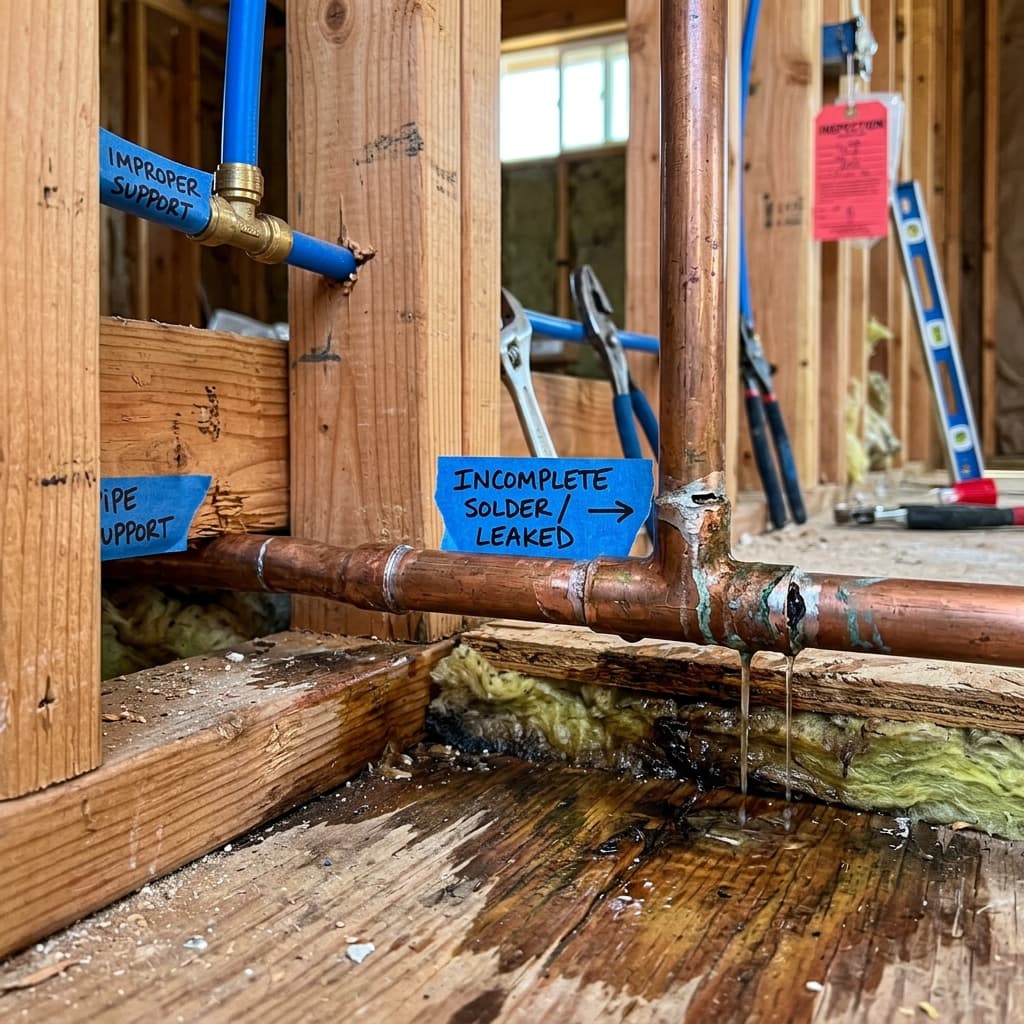
# CSLB Exam Study Guide 2025: Critical Code Violations and Inspection Failures on the C-36 Test
Passing the C-36 plumbing exam requires more than just general plumbing knowledge—you need to understand the specific California plumbing code violations that the Contractors State License Board (CSLB) tests on Part 2. This comprehensive study guide breaks down the critical inspection failures and code violations that consistently appear on the exam, along with proven test-taking strategies to help you succeed.Understanding Part 2: Code Application and Violations
Part 2 of the C-36 plumbing exam focuses specifically on applying California Plumbing Code (CPC) sections to real-world scenarios. Unlike Part 1, which tests general knowledge, Part 2 requires you to identify code violations, understand inspection failure reasons, and apply regulatory requirements to specific situations.
The exam structure for Part 2 includes:
- 55 multiple-choice questions
- Time limit: 2.5 hours
- Pass score: 70% (38-39 correct answers)
- Primary focus: CPC sections and violation identification
The 12 Most Frequently Tested Code Violations
1. Trap Seal and P-Trap Violations (CPC Section 308.1)
Trap seal violations rank among the most common inspection failures tested on the C-36 exam. The California Plumbing Code requires that all traps maintain a minimum water seal of 2 inches.
Common violation scenarios:- Traps installed without adequate water seal
- Evaporation causing trap seals to dry out
- Back-venting causing trap siphonage
- Improper trap sizing for fixture units
2. Vent Stack and Improper Venting Violations (CPC Section 301.1)
Venting violations appear on nearly every C-36 exam administration. These questions test your understanding of when vents are required, how they must be sized, and where they must terminate.
Critical venting violations include:- Missing vent pipes on fixtures
- Vents terminated below roof line
- Inadequate vent stack sizing
- Improper vent connections to the main stack
- Vents terminating in attic spaces without proper extension through roof
3. Cleanout Access and Maintenance Violations (CPC Section 403.1)
Cleanout placement and accessibility violations appear frequently because inspectors regularly cite improper cleanout installations in the field.
Common inspection failures:- Cleanouts not accessible for maintenance
- Improper cleanout spacing (exceeding maximum distance)
- Cleanouts with restricted access due to landscaping or structures
- Underground cleanouts not properly marked
- Cleanouts installed in wrong locations along the drainage line
4. Pitch and Grade Violations (CPC Section 422.1)
Drainage piping pitch violations consistently appear on the C-36 exam because incorrect pitch affects system performance.
Key violations:- Piping installed with less than 1/4-inch fall per 1 foot of length
- Excessive pitch causing water to separate from solids
- Horizontal runs without proper slope
- Variations in pitch within the same line
- Pitch violations in storm drain systems
5. Water Supply Backflow Prevention Violations (CPC Section 608.13)
Backflow prevention has become increasingly important and appears more frequently on recent CSLB exam study guide 2025 materials. Common violations tested:- Missing backflow prevention devices
- Improper device selection for hazard level
- Backflow preventers not installed at the proper location
- Devices not tested or certified
- Incorrect device type for the application (mechanical vs. atmospheric)
- Vacuum breakers (prevents backsiphonage)
- Check valves (prevents backpressure)
- Reduced pressure principle (RPP) devices (primary backflow prevention)
- Double check valve assemblies (secondary backflow prevention)
6. Water Heater Installation Violations (CPC Section 422.1 and 422.2)
Water heater violations appear frequently because there are many specific installation requirements.
Inspection failures include:- Missing or undersized drain pans
- Improper drain pan routing
- Temperature and pressure relief valves not installed or improperly sized
- Relief valve discharge not properly routed
- Improper heater placement or spacing
- Combustion air requirements not met
- Improper seismic support or bracing
7. Fixture Trap and Siphonage Violations (CPC Section 306.1)
These violations test whether candidates understand how trap siphonage works and how to prevent it.
Common violations:- Traps without proper venting allowing siphonage
- Back-venting causing trap seal loss
- Anti-siphon devices missing where required
- Improper vent sizing allowing siphonage
- Traps installed in improper orientation
8. Storm Drain and Rainwater Drainage Violations (CPC Section 3.1.6)
Storm drainage violations appear on the C-36 exam with increasing frequency.
Critical violations include:- Storm drains connected to sanitary drains (cross-connection)
- Improper sizing of rainwater drainage systems
- Missing strainers on storm drains
- Improper termination of roof drains
- Gutter sizing not meeting precipitation requirements
- Storm drain pitching violations
9. Grease Trap and Interceptor Violations (CPC Section 501.2)
Questions about grease traps and interceptors test your understanding of specialized plumbing equipment requirements.
Common violations:- Grease traps not installed in required locations (restaurants, commercial kitchens)
- Improper sizing for the application
- Grease traps not accessible for cleaning
- Discharge piping not properly routed
- Improper installation depth or connections
10. Cross-Connection and Contamination Violations (CPC Section 608.1)
Cross-connection violations have become increasingly tested due to health and safety concerns.
Key violations include:- Direct connections between potable and non-potable water lines
- Hose bibs without vacuum breakers in high-hazard locations
- Improper separation between irrigation systems and drinking water
- Toilet fill valves allowing backflow
- Improperly isolated recirculation systems
11. Fixture Unit and Sizing Violations (CPC Chapter 4.2)
These questions test whether you can properly calculate fixture units and size drainage and venting systems accordingly.
Common violations:- Inadequate pipe sizing for the number of fixture units
- Incorrect fixture unit counts
- Vent stacks undersized for the drainage load
- Trap arms oversized causing solids to settle
- Improper horizontal branch sizing
12. Rough-In and Inspection Requirement Violations (CPC Chapter 3.2)
These violations test knowledge of code compliance checkpoints during construction.
Frequent violations:- Rough-in inspections not performed before walls are closed
- Improper testing of drainage systems before covering
- Vent pipes not properly supported
- Hangers and supports not installed per code requirements
- System pressure testing not completed or documented
- Improper material use (mixing materials without proper fittings)
Common Inspection Failure Patterns
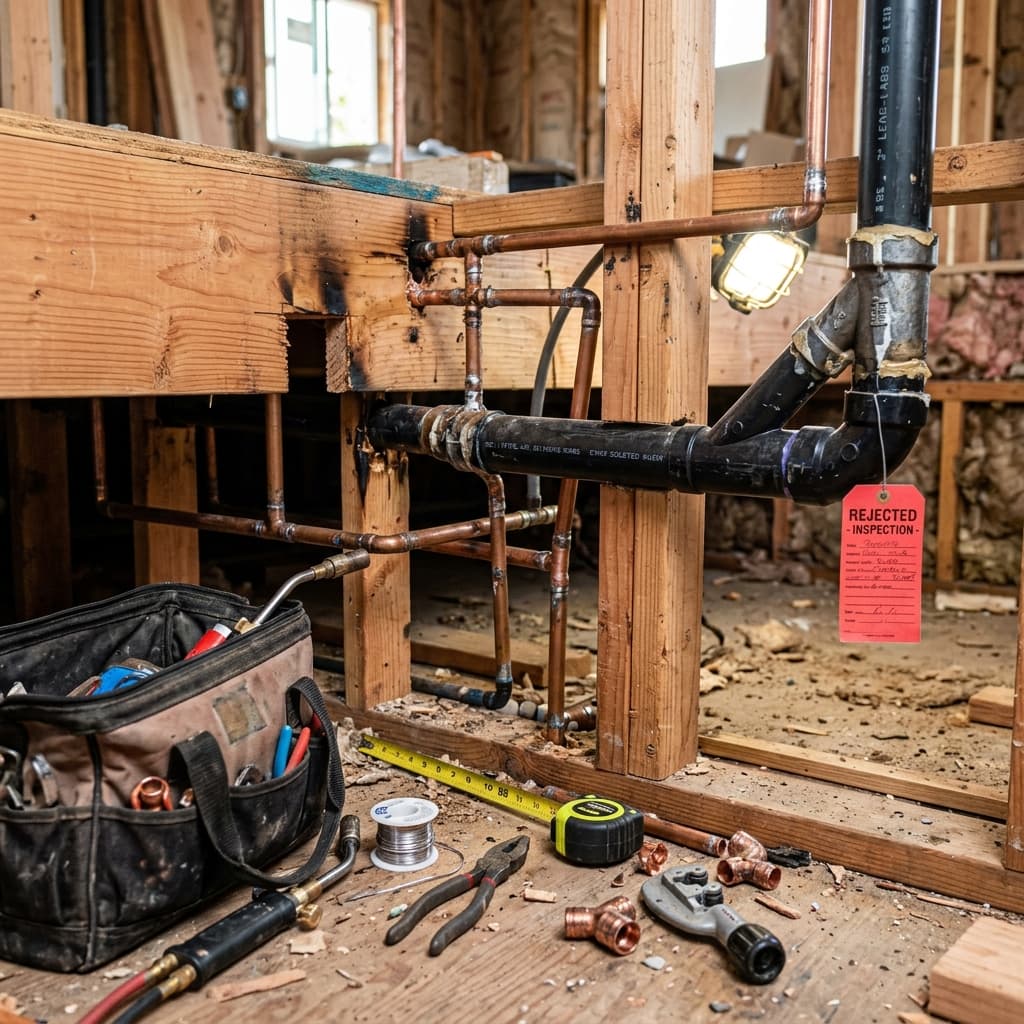
Understanding why plumbing systems fail inspection helps you answer exam questions correctly.
Pattern 1: The "Missing Component" Violation
Many C-36 exam questions describe plumbing installations where a required component is completely missing—such as a vent pipe, cleanout, or backflow preventer. These questions test whether you know what's required by code.
Exam strategy: When reading a question description, immediately identify what components are present. Then compare against what the code requires. Missing components are often the answer.Pattern 2: The "Improper Installation" Violation
These violations involve components that are installed but in the wrong way—incorrect pitch, wrong location, improper sizing, or improper connection.
Test-taking tip: Look for specific measurements or placements in the question. If a pipe is pitched at 1/8 inch per foot (less than the required 1/4), or a vent is terminated 12 inches below the roof line, mark it as a violation.Pattern 3: The "Accessibility" Violation
Many code violations involve components that are installed but cannot be properly accessed for maintenance or inspection.
Exam pattern: If the question describes a cleanout surrounded by concrete, a trap hidden behind drywall before walls were opened for inspection, or a relief valve discharge routed in a way that prevents inspection, it's likely a violation.Strategic Approach to Part 2 Test-Taking
Strategy 1: Create a Mental Code Reference
The most successful C-36 exam takers develop a mental organization of the code during study. Group violations by category:
- Venting violations
- Pitch and drainage violations
- Backflow prevention violations
- Fixture and trap violations
- Installation and accessibility violations
Strategy 2: Eliminate Obviously Correct Answers
On the C-36 exam, multiple-choice questions typically include one answer that is clearly compliant with code. Eliminate it first. This leaves you with 2-3 potentially correct answers to analyze more carefully.
Strategy 3: Look for Specific Code Violations
Exam questions usually contain one or more specific code violations. Your job is to identify them. Read the question twice—once for general understanding, once specifically looking for violations.
Strategy 4: Apply the "Show-Me" Requirement
For each answer choice, mentally ask: "Show me where in the code this is required." If you can't cite a specific code section or requirement, that answer is likely incorrect.
Strategy 5: Use the Fixture Unit Table
Many questions require calculating fixture units or determining proper pipe sizing. The CPC provides fixture unit tables and sizing tables. Practice using these tables so you can quickly find correct answers.
High-Risk Violation Categories to Focus On
Based on CSLB exam data, these violation categories appear most frequently:
- Venting systems and defects (15-18% of Part 2 questions)
- Water supply and backflow prevention (10-12% of questions)
- Drainage piping pitch and materials (8-10% of questions)
- Trap and siphonage violations (8-10% of questions)
- Cleanout access and location (6-8% of questions)
Recommended Study Materials for 2025
To maximize your preparation for the CSLB exam study guide 2025:- Study the California Plumbing Code (CPC) directly—don't rely solely on summaries
- Review previous exam questions if available through CSLB approved study providers
- Create flashcards for each major violation category with code section references
- Practice calculations for fixture units, pipe sizing, and vent sizing
- Study actual field inspection reports to understand common violations
- Join study groups focused on code violations and Part 2 preparation
Final Exam Tips for Success
- Manage your time: You have approximately 2.7 minutes per question. Don't spend more than 3 minutes on any single question. Mark difficult questions and return to them if time permits.
- Read questions carefully: Many C-36 exam questions include subtle details that identify violations. Read every question twice.
- Know when vents are required: Venting questions appear frequently. Understand CPC Section 301.1 thoroughly.
- Understand backflow prevention: Know the different device types and when each is required based on hazard level.
- Master pitch calculations: Be able to quickly calculate if a drainage pipe meets the 1/4-inch per foot requirement.
- Study actual violations: Look at field inspection reports and CSLB enforcement cases to see what violations are actually cited in California.