

# CPC Section 422.1: Master Water Supply Line Materials and Pressure Testing for C-36 Exam Success
Water supply line materials and pressure testing represent fundamental knowledge areas for the California C-36 plumbing exam. CPC Section 422.1 establishes the critical requirements governing approved materials for water supply piping systems throughout California residential and commercial installations. Understanding these specifications isn't just academic—it's the foundation of safe, code-compliant plumbing installations that protect public health.This comprehensive guide breaks down everything you need to know about water supply line pressure testing CPC 422 requirements to ace your C-36 exam.
Understanding CPC Section 422.1: The Basics
CPC Section 422.1 defines the materials acceptable for use in water supply distribution systems. This section is part of the California Plumbing Code's larger framework governing water supply and distribution (Part 2 of the exam). The code section establishes that water supply piping must be constructed of materials that:- Resist corrosion from soil or water conditions
- Withstand working pressures without leakage
- Maintain potable water quality
- Meet specific material standards and certifications
Why Section 422.1 Matters for Your Exam
Examiners focus heavily on material identification because inspectors must verify compliance during construction. Questions typically ask you to:- Identify approved materials for specific applications
- Determine testing pressures for different materials
- Explain why certain materials are prohibited
- Calculate proper test durations
Approved Water Supply Piping Materials Under CPC 422.1
Copper Tubing (Types K, L, and M)
Copper remains one of the most commonly specified materials for water supply installations. CPC Section 422.1 permits: Type K Copper (thickest walls)- Suitable for underground and exposed installations
- Highest pressure rating
- Most durable for aggressive soil conditions
- Acceptable for both underground and exposed service
- Most versatile choice for residential applications
- Balance between cost and durability
- Limited to interior, above-ground applications only
- Cannot be used underground
- Lower pressure ratings than K or L
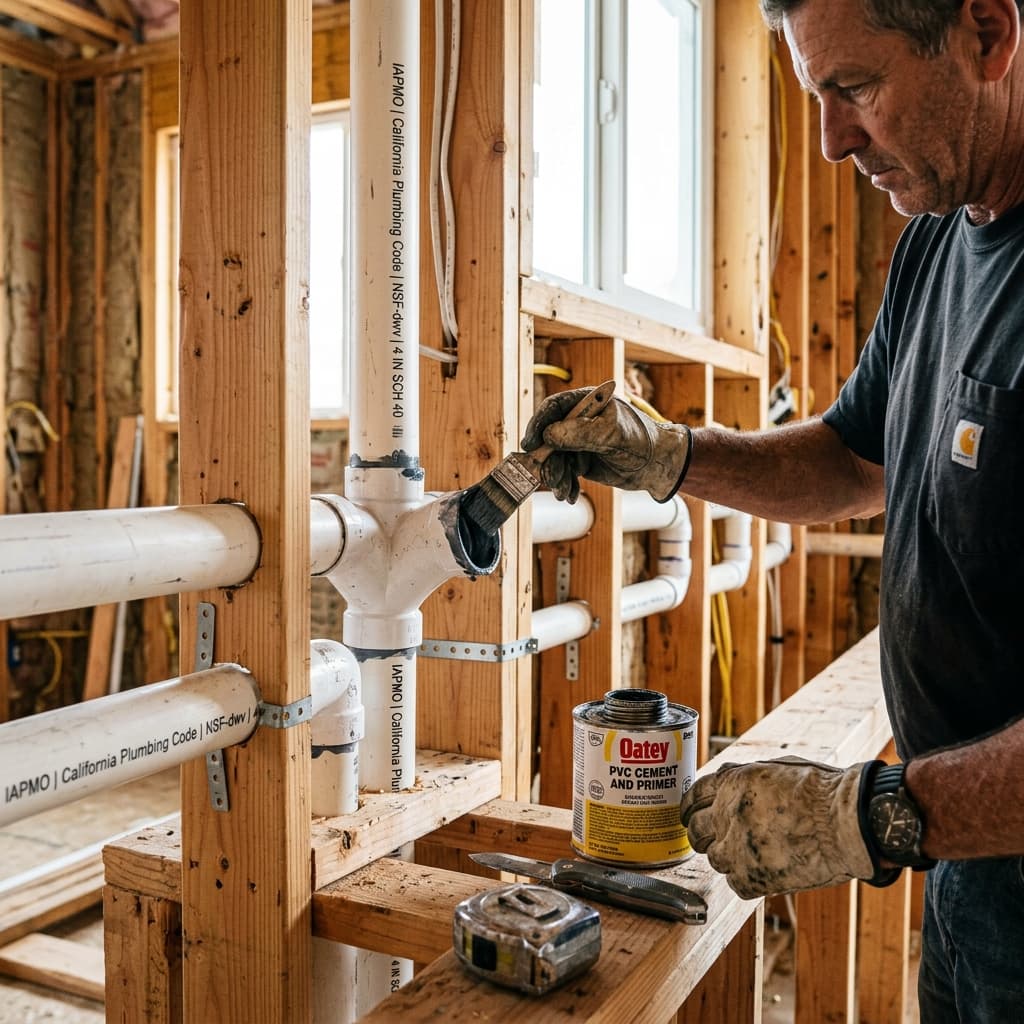
PVC and CPVC Plastic Piping
Plastic materials have gained acceptance under specific conditions:
CPVC (Chlorinated Polyvinyl Chloride)- Superior to PVC for hot water applications
- Temperature rating up to 180°F
- Common in residential water heaters
- Must be NSF/ANSI 61 certified
- Cold water service only
- Lower temperature tolerance
- Commonly used for irrigation lines and pool installations
- Rarely approved for potable water service lines in modern installations
Cross-Linked Polyethylene (PEX)
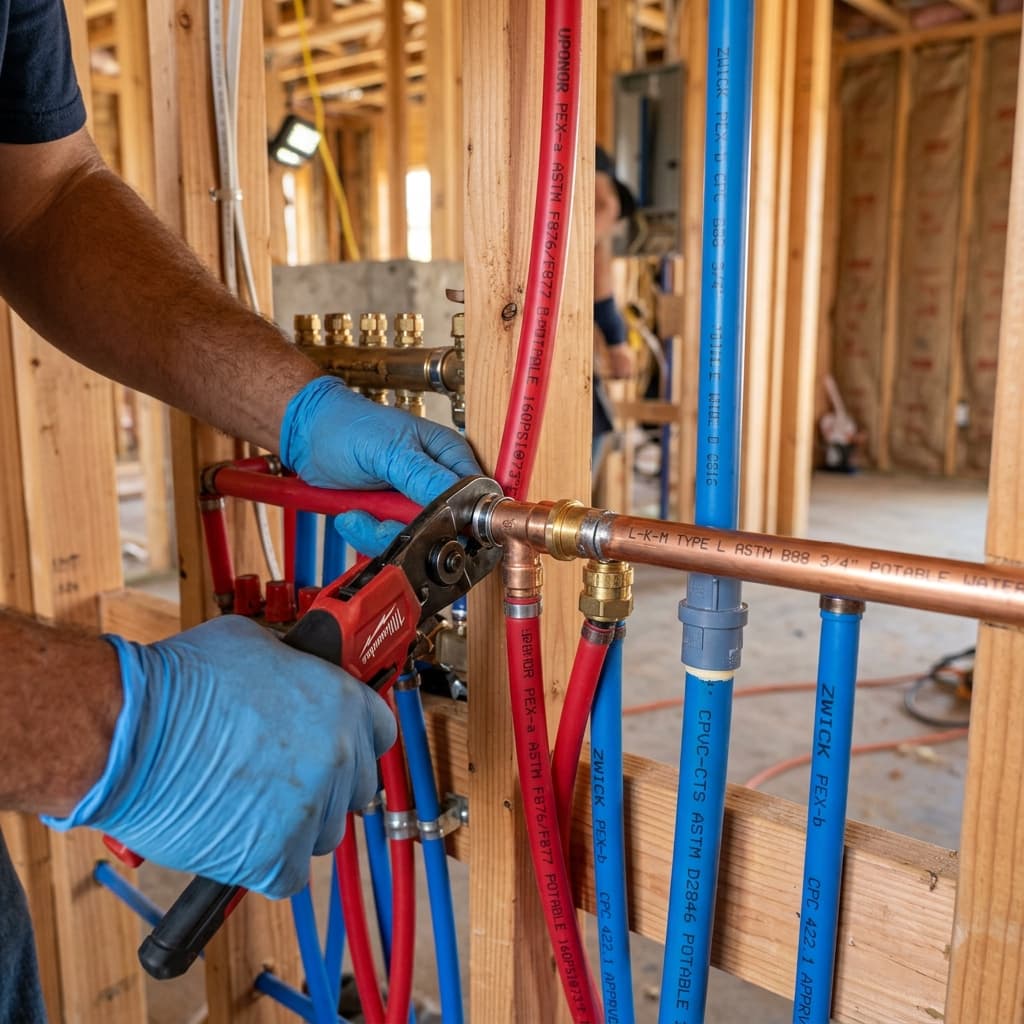
PEX piping has become increasingly popular and CPC 422.1 now recognizes it for water supply when:- NSF/ANSI 52 certified for potable water
- Properly installed with approved fittings
- Used with appropriate manifold systems
- Color-coded appropriately (red for hot, blue for cold)
Stainless Steel Piping
Stainless steel offers:- Excellent corrosion resistance
- Suitable for aggressive water chemistry
- Higher cost justifies use in specific applications
- Approved for both hot and cold water service
Galvanized Steel (Historical Note)
While historically common, galvanized steel is largely outdated under modern code. CPC 422.1 still permits existing installations but rarely approves new galvanized systems due to:- Zinc coating deterioration over time
- Water quality degradation
- Pinhole leaks in certain water conditions
- Limited lifespan compared to alternatives
Material Certification Requirements
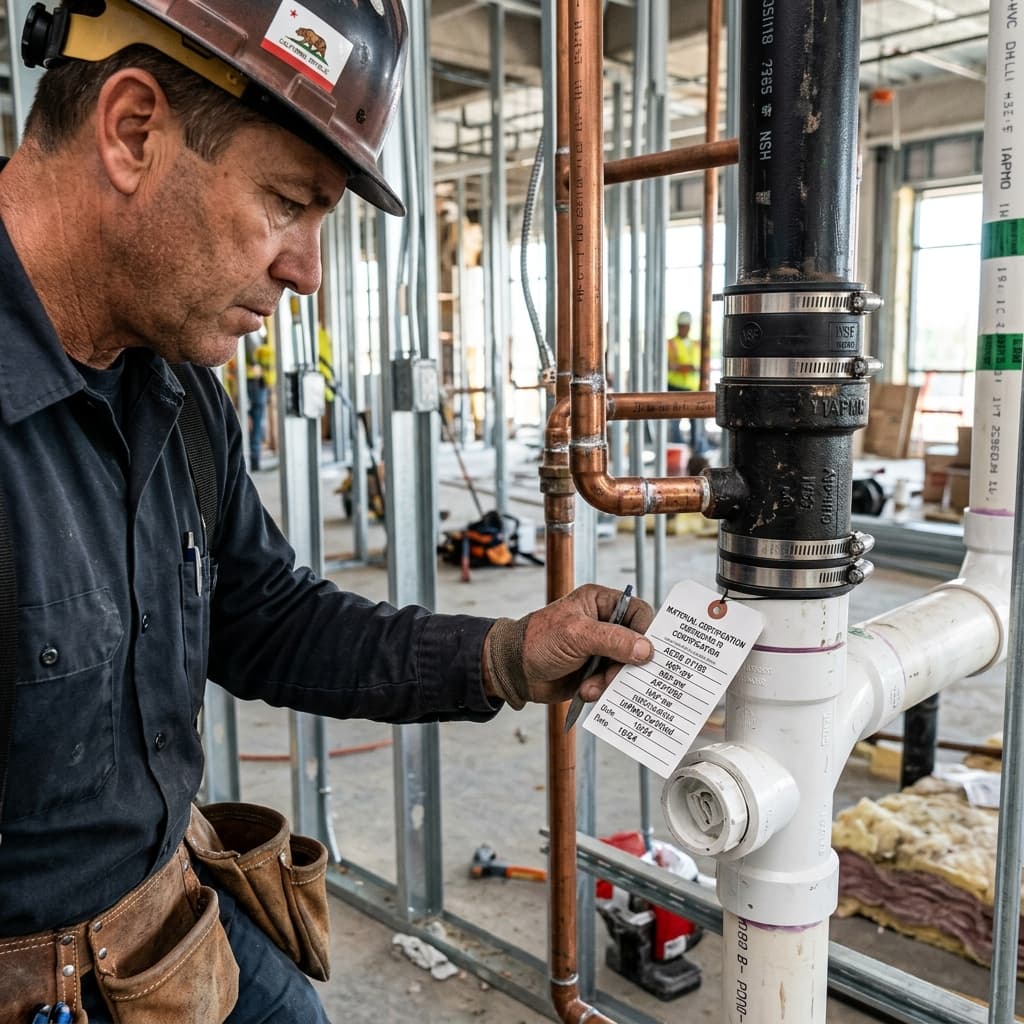
All materials used in water supply systems must meet specific standards:
NSF/ANSI Certification- NSF/ANSI 61: Drinking water system components
- NSF/ANSI 52: Plastic piping materials
- NSF/ANSI 58: Point-of-use reverse osmosis systems
- ASTM B88: Seamless copper tube
- ASTM D2241: PVC plastic pipe
- ASTM F876: Cross-linked polyethylene (PEX) tubing
- AWWA C104: Cement-mortar lining for ductile iron pipe
- AWWA C151: Ductile iron pipe for water service
Pressure Testing Requirements Under CPC Section 422.1
Test Pressure Standards
The California Plumbing Code requires different test pressures depending on piping materials:
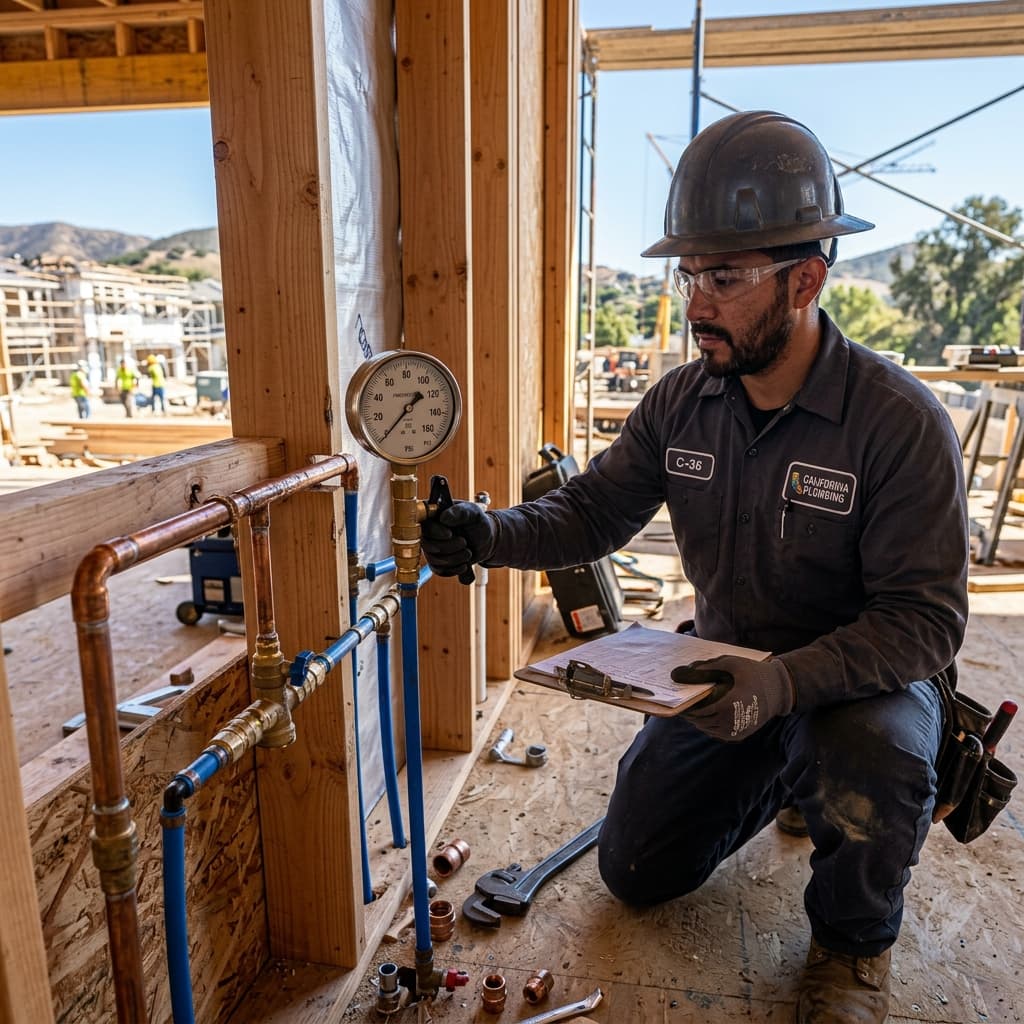
For Most Water Supply Piping Materials- Minimum test pressure: 100 PSI (pounds per square inch)
- Test duration: 15 minutes minimum
- No visible leaks permitted
- Gauge must be calibrated and readable
- Some applications require testing to 200 PSI
- Industrial or special-purpose water lines may exceed standard requirements
Test Procedure Guidelines
Proper pressure testing procedure includes:
- Isolation: Isolate the system section being tested from the main water supply
- Filling: Fill the system slowly with water, removing trapped air
- Pressurization: Use a hand pump or approved pressurization device
- Observation: Hold pressure for entire test duration without fluctuation
- Documentation: Record test pressure, duration, date, and test personnel
Material-Specific Testing Considerations
Copper Piping Tests- Standard 100 PSI for 15 minutes
- No discoloration or weeping at solder joints acceptable
- Sweat connections should be solid throughout
- Same 100 PSI standard applies
- Press-fit connections require equal scrutiny
- Ensure all connection points are properly crimped or pressed
- Pressure must be applied slowly to plastic piping
- Avoid sudden pressurization that could damage plastic material
- Some codes require 50 PSI pre-test before full pressurization
Common CPC Section 422.1 Exam Questions
Understanding typical exam questions helps target your study:
Question Type 1: Material Selection "Which copper tubing type is approved for underground water service?"- Answer: Type K (thickest walls, corrosion resistant)
- Answer: 15 minutes at 100 PSI
- Answer: Modern code discourages or prohibits new installations due to corrosion concerns
- Answer: NSF/ANSI 52
Critical Code References for Exam Preparation
When studying CPC Section 422.1, cross-reference these related sections:- CPC Section 422.2: Specific copper tubing requirements
- CPC Section 422.3: Plastic piping material specifications
- CPC Section 503: General testing and inspection procedures
- CPC Section 308.1: Materials approval standards
Practical Installation Scenarios
Scenario 1: Rural Property with Aggressive Soil
A property has highly corrosive soil conditions. Which material would comply with CPC 422.1?- Correct Answer: Type K copper or PVC/CPVC for portions below ground, stainless steel for extreme conditions
- Reasoning: Type L would be marginal; galvanized steel would be prohibited
Scenario 2: Mixed-Material Water System
A water line combines Type L copper with PEX connections. What testing procedure applies?- Correct Answer: 100 PSI for 15 minutes minimum on the entire system
- Reasoning: Test pressure doesn't change based on material combinations; weakest connection determines viability
Scenario 3: Pressure Test Failure
During inspection, water leaks at a copper solder joint at 100 PSI. What action is required?- Correct Answer: Repair the solder joint and retest; document all failures
- Reasoning: Code compliance requires zero visible leaks at test pressure
Exam Preparation Tips for CPC Section 422.1
Study Strategy 1: Material Matching
Create flashcards matching materials to their:- Temperature ratings
- Pressure ratings
- Approved applications
- Prohibited uses
Study Strategy 2: Timeline Practice
Practice tracing water supply systems from main shutoff through branches, identifying each material and its code compliance status. This mirrors real inspection procedures.Study Strategy 3: Pressure Calculation
Understand how working pressure differs from test pressure:- Test Pressure = 100 PSI (standard)
- Working Pressure = Variable based on system elevation and demand
- Safety Factor = Difference between test and working pressure
Study Strategy 4: Code Cross-Reference
Always connect Section 422.1 to broader code principles found in earlier sections. Modern exams test integrated knowledge across multiple code sections.Common Mistakes on the C-36 Exam
Mistake 1: Confusing Copper Types Candidates often mix up Type K, L, and M applications. Remember: Type M is interior-only; Types K and L work underground. Mistake 2: Overlooking Certification Failing to identify NSF/ANSI certification requirements costs points. Modern materials must be certified. Mistake 3: Miscalculating Test Duration "15 minutes" is the minimum—many candidates forget this specific timing requirement. Mistake 4: Ignoring Material Combinations Exam questions often present mixed-material systems. You must evaluate each section independently while testing the entire system together.Staying Current with CPC 422.1 Changes
The California Plumbing Code updates regularly, typically every three years. When preparing for your exam:
- Verify you're studying the current code version
- Check the California Building Standards Commission for amendments
- Review contractor association updates on material approvals
- Understand that some materials gain approval gradually as research confirms safety
Summary: Key CPC Section 422.1 Takeaways
For C-36 exam success, master these essential points about water supply line materials and pressure testing:
- Material Selection Matters: Only approved materials under CPC 422.1 are acceptable; certification is non-negotiable
- Test Pressure is Standard: 100 PSI for 15 minutes applies to most materials; know the exceptions
- Documentation is Critical: Record test results with date, time, gauge reading, and test personnel
- Cross-References Are Essential: Section 422.1 doesn't exist in isolation; connect it to sections 422.2, 422.3, 503, and others
- Application-Specific Rules: Underground, exposed, hot water, and cold water applications have different requirements
---
Ready to test your knowledge? Review our complete C-36 Plumbing Exam Study Guide for comprehensive preparation covering all Part 2 Water Supply topics.