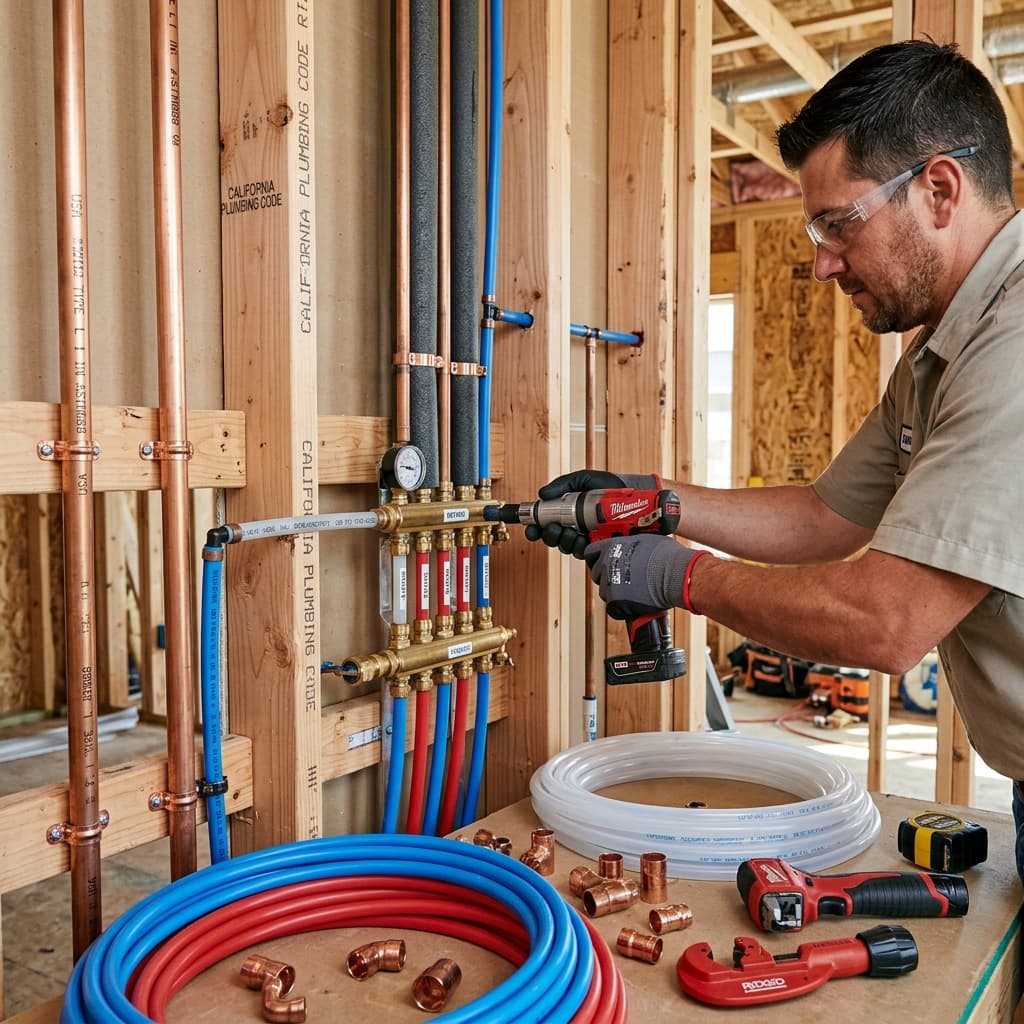

# CPC Section 422: Master Water Supply System Inspection and Rough-In Standards
Understanding CPC Section 422 requirements is essential for passing the California C-36 plumbing exam. This foundational section of the California Plumbing Code establishes the inspection and testing protocols that ensure water supply systems function safely and reliably. Whether you're preparing for your contractor's exam or seeking licensure as a plumber, mastering these standards will strengthen your competency in water system design and installation verification.What is CPC Section 422?
CPC Section 422 addresses the inspection and testing requirements for water supply systems before they're placed into service. This section doesn't focus on design alone—it emphasizes verification through systematic inspection procedures. The California Building Standards Commission designed these standards to protect public health by ensuring every water supply system meets minimum safety and performance criteria before occupancy or use.Historical Context and Evolution
The water supply system inspection requirements have evolved significantly over the past two decades. Early code versions focused primarily on material compatibility and pressure resistance. Modern iterations, reflected in the current California Plumbing Code, integrate:
- Advanced materials science standards
- Environmental protection requirements
- Cross-connection prevention protocols
- Seismic resilience considerations
Key Components of CPC Section 422
Water Pressure Standards
CPC Section 422.1 establishes minimum and maximum water pressure requirements for municipal water supplies:- Minimum operating pressure: 20 psi (pounds per square inch) at the point of delivery
- Maximum pressure: 80 psi under normal conditions
- Peak pressure: 100 psi maximum (including surges)
- Below 20 psi: Insufficient pressure for fixture operation and potential backflow hazards
- Above 80 psi: Accelerated wear on fixtures, increased leak potential, and safety concerns
Rough-In Inspection Standards
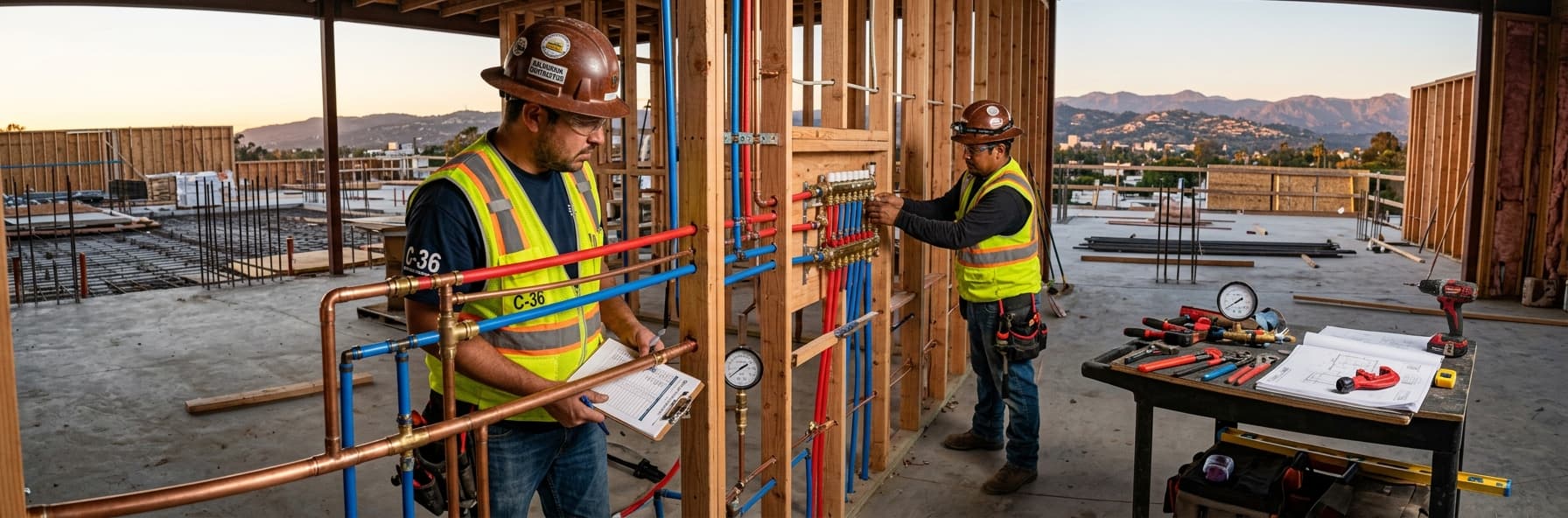
Rough-in inspections represent a critical checkpoint in plumbing system construction. CPC Section 422 requires that:- All piping and fittings must be exposed and accessible for visual inspection
- Installation must precede wall closure, concrete pours, or covering
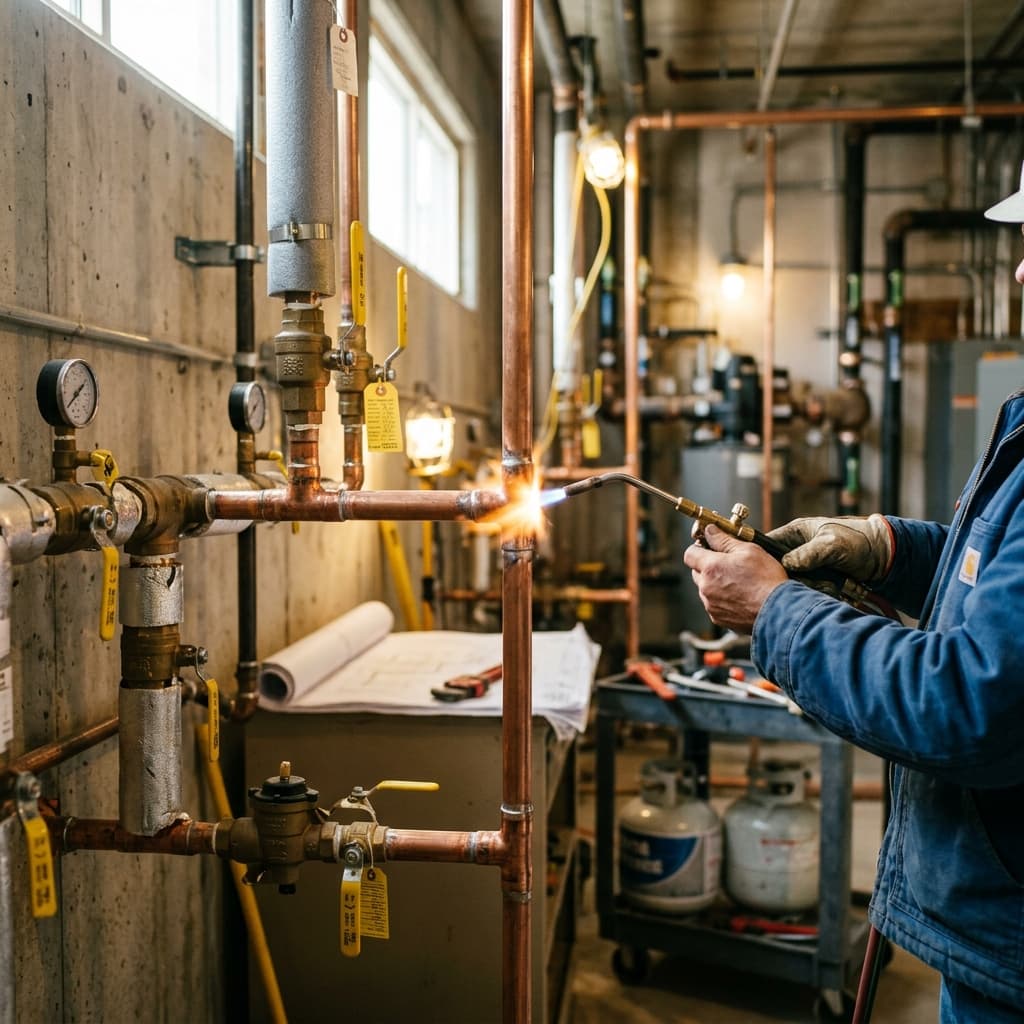
- Documentation through inspection tags or certificates is mandatory
- Test pressure standards must be demonstrated before concealment
Required Testing Procedures
CPC Section 422.2 mandates specific testing procedures:#### Hydrostatic Testing
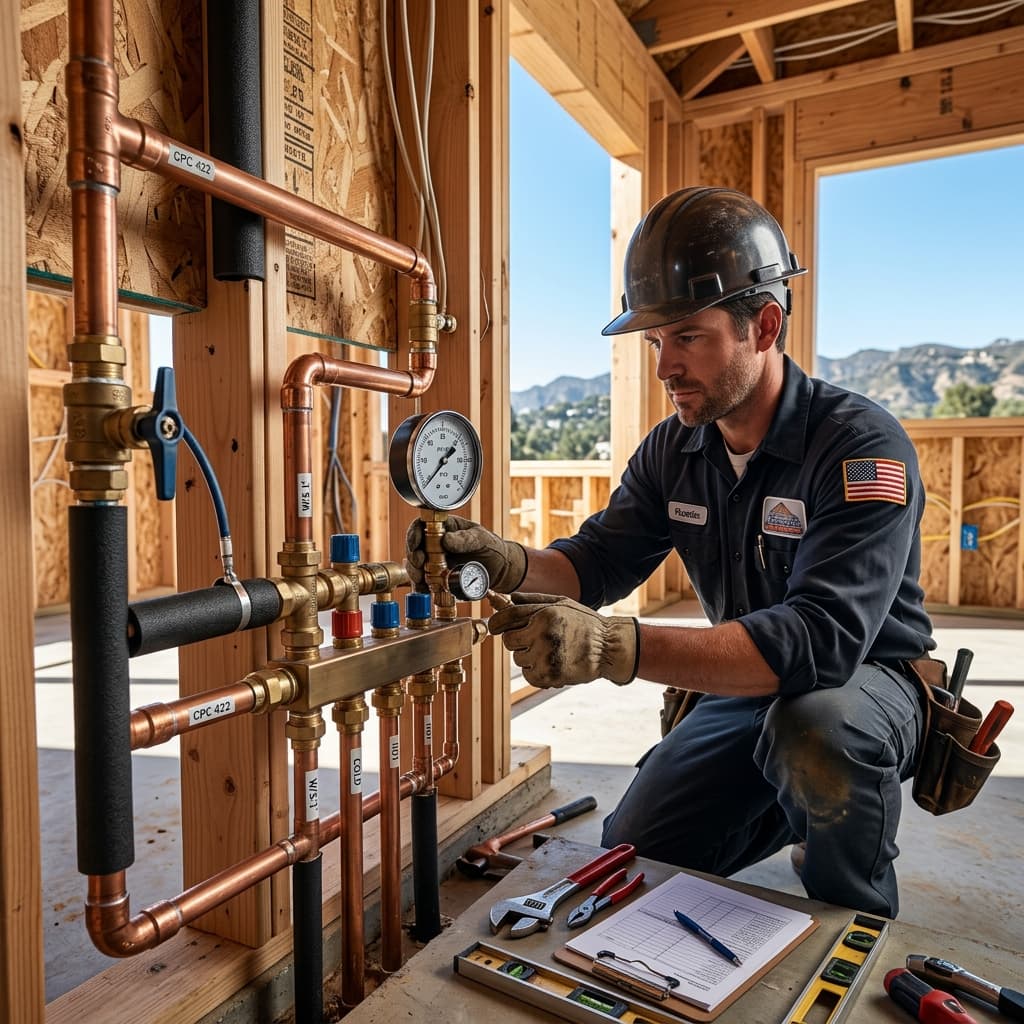
Newly constructed or altered water supply systems must withstand hydrostatic pressure testing at:- Test pressure: 1.5 times the maximum working pressure, minimum 100 psi
- Duration: 15 minutes minimum without visible leaks
- Equipment: Pressure gauges calibrated within the past 12 months
- Proper pipe sizing according to fixture demand
- Correct fitting types and installations
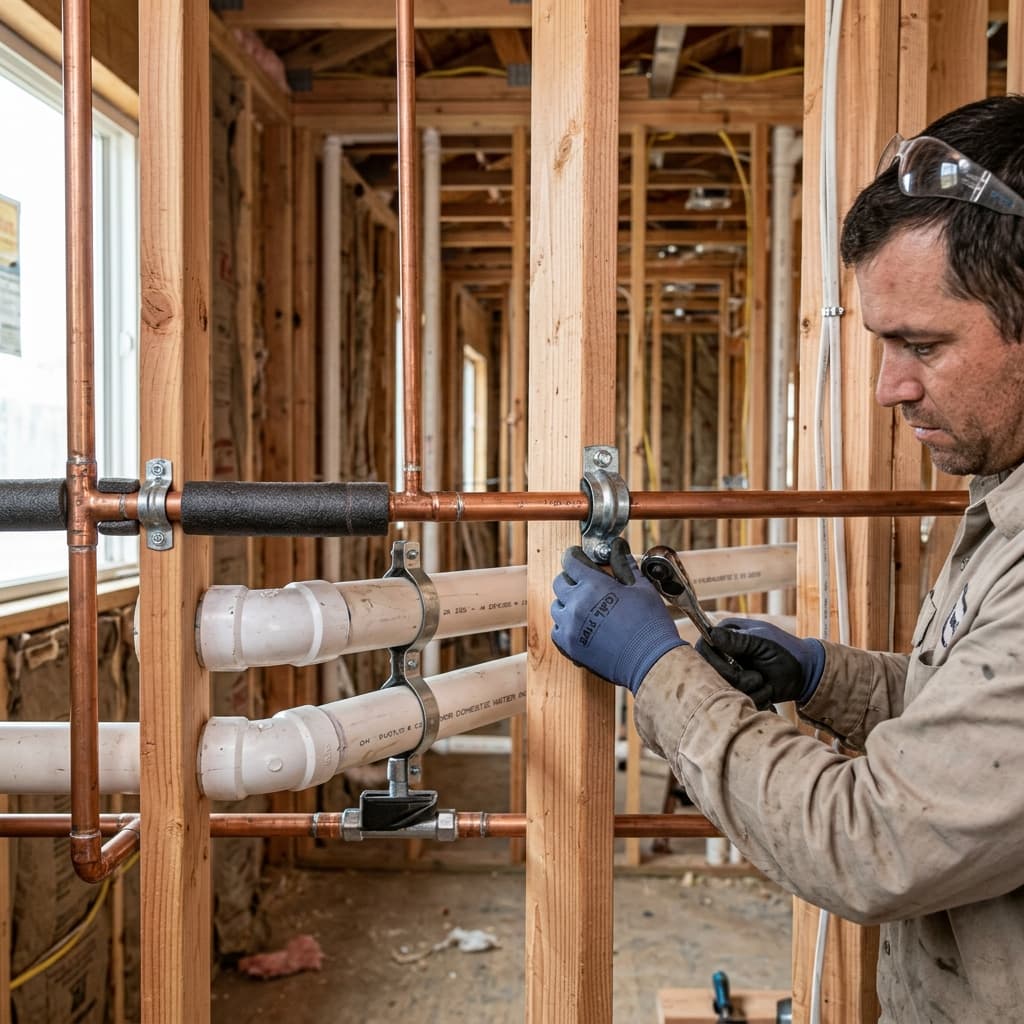
- Support and hanger placement (maximum 6 feet for copper, 4 feet for PVC)
- Isolation valves at appropriate locations
- Backflow prevention devices where required
Water Supply Piping Materials and Standards
CPC Section 422 references material standards from other sections while establishing performance requirements. Acceptable materials include:Copper Tubing
- Type K (underground, most durable)
- Type L (general supply, most common)
- Type M (interior only, adequate for low-pressure applications)
- Minimum 6-foot support intervals vertically
- Proper solder joints using lead-free solder
- Appropriate dielectric unions where dissimilar metals connect
Plastic Piping
- PVC (polyvinyl chloride) - underground cold water only
- PEX (cross-linked polyethylene) - flexible, suitable for both hot and cold water
- CPVC (chlorinated PVC) - hot water applications
- PVC: 4-foot maximum intervals
- PEX: 32-inch maximum intervals for horizontal runs, 48-inch for vertical
Galvanized Steel
Though increasingly rare in modern installations, galvanized piping remains code-compliant for:- Service lines
- Rough-in applications in commercial settings
- Existing system modifications
Inspection Documentation and Compliance
Required Documentation
The C-36 exam emphasizes that proper documentation is as critical as proper installation. CPC Section 422 requires:- Inspection Report: Documenting date, time, inspector credentials, and system condition
- Test Certificates: Pressure test results with dated gauge readings
- Material Certifications: Verification that materials meet applicable standards
- Permit and Inspection Tags: Visible identification at rough-in stage
Inspection Sequence
The inspection sequence matters significantly for exam questions:
- Building permit issuance - before any work
- Rough-in inspection request - after piping installation, before concealment
- Rough-in inspection approval - inspector verifies all exposed piping
- System pressure testing - hydrostatic test performed as required
- Final inspection - after all connections and fixtures installed
- Certificate of Occupancy - issued after final approval
Cross-Connection Control and Backflow Prevention
CPC Section 422 incorporates cross-connection prevention as a fundamental requirement. This integration reflects California's commitment to preventing contaminated water from entering the potable supply.Backflow Prevention Device Types
The code requires different protection levels based on hazard assessment:
- Air Gaps: Physical separation (minimum 1 inch, or two pipe diameters, whichever is greater)
- Vacuum Breakers: Atmospheric and pressure types for specific fixture hazards
- Check Valves: One-way flow control for low-hazard situations
- Reduced Pressure Principle (RPP) Devices: Highest protection for high-hazard conditions
Water Meter Installation Standards
CPC Section 422 includes specific requirements for water meter installation:Meter Location and Accessibility
- Inside building: Installed near point of entry, above grade
- Outside installation: Must be protected from freezing and physical damage
- Accessibility: Must be readable and maintainable without obstructing egress
Meter Protection
- Backflow prevention: Required upstream (typically in meter setter)
- Shutoff valve: Required downstream
- Drains: Required for isolation and maintenance
- Support: Adequate support to prevent stress on connections
Sizing Requirements
Meters must be appropriately sized for system demand:- Undersized meters: Create excessive pressure drop and restrict flow
- Oversized meters: Provide inaccurate consumption readings
- Selection criteria: Based on peak simultaneous demand calculations
Common Code Violations and Inspection Failures
Understanding typical violations helps exam preparation and real-world practice:
Pressure Deficiencies
- Violation: System pressure below 20 psi
- Cause: Undersized service line or inadequate pressure from municipality
- Solution: Install pressure booster pump or increase service line diameter
Inadequate Support
- Violation: Copper piping supported at 8-foot intervals
- Cause: Improper understanding of spacing requirements
- Solution: Add support at 6-foot maximum intervals
Improper Material Combinations
- Violation: Copper piping connected directly to galvanized steel
- Cause: Galvanic corrosion hazard ignored
- Solution: Install dielectric union between dissimilar metals
Missing Isolation Valves
- Violation: No shutoff valve for water heater or major fixture group
- Cause: Inadequate planning during rough-in
- Solution: Install ball valves at appropriate locations
Inadequate Backflow Prevention
- Violation: Potable water supply connected to non-potable source without protection
- Cause: Lack of hazard assessment
- Solution: Install appropriate backflow prevention device based on hazard level
Water Supply System Design Considerations
Successful rough-in inspections depend on proper initial design. CPC Section 422 connects to design standards in other sections:Fixture Demand Calculations
Supply line sizing must accommodate simultaneous fixture usage:- Demand load: Measured in fixture units (FU)
- Peak demand: Calculated using cumulative fixture unit values
- Pressure loss: Calculated based on pipe material, length, and friction loss
Pipe Sizing Methodology
- Calculate total fixture units for the building
- Determine peak simultaneous demand using demand factor tables
- Select pipe diameter ensuring:
Pressure Drop Calculations
Inspectors verify that pressure drops don't exceed acceptable thresholds:- Maximum allowable drop: 15 psi per 100 equivalent feet of pipe
- Service line: Usually accounts for 5-10 psi drop
- Interior rough-in: Typically accounts for 5-10 psi drop
Water Quality Testing and Compliance
While CPC Section 422 focuses primarily on system integrity rather than water chemistry, understanding water quality testing enhances exam performance:Testing Requirements
Some jurisdictions require water quality testing including:- Bacteriological analysis: Coliform testing
- Chemical analysis: Chlorine residuals, pH levels
- Hardness testing: Calcium and magnesium concentrations
System Flushing
New systems must be flushed to remove:- Construction debris and sediment
- Pipe manufacturing residue
- Solder flux and cutting oils
Exam Preparation Strategies for Section 422
Study Organization
Break CPC Section 422 into manageable components:- Pressure standards - memorize key thresholds
- Testing procedures - understand hydrostatic testing protocol
- Material standards - review acceptable piping materials
- Inspection sequence - master the required steps
- Documentation - understand required records
Practice Question Approach
When answering Section 422 questions:- Identify the scenario type - new installation, alteration, or testing
- Determine applicable standards - pressure, materials, or inspection-based
- Check code sections - reference actual CPC language if permitted
- Eliminate wrong answers - often include common misconceptions
Common Misconceptions
- Myth: "Hydrostatic testing pressure equals operating pressure"
- Myth: "Copper piping support spacing is the same for all orientations"
- Myth: "Water pressure above 80 psi is always dangerous"
Connecting Section 422 to Broader C-36 Competencies
CPC Section 422 serves as a foundation for understanding broader water supply systems. Master these standards to excel in:- Water Meter Installation and Sizing requirements
- Pressure Regulation and Booster Pump Installation principles
- Backflow Prevention Device Selection and Installation decisions
- Water Supply Piping Material Selection and support requirements
Key Takeaways for C-36 Exam Success
- Pressure standards are fundamental: 20 psi minimum, 80 psi maximum operating, 100 psi peak maximum
- Rough-in inspection precedes concealment: Timing is critical for compliance
- Hydrostatic testing requires 1.5× working pressure minimum: Usually 100 psi for 15 minutes
- Documentation is mandatory: Inspection reports and test certificates are essential records
- Backflow prevention selection depends on hazard assessment: Not all applications require RPP devices
- Material compatibility matters: Dielectric unions prevent galvanic corrosion
- Support spacing varies by material: Copper, PVC, PEX, and steel each have different requirements