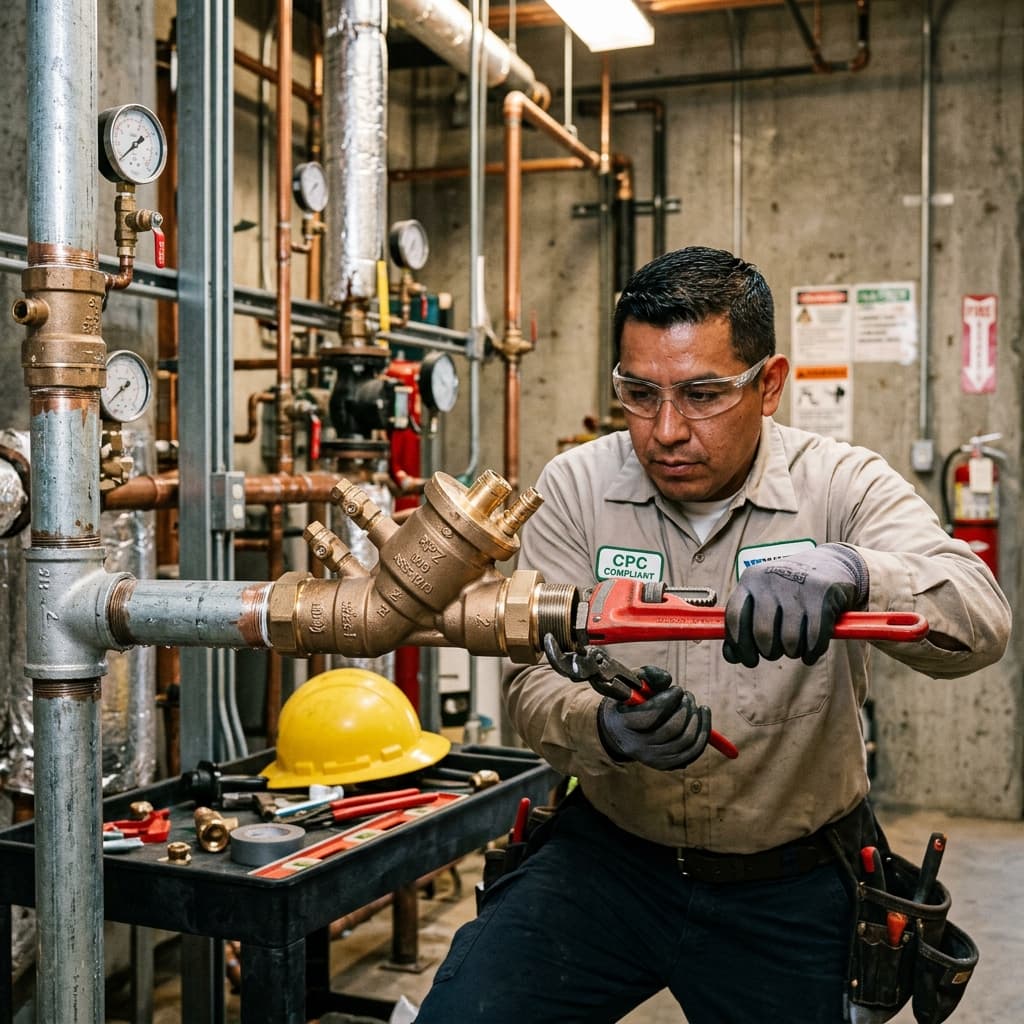

# CPC Section 422: Master Water Supply System Design, Pressure Regulation, and Backflow Prevention
Water supply system design california requirements are fundamental to the California Plumbing Code (CPC) and critical for C-36 exam success. CPC Section 422 establishes comprehensive standards for designing, installing, and maintaining water supply systems that protect public health while ensuring adequate water delivery to all plumbing fixtures.
This guide walks you through the essential components of Section 422, focusing on pressure regulation, backflow prevention requirements CPC 422, and inspection protocols that you'll encounter on the C-36 plumbing exam.
Understanding CPC Section 422: Core Principles
CPC Section 422 covers the general requirements for water supply systems serving buildings and structures. This section doesn't stand alone—it works in conjunction with water distribution system requirements and fixture supply lines. The primary intent of Section 422 is to ensure:- Adequate water pressure for all plumbing fixtures
- Protection against contamination through backflow prevention
- Safe system operation through proper installation and testing
- Compliance with local water authority standards
Key Definitions from CPC Section 422
Water supply system: The entire piping system from the water meter or service connection point to the most remote fixture. Backflow: The undesirable reverse flow of water from the plumbing system back into the public water supply. Backflow preventer: A device that allows water to flow in only one direction, protecting the potable water supply.Water Supply Pressure Regulation: CPC Section 422 Requirements
Water supply pressure regulation CPC is one of the most frequently tested topics on the C-36 exam. Understanding minimum and maximum pressure requirements is essential for protecting both fixtures and the distribution system.
Minimum and Maximum Water Pressure Standards
CPC Section 422.1 establishes that the minimum water pressure supplied to the plumbing system shall be 20 pounds per square inch (PSI). However, if the public water supply pressure is less than 20 PSI, the building's plumbing system must comply with the available pressure. Maximum water pressure cannot exceed 80 PSI. This critical requirement prevents:- Pipe ruptures and leaks
- Damage to water meters and fixtures
- Excessive noise (water hammer)
- Premature fixture failure
Pressure Reducing Valves (PRVs)
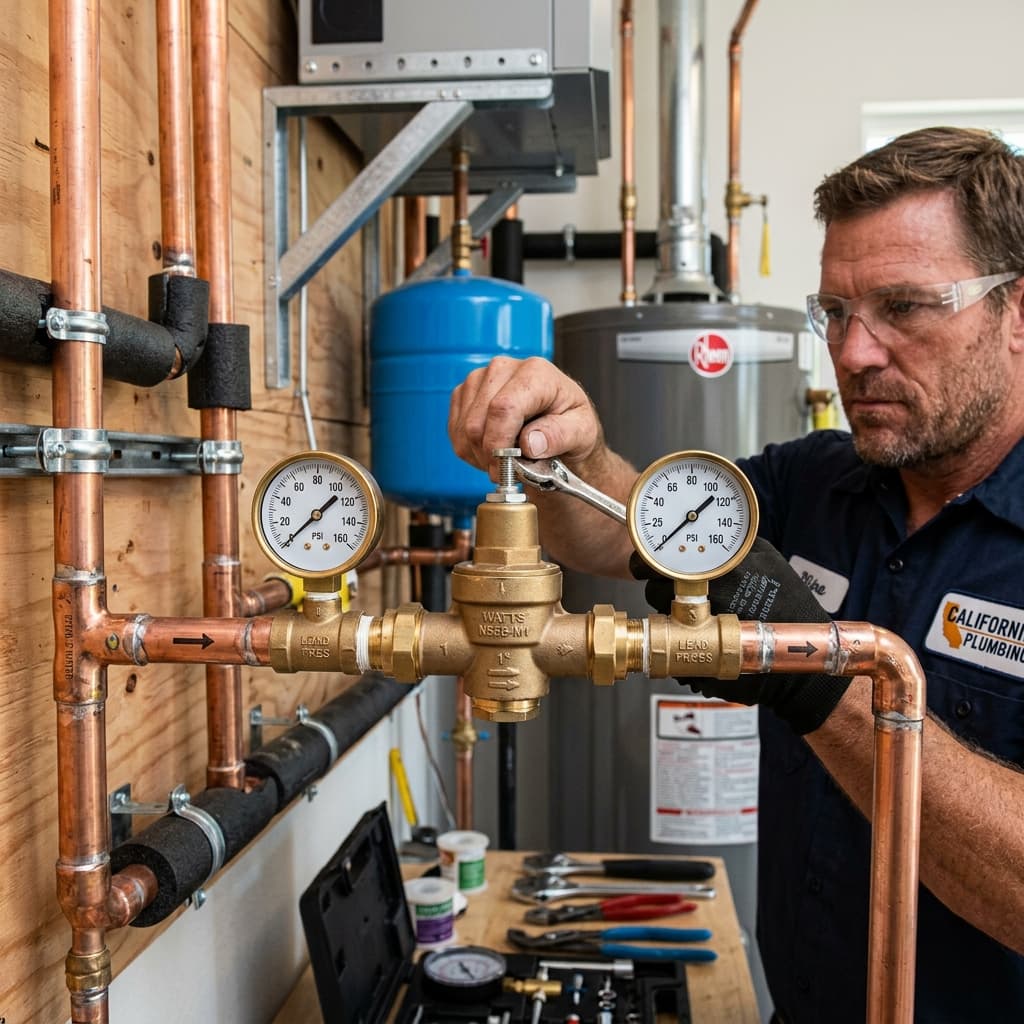
When water supply pressure exceeds 80 PSI, CPC Section 422.1.1 requires installation of a pressure reducing valve (PRV) at the point of entry. Key requirements for PRVs:- Must be of the type approved for potable water service
- Outlet side pressure cannot exceed 80 PSI
- Must include a full-port ball valve for isolation upstream
- Must include a check valve on the outlet side
- Installation location should allow for easy maintenance and testing
Pressure Boosting Systems
For buildings where the municipal water supply pressure is insufficient (below 20 PSI), CPC Section 422.1.2 permits the installation of pressure boosting systems. These systems must:- Meet approval requirements under CPC Section 322 (general water supply)
- Include check valves to prevent backflow
- Have pressure relief valves set at maximum 80 PSI
- Be provided with storage tanks complying with backflow prevention requirements
Backflow Prevention Requirements CPC 422: Comprehensive Coverage
Backflow prevention is the cornerstone of water supply system design california and represents a significant portion of Section 422. The CPC requires different levels of backflow prevention based on the hazard classification of the building or system component.
Understanding Backflow Hazard Classifications
CPC Section 422.2 recognizes two levels of backflow hazards: Hazard Level 1 - Low Hazard (Considered a Public Health Hazard)- Involves only water that is unclean, unpalatable, or objectionable but not grossly contaminated
- Examples: water supply lines to automatic ice machines, ornamental fountains, landscape irrigation systems
- Requires vacuum breakers or air gaps
- Involves water supply lines connected to conditions where contaminants may be introduced into the system under pressure
- Examples: chemical injection systems, boiler drains, wastewater lines, laboratory equipment
- Requires backflow prevention devices such as reduced pressure principle (RP) devices
Types of Backflow Prevention Devices
Understanding the differences between these devices is crucial for the C-36 exam:
Air Gaps- Physical separation of at least twice the pipe diameter, with a minimum of 1 inch
- Most reliable form of backflow prevention
- Cannot be used where continuous water flow is required
- Examples: faucet spout to sink rim, toilet supply line to bowl
- Atmospheric vacuum breaker (AVB): Inexpensive, requires no maintenance, but less reliable under dynamic conditions
- Pressure type vacuum breaker: More reliable under dynamic pressure conditions
- Used for low-hazard conditions only
- Prevent backflow through direct pressure difference
- Single check valves acceptable for low-hazard conditions
- Dual check valves provide better protection but still only for low-hazard applications
- Double check valve system with relief valve between them
- Maintains pressure differential to prevent backflow
- Required for high-hazard conditions
- Must be installed so relief valve port discharges to atmosphere
- Two independent check valves in series
- Less reliable than RP devices for high-hazard conditions
- Acceptable for low-hazard conditions where double protection desired
Installation Requirements for Backflow Prevention Devices
CPC Section 422.2.1 specifies that backflow prevention devices must be:- Installed as close as practical to the point of potential hazard
- Installed at the building entrance if the entire building is at risk
- Installed immediately after branch take-offs in complex systems
- Accessible for inspection and testing
- Located above finished floor when possible (not in crawl spaces)
Water Supply System Inspection and Testing Requirements
Initial Inspection Requirements
CPC Section 422.3 requires that water supply systems be inspected during installation at these points:- Point of entry/connection to public water main or private source
- Pressure regulating valve installation point
- Backflow prevention device location
- Water meter installation
- Main shutoff valve location
- Water storage tank connections
- All branch risers and distribution lines
- Rough-in inspection before concealment in walls
Testing and Certification of Backflow Prevention Devices
CPC Section 510 (which references Section 422) requires that:- RP devices must be tested before use and annually thereafter
- DCVA devices must be tested before use and annually thereafter
- Testing must be performed by certified backflow prevention device tester
- Test results must be submitted to local water authority
- Failed devices must be removed or repaired immediately
- RP device relief valve opening pressure: 3-5 PSI below outlet pressure
- Check valve cracking pressure: Typically 0.5-2 PSI
- Closure rate: Must close within acceptable timeframe (varies by device type)
Annual Maintenance and Inspection
Property owners are responsible for maintaining backflow prevention devices through:- Annual testing by certified testers
- Repair or replacement of failed devices within 30 days
- Record maintenance and test results for inspection
- Notification to water authority of any failed devices
Common C-36 Exam Questions on Section 422
Understanding these question types will improve your exam performance:
Scenario Question Type 1: "A residential building has a municipal water supply pressure of 95 PSI. What is required?"- Answer: A pressure reducing valve set to maximum 80 PSI is required at the point of entry.
- Answer: An RP device (reduced pressure principle device) is required due to high-hazard classification.
- Answer: 20 PSI minimum (unless municipal supply is lower).
- Answer: As close as practical to the point of potential hazard, typically at building entrance for whole-building protection.
Integrating Section 422 with Related Code Sections
CPC Section 422 works interconnectedly with several other critical sections:
- CPC Section 322: General water supply requirements and sources
- CPC Section 425: Water distribution system design
- CPC Section 510: Backflow prevention device testing and maintenance (Part 6)
- CPC Section 308: General plumbing system design principles
Practical Application: System Design Example
Example Scenario: Design a water supply system for a three-story office building with landscape irrigation. Required Components per CPC Section 422:- Check water supply pressure at meter (must be 20-80 PSI)
- If pressure exceeds 80 PSI, install PRV at service entrance
- Install main shutoff valve accessible to occupants
- Provide 20 PSI minimum to all fixtures (verify with calculations)
- For landscape irrigation system (low-hazard), install atmospheric vacuum breaker at each valve
- For any hazardous equipment connections, install RP device if high-hazard
- Perform rough-in inspection of all backflow prevention devices
- Obtain inspection approval before concealing any system components
Key Takeaways for Section 422 Mastery
To excel on the C-36 exam regarding water supply system design california:
- Memorize pressure limits: 20 PSI minimum, 80 PSI maximum—if exceeded, PRV required
- Distinguish hazard levels: Low-hazard uses simpler devices (air gaps, AVBs); high-hazard requires RP devices
- Know device characteristics: Air gaps are most reliable; RP devices required for high-hazard; check valves acceptable for low-hazard only
- Understand installation placement: As close as practical to hazard point; accessible for testing
- Remember testing requirements: RP and DCVA devices tested before use and annually; certified tester required
- Practice scenario analysis: Apply principles to real-world building situations
Final Exam Preparation Recommendations
When studying CPC Section 422 for your C-36 examination:- Review actual device specifications and pressure ratings
- Practice identifying hazard classifications in building scenarios
- Study the differences between device types and their applications
- Memorize pressure regulation standards
- Understand why each requirement exists (protective intent)
- Take practice tests focused on Section 422 scenarios
- Review local water authority requirements (often more stringent than CPC)