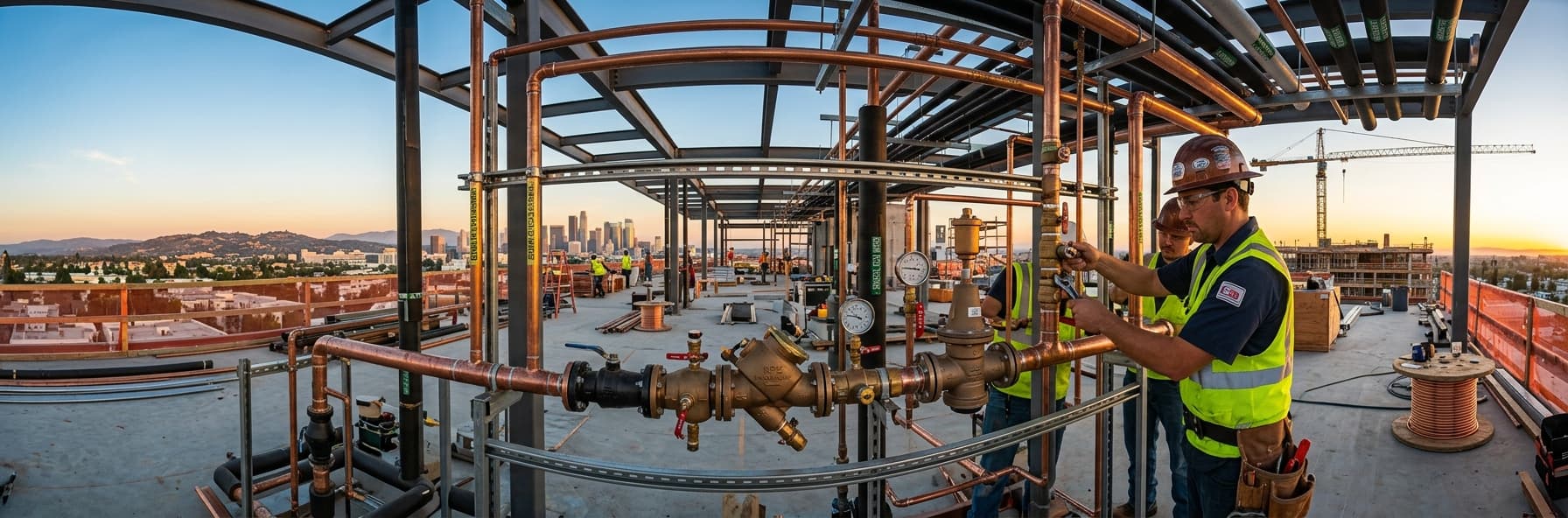
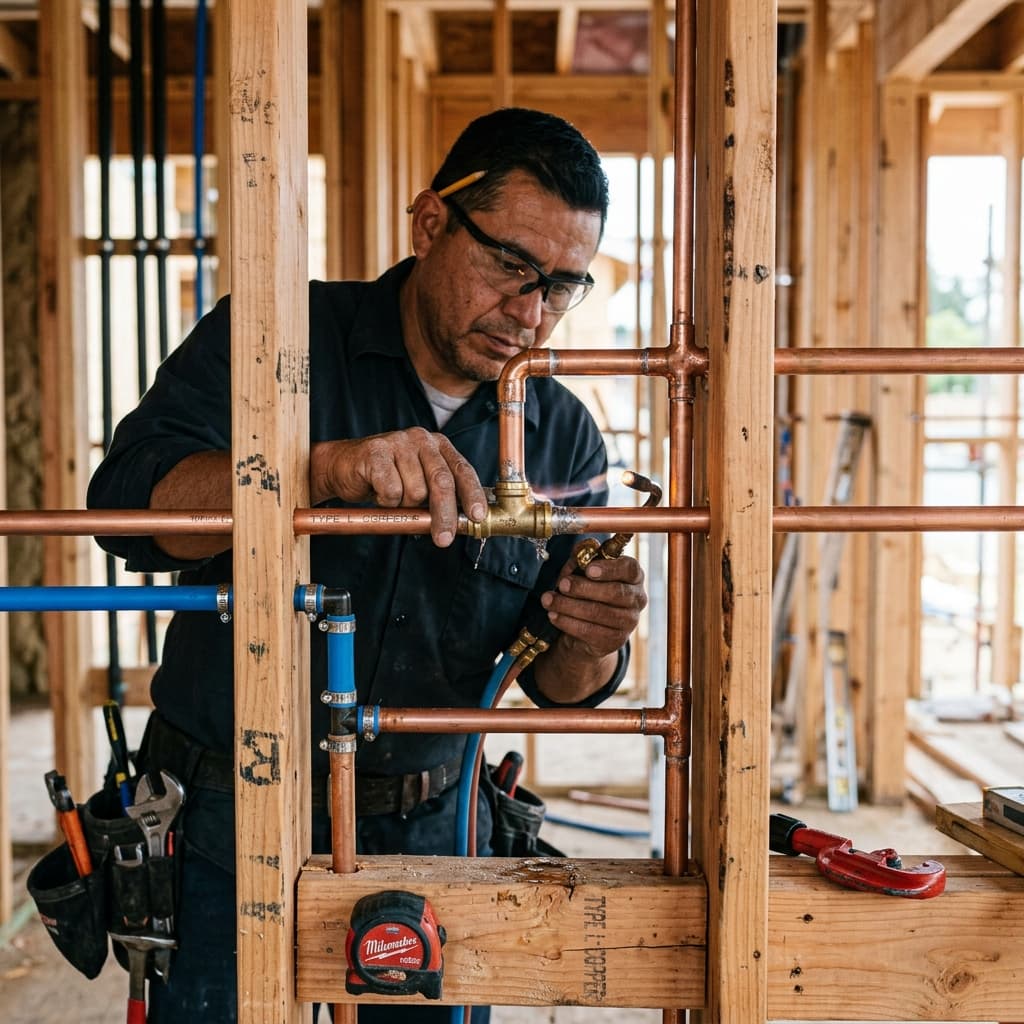

# CPC Section 422: Water Supply System Design - Pressure Regulation, Backflow Prevention, and Sizing Requirements
Understanding CPC Section 422 requirements is fundamental to passing the C-36 California plumbing exam. This critical section of the California Plumbing Code establishes the framework for designing safe, reliable water supply systems that protect public health while ensuring adequate service to all fixtures. Whether you're preparing for exam Part 2 or managing real-world installations, mastering these provisions is non-negotiable.Introduction to CPC Section 422
CPC Section 422 addresses the complete spectrum of water supply system design, from source protection to point-of-use delivery. This section works in conjunction with Section 608 backflow prevention requirements and establishes baseline standards that every licensed plumber must understand. The section covers three primary domains:- Pressure regulation and maintenance
- Backflow prevention device selection and installation
- System sizing based on demand calculations
Water Supply Pressure Regulation: CPC Section 422.1
Pressure Limits and Requirements
The water supply pressure regulation california standards mandate that all water supply systems maintain pressure between 20 and 100 pounds per square inch (psi) at the point of delivery to fixtures. Key pressure requirements include:- Minimum pressure (20 psi): Ensures adequate flow to upper-floor fixtures and proper operation of all devices
- Maximum pressure (100 psi): Protects fixtures, fittings, and appliances from damage and extends equipment lifespan
- Measurement point: Pressure is measured at the lowest fixture outlet in the building
Pressure Reducing Valves (PRVs)
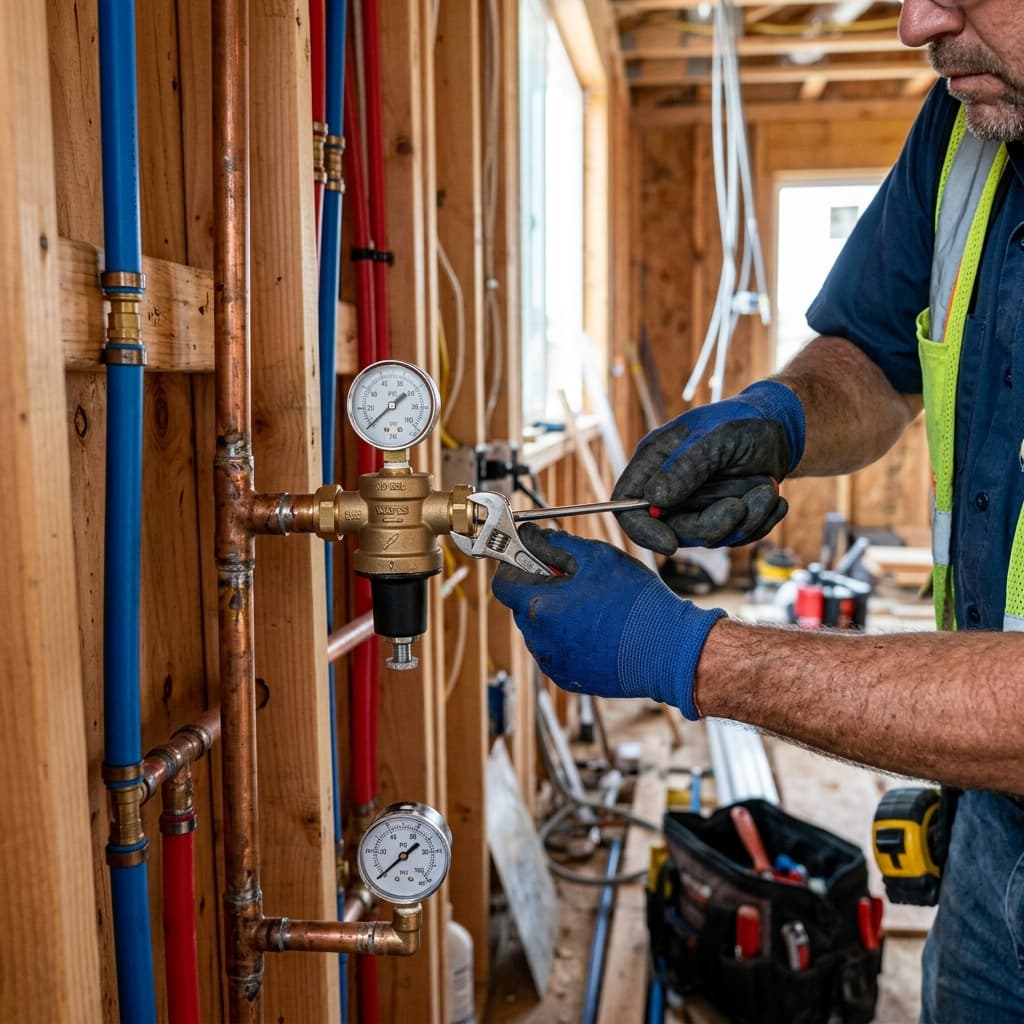
When municipal supply pressure exceeds 100 psi, installation of a pressure reducing valve is mandatory. CPC Section 422.1 specifies that PRVs must include:
- Integral check valve: Prevents backflow when downstream pressure exceeds supply pressure
- Shutoff valve: Allows isolation for maintenance and repair
- Proper sizing: Sized according to maximum flow demand, not the main line size
- Relief valve: Protects against excessive pressure from thermal expansion
Low-Pressure System Design
Buildings in high-elevation areas or systems with naturally low supply pressure require special consideration. CPC Section 422.1 permits systems operating below 20 psi when:
- Booster pumps are installed with appropriate pressure maintenance devices
- Capacity calculations account for simultaneous demand
- Storage tanks maintain minimum water volume for emergencies
Backflow Prevention Device Selection and Testing
Understanding Hazard Categories
Proper backflow prevention testing requirements depend on identifying the hazard level. CPC Section 422 and related sections establish two primary categories: High-Hazard (Toxic) Conditions:- Chemical injection systems
- Pesticide/fertilizer injection
- Carbonation systems
- Direct connections to non-potable sources
- Lawn irrigation systems
- Pool connections
- Auxiliary water supplies
Device Types and Applications
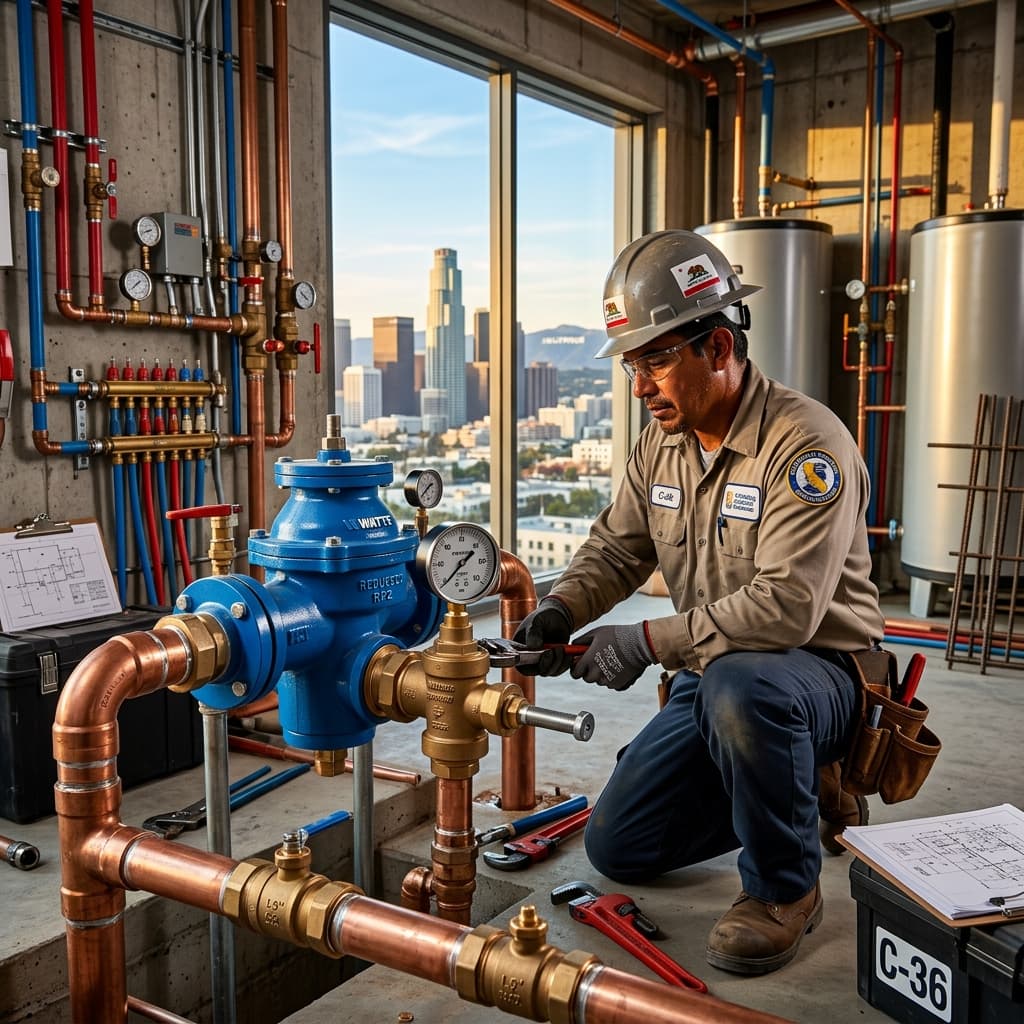
Reduced Pressure Principle (RPP) Assemblies:- Used for high-hazard conditions
- Contains two check valves with relief valve
- Relief opens at 5 psi differential
- Most stringent protection level
- Annual testing required per CPC Section 608.2
- Used for low-hazard conditions
- Contains two check valves in series
- No relief valve
- Less expensive than RPP
- Annual testing required
- Cannot be used for high-hazard applications
- Passive device preventing siphonage
- Used on hose bibs and irrigation systems
- No moving parts—lower maintenance
- Cannot provide check valve function
- Testing requirements differ from mechanical devices
- Active device with operational requirements
- Used on irrigation systems under pressure
- Must be tested annually
- Requires 6-inch elevation above highest outlet
Installation Requirements
CPC Section 422 mandates that backflow prevention devices meet these installation standards:
- Accessibility: Located where easily inspected and tested
- Orientation: Installed per manufacturer specifications and markings
- Isolation: Shutoff valves on inlet and outlet sides
- Labeling: Device type and hazard level clearly marked
- Drainage: Provisions for testing and maintenance drainage
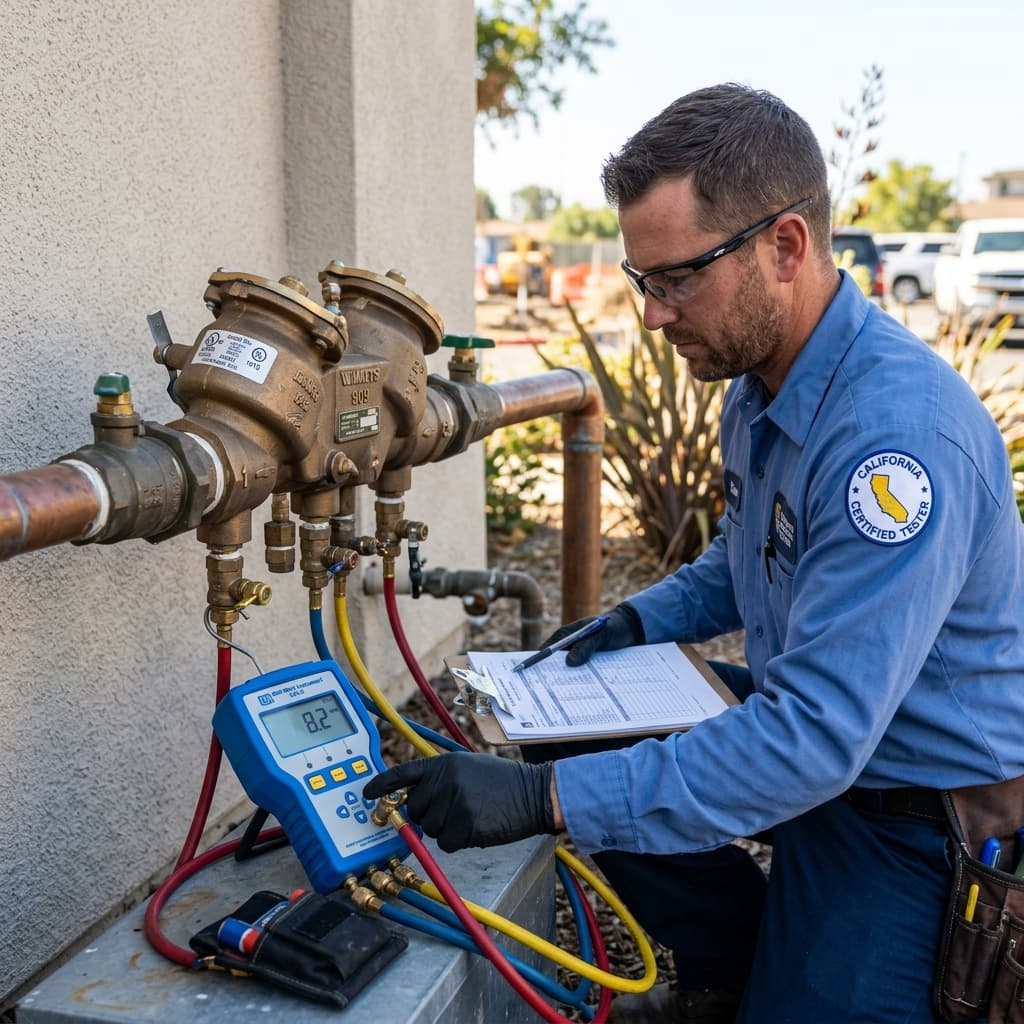
Annual Certification and Testing
Backflow prevention testing requirements require annual certification by a California Department of Public Health licensed tester. Documentation must include:- Device type and location
- Test results and pass/fail status
- Tester certification number
- Date of test
- Corrective action if device failed
Water Supply System Sizing: CPC Section 422.2
Demand Calculation Methodology
Proper sizing prevents inadequate service and excessive pressure. CPC Section 422.2 requires sizing calculations based on:
- Fixture Unit Values: Assigned to each fixture type based on flow characteristics
- Simultaneous Demand: Probability that not all fixtures operate simultaneously
- Supply Pressure: Available municipal pressure or pump capacity
- Friction Loss: Pressure drop through piping, fittings, and devices
Fixture Unit Requirements
The code establishes fixture units for common plumbing fixtures:
| Fixture Type | Fixture Units | |---|---| | Lavatory | 1.0 | | Water closet (flush valve) | 10.0 | | Water closet (tank) | 3.0 | | Shower/bathtub | 2.0 | | Kitchen sink | 2.0 | | Hose bibb | 2.5 | | Dishwasher | 1.4 | | Washing machine | 3.0 |
Flow Rate Determination
Once fixture units are totaled, determine required flow rate using demand tables in CPC Section 422.2. These tables account for the probability that not all fixtures will run simultaneously.
Example Calculation:- Single-family residence with 2 bathrooms, 1 kitchen, 1 hose bibb
- Total fixture units: (2×1) + (2×3) + (1×2) + (1×2.5) = 13.5 FU
- Required flow (from demand table): approximately 5-6 gallons per minute (GPM)
- Design supply pressure: 60 psi available
Friction Loss Calculations
Friction loss through pipes and fittings reduces available pressure. CPC Section 422.2 requires accounting for:
- Pipe diameter and length: Smaller pipes and longer runs increase friction
- Fitting resistance: Each elbow, tee, and valve adds equivalent length
- Velocity limitations: Flow velocity should not exceed 8 feet per second (fps)
Integrating Pressure Regulation and Backflow Prevention
In real-world installations, pressure regulation and backflow prevention often work together. When a pressure reducing valve is installed upstream of backflow prevention devices, ensure that:
- PRV outlet pressure: Reduces supply to appropriate level before backflow device
- Device protection: Backflow device protects the PRV from backflow conditions
- Testing accessibility: Both devices remain accessible for testing and maintenance
- Pressure maintenance: Downstream pressure remains adequate (minimum 20 psi) for all fixtures
Common C-36 Exam Scenarios
Scenario 1: High-Rise Building Supply
A 20-story office building receives 120 psi municipal supply pressure. What's required? Answer: Pressure reducing valve with integral check valve and relief valve. Booster pump system design accounts for pressure loss in vertical distribution. Annual testing of any backflow prevention devices installed at point of use.Scenario 2: Pesticide Injection System
A commercial landscape company needs to install a pesticide injection system. What backflow prevention device is required? Answer: Reduced Pressure Principle Assembly (high-hazard application). Located at point of injection. Annual testing mandatory. Cannot use double-check valve for this hazard level.Scenario 3: Water Supply Sizing for Addition
Adding 3 bathrooms to existing single-family home. Current system: 3/4-inch main line, 40 psi available pressure. Is sizing adequate? Answer: Calculate total fixture units for new and existing fixtures. Verify minimum 20 psi at farthest bathroom fixture accounting for friction loss. May require larger main line depending on total demand and pressure drop calculations.Study Strategies for Section 422 Success
Essential Activities
- Memorize pressure limits: 20 psi minimum, 100 psi maximum—these appear on nearly every C-36 exam
- Master device selection: Know which devices suit which hazard levels
- Practice sizing calculations: Work through 10-15 complete sizing problems
- Understand testing requirements: Know annual testing mandates for different device types
- Learn fixture unit values: These are frequently tested through calculation problems
Recommended Resources
- California Plumbing Code Section 422 (current edition)
- Water Supply Design and Installation guide
- Backflow prevention certification course materials
- Practice exam questions focusing on Part 2 content
Connection to Related Sections
Understanding Section 422 requires familiarity with:- CPC Section 308: Water quality and source protection
- CPC Section 608: Detailed backflow prevention requirements
- CPC Section 610: Specific pressure regulation standards
- CPC Section 606: Water supply and distribution piping materials
Conclusion
CPC Section 422 requirements form the foundation of competent water supply system design. By mastering pressure regulation standards, understanding backflow prevention device selection, and developing sizing calculation proficiency, you'll approach the C-36 exam with confidence.Success on Part 2 of the C-36 exam demands not just memorization, but application of these concepts to realistic scenarios. Dedicate focused study time to Section 422, practice calculation problems repeatedly, and ensure you understand the "why" behind each requirement—not just the "what."
The California plumbing industry depends on professionals who deeply understand these principles. Your thorough preparation protects public health, ensures code compliance, and demonstrates the professional competence expected of licensed plumbers.
---META_END---