
# CPC Section 422: Hot Water Distribution System Design and Temperature Control Requirements
Introduction to CPC Section 422
The CPC Section 422 hot water distribution system requirements represent one of the most important topics for C-36 plumbing exam candidates. As Part 4 of the exam focuses on Water Supply and Distribution Systems, understanding the complete framework of hot water system design, installation, and temperature control is essential for both passing the exam and working safely in California's plumbing field.Hot water distribution systems are critical infrastructure components in residential and commercial buildings. Section 422 of the California Plumbing Code provides comprehensive guidance on how these systems must be designed, installed, and maintained to ensure adequate water temperatures, energy efficiency, and safety.
Overview of CPC Section 422
What Does CPC Section 422 Cover?
CPC Section 422 establishes the minimum standards for hot water distribution systems in California. The section addresses:- System design and layout requirements
- Temperature maintenance and control
- Piping materials and sizing
- Insulation requirements
- Pressure relief and safety devices
- Backflow prevention measures
- Anti-scald protection mechanisms
Code Structure and Organization
Section 422 is organized into subsections that progressively build your knowledge:
- 422.1: Scope and general requirements
- 422.2: System design standards
- 422.3: Temperature control requirements
- 422.4: Piping and materials specifications
- 422.5: Insulation standards
- 422.6: Safety device requirements
Water Heater Installation Requirements California
General Installation Standards
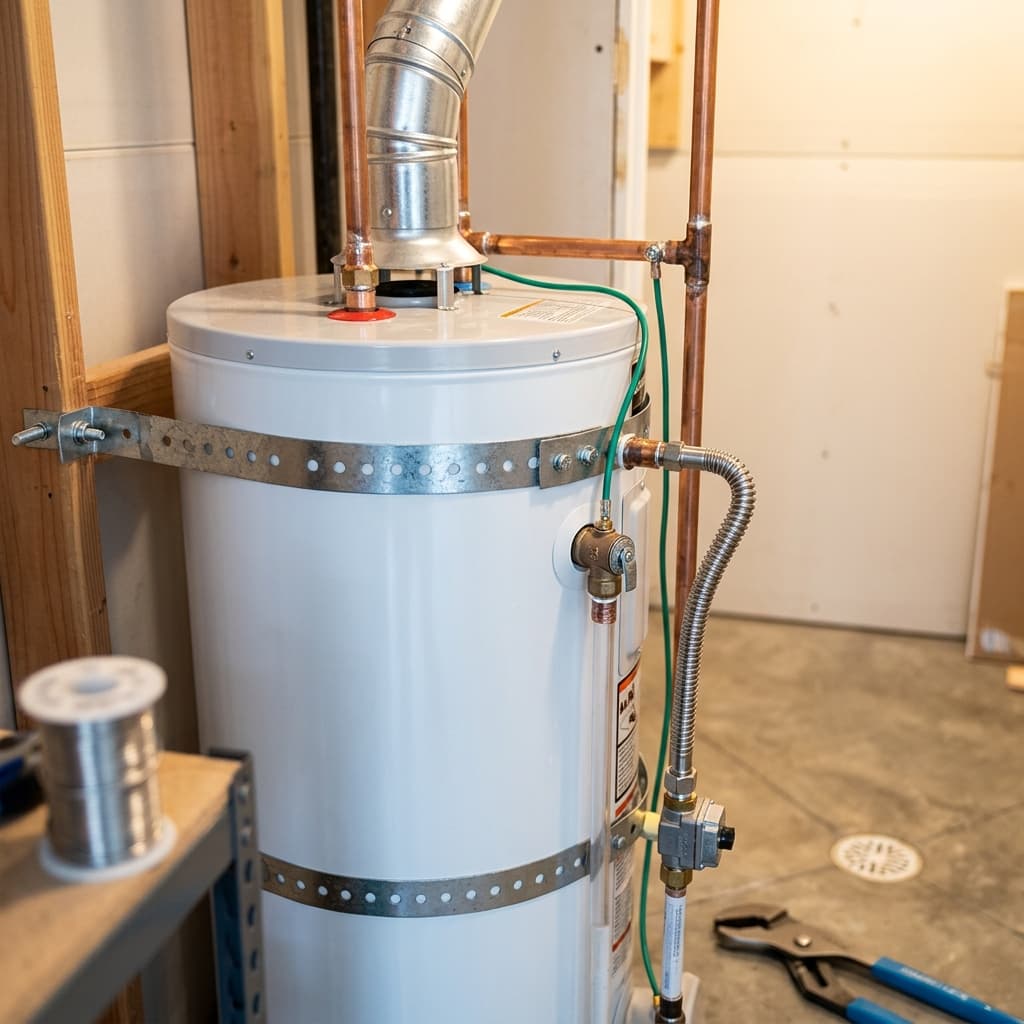
Water heater installation requirements california are strictly regulated under CPC Section 422 and related sections. All water heaters must comply with: #### Location Requirements- Water heaters must be installed in accessible locations
- Installation spaces must allow for adequate maintenance and repair access
- Heaters cannot obstruct egress or safety pathways
- Temperature relief valve must be accessible for testing and replacement
- Water heaters must be supported on level, stable foundations
- Support structures must be rated for the combined weight of the heater and water
- Seismic bracing is required in California per CPC Section 308
- Flexible connections must be used where movement is possible
Piping Connection Standards
All water heater installations must include proper piping connections:
- Cold water inlet: Must have a shutoff valve installed within 24 inches of the water heater
- Hot water outlet: Must be properly sized for the heater capacity
- Drain connection: Must have accessible drain valve located at the lowest point
- Relief valve connection: Temperature and pressure relief valve (T&P valve) must be connected to the top of the water heater tank
Hot Water Distribution System Design Principles
System Layout and Configuration
A properly designed hot water distribution system ensures adequate hot water delivery while maintaining energy efficiency. Key design principles include: #### Single-Riser Systems- Simplest configuration with vertical piping from the water heater to distribution points
- Most common in residential applications
- Requires adequate insulation to prevent heat loss
- Central hot water main with branches to individual fixtures
- More efficient for larger buildings
- Requires careful sizing and insulation
- Includes a pump and return line to the water heater
- Provides instant hot water at fixtures
- Must include temperature control and check valves
- Requires dedicated return line piping
Sizing Calculations
Proper hot water system sizing depends on:
- Peak demand: Maximum simultaneous hot water usage
- Recovery time: How quickly the heater can reheat stored water
- Heater capacity: Volume of stored hot water available
- Fixture demand: Flow rates for various plumbing fixtures
Temperature Control Valve Requirements
The Critical Role of Temperature Control Valves
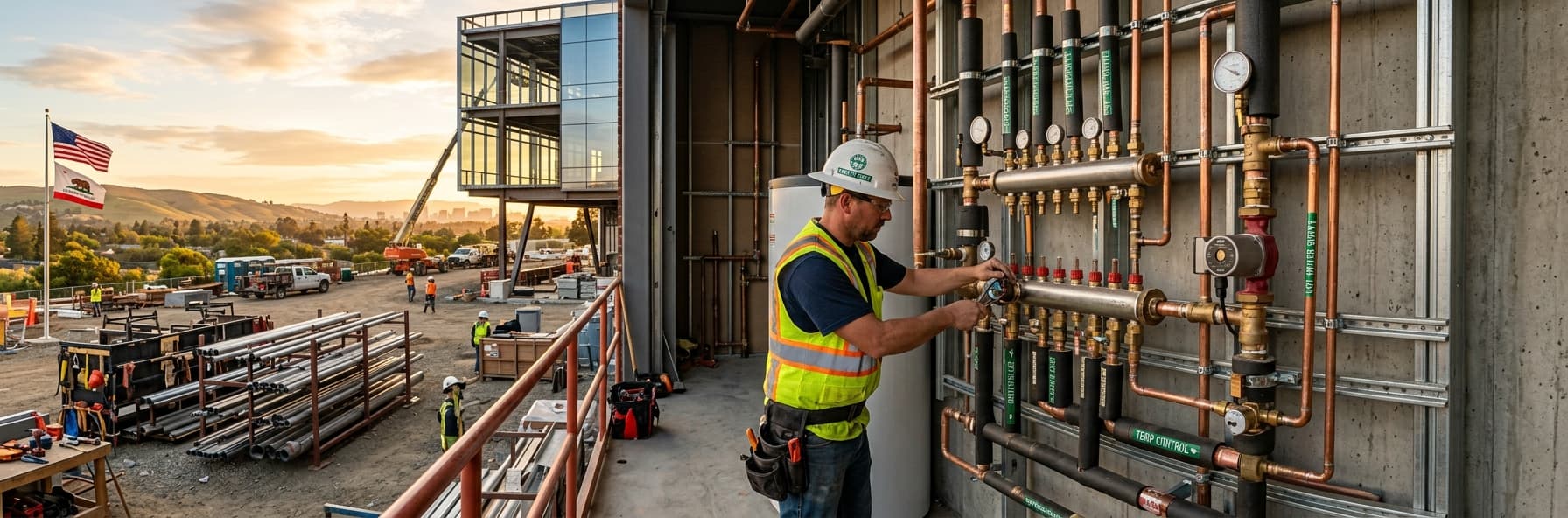
Temperature control valves are mandatory safety devices required by CPC Section 422. These devices protect occupants from scalding injuries and ensure consistent hot water delivery.Anti-Scald Valve Specifications
Per CPC Section 422.3, anti-scald valves must meet these requirements:
#### Performance Standards- Must maintain outlet water temperature within ±5°F of set temperature
- Must respond to temperature changes within 5 seconds
- Must include automatic shut-off if inlet water fails
- Must comply with ASSE Standard 1016 or equivalent
- Must be installed on the hot water outlet of the water heater or as close as practical
- Cannot be installed more than 10 feet from the heater in most applications
- Must be readily accessible for maintenance and adjustment
- Must include a test port for verification
- Typical setting is 120°F for residential applications
- Some applications (healthcare facilities, commercial) may require different settings
- Annual testing and maintenance is recommended
- Valves must be replaced if they fail to maintain temperature
Thermostatic Mixing Valves (TMV)
Thermostatic mixing valves provide point-of-use temperature control:
- Installed at individual fixtures or fixture groups
- Provide additional anti-scald protection beyond the main system valve
- Common in healthcare facilities and commercial applications
- Must meet ASSE Standard 1016 or ASSE 1025
Piping Materials and Sizing
Acceptable Piping Materials
CPC Section 422 and related sections permit these materials for hot water distribution:
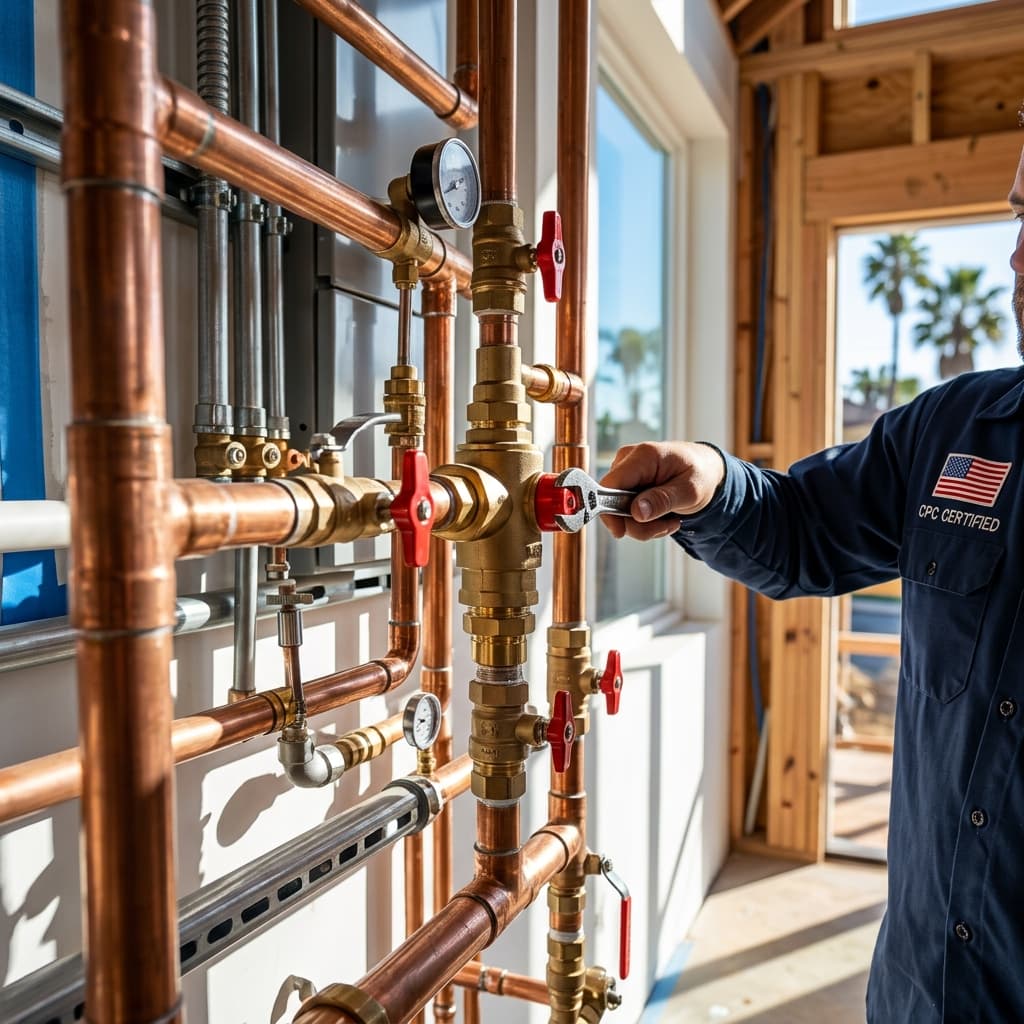
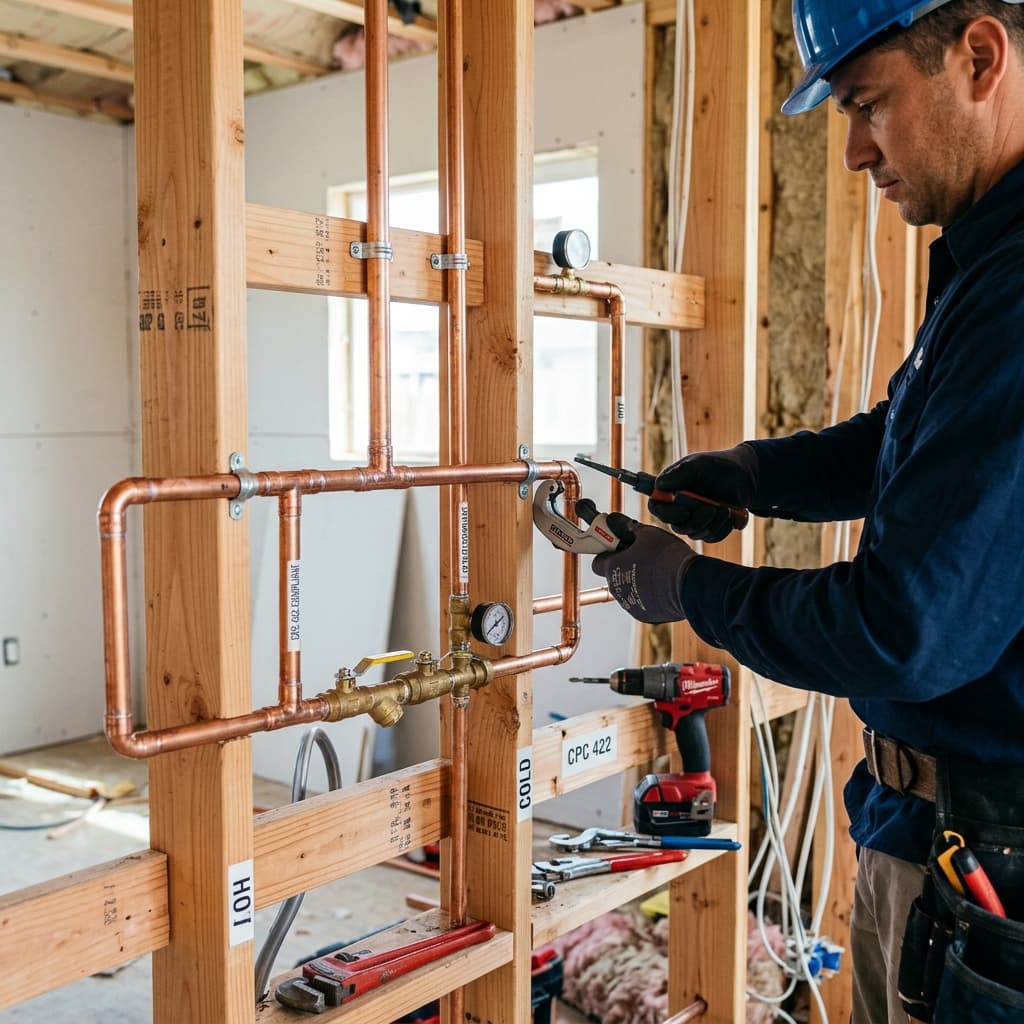
#### Copper Piping- Most common material for hot water systems
- Excellent heat conductivity
- Requires proper support and expansion protection
- Types K, L, and M acceptable (M not recommended for buried installations)
- PEX (cross-linked polyethylene) widely used in California
- PVC not acceptable for hot water applications
- CPVC (chlorinated PVC) acceptable with limitations
- Must comply with NSF/ANSI standards
- Stainless steel acceptable but expensive
- Galvanized steel not recommended (potential lead issues)
- PEX-AL-PEX (composite) acceptable
Pipe Sizing Standards
Proper sizing ensures adequate hot water delivery without excessive pressure drop:
- ¾-inch line: Typical for residential main distribution lines
- ½-inch line: Common for branch lines to individual fixtures
- ⅜-inch line: May be used for short fixture supplies
- Maximum friction loss: 5-8 psi per 100 feet of pipe
Insulation Requirements
Mandatory Insulation Standards
CPC Section 422.5 requires insulation of hot water piping to:
- Reduce heat loss and improve energy efficiency
- Maintain adequate water temperature at fixtures
- Protect occupants from contact burns
- ¾-inch or smaller: Minimum 1-inch insulation
- 1-inch to 1½-inch: Minimum 1.5-inch insulation
- 2-inch and larger: Minimum 2-inch insulation
- Insulation must achieve minimum R-values specified in Title 24
- Fiberglass wrap, foam tube, and spray foam are acceptable
- All insulation must be fire-rated and approved for the application
- All hot water lines in unheated or exterior spaces
- Hot water lines running through walls (recommended)
- Recirculation lines (mandatory)
- Hot water storage tanks (water heater jackets)
Pressure Relief and Safety Devices
Temperature and Pressure Relief Valve (T&P Valve)
Every water heater must have a T&P relief valve installed per CPC Section 422.6:
#### Valve Selection- Must be ASME-certified
- Must have pressure rating equal to or exceeding tank rating
- Must have temperature setting at or below 210°F
- Must be sized according to heater input rating
- Must be installed on the top of the water heater tank
- Outlet must extend to within 6 inches of the floor
- Cannot be trapped or valved with a shut-off device
- Must be accessible for testing and replacement
- Must be tested annually
- Should be replaced every 3-5 years
- Discharge line must be visible to alert occupants of failures
Pressure Reducing Valve
When city water pressure exceeds 80 psi, a pressure reducing valve must be installed:
- Protects water heater from excessive pressure
- Prevents T&P valve from relieving unnecessarily
- Should be installed at the main water meter or water heater inlet
- Requires a relief valve downstream
Backflow Prevention Requirements
Backflow Prevention in Hot Water Systems
CPC Section 422 requires backflow prevention devices to protect potable water supplies:
#### Check Valve Requirements- All water heaters must have check valves to prevent back-siphonage
- Check valves must be installed on the cold water inlet line
- Spring-loaded check valves are most reliable
- Hot water systems must be protected from contamination
- No cross-connections allowed between potable and non-potable water
- Isolation valves required at water heater connections
Exam Tips for CPC Section 422
High-Probability Exam Questions
Based on historical C-36 exam data, expect questions about:
- Temperature control valve requirements - Expect 2-3 questions
- Water heater installation spacing and clearances - High probability question
- Pipe sizing and friction loss - Calculation-based question
- Insulation requirements and R-values - Common test topic
- T&P valve installation and maintenance - Frequently tested
Study Strategies
- Memorize key requirements: Temperature settings, valve types, insulation values
- Understand the "why": Safety and efficiency are core reasons for regulations
- Practice calculations: Sizing and friction loss problems appear on exams
- Review code diagrams: Visual learners benefit from sketching system layouts
- Take practice tests: Identify weak areas and reinforce knowledge
Common Exam Mistakes
Avoid these errors when answering Section 422 questions:
- Confusing TMV with main anti-scald valve requirements
- Incorrect insulation thickness values
- Forgetting seismic bracing in California
- Omitting check valves in system design
- Miscalculating pipe sizes
Practical Application and Real-World Scenarios
Residential Installation Scenario
A homeowner installs a new 50-gallon electric water heater in a garage with 80 psi city water pressure.
Required installations:- Shut-off valve within 24 inches of cold water inlet
- Check valve on cold water inlet
- Pressure reducing valve (due to 80 psi pressure)
- T&P relief valve on tank top with discharge line to floor
- Anti-scald valve on hot water outlet (within 10 feet)
- 1-inch insulation on all exposed hot water piping
- Seismic bracing straps (California requirement)
- Proper drainage at lowest point
Commercial Building Hot Water System
A small office building requires a 75-gallon commercial water heater with a recirculation system to provide instant hot water.
Additional requirements:- Recirculation pump with low-flow switch
- Check valve on recirculation return line
- Temperature control valve maintaining 120°F
- Point-of-use thermostatic mixing valves at fixtures
- Thermometer wells for temperature monitoring
- Proper drain and overflow configuration
- Full insulation of recirculation loop
Connecting CPC Section 422 to Other Code Sections
Understanding how Section 422 relates to other CPC requirements strengthens your exam preparation:
- CPC Section 308: Seismic bracing of water heaters
- CPC Section 303: Backflow prevention device selection
- CPC Section 313: Water heater capacity and sizing
- CPC Section 410: Fixture outlet sizing and hot water demand
Conclusion
Mastering CPC Section 422 hot water distribution system requirements is essential for C-36 exam success. This comprehensive section covers everything from water heater installation requirements california through temperature control valve specifications, piping design, insulation standards, and safety device requirements.Key takeaways for exam preparation:
- Temperature control valves must maintain ±5°F accuracy and meet ASSE standards
- Water heater installation requirements include proper location, support, seismic bracing, and relief valve installation
- Proper insulation minimizes heat loss and protects occupants
- Backflow prevention and T&P relief devices are mandatory safety components
- System design must balance adequate hot water delivery with energy efficiency