

# CPC Section 422: Hot Water Distribution and Recirculation System Design for C-36 Exam Success
Hot water distribution systems are fundamental to modern plumbing installations throughout California. CPC Section 422 establishes the critical requirements governing these systems, and mastery of this section is essential for C-36 plumbing exam success. Whether you're designing a residential hot water system with recirculation or installing a commercial distribution network, understanding Section 422 ensures code compliance and protects public health and safety.This comprehensive guide walks you through the essential provisions of CPC Section 422, exploring water heater installation requirements, recirculation system design principles, and pump sizing calculations that appear regularly on the Part 4 exam.
Understanding CPC Section 422 Framework
CPC Section 422 addresses hot water supply and recirculation systems with specific attention to water temperature maintenance, delivery efficiency, and safety requirements. This section builds upon foundational concepts covered in CPC Section 308 dealing with water supply quality and works in conjunction with Section 423 addressing specific appliance connections.Primary Objectives of Section 422
The regulatory framework established by CPC Section 422 pursues three critical objectives:
Temperature Maintenance and Delivery Speed: The code requires hot water distribution systems to deliver hot water to fixtures within reasonable timeframes. Section 422.1 establishes that hot water systems must be designed to maintain water temperature while reducing the volume of water wasted during delivery. Safety and Scalding Prevention: Recirculation systems must incorporate proper temperature control mechanisms. The code requires mixing valves and temperature limiting devices to prevent scalding hazards, particularly in residential applications where vulnerable populations may be present. System Efficiency and Sustainability: Modern California plumbing code emphasizes water conservation. Hot water recirculation systems must balance the need for rapid hot water delivery against water waste and energy consumption considerations.Hot Water Supply System Requirements (CPC 422.1)
System Design and Configuration
CPC Section 422.1 mandates that every hot water supply system serving a building must be properly sized and designed. The code distinguishes between two primary system types:
Single-Pipe Systems: Traditional installations where hot water travels from the water heater to fixtures with no return line. These systems are common in smaller residential applications but suffer from longer wait times for hot water delivery. Recirculation Systems: Modern installations incorporating a dedicated return line and circulation pump. These systems maintain hot water availability throughout the distribution network, dramatically reducing delivery time and water waste.For exam purposes, you must understand when each system type is appropriate and what code provisions apply to each configuration.
Water Heater Placement and Location Requirements
CPC Section 422.1 requires that water heaters and hot water distribution systems be:
- Located to minimize heat loss: Positioning water heaters centrally reduces pipe run lengths and associated heat loss
- Properly supported and accessible: Section 422.1 cross-references seismic support requirements found in CPC Section 308.4
- Installed in spaces that permit adequate clearance: For maintenance, inspection, and component replacement
Hot Water Distribution Piping (CPC 422.2)
Pipe Material and Sizing
Section 422.2 establishes that hot water distribution piping must:
- Meet materials requirements specified in CPC Section 605
- Be sized according to demand loads using fixture unit methodology
- Incorporate proper expansion provisions for thermal expansion
Insulation Requirements
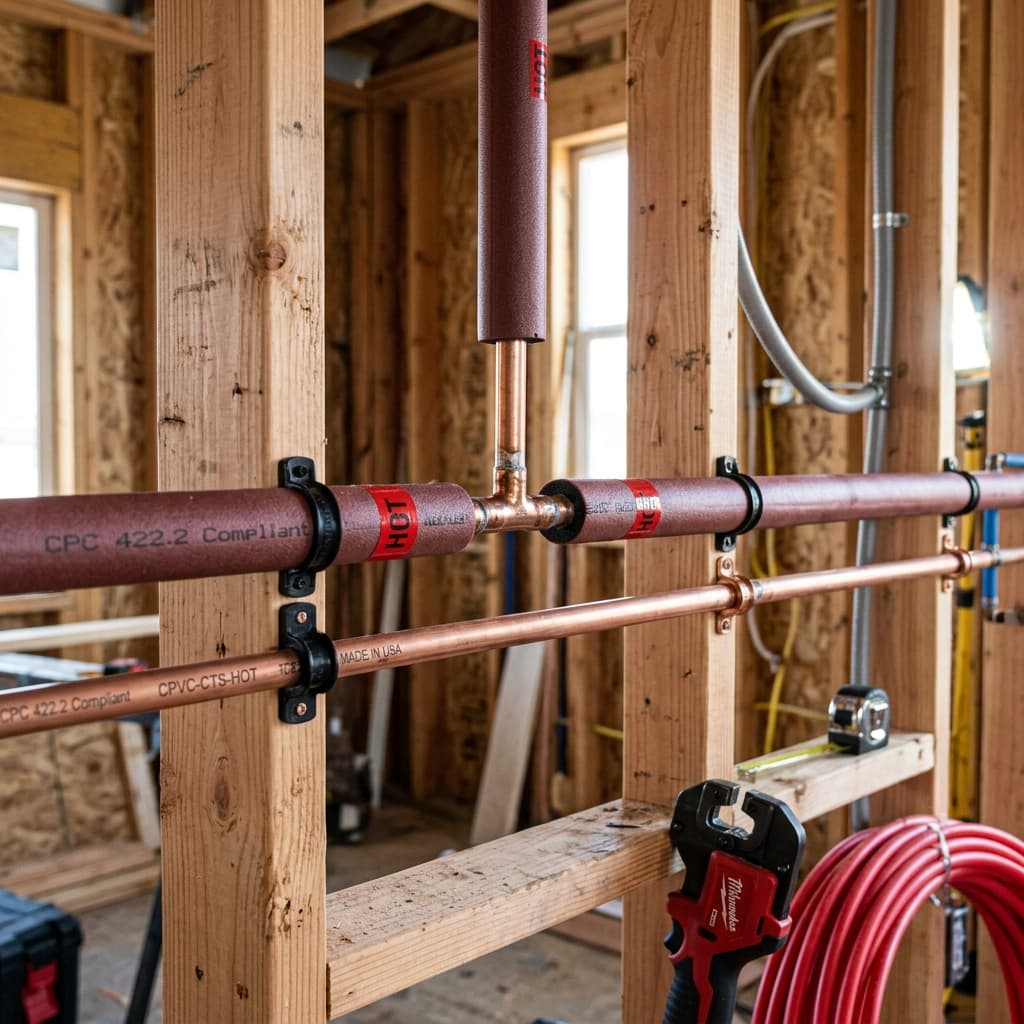
CPC Section 422.2(2) requires insulation of hot water piping where it:
- Travels through unheated spaces (crawlspaces, attics, exterior walls)
- Runs more than a certain distance from the water heater
- Serves areas where pipe freezing is possible
Insulation thickness directly affects system efficiency and operating costs. Larger diameter pipes require greater insulation thickness due to surface area considerations. The exam tests your ability to select appropriate insulation based on climate zone and application.
Recirculation Systems and Pump Design (CPC 422.3)
When Recirculation Systems Are Required
CPC Section 422.3 requires hot water recirculation systems in:
- Commercial buildings with extensive hot water distribution networks
- Multi-story residential buildings where fixture-to-heater distances exceed specified limits (typically 50-75 feet depending on pipe size)
- Any installation where the owner elects to reduce hot water delivery time and waste
Recirculation Pump Sizing and Selection
This is where many exam candidates struggle. Proper pump sizing requires understanding several variables:
Flow Rate Determination (GPM)The recirculation pump must circulate a volume sufficient to maintain acceptable hot water temperatures throughout the distribution loop. The flow rate is calculated using:
Q = (Heat Loss × 60) / (8.33 × Temperature Drop)
- Q = Flow rate in GPM
- Heat Loss = BTU/hour lost through insulated piping
- 8.33 = Conversion constant for water
- Temperature Drop = Maximum acceptable temperature loss (typically 5-10°F)
This calculation appears frequently on Part 4 exams. Practice working through variations with different heat loss and temperature drop scenarios.
Head Pressure DeterminationBeyond flow rate, you must calculate the total head pressure the pump must overcome. This includes:
- Friction losses in supply piping, return piping, and fittings
- Static head if the system includes elevation changes
- Backflow preventer losses if installed in the return line
Recirculation Loop Configuration
Section 422.3(3) specifies that recirculation loops must:
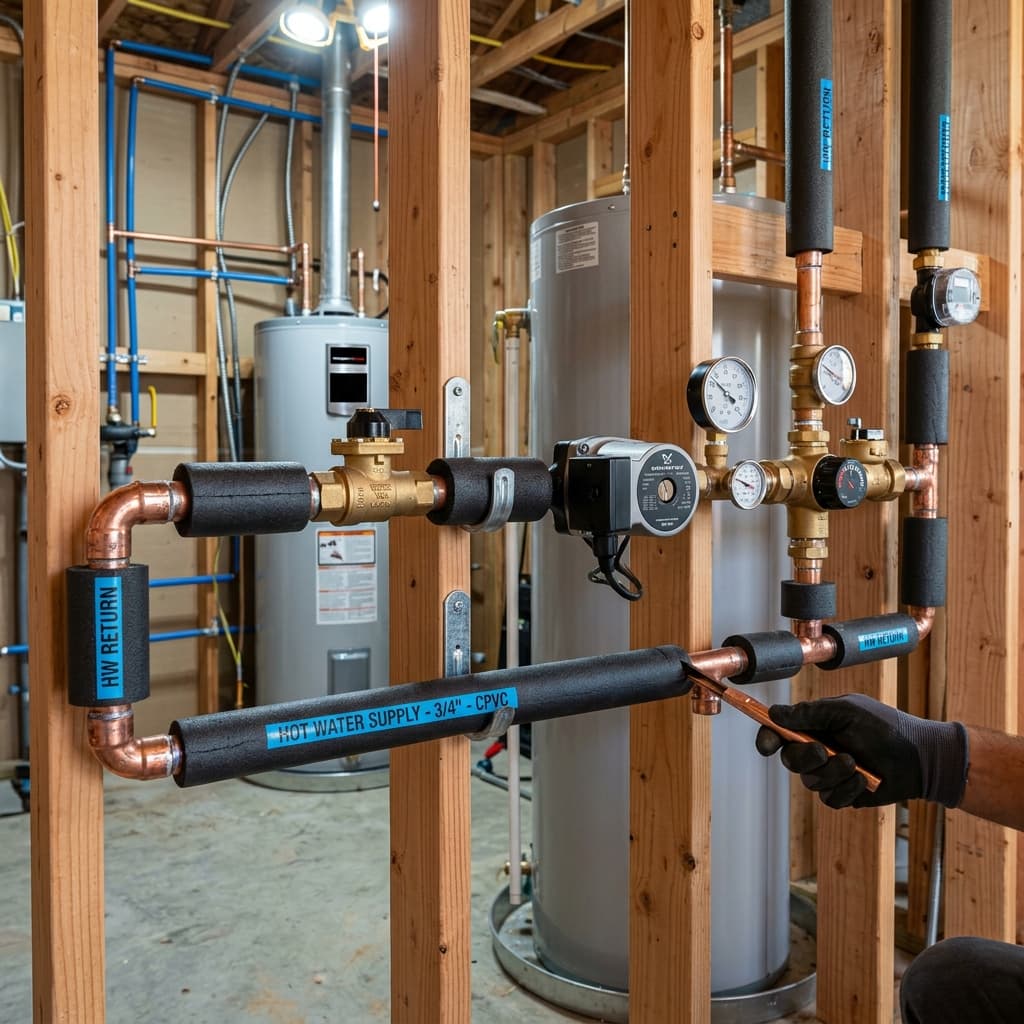
- Return to the water heater inlet, not the tank
- Incorporate a check valve to prevent reverse flow
- Include isolation valves for servicing
- Maintain minimum velocity in return piping (typically 1 foot per second minimum) to prevent bacterial growth and ensure adequate circulation
Temperature Control and Safety Provisions (CPC 422.4)
Thermostatic Mixing Valves
CPC Section 422.4 requires thermostatic mixing valves where hot water temperature exceeds 120°F in:
- Residential buildings: All fixtures accessible to children or elderly residents
- Commercial buildings with vulnerable populations: Healthcare facilities, schools, daycare centers
- Any location where scalding hazards exist
- Have adjustable temperature settings
- Include check stops to prevent temperature drift
- Be accessible for maintenance and adjustment
Temperature Maintenance
For recirculation systems, CPC Section 422.4 requires maintaining minimum water temperatures throughout the distribution loop to:
- Ensure adequate hot water delivery at fixtures (typically 110-120°F at the fixture)
- Prevent bacterial growth in stagnant piping (Legionella control requires 131°F minimum in some applications)
Common Exam Scenarios and Practice Questions
Scenario 1: Residential Hot Water System Design
Question: A single-family home has the water heater located 85 feet from the master bathroom. Which code section governs this installation, and what systems might be required? Answer: CPC Section 422 governs all hot water systems. With an 85-foot run exceeding typical single-pipe limits, either:- A recirculation system per Section 422.3
- Insulated piping to minimize temperature loss
- Or owner acceptance of longer hot water delivery times
Scenario 2: Commercial Building Distribution Network
Question: A four-story commercial building requires hot water distribution to 47 fixtures across multiple zones. Describe the recirculation pump sizing process per CPC Section 422.3. Answer: Candidates must:- Calculate total heat loss through the distribution loop
- Determine acceptable temperature drop
- Use heat loss/temperature drop formula to find required GPM
- Calculate total head pressure including friction losses
- Select an appropriate pump from manufacturer specifications
- Verify check valves and isolation provisions per Section 422.3(3)
Scenario 3: Thermostatic Valve Application
Question: A daycare facility maintains a water heater at 140°F to prevent Legionella growth. What code provisions apply to fixture outlets? Answer: Per CPC Section 422.4, thermostatic mixing valves are required in facilities serving children to limit outlet temperature to 120°F maximum, preventing scalding injuries. The system must maintain circulation at higher temperature while delivering safe outlet temperature.Integration with Related Code Sections
Proper preparation for the C-36 exam requires understanding how Section 422 integrates with related provisions:
- CPC Section 308: Water Supply - Establishes foundational water quality and supply requirements
- CPC Section 423: Specific Appliances - Details connection requirements for tankless heaters, solar systems, and other special applications
- CPC Section 608: Sanitary Drainage - Addresses overflow provisions for relief valves
- Title 24 Energy Code - California's parallel energy standards affecting water heater efficiency and insulation requirements
Key Takeaways for Exam Success
- Master the distinction between single-pipe and recirculation systems, and understand code requirements for each
- Practice pump sizing calculations using the heat loss formula with various scenarios
- Know when thermostatic mixing valves are required versus optional
- Understand piping material temperature ratings and where specific materials are appropriate
- Be familiar with practical applications combining Section 422 with adjacent code sections