
# CPC Section 408 Inspection and Testing Requirements: Complete Guide for C-36 Exam Success
Understanding CPC Section 408 inspection testing requirements is essential for anyone pursuing California's C-36 plumbing contractor license. This section forms the backbone of plumbing system safety and compliance throughout the state. Whether you're installing a new water supply system, constructing building drains, or connecting waste lines, proper inspection and testing procedures are non-negotiable requirements that protect public health and ensure code compliance.What is CPC Section 408?
CPC Section 408 establishes the comprehensive inspection and testing protocols that all plumbing systems must follow before receiving final approval. This section serves as the enforcement mechanism ensuring that every pipe, fitting, and connection meets California's stringent safety standards.
Section 408 covers four primary testing categories:
- Building drains and sewers
- Water supply systems
- Drainage and vent piping
- Special systems and equipment
Building Drain Testing Procedures
Pressure Test Requirements
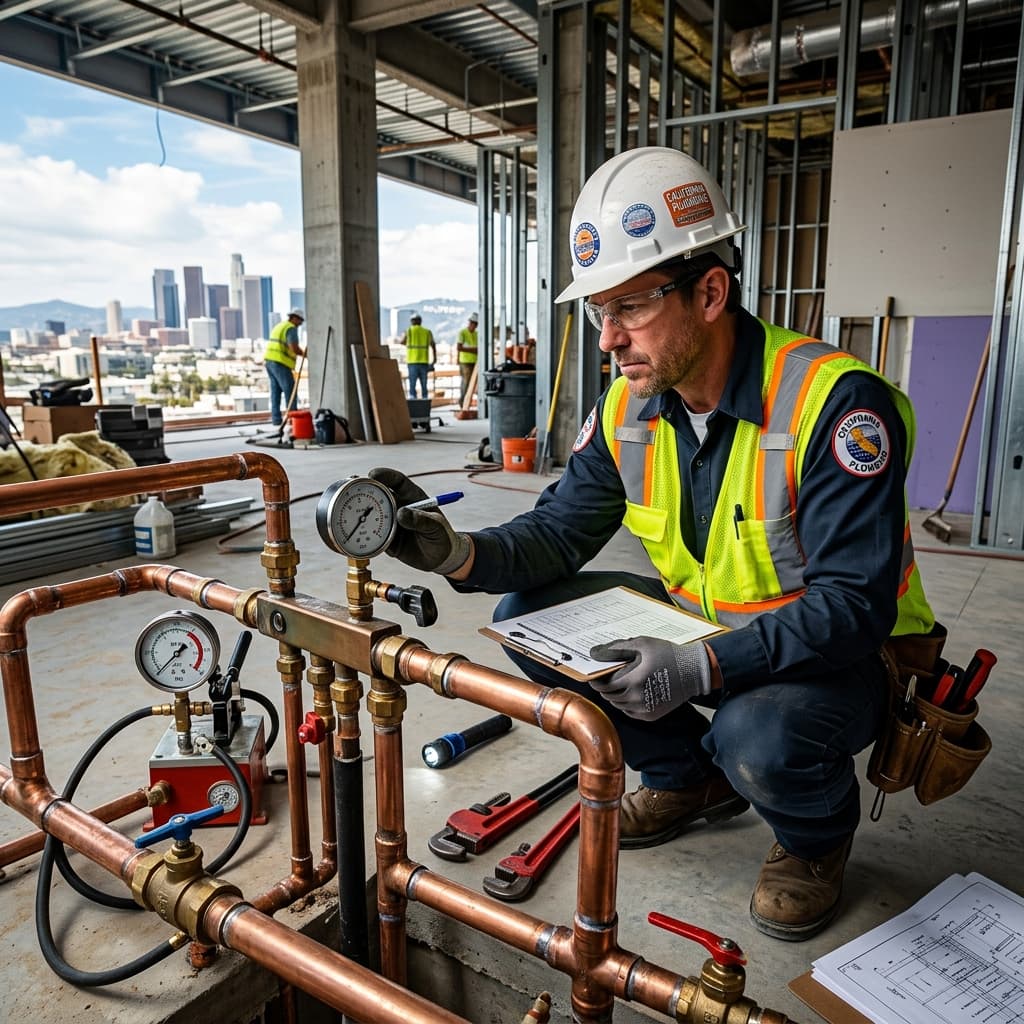
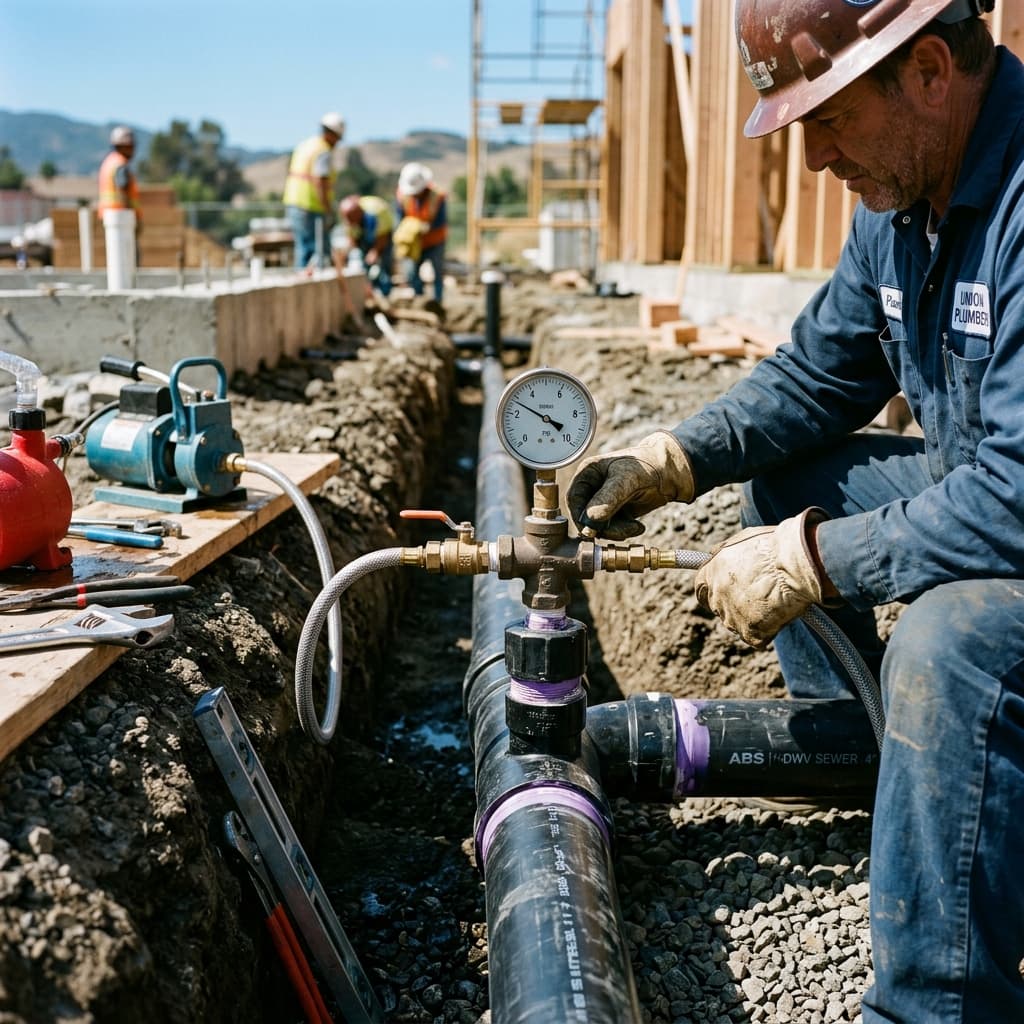
Building drain testing procedures under CPC Section 408.1 require a water pressure test or air pressure test. The plumbing system inspection requirements california mandate specific standards for each method: Water Pressure Test Method:- All building drains and sewers must withstand a minimum water pressure of 10 PSI for at least 15 minutes
- The water must remain in the pipe without visible leaks
- Testing begins after all traps are filled and the system is plugged at the lower terminal
- Test pressure must be maintained at the highest point of the section being tested
- Minimum pressure of 5 PSI maintained for at least 15 minutes
- Acceptable alternative when water damage would be problematic
- Requires specialized air pumps and pressure gauges
- Less commonly used but important for C-36 exam knowledge
Documentation Requirements
All pressure test results must be documented in writing, including:
- Date of test
- Type of test performed (water or air)
- Pressure achieved and maintained
- Duration of test
- Inspector's name and license number
- Pass/fail determination
Water Supply System Pressure Testing
Initial System Pressure Tests
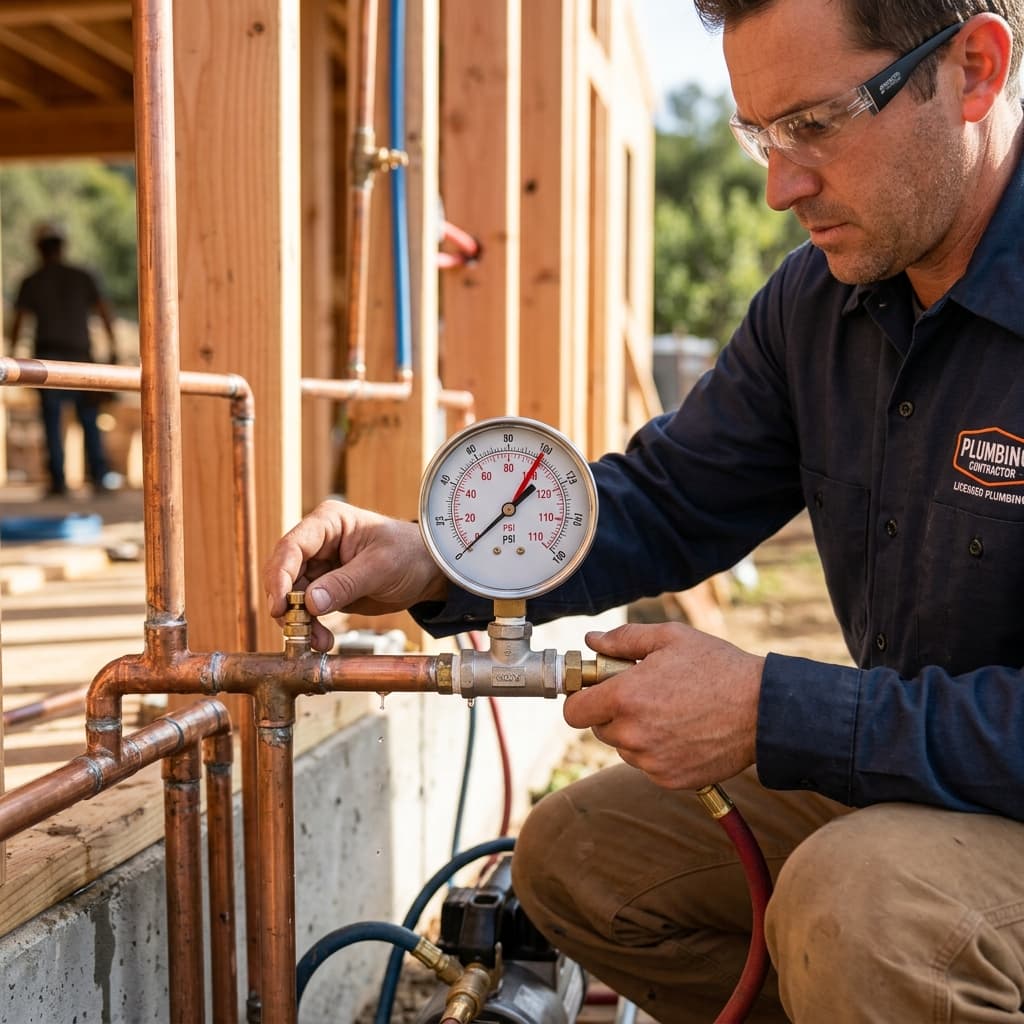
C-36 exam inspection standards require water supply systems to pass pressure testing before receiving approval. Section 408.2 specifies these requirements: Minimum Pressure Standards:- Water supply piping must withstand a pressure of 1.5 times the maximum working pressure, with a minimum of 200 PSI
- Test pressure maintained for 15 minutes minimum without leaks
- All fittings, valves, and connections must remain sound
- No visible water seepage permitted
Testing Equipment Specifications
Proper equipment is critical for accurate testing:
- Calibrated pressure gauges readable to 5 PSI increments
- Pressure pump capable of achieving required test pressures
- Water supply source of sufficient volume
- Closure plugs designed for the pipe material being tested
Multi-Zone Testing Procedures
For large buildings, water supply system pressure testing frequently occurs in sections rather than the entire system simultaneously:- Isolate the zone using temporary or permanent isolation valves
- Fill the section slowly, allowing air to escape
- Pressurize gradually to avoid water hammer and shock
- Maintain pressure for full 15-minute duration
- Document results for each section separately
Drainage and Vent Piping Inspection
Visual Inspection Requirements
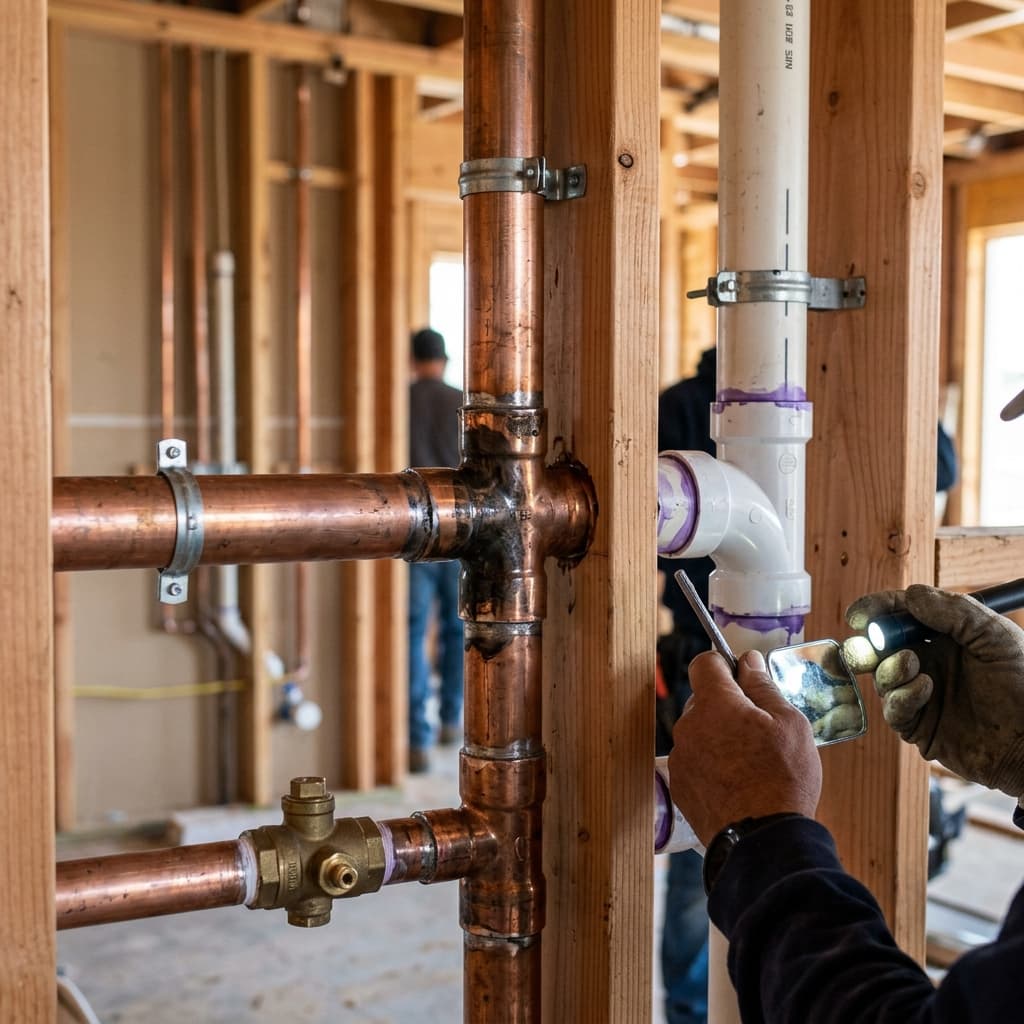
Before pressure testing, all drainage and vent piping undergoes visual inspection per CPC Section 408.3:
Inspection Points:- Verify proper slope on horizontal drains (1/4 inch per foot minimum)
- Confirm correct pipe sizing according to fixture unit loads
- Check all cleanouts are accessible and properly capped
- Ensure no cross-connections between potable and non-potable systems
- Validate trap seals are properly maintained
Special Testing for Vent Systems
Vent piping testing requires different procedures than drain piping:
- Water seal tests confirm trap protection
- Air testing validates connection integrity
- No pressure testing occurs; focus is on visual and functional verification
- Open ends of vent pipes must be verified during final inspection
Water Supply System Final Inspection Requirements
Pre-Occupancy Testing
After installation completion but before system activation, CPC Section 408.2 requires:
Final System Flush:- Run all fixtures for 5 minutes minimum
- Flush all lines to remove debris and construction materials
- Test all shutoff valves for proper operation
- Verify correct water pressure at all fixtures (typically 20-80 PSI)
- Confirm no interconnections between potable and non-potable supplies
- Test backflow prevention devices to confirm proper operation
- Verify pressure reducing valves maintain correct outlet pressure
Special Testing for Specialized Systems
Low-Pressure Boiler and Water Heating Systems
Section 408.4 addresses unique testing requirements for specialized equipment:
Hot Water System Testing:- Pressure tests at 1.5 times maximum working pressure
- Temperature relief valve testing
- Expansion tank verification
- Flow rate verification
- Temperature maintenance confirmation
- Pump operation validation
Common Testing Failures and Troubleshooting
Understanding why systems fail tests is crucial for exam success and field competency:
Pressure Drop Indicators
Potential failure causes:- Leaking fittings or connections
- Cracked or punctured pipe
- Improper joint preparation
- Defective shutoff valves
- Inadequate test pressure pump capacity
Remediation Procedures
When pressure tests fail:
- Identify the failure location through visual inspection and water tracing
- Isolate the failed section using valves
- Correct the defect (re-joint, replace fitting, etc.)
- Retest the corrected section before final approval
- Document all corrections in writing
C-36 Exam Inspection Standards and Testing Knowledge
Key Exam Concepts
For Part 2: Plumbing Systems and Components, expect questions covering:
- Minimum pressure requirements for different piping systems
- Test duration standards (typically 15 minutes)
- Documentation requirements and what constitutes acceptable records
- Testing method selection (when to use water vs. air tests)
- Failure identification and corrective procedures
- Equipment specifications and calibration requirements
Sample Exam Question Formats
Exam questions typically present scenarios requiring application of inspection standards:
"A building drain tests at 8 PSI for 15 minutes with no visible leaks. Does this system pass inspection under CPC Section 408?"Answer: No. Minimum pressure is 10 PSI. This would be a failure requiring pressure increase and re-testing.
"Which document must accompany all pressure test results for municipal approval?"Answer: Written test report including date, time, tester identification, pressure achieved, duration, and pass/fail status.
Regulatory Compliance and Authority Having Jurisdiction (AHJ)
Municipal Inspector Coordination
Building officials and plumbing inspectors enforce CPC Section 408 requirements. Contractors must:
- Schedule inspections before concealing pipes
- Provide accurate test reports and documentation
- Be prepared to re-test if requested
- Understand local amendments or variations to state code
Best Practices for Testing Compliance
Pre-Testing Preparation
Before conducting formal pressure tests:
- Complete all connections and verify fit-up quality
- Remove all temporary plugs except test closure plugs
- Flush and clear all debris from pipes
- Pre-pressurize slowly to 25% of test pressure
- Inspect visually for obvious leaks before full pressurization
During Testing
- Maintain consistent pressure throughout test duration
- Monitor gauges for pressure drops indicating leaks
- Keep documentation readily available
- Have repair materials on-site for immediate correction
- Never leave system unattended during testing
Post-Testing
- Release pressure slowly to prevent water hammer
- Collect all test reports and documentation
- File copies with building department
- Maintain records for warranty and future reference
Connecting CPC Section 408 to Overall Code Compliance
Understanding inspection and testing requirements within the broader context of California plumbing code fundamentals strengthens your exam preparation. Section 408 represents the enforcement mechanism ensuring that sections covering building drain sizing and water supply design are actually implemented correctly.Conclusion
CPC Section 408 inspection testing establishes non-negotiable standards protecting public health and ensuring system reliability. For C-36 candidates, mastery of these requirements means:- Understanding pressure test minimums for all system types
- Knowing proper documentation procedures
- Recognizing failure indicators and corrective measures
- Applying equipment specifications correctly
- Demonstrating competency for exam success
---META_END---