

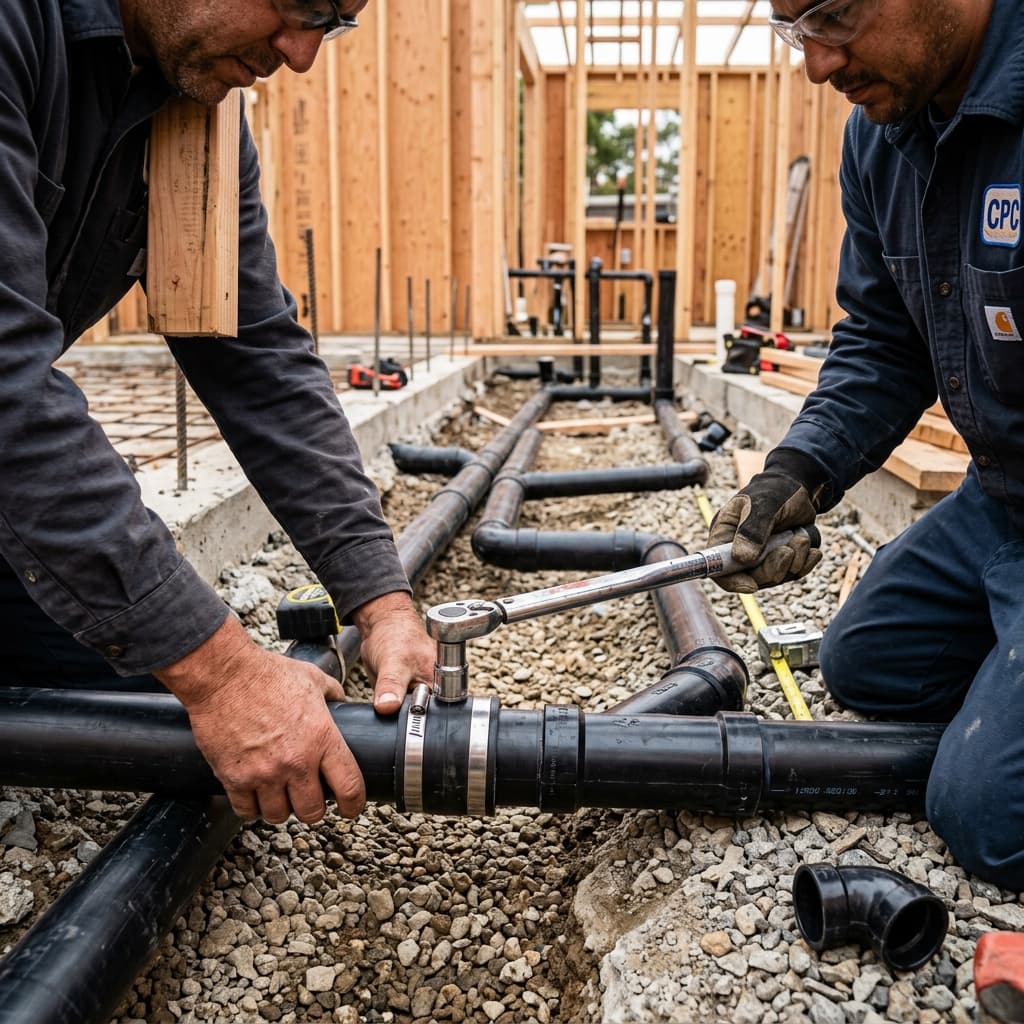



# CPC Section 403 Drainage System Calculations: Fixture Unit Load Demand vs. Supply Methods
Understanding CPC Section 403 drainage calculations is fundamental to passing the California C-36 plumbing exam. This section establishes the methodologies for determining drainage system sizing based on fixture unit load demand and supply capacity. Whether you're calculating drain, waste, and vent (DWV) piping sizes or designing drainage systems for commercial buildings, mastering these calculations separates competent plumbers from exam failures.Understanding CPC Section 403: The Foundation of Drainage Design
CPC Section 403 provides the framework for calculating drainage system loads and sizing piping accordingly. The California Plumbing Code recognizes that different fixtures generate different volumes of wastewater, requiring proportional drainage capacity.
The Core Principle: Fixture Unit Load Demand
A fixture unit (FU) is a standardized measure of the probable maximum discharge of liquid waste from a fixture. Rather than sizing drains based on arbitrary measurements, CPC Section 403 uses fixture unit loads to create consistent, code-compliant drainage systems. The fundamental concept is straightforward:- Each plumbing fixture is assigned a fixture unit value
- Multiple fixtures combine their loads to determine total demand
- The total demand determines required drain pipe diameter and slope
- Supply capacity must meet or exceed demand requirements
Demand vs. Supply: Two Calculation Methods
The critical distinction between fixture unit demand calculations and supply methods forms the basis of CPC Section 403: Demand Method:- Determines the maximum anticipated drainage load from connected fixtures
- Uses Table 422.1 (Drainage Fixture Unit Values) to assign FU values
- Calculates total demand by summing all connected fixtures
- Accounts for usage patterns and simultaneity factors
- Determines the drainage capacity of installed piping
- Uses Table 423.1 (Drainage and Vent Piping Capacity) to identify maximum capacity
- Ensures installed pipe sizes can handle calculated demands
- Must meet or exceed demand requirements
Table 422.1: Assigning Fixture Unit Values
CPC Section 422 requires use of Table 422.1 to determine drainage fixture unit values for common fixtures. These values represent the relative discharge rates:
| Fixture Type | Fixture Units | |---|---| | Lavatory | 1 | | Water closet | 4 | | Bathtub/Shower | 2 | | Kitchen sink | 2 | | Floor drain | 1 | | Washing machine | 2 | | Urinal (1 inch) | 4 | | Urinal (0.75 inch) | 3 |
Exam Tip: These fixture unit values appear frequently in Part 2 calculations questions. Create flashcards for the ten most common fixtures and memorize exact values—approximations cost points.Applying Fixture Unit Demand Calculations
Let's work through a practical scenario:
Example: Multi-Unit Residential Building A residential floor includes:- 3 lavatories = 3 × 1 = 3 FU
- 2 water closets = 2 × 4 = 8 FU
- 1 bathtub = 1 × 2 = 2 FU
- 1 kitchen sink = 1 × 2 = 2 FU
Now the demand value determines minimum drain pipe sizing using Table 423.1 capacity ratings.
Table 423.1: Drainage Piping Capacity Standards
CPC Section 423 establishes Table 423.1, which specifies the maximum drainage capacity for various pipe diameters and slopes. This represents the supply side of the equation.| Pipe Diameter | Slope 1/4" | Slope 1/2" | Slope 3/4" | |---|---|---|---| | 1.5" | 3 FU | 4 FU | 5 FU | | 2" | 6 FU | 8 FU | 10 FU | | 3" | 20 FU | 24 FU | 27 FU | | 4" | 160 FU | 192 FU | 216 FU |
Critical Understanding: The table shows that larger pipes at steeper slopes carry more fixture units. A 2-inch pipe at 1/4-inch slope carries 6 FU, but the same pipe at 1/2-inch slope carries 8 FU.Matching Demand to Supply
Using our previous example with 15 FU demand:- 1.5-inch pipe: Maximum 5 FU at steepest slope—insufficient
- 2-inch pipe at 1/4" slope: Capacity 6 FU—insufficient
- 2-inch pipe at 1/2" slope: Capacity 8 FU—insufficient
- 3-inch pipe at 1/4" slope: Capacity 20 FU—adequate
Calculating Simultaneity and Load Factors
CPC Section 403.2 addresses the reality that not all fixtures operate simultaneously. The code permits load factor adjustments for residential and commercial occupancies.
Residential Load Factors
Residential drains typically apply a 70% load factor for multi-fixture installations:- 15 FU × 0.70 = 10.5 FU (round up to 11 FU for sizing)
Commercial Load Factors
Commercial buildings may use different load factors depending on occupancy type:- Office buildings: 50-75% factor
- Restaurants: 85-95% factor (high simultaneous usage)
- Hotels: 70-80% factor
Special Considerations: Subsoil and Branch Drains
Subsoil (Main) Drain Calculations
The main building drain serves all fixtures and must accommodate total system demand. CPC Section 403.3 requires main drains to be sized for the sum of all connected fixture units.
Branch Drain Calculations
Individual branch drains serve specific fixture groups. Each branch must be sized independently using its connected fixture units.
Example Application:- Master bathroom branch (2 lavatories + 1 water closet + 1 bathtub) = 2(1) + 4 + 2 = 8 FU
- Guest bathroom branch (1 lavatory + 1 water closet) = 1 + 4 = 5 FU
- Kitchen branch (1 kitchen sink) = 2 FU
- Each branch sized independently using Table 423.1
Vent System Load Calculations
While this article focuses on drainage, vent systems require parallel calculations using similar fixture unit methodologies. CPC Section 403.4 establishes vent sizing procedures that depend on:- Number of fixtures served
- Length of vent pipe
- Degree of slope
Common Exam Question Patterns
Pattern 1: Size the Drain
"A residential unit includes 3 lavatories, 2 water closets, 1 bathtub, and 1 kitchen sink. What is the minimum drain pipe diameter and slope?" Solution Method:- Calculate total FU using Table 422.1
- Apply residential load factor (70%)
- Reference Table 423.1 to find minimum size and slope
Pattern 2: Determine Adequacy
"A 2-inch drain at 1/4-inch slope serves 8 fixtures. Is this adequate? Why or why not?" Solution Method:- Calculate fixture unit demand from description
- Reference Table 423.1 for 2-inch pipe at 1/4-inch slope capacity
- Compare demand to supply capacity
- Explain deficiency or adequacy with code reference
Pattern 3: Load Factor Application
"May load factors be applied to this commercial kitchen drain? Justify your answer with CPC references." Solution Method:- Identify occupancy type
- Reference CPC Section 403.2 for load factor permissibility
- Explain why or why not applicable
- Provide corrected calculations if appropriate
Key CPC Section 403 References for Exam Success
- CPC Section 403.1: Establishes drainage system design requirements
- CPC Section 403.2: Addresses load factor reductions and simultaneity
- CPC Section 403.3: Specifies main drain sizing methodology
- CPC Section 403.4: Details vent system load calculations
- CPC Section 422.1: Table 422.1—Drainage Fixture Unit Values
- CPC Section 423.1: Table 423.1—Drainage Piping Capacity
Practical Study Tips for C-36 Exam Success
Create Your Reference Sheet: Before exam day, verify allowed resources. If permitted, create a one-page reference containing Tables 422.1 and 423.1 with load factor information. Practice Calculation Sequences: Work through 20-30 varied scenarios until your calculation process becomes automatic:- Identify all fixtures
- Assign fixture units from Table 422.1
- Sum total units
- Apply load factors if permitted
- Reference Table 423.1 for sizing
- Select minimum adequate size
- Forgetting to apply load factors in residential scenarios
- Selecting pipe sizes larger than necessary (suggests misunderstanding)
- Applying load factors where not permitted
- Confusing drainage fixture units with water supply units
- Misreading Table 423.1 slope columns
Conclusion
CPC Section 403 drainage system calculations form the mathematical foundation of plumbing design. Mastering the distinction between fixture unit demand versus supply methods directly translates to exam success on Part 2 calculations questions. The methodology—identifying fixtures, calculating demand using Table 422.1, applying load factors where appropriate, and verifying capacity using Table 423.1—appears repeatedly in various question formats.Your success depends on understanding these principles deeply enough to apply them to novel scenarios presented on exam day. Rather than memorizing specific answers, internalize the calculation sequence and code references. This approach ensures you can solve any drainage sizing problem the exam presents.
---
Ready to test your understanding? Review CPC Section 403 in your code book, work through additional practice problems, and ensure you can confidently size drainage systems for any fixture combination presented on exam day.