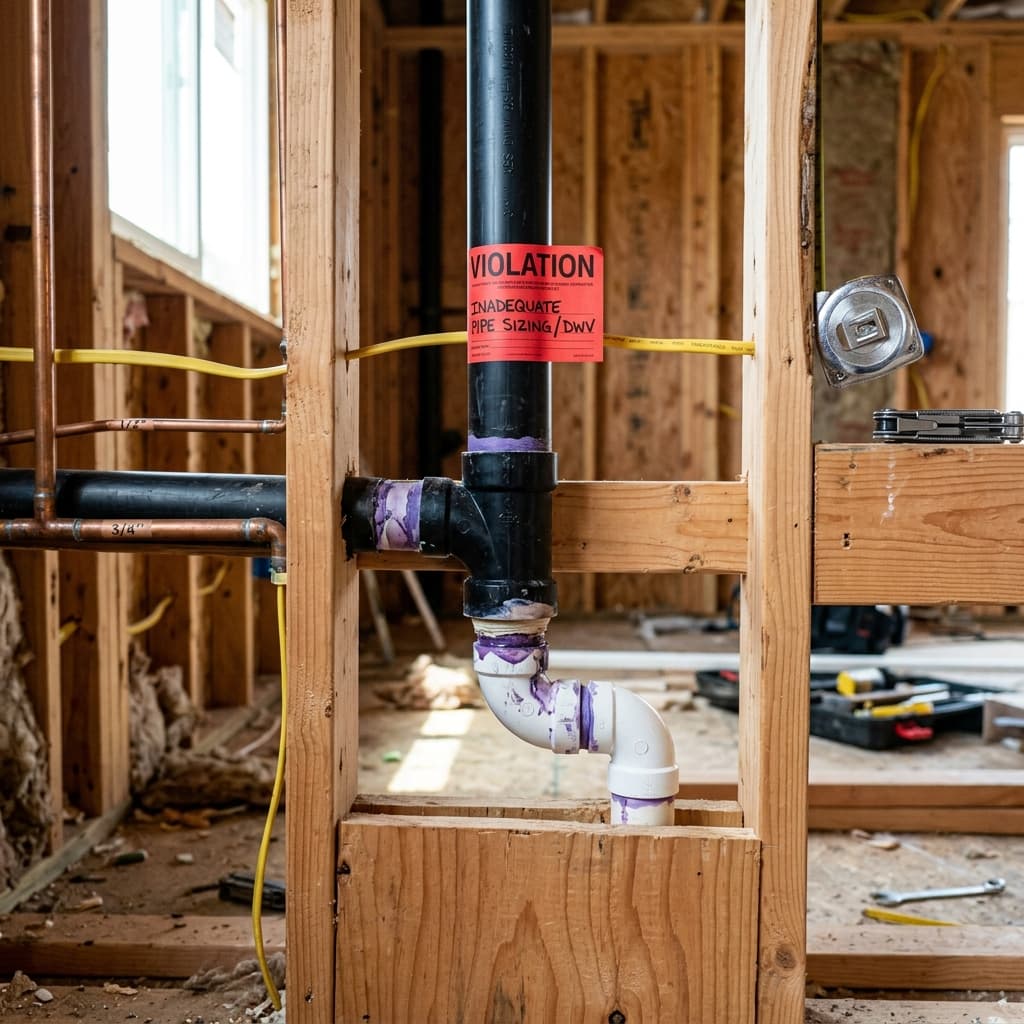

# Common Code Violations in Drainage System Design: CPC Section 403 Mistakes That Fail C-36 Exams
The California Plumbing Code Section 403 establishes the foundational requirements for drainage system design that every C-36 certificate holder must master. Yet examination data consistently shows that drainage system design violations under CPC Section 403 represent one of the leading causes of Part 2 exam failures among candidates. Understanding these critical code violations isn't just about passing the test—it's about developing the professional competency needed for safe, functional plumbing installations.This comprehensive guide explores the most common CPC Section 403 mistakes, their real-world consequences, and the strategies that high-scoring C-36 candidates use to avoid these pitfalls.
Understanding CPC Section 403: Drainage System Fundamentals
CPC Section 403 provides the baseline requirements for drainage system design in California. This section doesn't exist in isolation—it's the foundation upon which all other drainage requirements are built. When designers and installers violate Section 403 principles, they create cascading problems throughout the entire plumbing system.What CPC Section 403 Covers
The section addresses several critical areas:
- General drainage system design principles
- Pipe slope and gradient requirements
- Horizontal and vertical drainage configurations
- Connection and joining standards
- Sizing and capacity requirements
- Material specifications
Violation #1: Improper Pipe Slope and Gradient
The Code Requirement
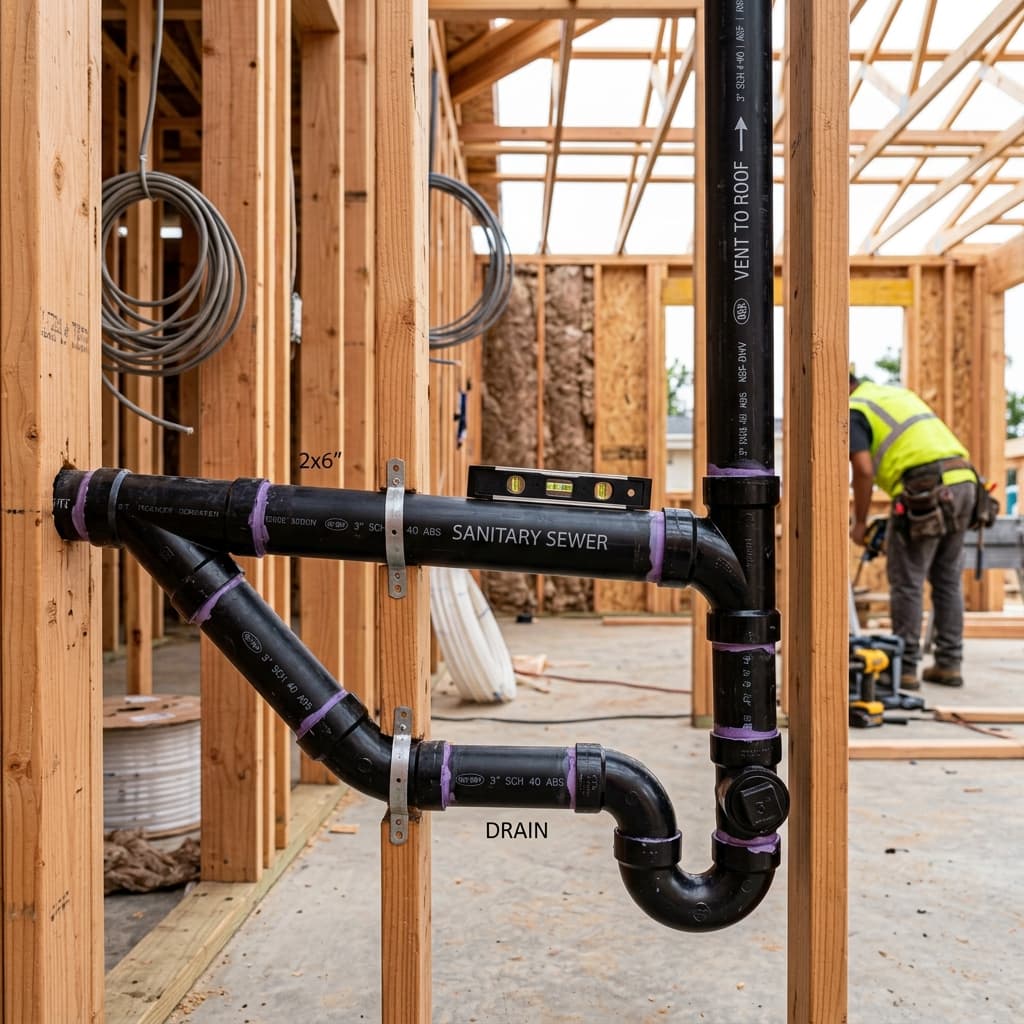
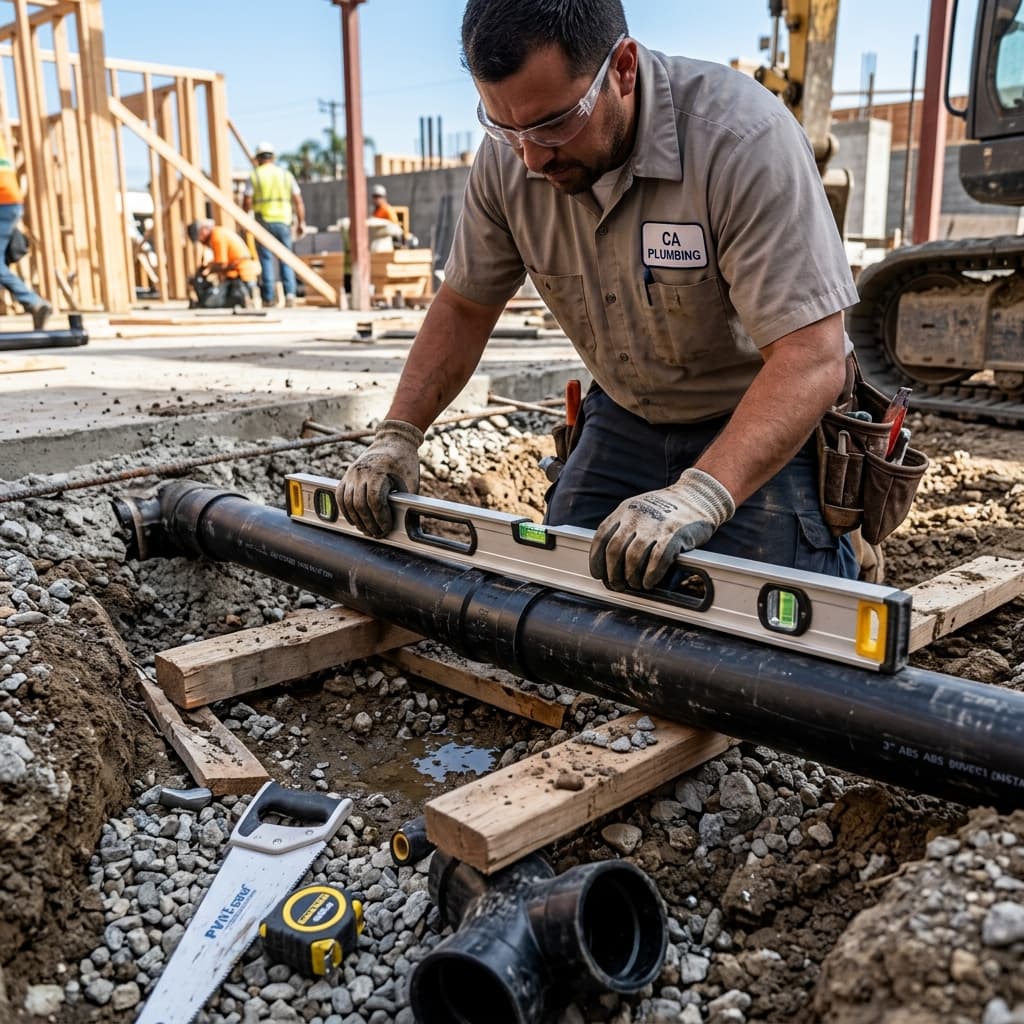
CPC Section 403.2 requires that drainage piping be installed with a uniform slope that facilitates drainage without creating stagnant areas. The minimum slope for horizontal drainage piping is 1/4 inch per foot (the magic number you must memorize), and the maximum slope should not exceed 3 inches per foot for most applications.Why This Violation Occurs
The slope requirement seems straightforward, yet it represents the number one drainage system design violation on C-36 exams. Here's why:
Insufficient Slope (Most Common Error):- Installers attempt slopes less than 1/4" per foot, thinking slight variations won't matter
- Lack of understanding regarding gravity's role in waste transportation
- Inadequate floor planning during design phases
- Misplaced confidence in modern pipe materials to overcome gravity limitations
- Creating slopes exceeding 3 inches per foot
- Attempting to solve drainage issues through over-aggressive grading
- Failure to understand velocity and scouring concerns
Real-World Consequences
An improperly sloped drainage line creates several problems:
- Solids Deposition: Waste materials settle within the pipe, creating blockages
- Slow Drainage: Water drains faster than solids, leaving organic matter behind
- Odor Development: Stagnant waste creates hydrogen sulfide production
- System Failure: Complete blockage within 6-12 months of installation
- Health Hazards: Bacterial growth and backflow potential
C-36 Exam Strategy for Slope Questions
When encountering slope-related questions on your C-36 exam:
- Immediately identify the pipe type (horizontal vs. vertical)
- Apply the 1/4" per foot minimum rule for horizontal drainage
- Consider special applications (fixture drains vs. building sewers)
- Never assume modern materials override fundamental physics
Violation #2: Inadequate Pipe Sizing
The Code Framework
CPC Section 403.3 establishes sizing requirements based on drainage fixture units (DFUs). This section creates a direct mathematical relationship between the number and type of fixtures and the required pipe diameter.
Common Sizing Mistakes
Undersizing Pipes:The most frequent error involves selecting smaller diameter pipes than CPC Section 403.3 requires. Candidates often reason that "the fixtures don't always drain simultaneously," failing to account for code-mandated safety factors.
- 3" pipe instead of 4" for main drains
- 1.5" instead of 2" for bathroom groups
- Combining fixture units incorrectly
- Misunderstanding the difference between fixture units and fixture count
While less common, oversizing creates its own problems:
- Reduces velocity, allowing solids to settle (similar to insufficient slope)
- Increases installation costs
- Creates maintenance challenges in future modifications
- Demonstrates insufficient code knowledge to examiners
Drainage Fixture Unit Calculation
Understanding fixture units is non-negotiable for Part 2 exam success. CPC Section 403.3 provides a fixture unit table:
| Fixture Type | Drainage Fixture Units | |---|---| | Toilet/Water Closet | 4 | | Bathroom Sink/Lavatory | 1 | | Kitchen Sink (2 compartment) | 2 | | Shower/Bathtub | 2 | | Washing Machine | 2 | | Floor Drain | 1 | | Urinal | 4 |
Pipe Sizing Requirements
Once fixture units are calculated:
- 1-inch pipe: Maximum 4 DFU
- 1.25-inch pipe: Maximum 6 DFU
- 1.5-inch pipe: Maximum 8 DFU
- 2-inch pipe: Maximum 21 DFU
- 3-inch pipe: Maximum 48 DFU
- 4-inch pipe: Maximum 180 DFU
- 6-inch pipe: Maximum 700 DFU
Why This Matters for C-36 Exams
Part 2 exams frequently include scenario-based questions presenting a home with multiple bathrooms and kitchen fixtures, then asking candidates to determine proper drainage pipe sizing. These questions test both your mathematical ability and your code comprehension.
Example Exam Question Format: "A single-family residence includes: one toilet (4 DFU), two lavatories (2 DFU), one kitchen sink (2 DFU), one shower (2 DFU), and one washing machine (2 DFU). What is the minimum required size for the building drain?" Answer Process:- Total DFU: 4 + 2 + 2 + 2 + 2 = 12 DFU
- Building drain requires 3-inch minimum per CPC Section 403.3
- 2-inch pipe (21 DFU capacity) is undersized
- 3-inch pipe (48 DFU capacity) is correct
Violation #3: Improper Vent System Connection
The Venting Requirement
CPC Section 403 establishes that all drainage piping must include proper venting. Vents serve critical functions:
- Allow air into drainage system for proper siphoning prevention
- Permit sewer gases to escape safely to the atmosphere
- Maintain atmospheric pressure throughout drainage system
- Prevent trap seals from being broken by negative pressure
Common Venting Violations
Inadequate Vent Sizing: Vents must be sized relative to the drainage piping they serve. CPC Section 403.7 establishes that vent piping must be at least one-half the diameter of the drainage pipe it services, with a minimum of 1.25 inches. Many candidates mistakenly assume:- 1-inch vents can serve any residential drain
- Vent sizing is arbitrary
- Oversizing vents improves performance
- Commercial and residential venting requirements are identical
Complex drainage systems require branch vents connecting to the main vent stack. Violations include:
- Horizontal drainage without adequate vent connections
- Drainage pipes exceeding maximum vent distances without branch vents
- Fixture groups without individual vent stacks
CPC Section 403 establishes maximum distances between fixtures and vent connections:
| Fixture Type | Maximum Distance | |---|---| | Toilet | 6 feet | | Sink/Lavatory | 2.5 feet | | Bathtub | 5 feet | | Shower | 5 feet |
Violating these distances allows trap seals to be siphoned, creating backflow and odor problems.
Violation #4: Improper Materials and Connections
Material Requirements Under CPC Section 403
The California Plumbing Code permits specific materials for drainage systems:
- Cast Iron Pipe: Traditional standard, still commonly used
- Copper Tubing: Acceptable for residential applications
- PVC Plastic Pipe: Most common in modern installations
- ABS Plastic Pipe: Permitted in specific applications
- Galvanized Steel: Limited applications, generally prohibited for new work
Connection Violations
Incompatible Material Connections:Connecting dissimilar materials without proper transition fittings creates:
- Galvanic corrosion
- Joint failure and leaks
- System separation under differential expansion
- Code non-compliance
Common errors include:
- Using compression fittings on drainage (compression fittings are pressure-rated only)
- Employing street elbows where sanitary elbows are required
- Installing 45-degree bends where 90-degree bends are mandated
- Using reducing couplings inappropriately
Material Selection for Specific Installations
Understanding where each material is appropriate is crucial:
PVC Pipe:- Preferred for most residential applications
- Cannot be used in exposed locations above-ground (flammability concerns)
- Requires proper support and expansion allowance
- Generally the most cost-effective option
- Superior for noise reduction
- Better for high-temperature applications
- More durable but more expensive
- Heavier, requiring more substantial support
- Excellent corrosion resistance
- Higher material and labor costs
- Subject to water chemistry issues in certain regions
- Effective heat dissipation characteristics
Violation #5: Horizontal-to-Vertical Transitions
The Transition Problem
CPC Section 403 requires specific procedures when transitioning from horizontal to vertical drainage piping. Improper transitions create several issues:
Common Transition Violations
Improper Elbow Selection:- Using long-radius elbows (street elbows) where short-radius elbows are required
- Employing 90-degree bends instead of required 45-degree bends in certain configurations
- Installing horizontal elbows in vertical applications
Transitions must include cleanout provisions. CPC Section 403 requires:
- Cleanouts at changes of direction
- Cleanouts every 50 feet in straight horizontal runs
- Accessible cleanouts for maintenance purposes
- Proper cleanout sizing (must be same diameter as pipe, minimum)
When horizontal drainage transitions to vertical, velocity changes significantly. Improper transitions can:
- Create excessive velocity (causing scouring and damage)
- Reduce velocity below minimum requirements (1 foot per second minimum, 6 feet per second maximum)
- Generate turbulence and noise
- Allow backflow conditions
Violation #6: Building Sewer and Underground Drainage
Underground Drainage Requirements
CPC Section 403 establishes specific requirements for below-grade drainage piping that many residential contractors overlook:
Depth and Protection:- Minimum depth to prevent freezing (typically 18-24 inches below finished grade)
- Proper bedding material to prevent settling
- Adequate compaction to prevent subsidence
- Protection from vehicular or foot traffic
Building sewers (the main line from the building to the public sewer or septic system) must maintain the same 1/4" to 3" per foot slope established for interior drainage.
Common Underground Violations:- Installing building sewer at insufficient depth (freezing risk)
- Sloping building sewer away from public connection point
- Failing to provide proper bedding and support
- Inadequate cleanout provisions for access and maintenance
- Improper connection to septic systems or public sewers
Cleanout Requirements for Sewers
Every building sewer must have at least one accessible cleanout. Additional cleanouts are required:
- At changes in direction exceeding 45 degrees
- Every 50 feet in straight runs
- At the building exit point
- At public sewer connection point (when accessible)
Violation #7: Special Applications and Exceptions
Kitchen Sink Drainage
Kitchen sinks require special consideration under CPC Section 403:
- Grease interceptors often required (check local amendments)
- Adequate slope to prevent grease solidification
- Separate drainage line from disposal units
- Minimum sizing to handle food waste
Toilet Drainage Separation
Toilet drainage must:
- Connect directly to main building drain
- Never connect through fixture traps or similar devices
- Maintain minimum 4-DFU sizing
- Provide exclusive vent stack or common vent with proper sizing
Shower and Tub Drainage
Common violations include:
- Undersizing drain lines (2-inch minimum required)
- Improper slope in wall penetrations
- Inadequate access for cleaning
- Improper trap installation or P-trap removal
Test-Taking Strategies for CPC Section 403 Questions
Question Type Patterns
Part 2 C-36 exams test CPC Section 403 through several question formats:
Calculation-Based Questions:- Present a fixture scenario requiring DFU calculations
- Ask for proper pipe sizing
- Require understanding of fixture unit tables
- Demand accurate mathematical computation
- Test understanding of specific slope requirements
- Question material selection appropriateness
- Ask about vent sizing relationships
- Require identification of violations
- Present incomplete or improper installations
- Ask candidates to identify violations
- Require explanation of why violations are problematic
- Demand understanding of safety implications
Study and Preparation Techniques
Master the Reference Materials:- Keep CPC Section 403 readily available during study
- Highlight key requirements and numeric values
- Create reference sheets for fixture units and pipe sizing
- Mark sections you find most challenging
- Perform DFU calculations repeatedly until automatic
- Practice pipe sizing selection with various fixture combinations
- Work through slope calculations for different pipe runs
- Calculate vent sizing requirements in multiple scenarios
- Study properly installed drainage systems
- Identify correct slope, sizing, and vent connections
- Compare with improper installations
- Understand visual indicators of violations
- Discuss challenging concepts with peers
- Explain concepts aloud to improve retention
- Quiz each other on CPC Section 403 requirements
- Share test-taking strategies and experiences
Real-World Applications Beyond the Exam
Understanding CPC Section 403 violations isn't merely academic—these requirements protect public health and prevent property damage. Violations lead to:
- Sewage backups into homes
- Contaminated groundwater
- Structural damage from water intrusion
- Health hazards from improper waste handling
- Costly remediation work
- Potential liability for the responsible plumber
Conclusion
CPC Section 403 violations represent a significant portion of C-36 Part 2 exam failures. By