

# CPC Section 4204 Cleanout Access Requirements: Complete C-36 Exam Guide
Understanding CPC section 4204 cleanouts is essential for passing the California C-36 plumbing exam. This critical section of the California plumbing code drainage standards establishes when, where, and how cleanouts must be installed throughout drainage systems. Whether you're a first-time test taker or improving your score, mastering cleanout requirements will significantly boost your performance on Part 4.What is CPC Section 4204?
CPC Section 4204 provides comprehensive regulations for cleanout installation and access. Cleanouts serve a fundamental purpose in drainage systems: they provide access points for clearing blockages, inspecting the system, and maintaining proper flow. Without proper cleanout placement, a drainage system becomes difficult or impossible to maintain—a violation that inspectors take seriously.
The code recognizes that different pipe configurations, diameters, and materials require different cleanout strategies. Drainage system access points must be strategically placed to ensure that every section of pipe can be reached and serviced.Why Cleanouts Matter for Your Exam
Exam candidates frequently miss questions about cleanout placement because the requirements involve multiple variables:
- Pipe diameter and material
- Change of direction angles
- Horizontal versus vertical pipe runs
- Stack and branch configurations
- Slope and grade considerations
Primary Cleanout Installation Requirements
Cleanout at Base of Stacks
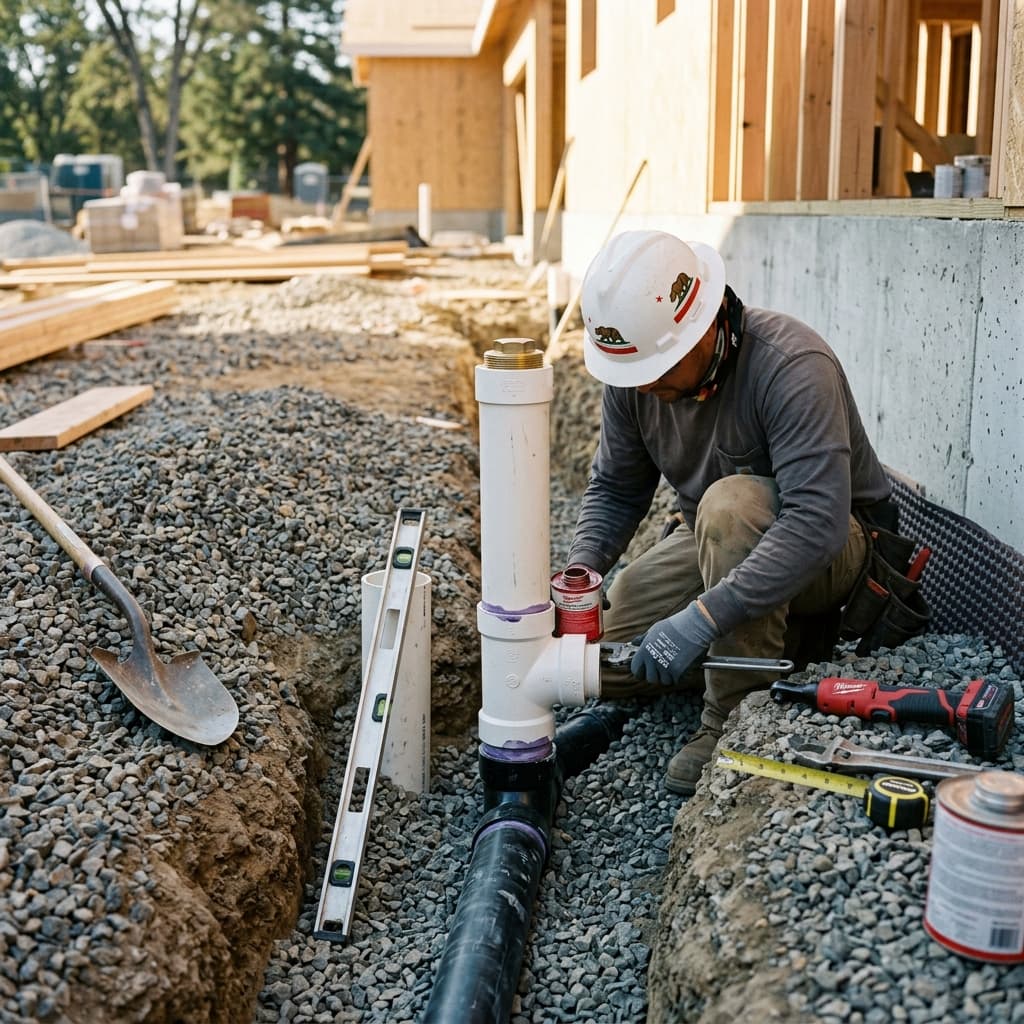
CPC 4204.1 requires a cleanout at the base of every stack or highest point in the drainage system. This is often the most straightforward requirement students learn:- Install cleanouts at the lowest point of each soil or waste stack
- Cleanouts must be accessible for rodding and camera inspection
- The base cleanout provides access to the entire vertical stack above it
Cleanouts at Changes of Direction
One of the most heavily tested topics, CPC 4204.2 addresses changes in pipe direction. Understanding angle requirements separates strong exam performers from struggling candidates: For horizontal piping runs:- Cleanouts required at every change of direction exceeding 45 degrees
- Changes of exactly 45 degrees or less do NOT require cleanouts (common exam trick)
- This applies to both major direction changes and slight deflections
- A cleanout is required where a vertical stack changes to horizontal drainage
- This typically occurs at the base of the stack
- The cleanout must be positioned to allow access to both segments
- When two 45-degree bends combine to exceed 45 degrees total, a cleanout is required between them
- This is where exam questions often test deeper understanding rather than simple memorization
Cleanout Spacing Requirements
CPC Section 4204 doesn't specify a maximum horizontal run distance between cleanouts in the manner that some other codes do. However, it does require cleanouts at strategic points:
Horizontal Branch Intervals
For horizontal drainage branches:- Cleanouts required at changes in direction exceeding 45 degrees
- Cleanouts required where branches connect to stacks
- Additional cleanouts may be required for runs exceeding practical rodding distances
Stack Height Considerations
While not strictly a "spacing" requirement, CPC Section 4204 implies that:- Stacks exceeding 75 feet should have intermediate access provisions
- Cleanouts for high-rise construction must accommodate specialized equipment
- Access requirements may be modified through alternate means approved by the Authority Having Jurisdiction (AHJ)
Cleanout Accessibility and Configuration
Access Opening Requirements
CPC 4204.3 specifies minimum opening dimensions and configurations:| Pipe Diameter | Minimum Cleanout Opening | |---|---| | Up to 3 inches | 3 inches diameter | | 4 inches | 4 inches diameter | | 6 inches | 6 inches diameter | | 8 inches and larger | 8 inches minimum |
- Cleanout openings must be accessible for manual rodding
- Plugged tees are not acceptable substitutes for proper cleanout fittings
- Cast-in-place cleanouts must have removable plugs or caps
Grade and Slope Considerations
Cleanouts for gravity drainage systems must accommodate the pipe's slope:
- Cleanout must be installed perpendicular to the pipe's flow direction when possible
- If installed at an angle, the opening must still allow adequate access
- Cleanouts in stacks may be installed with sweep bends rather than 90-degree elbows to improve flow characteristics
Material-Specific Requirements
Hub and Spigot vs. No-Hub Pipe
Different pipe materials may have specific cleanout requirements:
Clay, cast iron, and no-hub pipe:- Standard cleanout fittings apply
- Material compatibility must be maintained
- Cleanouts must be same material as connected pipe or properly sized/adapted
- Same cleanout spacing requirements apply
- Plastic cleanout bodies must be rated for pressure conditions
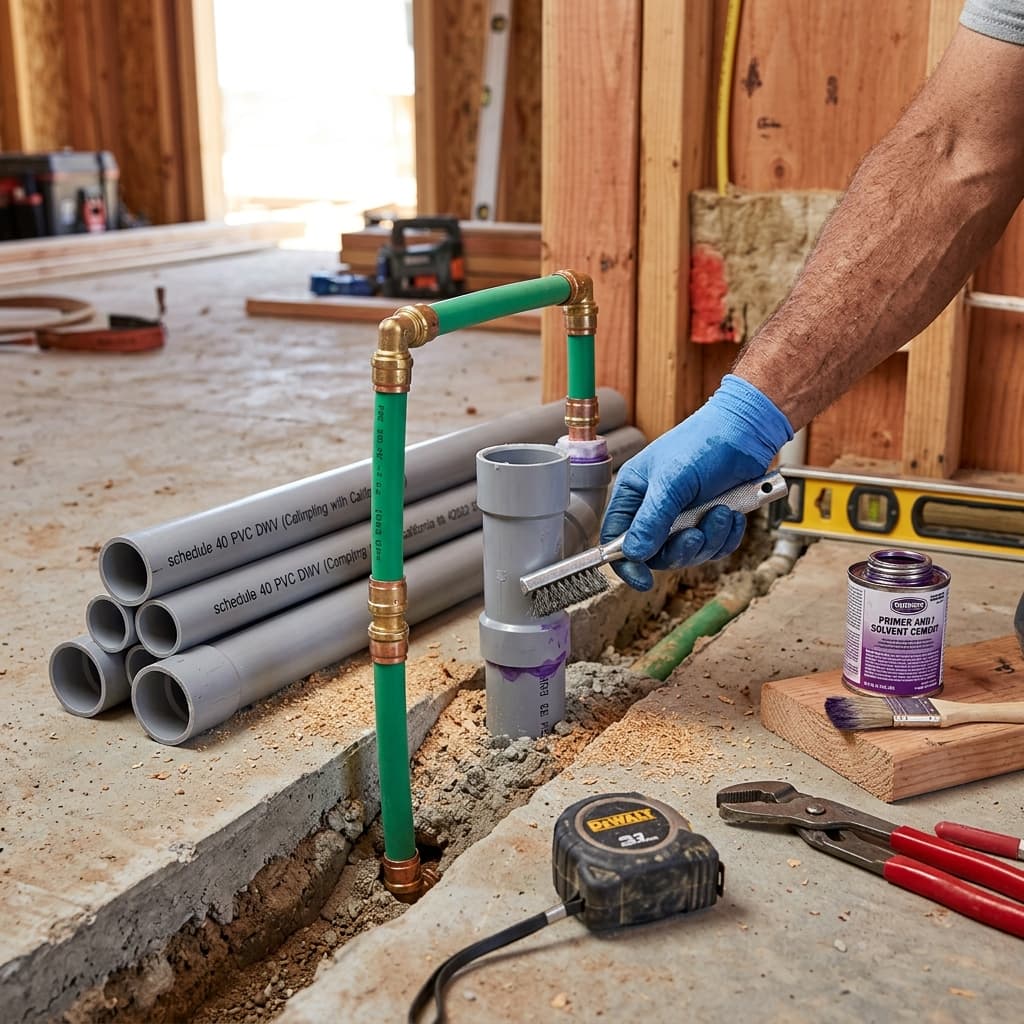
- For drainage (gravity flow), standard schedule 40 fittings suffice
Cleanout Fitting Types
Acceptable cleanout configurations under CPC 4204 include:
- Straight tees (for vertical stacks, incoming from side)
- Wye fittings (45-degree angle, preferred for horizontal changes)
- Combination wye and 1/8 bends (for complex transitions)
- Long-sweep 90-degree elbows (not preferred, but acceptable in some configurations)
Accessing Difficult Locations
Real-world plumbing often encounters situations where standard cleanout placement seems impossible. CPC Section 4204 provides flexibility through several mechanisms:
Under-Floor and Slab Cleanouts
- Cleanouts may be installed under raised floors if accessible through removable covers
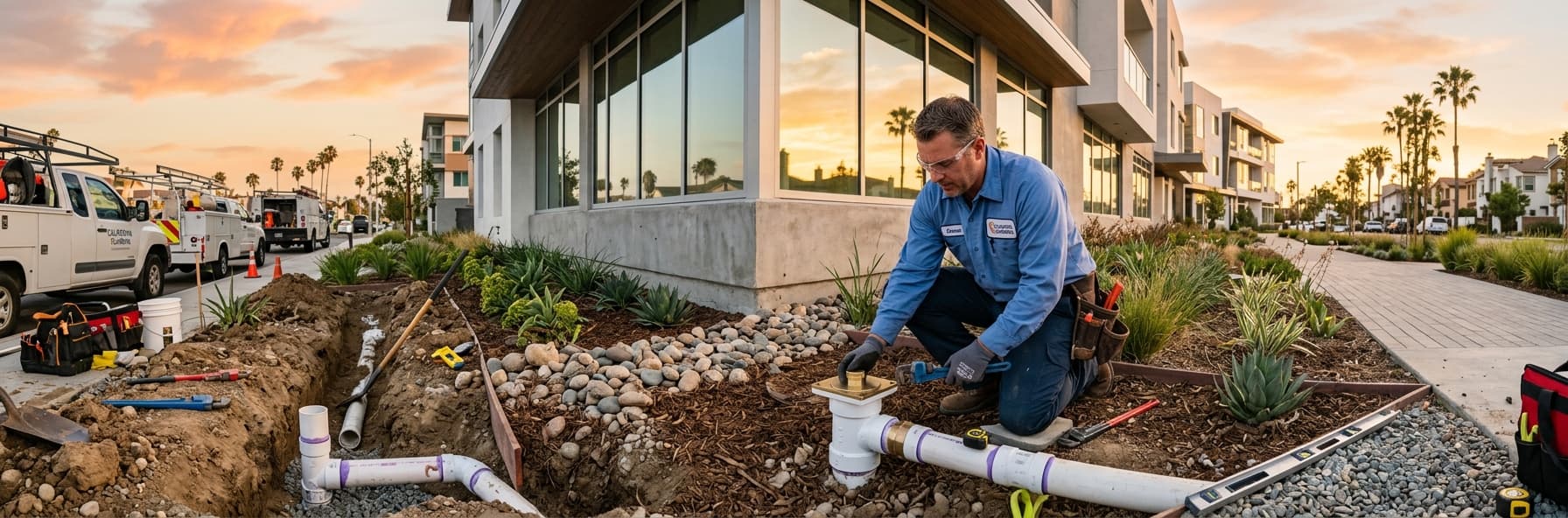
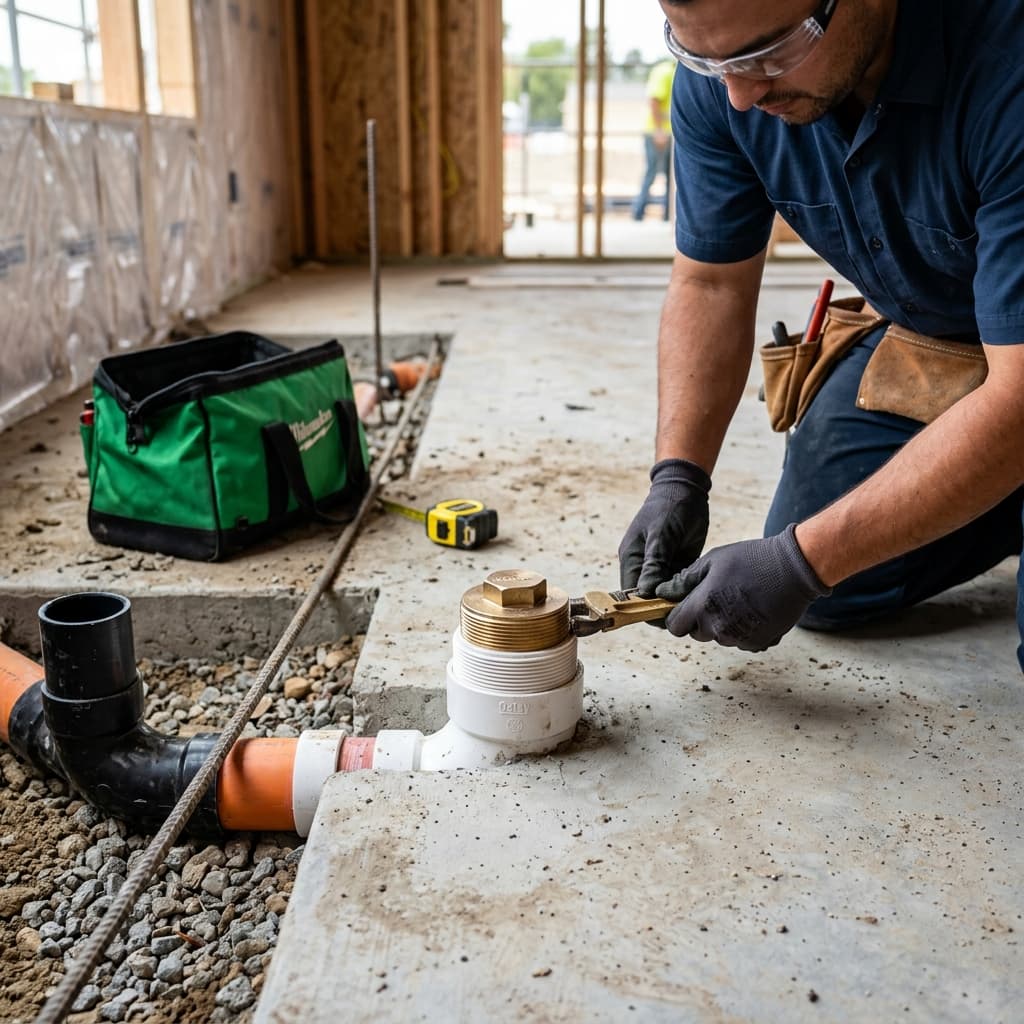
- Slab-on-grade installations may have cleanouts embedded in concrete with removable caps
- Caps must be clearly labeled and accessible for maintenance
Above-Grade Access Solutions
- Vent stack cleanouts may be installed above the roofline (with proper flashing)
- Interior wall cleanouts must be in accessible locations
- Wall cleanouts require proper framing access—never behind finished surfaces
Common Exam Questions and Tricky Scenarios
Scenario 1: Multiple Bends
Question: "A horizontal drainage line contains two consecutive 30-degree bends. Must a cleanout be installed between them?" Answer: No. Each 30-degree bend is less than 45 degrees individually, and their combined 60-degree total change occurs across the two fittings, not at a single point. However, if they occurred at effectively the same location (like a true 60-degree total bend), a cleanout would be required.Scenario 2: Cleanout Spacing in Long Runs
Question: "A 150-foot horizontal drainage line with no changes of direction requires how many cleanouts?" Answer: Minimum one at the start/end connection points. CPC 4204 doesn't specify a maximum distance for horizontal runs without direction changes. However, practical rodding considerations and AHJ requirements might require additional access points.Scenario 3: Stack Transitions
Question: "A vertical soil stack transitions to a horizontal branch. Where is the cleanout required?" Answer: At the point of transition—typically at the base of the stack or immediately where it begins the horizontal run. This provides access to blockages in both the vertical and horizontal segments.Integration with Other Code Sections
Understanding CPC 4204 requires context from related regulations:
- CPC Section 308 (Drainage Piping Materials) – Defines acceptable pipe materials that affect cleanout specifications
- CPC Section 4205 (Trap Requirements) – Traps often occur near cleanout locations
- CPC Section 4206 (Vent Pipes) – Vent stacks have their own cleanout rules
- CPC Section 4207 (Building Traps) – Building traps require specific cleanout placement
Practical Installation Considerations
While CPC 4204 focuses on requirements, experienced plumbers understand practical implications:
Rodding Access
Cleanouts must allow tools (typically 3/8-inch cable) to reach the blockage:- Wye fittings provide better rodding angles than tees
- 45-degree angles are easier to rod than 90-degree angles
- Vertical pipes are easier to clear than horizontal runs
Future Maintenance
Code-compliant cleanout installation should anticipate future use:- Access must be maintained even after landscaping or construction
- Interior cleanouts shouldn't require removing cabinets or fixtures
- Labels should indicate what each cleanout serves
Inspector Expectations
California building inspectors evaluate cleanout compliance by:- Verifying proper spacing at direction changes
- Confirming adequate access for tools and personnel
- Checking material compatibility
- Ensuring proper pitch and installation angle
Study Tips for C-36 Exam Success
Key Points to Memorize
- 45-degree threshold – Changes exceeding 45 degrees require cleanouts
- Base of stack – Always required, always testable
- Opening sizes – Must match pipe diameter (minimum 3 inches)
- Wye preference – Code prefers wyes over 90-degree elbows
Practice Scenarios
Draw drainage system sketches and identify required cleanout locations:- Single-story residence with one soil stack
- Two-story house with multiple branches
- Commercial building with multiple stacks and horizontal mains
- Complex systems with direction changes at multiple angles
Common Mistakes to Avoid
- Assuming all direction changes require cleanouts (only those exceeding 45 degrees)
- Forgetting cleanouts at stack bases
- Using plugged tees instead of proper cleanout fittings
- Placing cleanouts in inaccessible locations
- Misunderstanding "combined bend" rules
Recent Code Trends and Updates
California's current plumbing code maintains consistent cleanout requirements, though recent updates emphasize:
- Accessibility standards – ADA considerations for public buildings
- Inspection capability – Provisions for camera inspection through cleanouts
- Trenchless technology – Modern cleanout sizing for equipment passage
- Sustainable design – Integration with greywater and alternative drainage systems
Conclusion: Mastering Cleanout Requirements
CPC Section 4204 cleanouts represent a fundamental drainage system principle: every section of pipe must be accessible for maintenance and repair. While the specific requirements may seem complex initially, they follow logical patterns once you understand the underlying rationale.For C-36 exam success, focus on these core concepts:
✓ Cleanouts at all changes of direction exceeding 45 degrees ✓ Mandatory base-of-stack cleanouts ✓ Proper sizing based on pipe diameter ✓ Preference for wye fittings over sharp bends ✓ Accessibility as the overriding principle
Review CPC Section 4204 alongside practical installation scenarios, and you'll develop the mastery needed to answer any exam question on drainage system access points with confidence. Your dedication to understanding these fundamentals will serve you not only on exam day but throughout your plumbing career.