
# California Water Heater Installation Requirements: CPC Code Compliance for C-36 Exam Success
Water heater installation requirements California standards represent one of the most heavily tested topics on the C-36 plumbing contractor license exam. Whether you're a seasoned plumber brushing up on current codes or preparing for your first attempt, understanding the California Plumbing Code (CPC) requirements for water heater installations is absolutely essential for exam success and real-world compliance.
The California Energy Commission and Building Standards Commission have established comprehensive regulations governing water heater selection, sizing, installation, and safety mechanisms. Part 4 of the C-36 exam—Water Supply and Distribution—dedicates significant weight to fixture requirements and standards, with water heaters being a primary focus area.
Understanding CPC Water Heater Code Fundamentals
The Regulatory Framework
The CPC water heater code is built upon three foundational principles: safety, efficiency, and reliability. These principles are woven throughout Sections 308, 504, and 507 of the California Plumbing Code, which directly govern water heater installations. CPC Section 308.1 establishes that every water heater must be:- Sized appropriately for the fixture load it serves
- Installed in compliance with manufacturer specifications
- Protected by approved safety devices
- Accessible for maintenance and replacement
- Located in designated spaces with proper clearance
Key Code Sections to Master
For your C-36 plumbing license requirements California exam, memorize these critical sections:
- CPC Section 504.1-504.7: Water heater connections, controls, and thermal expansion
- CPC Section 507.1-507.13: Water heater material standards and installation procedures
- CPC Section 308.1-308.4: General fixture requirements applicable to water heaters
- CPC Section 422: Backflow prevention requirements affecting water heater supply lines
Water Heater Sizing Calculations: The Mathematics of CPC Compliance
Demand-Based Sizing Method
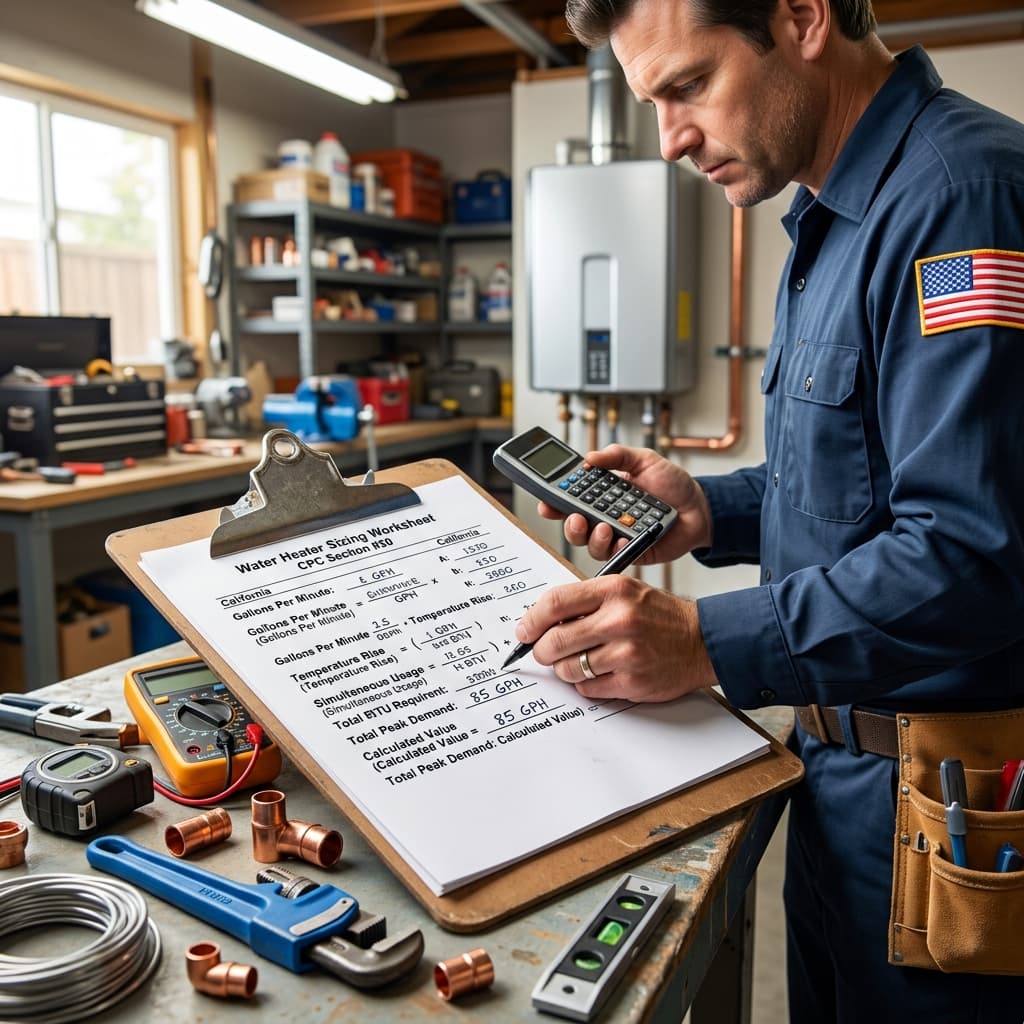
Water heater sizing calculations represent approximately 15% of Part 4 exam questions. The CPC requires using the demand-based sizing method, which calculates hot water demand in gallons per hour (GPH) at 140°F.
The Basic Formula:Sizing = Peak Hour Demand (GPH) × Temperature Rise Factor ÷ Recovery Efficiency
- 3 bathrooms (3 × 12 GPM = 36 GPM)
- 1 kitchen sink (2 GPM)
- 1 washing machine (3 GPM)
- Total simultaneous demand = 41 GPM at 140°F
- Temperature rise needed = 140°F - 55°F = 85°F
- Energy required = 41 GPM × 8.34 lbs/gallon × 85°F × 1 BTU/lb/°F = 29,148 BTU/hour
- Required input = 29,148 ÷ 0.80 = 36,435 BTU/hour
Commercial Water Heater Sizing
Commercial applications follow more complex methodologies outlined in CPC Appendix D. The exam may test your understanding of:
- Load classification systems (Light, Medium, Heavy use)
- Peak demand calculations for multiple simultaneous fixtures
- Storage tank requirements versus instantaneous heater needs
- Time factor adjustments for non-simultaneous use periods
Thermal Expansion Tanks: Non-Negotiable Safety Requirements
Understanding Thermal Expansion in Closed Systems
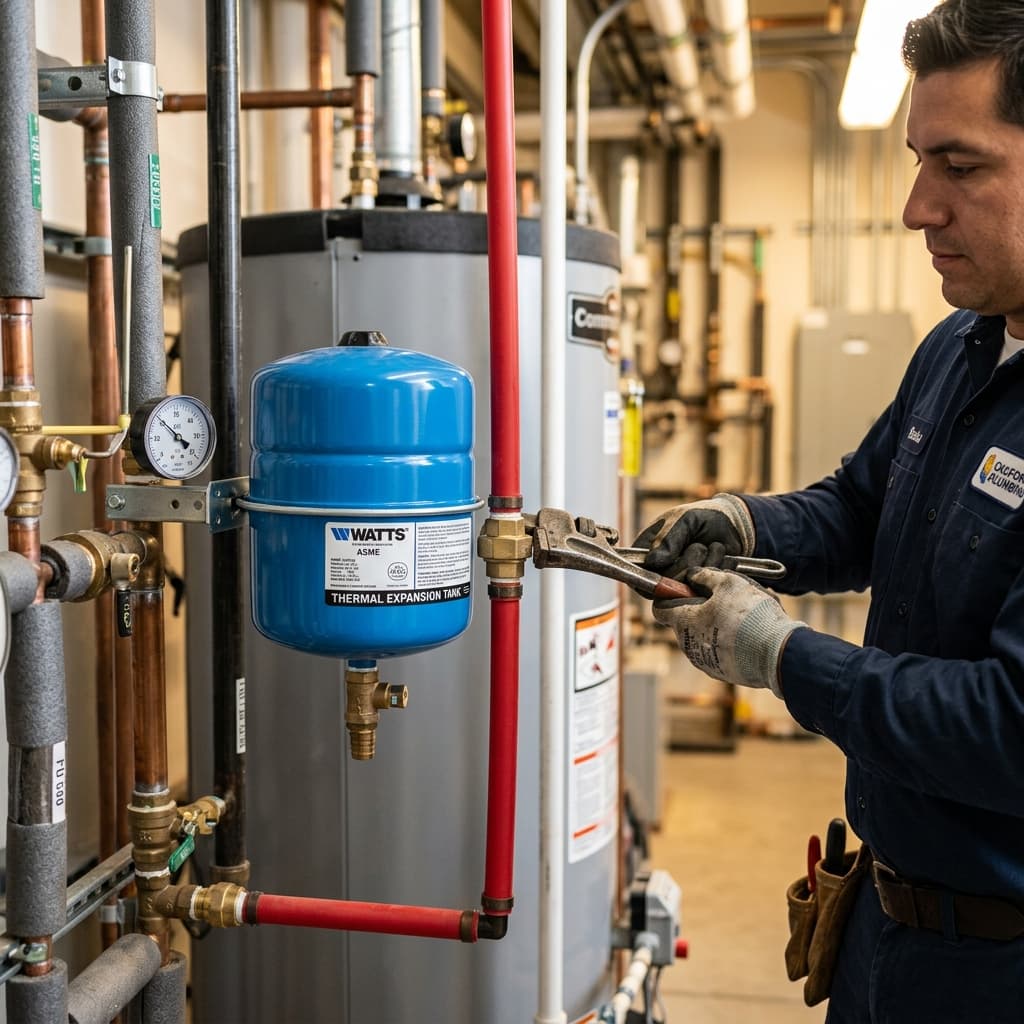
One of the most frequently missed exam topics involves thermal expansion tanks. Under CPC Section 504.7, thermal expansion tanks are mandatory for all water heater installations where:- The water supply is shut off by a check valve or backflow preventer
- The water heater creates a "closed system"
- Temperature increases cause water volume expansion with no outlet
- Pressure relief valve leakage
- Water heater tank failure
- Supply pipe damage
- Property damage and liability exposure
Thermal Expansion Tank Sizing
The formula for calculating thermal expansion tank volume:
Expansion Volume = [System Volume × (Temperature Rise ÷ 100)] ÷ Expansion Factor
- Total system volume = 55 gallons (50-gallon tank + 5 gallons supply piping)
- Temperature rise = 60°F (from 60°F cold to 120°F hot)
- Expansion factor for water ≈ 0.0188
Expansion Volume = [55 × (60 ÷ 100)] ÷ 0.0188
Expansion Volume = 33 ÷ 0.0188 = 1.75 gallons
- Pre-charged to 12 PSI below the system's minimum pressure (typically 22-24 PSI for residential)
- Installed on the supply line between the check valve and water heater
- Accessible for inspection and pressure maintenance
- Sized minimum 2 gallons for residential, larger for commercial applications
Safety Devices and Temperature Controls
Pressure Relief Valves (PRV)
CPC Section 504.4 mandates that every water heater must have an approved pressure relief valve set to open at:- No more than 150 PSI for residential installations
- No more than the tank's maximum rated pressure per manufacturer specifications
- Installed within 6 inches of the water heater outlet (measured along the pipe)
- Extend to within 6-12 inches above the floor
- Terminate in a safe location
- Never be capped or valved
- Be sized minimum 3/4-inch diameter
- Relief valve more than 6 inches from heater outlet
- Discharge line too small (less than 3/4")
- Valve discharge that creates backpressure
- Valving installed on discharge line
Temperature and Pressure Relief (T&P) Valves
For storage-type water heaters, CPC Section 504.5 requires combination temperature and pressure relief valves that:- Are rated for the maximum system pressure
- Include a temperature element set at 210°F (±10°F)
- Discharge to the same specifications as pressure-only valves
- Are not interchangeable with pressure-only valves
Installation Location and Clearance Requirements
Space and Ventilation Standards
The C-36 exam tests knowledge of proper water heater placement through questions about CPC Section 507.2, which establishes: Gas Water Heaters:- Minimum 6-inch clearance from combustible materials on all sides
- Minimum 18-inch clearance in front for servicing
- Proper ventilation to outdoor air (not re-circulated from living spaces)
- Installed only in areas classified as appropriate per CPC Table 507.2
- Minimum 12-inch clearance from walls for service access
- Installation in dry locations or approved wet-location models
- GFCI protection in bathrooms and wet areas per NEC standards
Seismic Bracing and Restraint
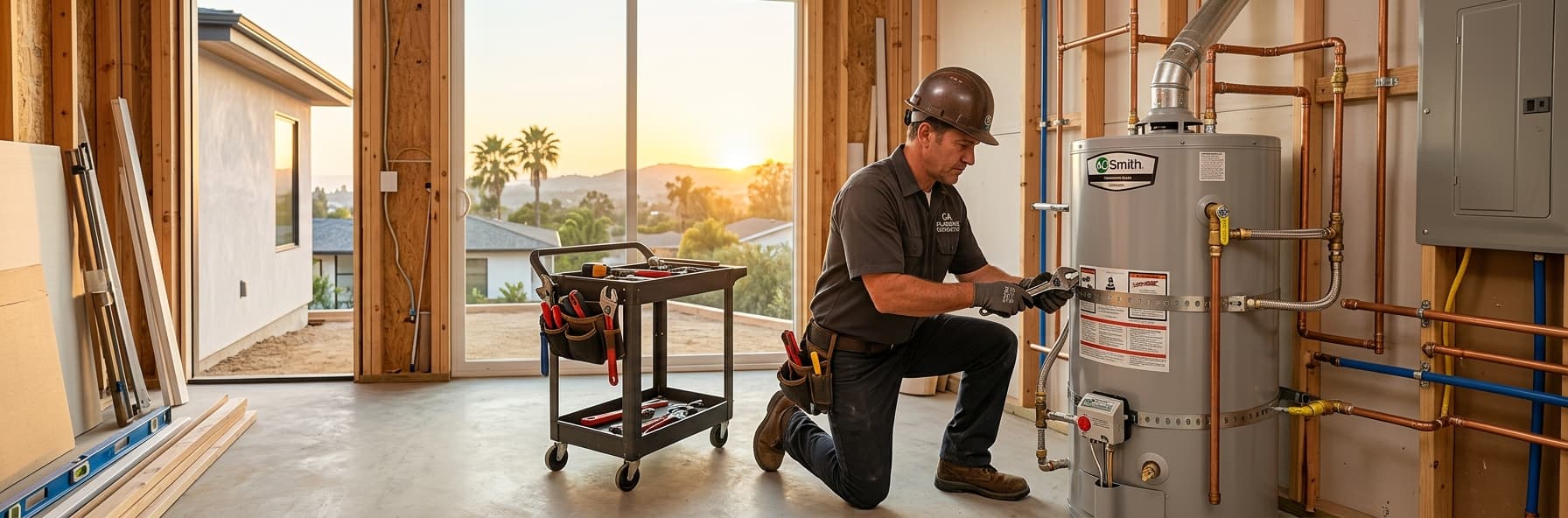
California's seismic zone requirements mandate that water heaters exceeding 20 gallons be restrained per CPC Section 507.13:- Brass or stainless steel strapping (never galvanized on copper tubing)
- Fastened securely to building structure at two points minimum
- Upper restraint within 4 feet of top of tank
- Lower restraint within 4 feet of bottom of tank
- Rated for 250+ pounds force retention
- Single restraint point (needs two minimum)
- Improper strap material
- Restraints more than 4 feet from tank ends
- Fasteners attached to flexible piping rather than structure
Backflow Prevention and Check Valve Integration
Mandatory Check Valve Installation
CPC Section 504.6 requires an approved check valve on the cold water inlet to every water heater. This prevents:- Back-siphonage of heated water into the cold water supply
- Cross-contamination of the potable water system
- Pressure surges back toward the municipal supply
Backflow Prevention Device Selection
When the water heater installation occurs in an area requiring backflow prevention per CPC Section 608.1, you may need:- Dual check valve assembly (if check valve + vacuum breaker)
- Reduced pressure principle (RP) backflow device
- Double check valve (DCV) assembly
Water Heater Type-Specific Requirements
Storage Tank Water Heaters
Standard tank heaters (CPC Section 507.1-507.4) require:- Working pressure rating of at least 150 PSI
- Temperature relief valve rated at heater's maximum pressure
- Drain valve at lowest point
- Dip tube to direct inlet water to tank bottom
- Insulation to CPC energy efficiency standards
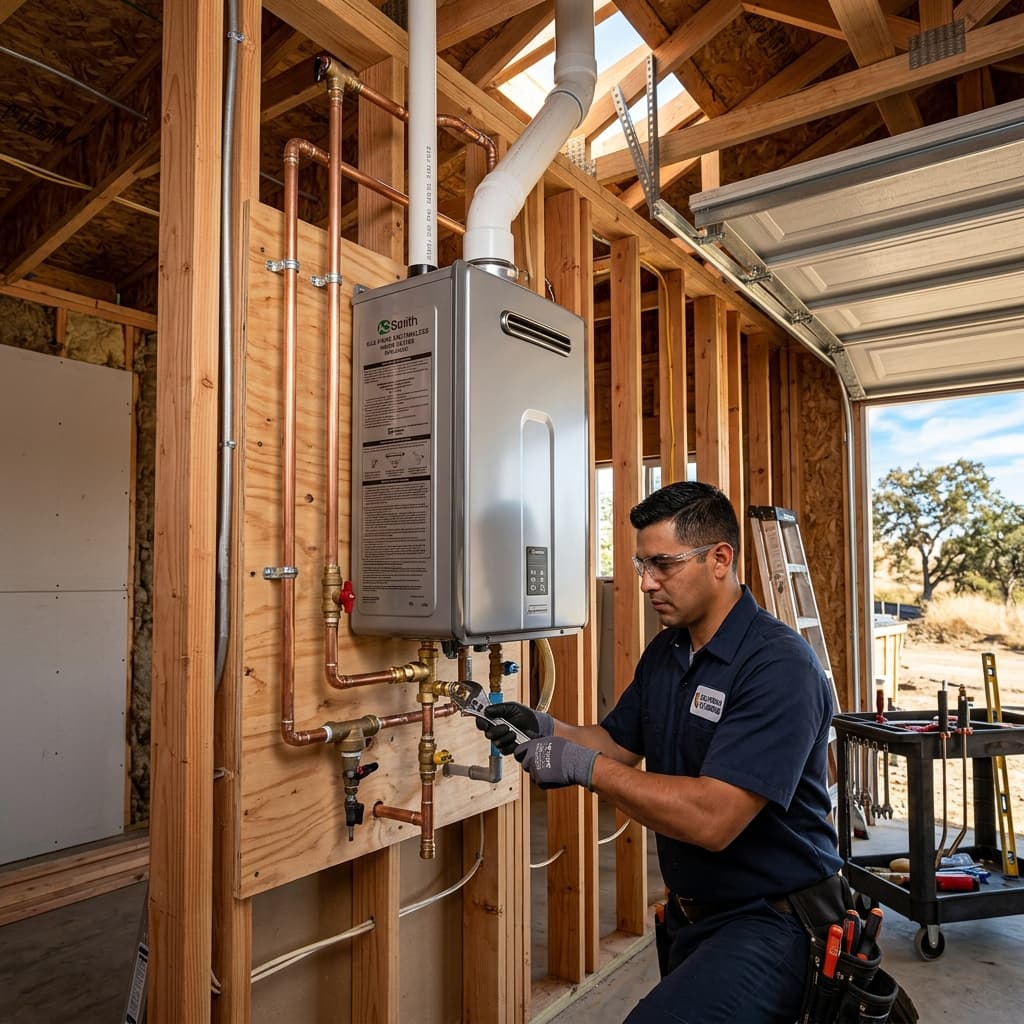
Tankless/Instantaneous Water Heaters
Tankless units (CPC Section 507.5) have different requirements:- No thermal expansion tank required when properly sized for load
- May require additional check valves on inlet and outlet
- Temperature controls must maintain delivery temperature between 120-140°F
- Anti-scald protection devices required at fixture delivery points
Solar Water Heating Systems
Solar thermal systems (CPC Section 507.6) require:- Pressure relief valves on collector circuits
- Freeze protection mechanisms
- Differential temperature controls
- Secondary heat source compliance with standard heater rules
Common Exam Mistakes to Avoid
- Confusing PRV and T&P valve requirements - Remember: ALL storage heaters need T&P valves; only some need additional PRV valves
- Misplacing thermal expansion tanks - The tank MUST be after the check valve, on the supply inlet line
- Undersizing expansion tanks - Using 1-gallon tanks on systems requiring 2-gallon minimum
- Incorrect PRV discharge line sizing - 3/4-inch minimum diameter; never less
- Forgetting seismic restraint requirements - California exam always includes seismic bracing questions
- Misunderstanding closed-system triggers - Check valves and backflow preventers both create closed systems requiring expansion tanks
- Improper spacing of restraint straps - Both straps must be within 4 feet of tank ends; not positioned in middle of 8-foot tank
Preparing for C-36 Exam Success
The water heater installation requirements California content appears across 20-25% of Part 4 questions on the C-36 exam. Success requires:
Concept Mastery:- Understand the "why" behind each requirement (safety, efficiency, backflow prevention)
- Connect related topics (check valves trigger expansion tank requirements)
- Review manufacturer specifications as referenced in CPC sections
- Work through sizing calculations until formulas become automatic
- Practice with different water temperatures and fixture loads
- Understand temperature rise calculations for various climates
- Know which CPC sections govern which requirements
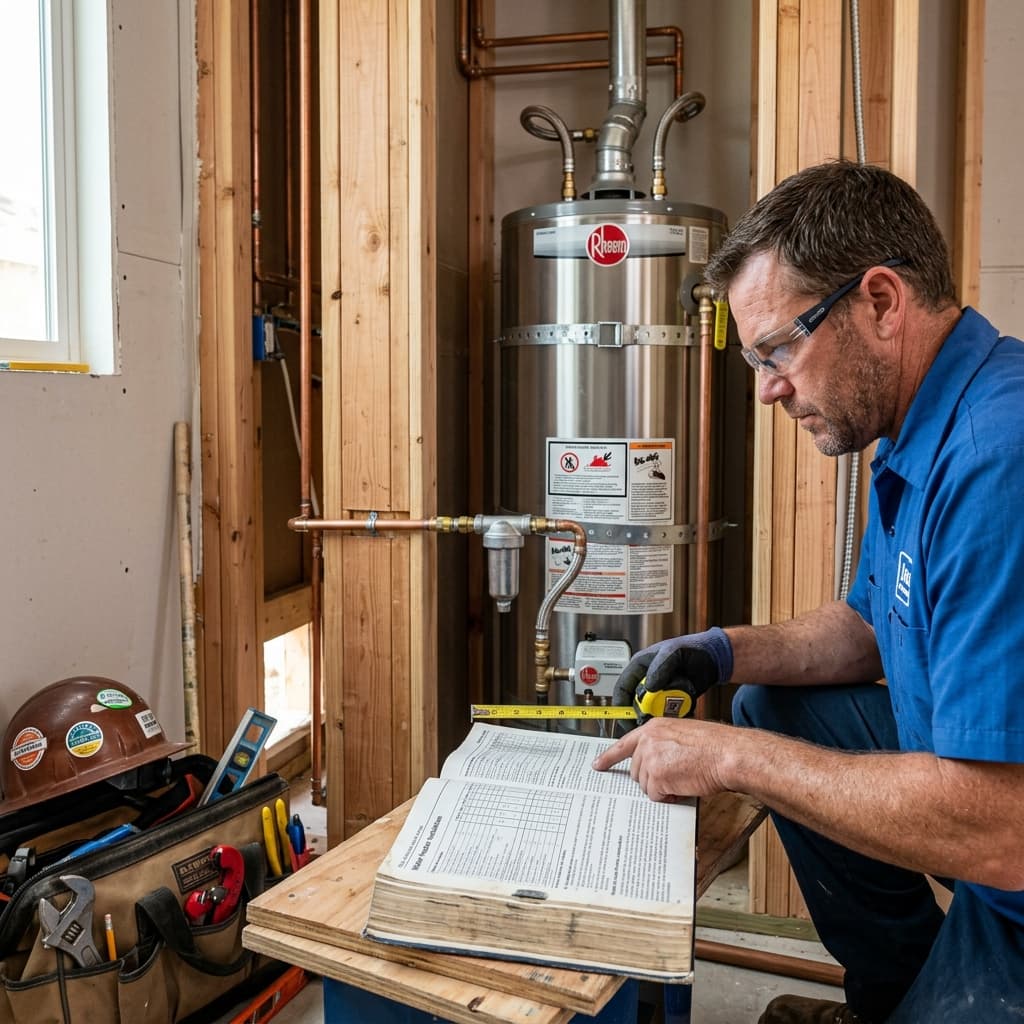
- Practice finding answers in the actual CPC document during open-book study
- Understand the hierarchy of code requirements (general rules vs. exceptions)
- Review installation diagrams identifying code violations
- Analyze piping layouts for thermal expansion tank placement errors
- Practice seismic bracing requirement questions with images
Resources for Further Study
For comprehensive C-36 exam preparation specifically addressing water heater installation standards, consider reviewing:- California Plumbing Code Sections 308, 504, and 507 directly
- Manufacturer installation guides for common heater types
- CPC Appendix D for commercial sizing methodologies
- Practice exam questions focused on Part 4 fixture requirements