# California Plumbing Code Section 422: Backflow Prevention Device Installation and Testing Requirements
Backflow prevention is one of the most critical safety requirements in modern plumbing systems. California Plumbing Code Section 422 establishes comprehensive standards for protecting public water supplies from contamination through backflow. For C-36 plumbing license candidates in California, mastery of these requirements is essential for passing the CSLB exam and ensuring public health protection in your professional practice.Understanding Backflow and Its Dangers
Before diving into the specific requirements of California Plumbing Code Section 422, it's important to understand what backflow is and why it presents such a serious threat to water safety.
Backflow occurs when water flows in the reverse direction through a plumbing system—moving from the building's internal piping back into the public water supply. This can happen due to:
- Back pressure: When downstream pressure exceeds supply pressure
- Back siphonage: When pressure in the supply line drops below atmospheric pressure
Overview of California Plumbing Code Section 422
CPC Section 422 is the primary regulatory section addressing backflow prevention in California. This section requires that no water connection shall be made to any water supply unless backflow prevention is provided in accordance with the code requirements.Key Principles of Section 422
The fundamental principle underlying California Plumbing Code Section 422 is that all premises connected to a public water supply must have appropriate backflow prevention measures installed. The specific type and grade of device depends on:- The hazard classification of the premises
- The nature of the materials or processes on the premises
- Local water supplier requirements
- The specific point of connection
Hazard Classification Requirements
Understanding hazard classification is critical for C-36 exam preparation. CPC Section 422 recognizes two primary hazard categories:High-Hazard Premises (Pollutants)
High-hazard premises involve the potential for contamination by fluids containing pathogens, toxic substances, or other hazardous materials that could cause illness or death. Examples include:
- Hospitals and medical facilities
- Laboratories and research facilities
- Chemical processing plants
- Food processing facilities
- Wastewater treatment plants
- Swimming pools and spas
- Fire suppression systems with additives
Low-Hazard Premises (Contaminants)
Low-hazard premises involve potential contamination by non-pathogenic substances that would cause deterioration of the water quality but pose minimal health risk. Examples include:
- Lawn irrigation systems
- Air conditioning systems
- Decorative fountains
- Boiler systems using treated water
Backflow Prevention Device Types
The C-36 exam requires comprehensive knowledge of different backflow prevention device types and their applications. California Plumbing Code Section 422 recognizes several approved device categories:Reduced Pressure Principle (RP) Devices
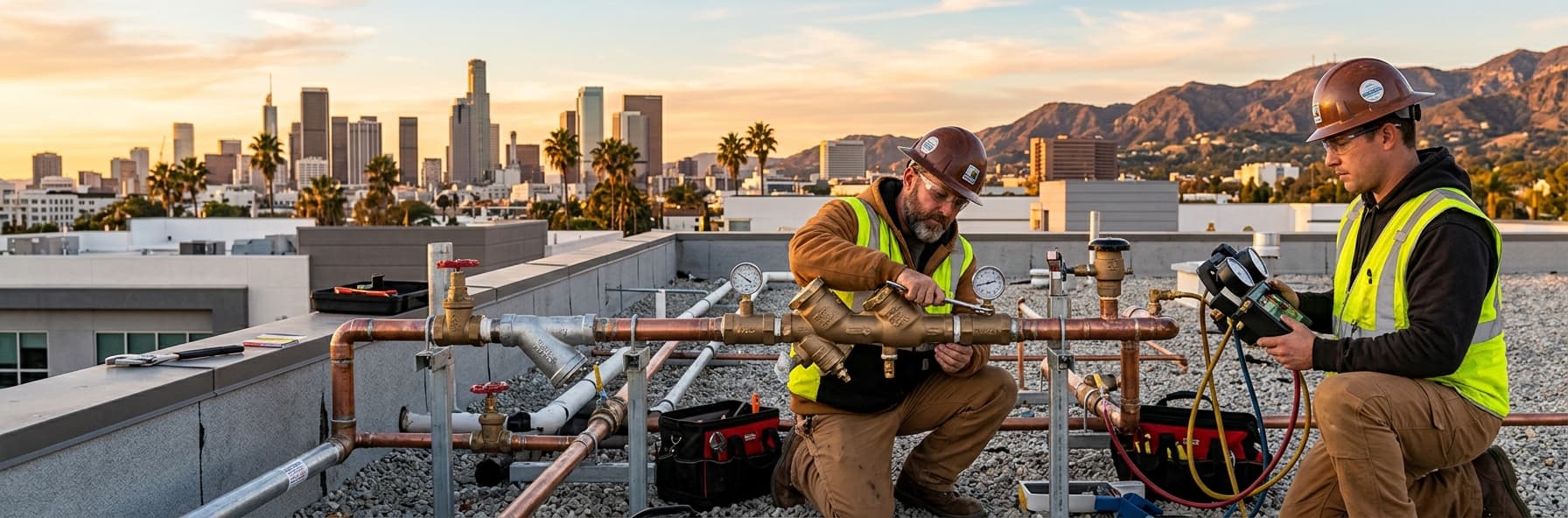
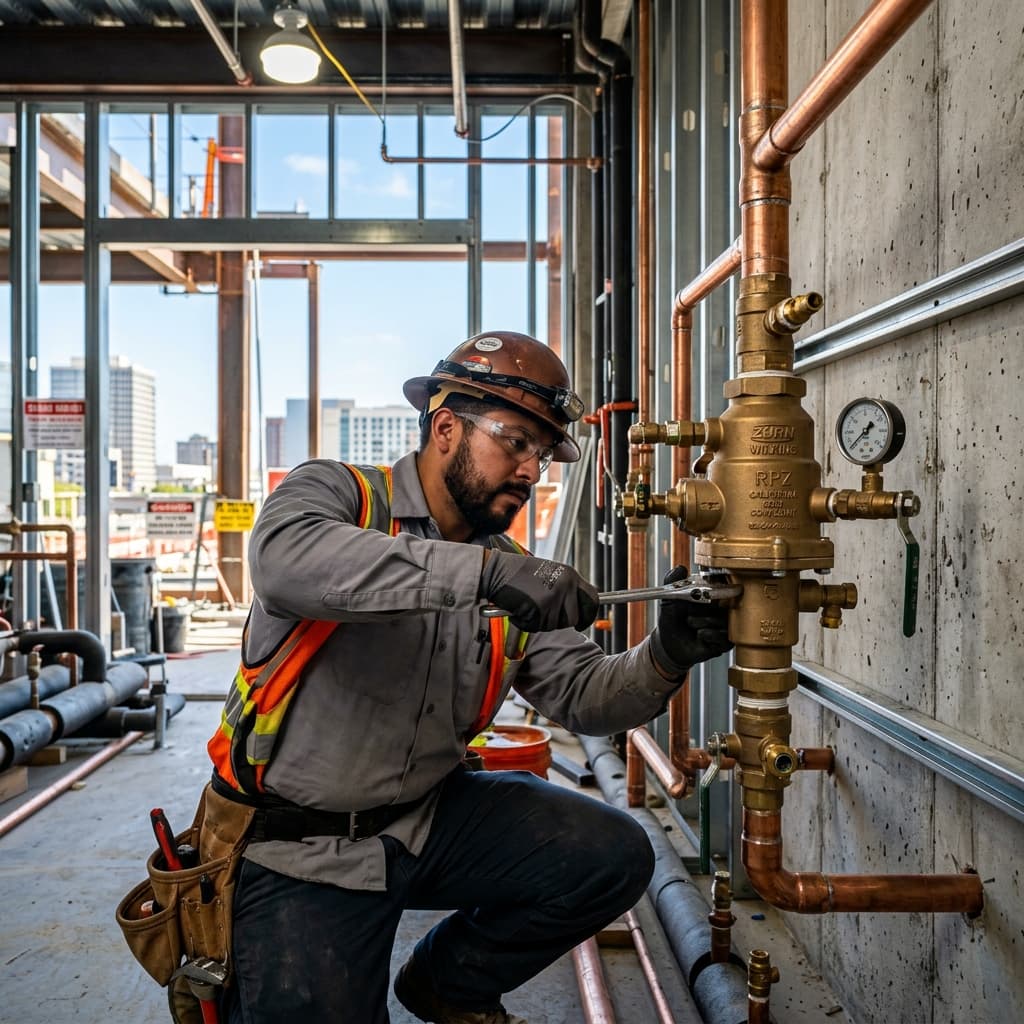
RP devices are the gold standard for high-hazard backflow prevention. They feature:
- Two independently operating check valves
- A pressure differential relief valve between the checks
- Continuous relief during backflow conditions
- Annual testing requirements
Double Check Valve Assembly (DCVA)
DCVA devices contain:
- Two independently operating check valves
- No relief valve (primarily relies on check valve integrity)
- Lower cost than RP devices
- Suitable for low-hazard applications
Pressure Vacuum Breaker (PVB) Devices
PVB devices are specifically designed for back-siphonage protection and feature:
- A float-loaded check valve
- An atmospheric vent valve
- Seasonal installation/removal in some applications
- Common in irrigation and lawn sprinkler systems
Atmospheric Vacuum Breaker (AVB)
AVB devices are the simplest backflow prevention method, featuring:
- A single atmospheric vent
- No moving parts
- No testing requirements
- Limited application (atmospheric supply pressure only)
Installation Requirements Under Section 422
California Plumbing Code Section 422 establishes specific installation requirements that C-36 candidates must understand:Location and Accessibility
Backflow prevention devices must be:
- Installed as close as possible to the point of connection to the water supply
- Located where they are accessible for testing and maintenance
- Protected from physical damage and weather conditions
- Installed downstream of any water meter
- Protected from freezing in climates where applicable
Orientation and Support
Proper orientation is critical for device functionality:
- Devices must be installed in the manufacturer's recommended orientation
- Flow direction must be clearly marked and followed
- Devices must be securely supported and cannot hang freely
- Adequate clearance must be maintained for testing access
Multiple Buildings and Fire Protection
When CPC Section 422 requirements apply to properties with multiple buildings:- Each building may require its own backflow prevention device
- Separate fire suppression systems typically require RP device protection
- Underground installations must follow additional requirements in CPC Section 428
Testing and Certification Requirements
One of the most heavily tested topics on the C-36 exam relates to backflow prevention device testing. California Plumbing Code Section 422 and related sections establish comprehensive testing protocols.Testing Frequency and Intervals
CPC Section 422.3 specifies testing intervals:| Device Type | Testing Interval | Exam-Critical Point | |---|---|---| | Reduced Pressure (RP) | Annually | Must be tested every 12 months | | Double Check Valve (DCVA) | Every 5 years (or annually per local requirement) | Varies by water supplier—candidates must check local requirements | | Pressure Vacuum Breaker (PVB) | Annually | Required for all installations | | Atmospheric Vacuum Breaker (AVB) | No testing required | Simplest option for specific applications |
Certification and Credentials
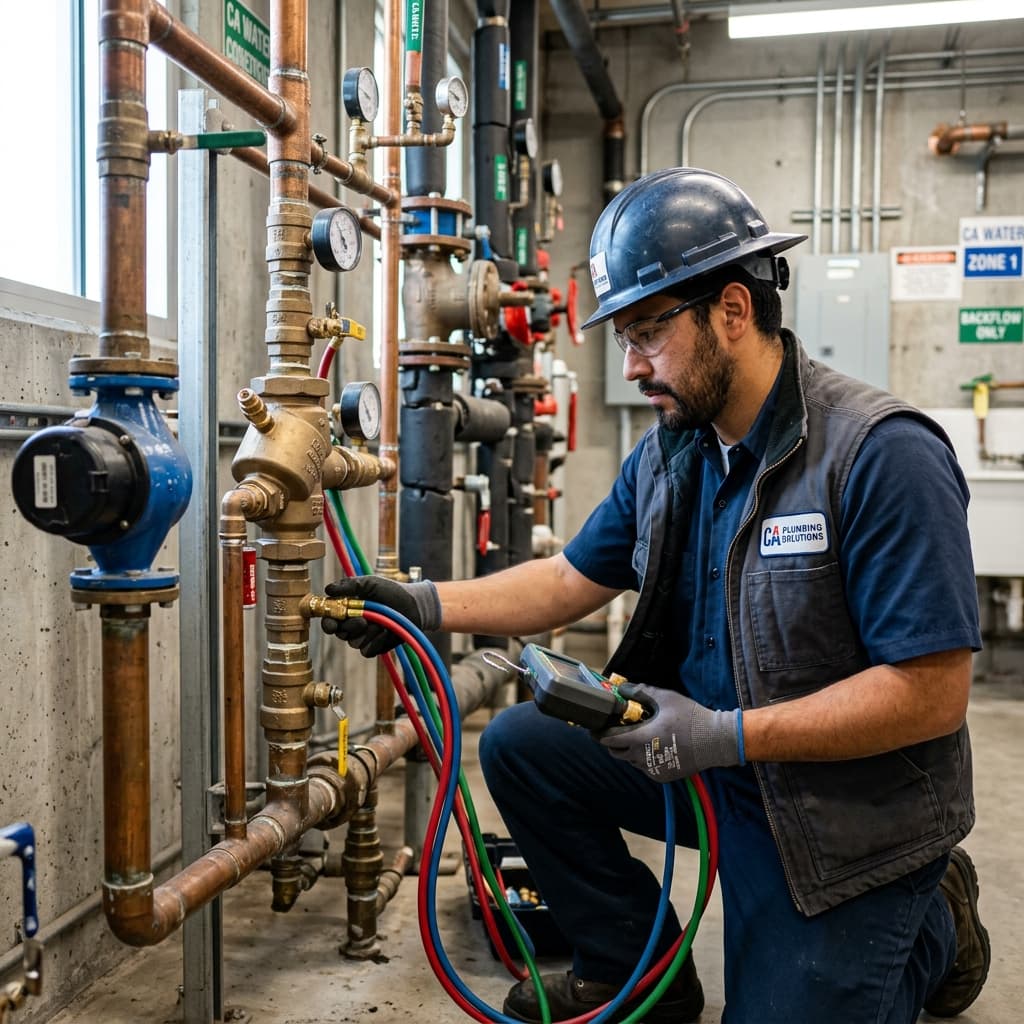
Critical for C-36 exam: Only certified backflow prevention device testers can perform official testing and certification. Testing credentials include:- Certified Backflow Prevention Device Tester (CBPDT)
- Certification issued by approved testing organizations
- State-recognized training and competency requirements
- Annual or biennial renewal requirements depending on local jurisdiction
Test Documentation
Proper documentation is essential for code compliance. Testing records must include:
- Device make, model, and serial number
- Testing date and results
- Tester name and certification number
- Pass/fail determination
- Signature of certified tester
- Building address and water service account information
Common Code Violations in Section 422
Understanding common violations helps C-36 candidates apply the code correctly in practice:
Lack of Device Installation
The most common violation is failing to install any backflow prevention device where required. This occurs frequently in:
- Retrofitted plumbing systems
- Irrigation system installations
- Commercial kitchen upgrades
Improper Device Selection
Installing the wrong device type for a premises hazard level—for example, using a DCVA where an RP device is required for a high-hazard installation.
Failure to Test and Certify
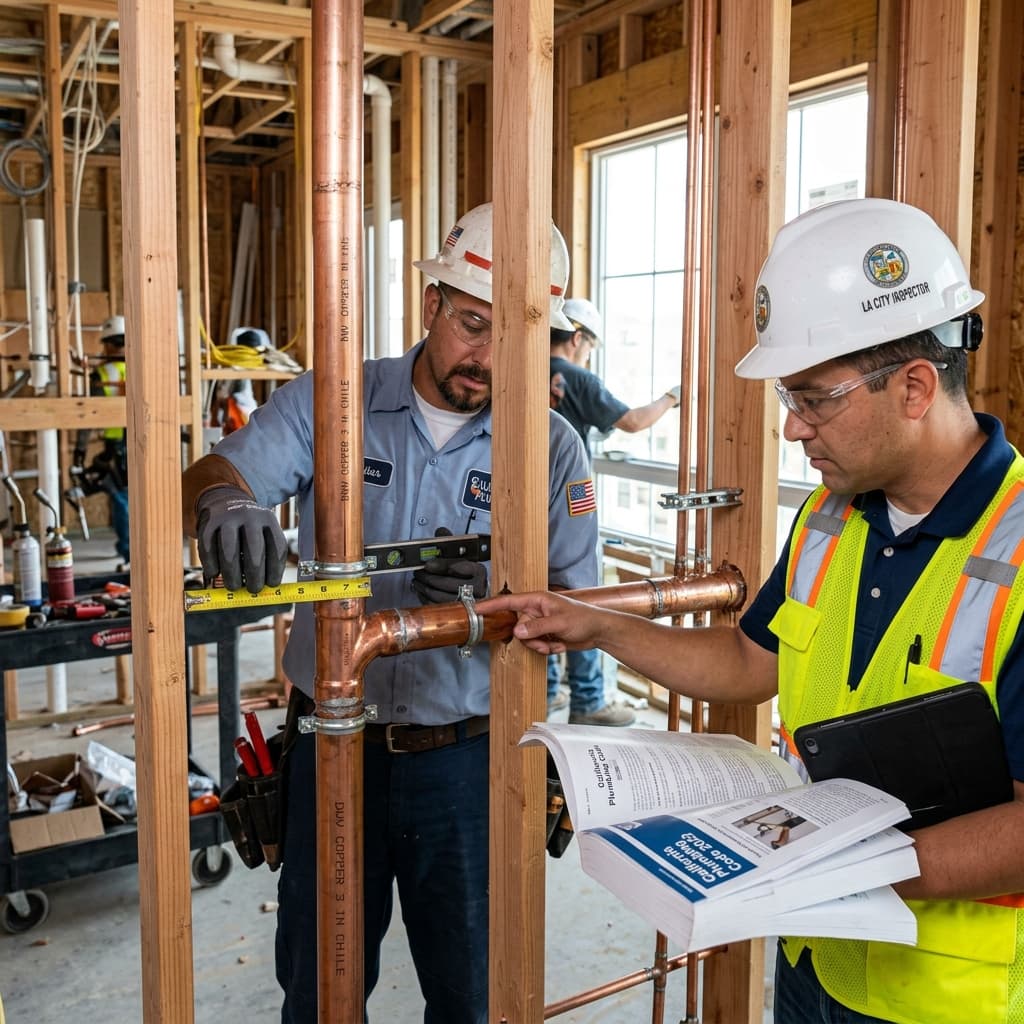
Devices not tested by certified testers or not tested within required intervals represents a significant compliance gap that inspectors frequently identify.
Inaccessible Device Installation
Devices installed in locations making testing access impossible, such as behind walls or underground without access points, violates CPC Section 422.2.Improper Support and Orientation
Devices hanging freely or installed upside down from manufacturer specifications represent improper installation per CPC Section 422.2.Integration with Other Code Sections
Understanding how California Plumbing Code Section 422 integrates with other code requirements strengthens exam preparation:Section 424 - Cross-Connection Control
CPC Section 424 addresses cross-connection control programs, which work in conjunction with backflow prevention devices to provide comprehensive contamination prevention.Section 608 - Water Service and Distribution
CPC Section 608 addresses water supply system design, which must incorporate backflow prevention requirements from Section 422.Section 502 - Water Service and Distribution
Requirements for water supply sizing and demand must account for pressure losses in backflow prevention devices.
Practical Application for C-36 Candidates
Scenario-Based Exam Questions
C-36 exam Part 2 typically includes scenario questions like:
"A hospital surgical suite requires backflow prevention on the water supply. Which device type is required per California Plumbing Code Section 422?" Correct answer: Reduced Pressure (RP) device, as hospitals are high-hazard premises per CPC Section 422.1. "A single-family residential property installs a landscape irrigation system with separate water meter. What testing interval applies?" Correct answer: Annual testing per local water supplier requirements, typically requiring a PVB device.Exam Study Tips
For effective C-36 exam preparation on California Plumbing Code Section 422:- Master the hazard classification system: Understand what makes a premises high-hazard versus low-hazard
- Know device capabilities: Be able to match device types to hazard levels
- Memorize testing intervals: Critical for CSLB exam questions
- Study local amendments: California water suppliers adopt varying requirements—review your local jurisdiction's specific amendments to the state code
- Practice code calculations: Some exam questions may involve pressure requirements for device selection
Water Supplier-Specific Requirements
An important consideration for C-36 candidates: while California Plumbing Code Section 422 establishes the baseline, individual water suppliers often adopt more stringent requirements.The CSLB exam expects candidates to understand:
- Local water supplier requirements often exceed state code minimums
- Some suppliers mandate annual testing for all device types (not just RP devices)
- Specific device brands or models may be required by some suppliers
- Documentation and reporting procedures vary by supplier
Maintenance and Record-Keeping
Beyond initial installation, CPC Section 422 addresses ongoing maintenance:Device Maintenance Requirements
- Regular inspection for visible damage or leaks
- Cleaning of strainers and sediment traps
- Lubrication of moving components per manufacturer specifications
- Replacement of worn gaskets or seals
Record-Keeping Obligations
Property owners must maintain:
- Original installation records
- Annual or periodic testing certificates
- Documentation of any repairs or modifications
- Correspondence with testing agencies and water suppliers
Conclusion
California Plumbing Code Section 422 represents one of the most important safety requirements in modern plumbing practice. For C-36 license candidates, comprehensive understanding of backflow prevention device types, installation requirements, testing protocols, and hazard classification is essential for exam success.The CSLB exam emphasizes practical application of Section 422 requirements, meaning candidates must not only memorize code provisions but understand how to apply them in real-world scenarios. By mastering this material now, you're preparing yourself for both exam success and professional competence in protecting California's water supply.
Success on the C-36 exam's Part 2 (Water Supply and Distribution) section depends on thorough knowledge of California Plumbing Code Section 422 backflow prevention requirements. Study actively, practice with code scenarios, and ensure you understand the "why" behind each requirement—not just the "what."