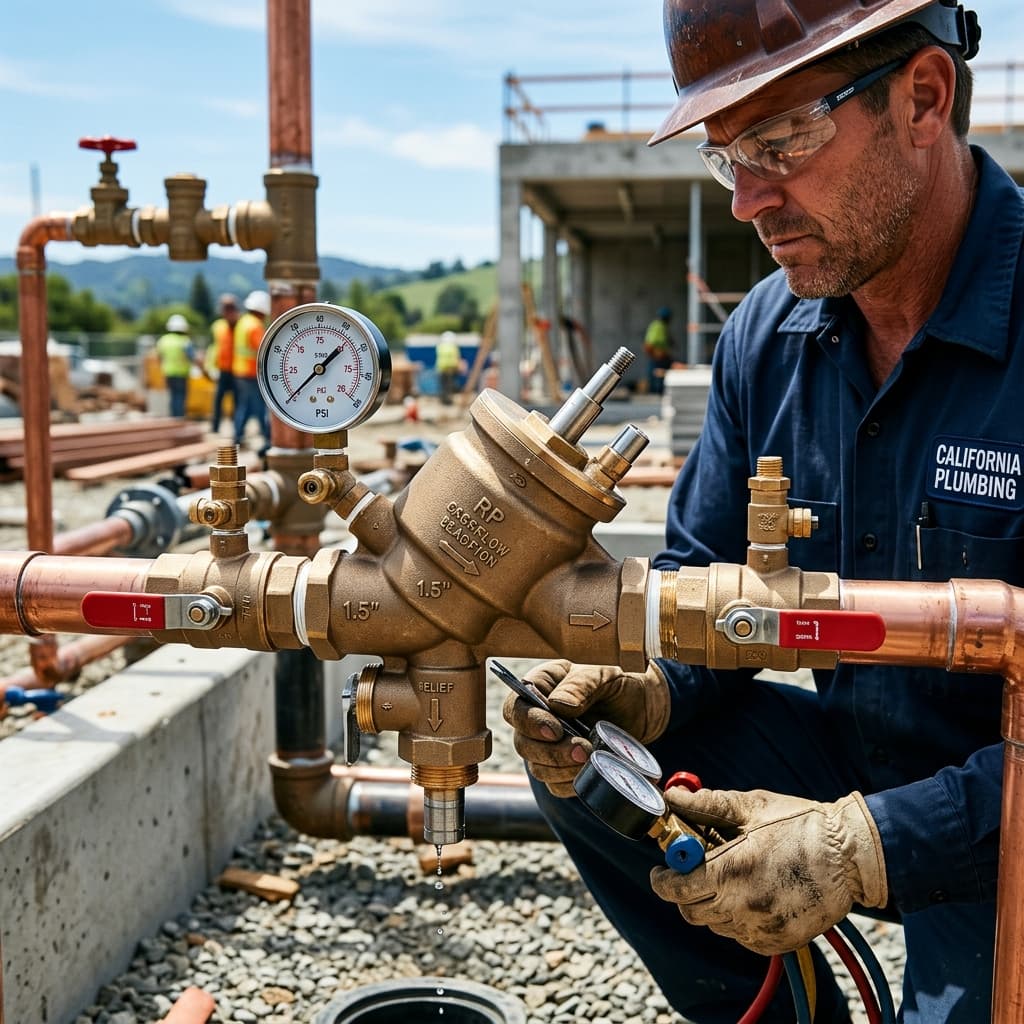

# California Plumbing Code Section 422: Backflow Prevention Requirements and C-36 Exam Strategy
Introduction
California Plumbing Code Section 422 establishes the fundamental requirements for backflow prevention devices that protect public water supplies from contamination. For candidates pursuing a C-36 plumbing license, mastering this section is essential for passing the CSLB exam and becoming a competent plumbing professional.Backflow occurs when water flows in the reverse direction through a plumbing system—either through back-siphonage or back-pressure. This phenomenon can introduce contaminated water into the public supply, creating serious public health hazards. Section 422 provides the regulatory framework that prevents these dangerous situations.
This comprehensive study guide covers device classifications, installation requirements, testing procedures, and strategic exam preparation techniques that will elevate your performance on Part 2 of the C-36 examination.
Understanding Section 422: Scope and Purpose
What is Section 422?
California Plumbing Code Section 422 is titled "Backflow Prevention" and serves as the primary regulatory authority for all backflow prevention requirements throughout California plumbing installations. This section works in conjunction with:
- CPC Section 608 (Protection of Public Water Supply)
- CPC Section 419 (Vacuum Breakers)
- Title 22 California Code of Regulations (Water Reclamation Requirements)
Why Section 422 Matters for Your C-36 License
The CSLB exam emphasizes Section 422 because:- Public Health Protection: Backflow prevention is the last line of defense against water supply contamination
- Legal Liability: Improper installation creates liability for plumbers and property owners
- Real-World Application: Nearly every commercial project and many residential projects require backflow devices
- Complex Decision-Making: Device selection requires understanding hazard classifications and water system dynamics
The Five Backflow Prevention Device Classifications
1. Atmospheric Vacuum Breaker (AVB)
Definition: A device that prevents back-siphonage by allowing air into the supply line when pressure drops. Key Specifications:- Protects against back-siphonage only (not back-pressure)
- Used on non-potable water branches
- Cannot be used where subject to back-pressure
- Must be installed minimum 12 inches above the highest downstream outlet
- Hose bibs and garden faucets
- Lawn irrigation systems without booster pumps
- Laundry tray supply lines
2. Dual Check Valve (DCV) / Anti-Siphon Valve
Definition: A spring-loaded, two-chamber device preventing back-siphonage through independent check valves. Key Specifications:- Protects against back-siphonage only
- Lower cost alternative to reduced pressure devices
- Smaller physical footprint than RPZ valves
- Requires 6-12 inches clearance for service access
- Laundry tray supplies
- Hose reel connections
- Lawn sprinkler zones without pressure boost
- Drinking fountain supply lines
3. Pressure Vacuum Breaker (PVB)
Definition: A device combining a check valve and vacuum breaker to protect against both back-siphonage and back-pressure. Key Specifications:- Handles both back-siphonage AND moderate back-pressure (typically up to 6 psi)
- Requires 12 inches of clearance above highest downstream outlet
- More affordable than reduced pressure zone (RPZ) devices
- Subject to water hammer damage
- Irrigation systems with booster pumps
- Hose stations on commercial buildings
- Auxiliary water supplies from wells or storage tanks
- Fire suppression system branch lines
4. Reduced Pressure Zone Device (RPZ Valve)
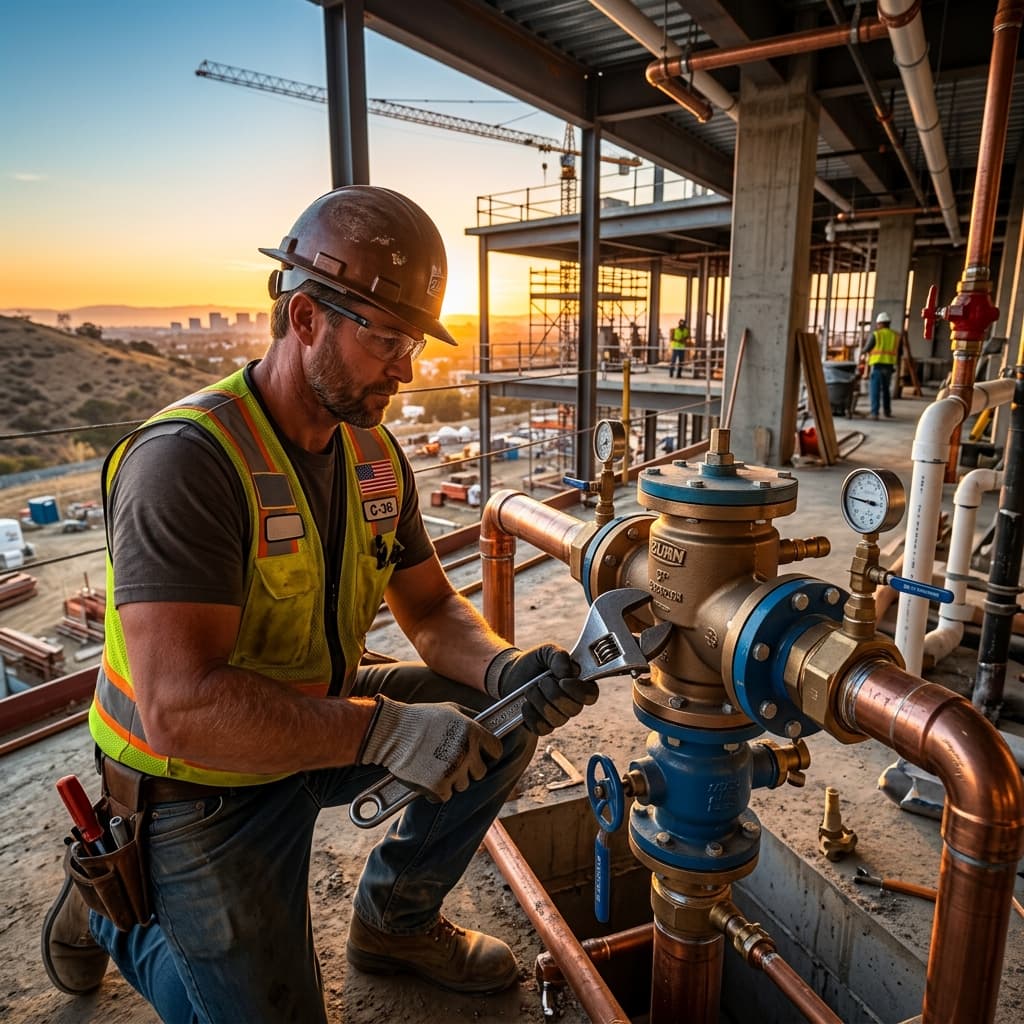
Definition: The most protective device, using two check valves and a relief valve to create a pressure differential zone. Key Specifications:- Protects against both back-siphonage AND high back-pressure
- Creates 5 psi relief zone between check valves
- Most reliable device (highest safety rating)
- Larger physical footprint (18-36 inches)
- Requires secondary drain line and inspection access
- Annual testing and certification mandatory
- Higher installation cost ($500-$2,000+)
- Carbonated beverage dispensers
- Chemical injection systems
- Medical gas connections
- Laboratory process water
- Wastewater reclamation supplies
- High-hazard industrial installations
- Why the relief valve creates a "reduced pressure zone"
- Why secondary drains are non-negotiable
- Annual certification and testing requirements
5. Double Check Valve Assembly (DCVA)
Definition: Two independently operating spring-loaded check valves in series, providing moderate back-pressure protection without atmospheric vent. Key Specifications:- Protects against both back-siphonage AND back-pressure (moderate levels)
- Mid-range cost between DCV and RPZ
- No atmospheric vent required (unlike PVB)
- Compact installation footprint
- Requires 5-year certification testing
- Subject to water hammer damage
- Boiler feed lines
- Auxiliary water supplies
- Non-potable system branch lines
- Secondary water system connections
- Landscape irrigation with storage tanks
Hazard Classification System
Understanding hazard levels is essential for device selection and represents a significant exam focus area.Low Hazard (Pollution) vs. High Hazard (Contamination)
Low Hazard (Pollution):- Non-potable water of questionable safety
- Minimal health risk
- Examples: Landscape irrigation, building toilet supply, cooling tower makeup
- Minimum Device: Dual check valve or atmospheric vacuum breaker
- Direct or indirect contact with human waste, food contact surfaces, or toxic chemicals
- Immediate health threat
- Examples: Laboratory wastewater, medical gas systems, carbonated beverage dispensers
- Minimum Device: Reduced pressure zone device (RPZ)
Decision Tree for Device Selection
- Identify hazard level (Low or High)
- Identify pressure threat:
- Consider installation constraints (space, drain requirements, maintenance access)
- Select minimum-compliant device
Installation Requirements and Inspection Access
Clearance and Access Standards
Section 422.2 through 422.6 specify minimum clearance requirements:| Device Type | Vertical Clearance | Inspection Access | Secondary Drain | |---|---|---|---| | AVB | 12" above outlet | Not required | Not required | | DCV | 6-12" minimum | 12" all sides recommended | Not required | | PVB | 12" above outlet | 18" all sides | Optional | | RPZ | No minimum | 24" all sides REQUIRED | REQUIRED | | DCVA | No specific height | 12" all sides | Not required |
Exam Tip: RPZ devices have the strictest access requirements. Questions often test whether a location has sufficient clearance for inspection and maintenance.Secondary Drain Line Requirements
RPZ devices must include:- Separate drain line to approved waste outlet
- No connection to sanitary sewer without backflow prevention on drain
- Visible discharge (no direct connection to sewer)
- Minimum 1-inch diameter for residential, 1.5-inch for commercial
Testing, Certification, and Maintenance
Mandatory Testing Intervals
CPC Section 422.7 requires:- Atmospheric Vacuum Breakers: No periodic testing (visual inspection only)
- Dual Check Valves: Annual testing (ASSE 1015 standard)
- Pressure Vacuum Breakers: Annual testing (ASSE 1020 standard)
- Reduced Pressure Devices: Annual testing (ASSE 1047 standard)
- Double Check Assemblies: 5-year testing (ASSE 1048 standard)
Certification Requirements
Only certified backflow prevention technicians may perform testing:- Must hold CSLB certification (Backflow Prevention Device Inspector)
- Must use ASSE-certified test equipment
- Must provide test reports documenting flow rate, pressure differential, and valve operation
- Test reports must be maintained for 5 years
Maintenance Considerations
Preventive maintenance extends device life and ensures reliability:
- Inspect annually for corrosion, mineral deposits, and visible leakage
- Flush supply lines before installation to prevent debris damage
- Maintain water pressure within device specifications
- Protect from freezing in cold climates
- Replace after 10 years or if manufacturer recommends
Common Installation Mistakes and How to Avoid Them
Mistake 1: Selecting the Wrong Device for the Hazard
Problem: Installing a dual check valve where an RPZ is required. Solution: Always identify hazard classification first. When in doubt, err on the side of higher protection (specify RPZ). CPC Reference: Section 608.1 hazard classification examples provide clear guidance.Mistake 2: Inadequate Inspection Access
Problem: Installing an RPZ device in a wall cavity without 24-inch clearance on all sides. Solution: Verify space requirements before device selection. Consider installing in accessible mechanical room or utility closet. Exam Implication: "Where can this RPZ valve be installed?" questions test practical knowledge of space constraints.Mistake 3: Missing or Improper Secondary Drain
Problem: Connecting RPZ secondary drain directly to sanitary sewer without relief valve. Solution: Secondary drains must be visible discharge. No direct sewer connection allowed per Section 422.5(d).Mistake 4: Neglecting Testing Requirements
Problem: Installing a device without documenting certification or scheduling required testing. Solution: Provide building owner with device specification sheet clearly stating testing intervals. Document installation with certification report.Strategic Exam Preparation for Section 422
What to Memorize
Critical facts for exam success:- Five device types and their pressure/siphonage capabilities
- 12-inch rule for AVB and PVB installation height
- RPZ device secondary drain requirement
- Testing intervals: Annual (DCV, PVB, RPZ), 5-year (DCVA), None (AVB)
- Low hazard vs. high hazard device requirements
Practice Question Types
Type 1: Scenario-Based Device Selection "A commercial building has a carbonated beverage dispenser connected to the domestic water supply. What is the minimum required backflow prevention device?" Analysis:- Carbonated beverage dispenser = HIGH HAZARD (food contact surface contamination)
- Requires highest protection device
- Answer: Reduced pressure zone (RPZ) device - Section 422.5
- RPZ requires 24-inch clearance on ALL SIDES
- This location provides only 24-inch total width (insufficient for 24-inch clearance on both sides)
- Answer: Non-compliant; requires larger installation space - Section 422.5(b)
- DCV = annual testing (Section 422.3)
- Certified backflow prevention technician only
- Answer: Annually, by CSLB-certified backflow prevention technician - Section 422.7
Study Schedule Recommendation
Week 1: Master the five device types and basic specifications Week 2: Practice device selection scenarios from CSLB study materials Week 3: Focus on installation requirements and inspection access standards Week 4: Review testing/certification requirements and common violations Final Week: Complete full-length practice exams with Section 422 emphasisReal-World Application: Case Study
Scenario: New Medical Facility Water System
A new urgent care clinic requires connection to municipal water supply with potential for contamination from:- Wastewater from sinks and toilets
- Oxygen injection system (non-toxic but non-potable)
- Hose station for general cleaning
- Minimum device: RPZ valve (Section 422.5)
- Secondary drain required
- Annual testing mandatory
- Cost: $1,200-$2,000 plus installation
- Minimum device: DCVA or PVB (Section 422.4 or 422.6)
- Back-pressure expected from oxygen pressure
- 5-year testing (DCVA) or annual (PVB)
- Cost: $400-$800
- Minimum device: DCV or AVB (Section 422.2 or 422.3)
- Location in weather-exposed area suggests DCV (no atmospheric vent freezing)
- Annual testing required
- Cost: $150-$300
This case demonstrates why device selection is critical—incorrect choices dramatically increase compliance costs.
Conclusion and Final Exam Strategy
California Plumbing Code Section 422 represents one of the most testable and practically important topics on the C-36 licensing examination. Success requires:- Thorough understanding of five device classifications and their applications
- Clear recognition of hazard levels and corresponding device requirements
- Detailed knowledge of installation requirements, testing intervals, and certification procedures
- Practical problem-solving through scenario-based practice questions